 CULTURETECHLENS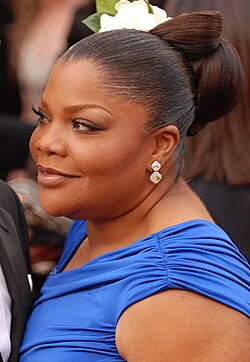
Photo: SGT Michael Connors, U.S. Army, Public Domain, via DVIDS
CULTURETECHLENS · "Culture, Clearly Seen." · Black Cultural Intelligence
Chicago's Black cultural intelligence platform, curating the intersection of history, athletics, music, and technology through a lens of cultural preservation and analysis.
Cite as: CultureTechLens, "Funny Business: How Hard It Is for Women Comics to Get Put On," 2026-09-30.
Dek: In 2007, a famous essayist announced that women aren't funny. The scientists disagreed, the rebuttals were devastating, and the comedians kept selling out anyway. So why is the pipeline still rationed, the pay still discounted, and the job title still "female comedian"? A deeply sourced investigation — with receipts, and a roster of the women who had to be undeniable.
The setup
In January 2007, Christopher Hitchens published an essay in Vanity Fair with a title engineered to start a bar fight: "Why Women Aren't Funny." His thesis, delivered with the confidence of a man explaining your own joke back to you, was that humor is a male courtship display — men must be funny because "the chief task in life that a man has to perform is that of impressing the opposite sex," while "women have no corresponding need to appeal to men in this way. They already appeal to men, if you catch my drift." He cited a Stanford brain-imaging study and concluded that women are "slower to get it, more pleased when they do, and swift to locate the unfunny — for this we need the Stanford University School of Medicine?" For good measure, he added that the impressive female comics who do exist are, "when you come to review the situation… hefty or dykey or Jewish, or some combo of the three."
It takes a special kind of confidence to write that sentence and then keep typing.
The rebuttals arrived on schedule. Vanity Fair commissioned Alessandra Stanley's reply, "Who Says Women Aren't Funny?", for April 2008 — the cover put Tina Fey, Amy Poehler, and Sarah Silverman in gowns, photographed by Annie Leibovitz, "like Greek goddesses… the point being that women can be funny and hot." Tina Fey gave the definitive answer in her 2011 memoir Bossypants, in a passage that has since become the entire debate's epitaph: "I think of this whenever someone says to me, 'Jerry Lewis says women aren't funny,' or 'Christopher Hitchens says women aren't funny,' or 'Rick Fenderman says women aren't funny…. Do you have anything to say to that?' Yes. We don't fucking care if you like it."
Germaine Greer, writing in The Guardian in March 2009, agreed women are as funny as men and located the gap where it actually lives — in socialization: "Men… have been honing their skills ever since they started school. Girls have nothing similar of their own and are not invited to horn in on the guys' act." Her kicker doubled as an economic thesis: "Female performers don't make it, don't get the prizes, don't get the audiences and don't make the money."
That last sentence is the real subject of this article. Not whether women are funny — that question was settled by the science, the box office, and Tina Fey's profanity. The real subject is the machinery: the booking conventions that ration stage time, the label that taxes every credit, the specials economy that pays legends like open-mikers, and the pipeline Black women had to build themselves because nobody was building it for them.
Hitchens, by the way, never conceded. In a 2008 video follow-up, "Why Women Still Aren't Funny," he said: "There's only a dispute about what the answer is, there is no question that for women the need or ability to be funny is tremendously less than it is among men." He also claimed the achievement of his essay was that it had "made sexier women try harder to amuse me," adding: "Well, that was my whole plan to start with." Reader, it was not.
I. What the science actually says (spoiler: it's the bias, not the ability)
Hitchens leaned on a 2005 Stanford study — Eiman Azim and colleagues' "Sex differences in brain activation elicited by humor" (PNAS) — in which 10 men and 10 women rated cartoons while being scanned. Here's the part he left out: that study measured humor appreciation, not production. Nobody in the scanner was writing jokes. It is, as the linguists at Language Log noted at the time, a strange foundation for a claim about who can generate comedy.
The production studies tell a different story — and a funnier one, in the bleak sense:
- Laura Mickes and colleagues (2012) had 32 participants write captions for 20 cartoons. Raters of both sexes judged men's captions slightly funnier — a 0.11-point edge on a 5-point scale, which the authors called "just at the edge of detectability," and stronger among male raters. Then came the twist: in a second experiment, people falsely remembered funny captions as having been written by men and unfunny ones as written by women. Lead author Laura Mickes put it plainly: "The differences we find between men's and women's ability to be funny are so small that they can't account for the strength of the belief in the stereotype." Translation: the gap is real, it's tiny, and your memory is lying to you about the rest.
- Kim Edwards (2009, University of Western Ontario) found men and women "created an equal number of highly rated captions" — the laughter gap is "more a consequence of social factors than a sign of a superior capacity for humor production."
- A Liverpool John Moores replication found the highest-rated male-authored captions (M = 3.26) and female-authored captions (M = 3.29) did not differ at all — yet participants still attributed male authorship to the funniest captions more often than chance. The stereotype, in other words, operates independently of the evidence. It is a self-cleaning oven of a bias: it burns off any data you feed it.
- The outlier is Gil Greengross & Geoffrey Miller (2011), who found higher average humor-production ability in 200 men vs. 200 women university students and interpreted it through sexual selection. Even on its own terms, it's a study of undergraduates writing cartoon captions — a long way from a comedy club at midnight.
So the laboratory verdict is roughly: women can write jokes as funny as men's; audiences misremember who wrote the good ones; and the belief persists regardless. Which raises the interesting question — if the talent is evenly distributed, why is the career so unevenly distributed? For that, we leave the lab and enter the club.
II. The pioneers (or: the essay was 50 years late)
Long before anyone needed a rebuttal essay, four women built the template for surviving an industry designed for someone else.
Moms Mabley — born Loretta Mary Aiken in Brevard, North Carolina (1894; some sources say 1897) — became, in April 1939, the first female comic to perform at the Apollo Theater, and went on to become one of its highest-paid headliners, earning a reported $10,000 a week at her peak. In 1962 she became the first Black woman to perform at Carnegie Hall. Her cover of "Abraham, Martin and John" hit No. 35 on the Billboard Hot 100 on July 19, 1969 — making her, at a presumed 75, the oldest living person with a U.S. Top 40 hit, a record that stood until Brenda Lee broke it in 2023. She did this as a Black woman who came out as a lesbian in 1921, at 27 — "one of the first openly gay comedians" — working a circuit that paid Black women meagerly and booked them rarely. When a talk-show host told her, "Moms, we'd love to have you on the show, but we never know what you're gonna say," she declined the spot: "I wasn't particular on being on it, because I don't like for no one to underrate my intelligence… I know what to say and when to say it and where to say it." She turned down a return to The Ed Sullivan Show because "Mr. Sullivan didn't want to give me but four minutes. Honey, it takes Moms four minutes just to get on the stage." At her funeral, Dick Gregory said: "Had she been white, she'd have been known fifty years ago."
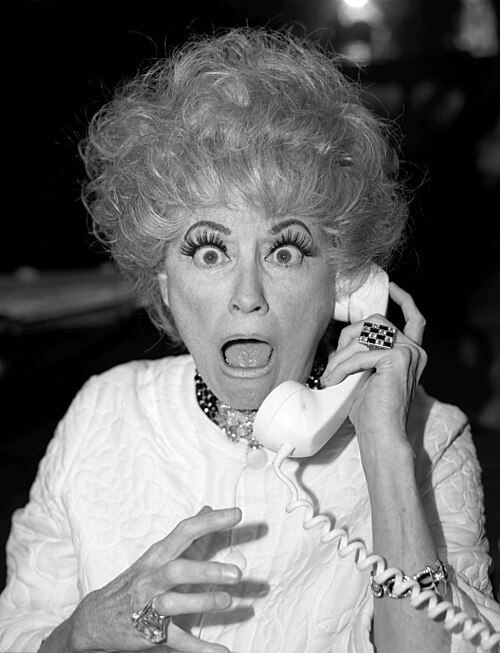
Phyllis Diller made her professional stand-up debut at 37, on March 7, 1955, in the basement of San Francisco's Purple Onion. A two-week booking stretched to nearly 90 consecutive weeks. Her persona — the wild hair, the cigarette holder she never smoked from, the cackle, the fictional husband "Fang" — was armor and engine at once: "I became a stand-up comedian because I had a sit-down husband." In a 1986 NPR interview she said that when she started, she never saw another woman on the comedy circuit — there were no female road models, because there was barely a road for women. Of early audiences, she recalled: "They had no idea what I was. It was like — 'Get a stick and kill it before it multiplies!'"
Joan Rivers got her first Tonight Show shot in 1965, when Johnny Carson told her on air she was going to be a star. In 1983, Carson named her the first permanent guest host in the show's history — he created the position for her. Then, in 1986, she accepted her own late-night show on the fledgling Fox network — the first time a woman hosted a network late-night talk show — and Carson treated it as betrayal. "The first person I called was Johnny, and he hung up on me — and never, ever spoke to me again… and then denied that I called him." She was effectively exiled from The Tonight Show until Jimmy Fallon's first episode in 2014. Her summary of the era's math: "Women comics were very rare those days. You had to work twice as hard to get the audience, whereas now women are totally accepted." (A 1965 New York Times review had praised her for "overcoming the handicap of a woman comic" — the handicap being, apparently, the audience.) Asked late in life about the "pioneer" label, she said: "It upsets me to say I'm a pioneer because I'm so current now, you know?… I'm still breaking barriers."
Whoopi Goldberg built The Spook Show in Berkeley in 1983, brought it to Broadway as Whoopi Goldberg (October 24, 1984 – March 10, 1985, 156 performances), and won the Grammy for Best Comedy Recording in 1986 — the first Black woman to do so, and only the second solo woman performer ever (after Lily Tomlin). Before that she had worked as a waitress, bank teller, mortuary cosmetologist, and bricklayer. She completed her EGOT in 2002. Her path — character-driven one-woman theater to mainstream stardom — became a blueprint precisely because the club pipeline had no lane for her.
Four women. Four different workarounds for the same locked door. Keep that image in mind; the rest of this article is about the locks.
III. The booking gauntlet (or: stage time is the currency, and the mint is rationed)
Every comic will tell you the same thing: stage time is the currency of the trade. You don't get funny in your apartment; you get funny in front of strangers, hundreds of times, bombing and adjusting. Now imagine the mint decides to ration your currency.
Academic research submitted to the UK Parliament's live comedy inquiry by Dr Laura Minor confirms what comics have said for decades: longstanding informal booking conventions hold that "one woman per bill is sufficient, or that women should not follow one another in a running order." The result, in Minor's words: "Rationed booking means fewer paid spots and slower development (which is significant because stage time is the currency of live comedy)." Note the elegance of the trap: bookers under-book women, women get less stage time, women develop slower, bookers cite the development gap as the reason. It's a perpetual-motion machine that runs on plausible deniability.
The comics describe it in plainer language. Judy Gold, in the 2021 FX documentary Hysterical: "Way too often, I would hear, 'Oh, we had a woman here three months ago. She didn't do well, so we're not booking women at this time.'" Three months. One woman. The entire gender benched on a sample size of one — a standard no male comic has ever been held to, unless every open mic in America is about to be shut down.
Sherri Shepherd, also in Hysterical: "It was never an even playing field. It was so hard to get stage time. As a Black woman, I had to fight. I really, really had to fight for my spots. And I really, really had to prove to the other comics that I was funny." British comic Jenny Bede nailed the booker's mental model: "People see gender as a genre… They'll be like 'OK we need one musical act, one one-liner act, one woman…'" Gender as a genre — as if "woman" were a style of joke, like one-liners or musical comedy, rather than half the species.
Sometimes the quiet part gets written down. In 2016, comic Bethany Black published an email from a promoter: "Bethany, you sound fab but can you believe 'too many women on the bills' this time. But will definitely book you for the future." Black's reply deserves framing: "No, I do not believe too many women on the bills as an excuse, because it's not 1964 and this isn't an episode of Mad Men. Women isn't a type of comedy, and this type of misogyny is what's leading to the homogeneity that's destroying our circuit." In 2014, comic Jen Collier was canceled from a gig because the venue had booked "too many women" — three, in a show of five. The booker apologized, explaining the venue insisted "female clients did not suit their audience." The booker added that in 17 years, it was "probably the only time a female comic has been canceled specifically for being a female comic" he knew of — which tells you less about its rarity than about how rarely anyone writes it down.
The numbers back the anecdotes. Chortle's September 2024 analysis of 168 line-ups at 12 major UK clubs found 184 slots went to women, compared to 470 for men — 72% of booked comics were men. Just under 18% of bills were all-male, and "of the rest, the vast majority featured just one woman on a bill of around four comics." At three clubs, fewer than one in six weekend comics were women. When London's Banana Cabaret responded to the analysis, it said it had "committed to no all male shows many years ago" — then added: "Admittedly it tends to be 1 woman on a bill of 4." Even the defense confesses the quota. Comic Lucy Beaumont, calling out all-male bills in 2024, estimated "about 90 percent have either no women or [one] woman on the bill," adding: "Let's just call 'most' of them what they really are — male panel shows that book a woman and male comedy clubs that tolerate women." One venue's reply was that there were insufficient women "good enough to be booked without compromising the overall quality of the show" — the development gap, cited as nature rather than nurture, right on cue.
The rationing starts before the clubs, too. Bringer shows — "you must bring x-amount of paying audience members to get stage time" — turn stage time into a cover charge, exploiting newcomers desperate for reps. And the pipeline narrows further upstream: for the 2013–14 season, the Writers Guild reported that women held just 18% of late-night TV writing jobs (vs. 29% of TV writing overall), and people of color just 3.5%. When Samantha Bee launched Full Frontal in 2016, her room was 50% women and 30% people of color — achieved, she said, by the radical method of actually hiring: "In the entertainment industry in particular, there are seminars and… work groups about creating diversity when, really, the fucking thing you have to do is just hire people… Find some diverse people and actually give them jobs." Her team used blind submissions with identifying info stripped. It worked. Nobody was surprised except, presumably, the seminar industry.
Festival gates tell the same story with different scenery. Edinburgh Fringe — the industry's great sorting hat — had only about 17% women performers in the mid-2010s (even after a reported 62% rise in female comics). By 2019, around 30% of solo shows were by women. And the reviewers rationed acclaim to match: across 1,530 Fringe reviews in 2017, 69% covered male comics — and The Scotsman gave all eight of its five-star comedy reviews to men. The Edinburgh Comedy Award didn't have a solo female winner until Jenny Eclair in 1995, fourteen years after the prize began. The gatekeepers weren't just at the door; they were holding the stars.
IV. The label tax (or: "female comedian" and other surcharges)
Suppose a woman survives the booking gauntlet. She is then issued a job title with a surcharge built in: female comedian. Nobody says "male comedian." The qualifier does quiet work — it marks the default as male and the woman as the special edition, the novelty flavor, the thing you order when you're feeling adventurous.
Jena Friedman — comic, late-night writer, Borat 2 screenwriter — on the journalism: "If I had a dollar for every time a journalist asked me, 'Is it hard being a woman in comedy?' I'd probably make as much as a man in comedy." The question is the tax: her male peers never field it. British comic Sara Pascoe has described how being labeled a "female comedian" made her notice gender more than she otherwise would — the label creates the consciousness it claims to describe. Kaneez Surka, a 17-year veteran: "If you're a female comedian, then that was the only distinguishing factor. It was never about what kind of comedy you do or the personality you have in comedy or the genre or style of comedy you do." Chortle's correspondents noted the introduction gap: men get welcomed as "the hilarious…" while women get "the beautiful…" or "the sassy…" — when they're not simply announced as "female comediennes" while the men get to be "comedians."
Then there's the material surcharge: what's policed on stage depends on who's holding the microphone. In Stephanie Brown's University of Illinois dissertation on women in stand-up, a scene creator praised her material as "more observational" than other women's — because she didn't "just talk about sex." This was after a show where nearly every male comic on the lineup mentioned his penis at least once. The dissertation's framing is precise: complaints that women talk about sex too much, queer comics talk about sexuality too much, or comics of color talk about race too much "reinforce an assumption of white, straight, male neutrality." Comics told Brown they'd been criticized for swearing, for talking about sex, for dirty jokes — "because it wasn't appropriately feminine." And women are "more susceptible to being accused of trying too hard or putting on a fake personality, because of the widespread cultural assumption of feminine artificiality." He gets a persona; she gets accused of having one.
This is the part of the article where the jokes stop, because the next surcharge is safety. In November 2017, five women told The New York Times that Louis C.K. had masturbated in front of them — colleagues, in professional settings: on set, at a festival, on the phone about bookings. The next day he admitted it: "These stories are true… The power I had over these women is that they admired me. And I wielded that power irresponsibly." Comic Marina Franklin told Refinery29 about touring the club circuit's "comedy condos" — shared housing where she once locked her bedroom door and read "with Pauly Shore's cum on the fucking comforter" — and about a club chain that stopped booking her entirely after she declined the condo, even when she offered to pay for her own lodging. Dr Minor's Parliament evidence states the structural fact coldly: "A woman harassed by a promoter cannot report him to an employer; the person she would report to may be the perpetrator or may depend commercially on him. Speaking up carries an immediate and unappealable economic penalty — the quiet loss of future bookings — against which there is no remedy." The whisper network isn't gossip. It's the HR department the industry refused to build.
V. The specials economy (or: the legend discount)
If stage time is the currency of the club, the hour special is the currency of the career — the thing that converts road work into cultural capital. And here the books are cooked in a very specific way: there are no books. No streamer publishes what it pays for stand-up. The entire economy runs on leaked numbers, talent-side disclosures, and trade-press whispers. That absence of data isn't an accident of the story. It is the story — you can't audit a gap nobody measures.
What we know comes from the people who decided to talk. In 2017, Okayplayer tallied Netflix's original comedy specials since the program began in 2012: 91 specials, of which exactly four were by women of color — Cristela Alonzo, Ali Wong, Anjelah Johnson, Sofia Niño de Rivera — and zero by a Black woman. Ninety-one to zero. That's not a pipeline problem; that's a vault door.
The pay disclosures are worse. In January 2018, Mo'Nique posted an Instagram video: Netflix had offered her $500,000 for a special. Amy Schumer, she said, had been offered $11 million — then learned Chris Rock and Dave Chappelle got $20 million each, asked for $2 million more, and got it. Her account of the negotiation deserves to be quoted at length, because it's the clearest primary-source document the specials economy has:
"When we asked Netflix to explain the difference why the money was so different, they said, 'Well, we believe that's what Mo'Nique will bring.' We said, well, what about my résumé? They said, 'we don't go off of résumés.' Then we asked them, 'What was it about Amy Schumer?' And they said, 'Well, she sold out Madison Square Garden twice and she had a big movie over the summer.' Is that not Amy Schumer's résumé? And then Netflix said, 'By the way, we believe Mo'Nique is a legend too.' Why shouldn't I get what the legends are getting?"
Read that again slowly. We don't go off of résumés — followed immediately by a résumé. The algorithm, it turns out, was vibes.
The numbers around her tell the rest. Dave Chappelle's 2016 Netflix arrangement was reported at $60 million for three specials. Chris Rock's at a reported two specials at $20 million each — the same structure Jerry Seinfeld got. Mo'Nique's 2019 lawsuit alleged race and gender discrimination and noted Netflix had "offered Schumer 26 times more per show than Mo'Nique." Netflix's response: "We care deeply about inclusion, equity, and diversity and take any accusations of discrimination very seriously. We believe our opening offer to Mo'Nique was fair — which is why we will be fighting this lawsuit." They fought it for nearly three years, then settled in 2022 on undisclosed terms — and in April 2023 released My Name is Mo'Nique on Netflix. The legend got her special. The price of the lesson is sealed.
Wanda Sykes added her own receipt. When Mo'Nique went public, Sykes tweeted: "@moworldwide, thank you for speaking out. @netflix offered me less than half of your $500k. I was offended but found another home. #EPIX." Less than half of $500,000 — for Wanda Sykes, with decades of specials, sitcoms, and an Emmy. She took What Happened… Ms. Sykes? to Epix in 2016; Netflix later came back with the better offer, and Wanda Sykes: Not Normal premiered May 21, 2019 — making her the first African-American woman with a full-length Netflix special. Her follow-up, I'm an Entertainer, arrived May 23, 2023. The terms were never disclosed. They never are.
The scoreboard, such as it is: Forbes' 2017 highest-paid comedians list had Amy Schumer as the only woman in the top 10 ($37.5M, fifth — behind Seinfeld, Rock, Louis C.K., and Chappelle). In 2016 she'd been the first woman ever to make the list. One woman. A decade of lists. And the audience data hints at why the buyers undervalue: Jumpshot analytics found Chappelle's 2017 Netflix audience was 83% male, while Schumer's The Leather Special audience was 52% female — the industry reads "female audience" as niche and "male audience" as mainstream, then prices accordingly. The discount is applied before the negotiation starts.
There were breakthroughs, and they matter. Ali Wong filmed Baby Cobra — released Mother's Day 2016 — at Seattle's Neptune Theater while seven and a half months pregnant, then did it again with Hard Knock Wife (May 2018), seven months pregnant with her second child, before Don Wong (2022) and Single Lady (2024). Tiffany Haddish's Black Mitzvah premiered December 3, 2019 — her 40th birthday — executive produced by Haddish with Wanda Sykes and Page Hurwitz; Sykes also produced Haddish's They Ready showcase of Black women stand-ups for the platform. Hannah Gadsby's Nanette (June 2018) — 100% on Rotten Tomatoes across 48 reviews — won an Emmy and a Peabody and detonated the form itself. But notice the pattern: every one of these women had to be undeniable first, on someone else's terms, before the platform wrote the check. The men got the check on promise. The women got it on proof. That's not a pay gap; it's a presumption gap.
VI. The pipeline Black women built themselves
Here's the part of the story the "women in comedy" conversation usually flattens: for Black women, the gauntlet was never just gender. It was gender times race times respectability — a triple tax, collected at every door. So they built their own doors.
The institutional door was *BET's ComicView, which premiered September 14, 1992, and became, in BET's own oral history, "one of the proving grounds" — "a well-received act often kick-started the kind of momentum that makes (or breaks) a career." The launch-pad roll call — D.L. Hughley, Cedric the Entertainer, Sommore, Rodney Perry — tells you what the mainstream clubs weren't doing. Sommore became the first woman to host ComicView* in the mid-1990s, then headlined the record-breaking Queens of Comedy tour in 2000 — 50,000-plus in Atlanta, a Guinness record — with a 2001 Showtime recording that became the highest-rated and longest-running special in the network's history. Read that sentence again and ask why her name isn't in every "greatest" conversation the men dominate.
The lineage runs straight and unbroken, each generation putting the next on:
- Moms Mabley (Apollo, 1939; Carnegie Hall, 1962; $10,000 a week at her peak; a gold record at 75) → portrayed by Whoopi Goldberg in the 1983–84 one-woman show Moms, and honored in Goldberg's 2013 HBO documentary Whoopi Goldberg Presents Moms Mabley.
- Whoopi Goldberg (Broadway 1984–85; 1986 Grammy, first Black woman to win Best Comedy Recording; 1991 Oscar for Ghost; EGOT 2002) → the proof that a Black woman comic could become the industry, not just survive it.
- Mo'Nique (Queens of Comedy; The Parkers, 1999–2004; 2002 Grammy nomination for Best Comedy Album; 2010 Oscar for Precious — the fourth Black woman to win it) → who then spent the 2010s fighting the specials economy in public, alleging she was blackballed by Lee Daniels, Oprah Winfrey, and Tyler Perry for demanding fair pay (Daniels apologized to her on stage at her 2022 show), and who told Club Shay Shay in 2024 exactly what the fight cost.
- Leslie Jones (SNL 2014–2019; Ghostbusters 2016; back-to-back Emmy nominations 2017–18; Showtime's Problem Child back in 2010) → who caught hell for a Weekend Update slavery joke that an Ebony editor called an embarrassment — the respectability tax, itemized in real time.
- Tiffany Haddish (Girls Trip, 2017; New York Film Critics Circle Best Supporting Actress; SNL guest host November 2017, winning the guest-actress Emmy) → who has talked openly about doing stand-up while homeless, about getting $80,000 for Girls Trip and buying a house before Season 2 of The Carmichael Show because she knew what the floor felt like.
- Robin Thede (2015: first Black woman head writer of a late-night show, The Nightly Show; 2016: first Black head writer of the White House Correspondents' Dinner; 2019: creator of A Black Lady Sketch Show — HBO, August 2, 2019, "the first TV sketch show in history created by, written by and starring Black women") → who stopped waiting for a seat and built the table.
- Quinta Brunson (created Abbott Elementary, ABC, December 7, 2021; at the 74th Emmys in 2022 won Outstanding Writing for a Comedy Series — the second Black woman ever, after Lena Waithe's 2017 win for Master of None's "Thanksgiving" — and became the first Black woman nominated three times in the comedy categories in a single year) → Ayo Edebiri (2024 Emmy for The Bear; with Brunson's lead-actress win, the first year two Black actresses took both female comedy acting categories; SNL host, February 3, 2024).
But the pipeline charged its own tolls. The respectability police worked both sides of the color line. The Emancipator (March 2025) put it cleanly: "Women of color are often forced to navigate hostile environments in which their humor and mirth are scrutinized through sexist and racist lenses." Mabley herself survived by packaging edgier material inside a "nonthreatening bedraggled granny in a floppy hat" — the costume was the compromise. Margaret Cho was removed as headliner from a major 2004 Democratic fundraiser for being too outspoken — a "distraction." And Veep writer Alexis Wilkinson — the first Black woman editor of the Harvard Lampoon — told scholar Maury Jeffries that at "Black" clubs she felt they wanted "a very specific version of black womanhood," "very physical and raunchy," that wasn't her act; at "white" clubs she didn't fit either. Her conclusion: "I want to be off stage, because when I'm writing, no one looks at me that way." When the stage demands you be two different stereotypes depending on the zip code, the page starts looking like freedom.
That is the Black women's comedy story in one line: they were taxed at every door, so they built their own doors — and then got charged admission to walk through them.
VII. The Roster: women comics who had to be undeniable
Everything above is argument. This is evidence. Forty-three verified stand-ups across five waves — each name checked against a source read for this article, each line carrying era plus signature credit. (Three more famous names — Robin Thede, Amber Ruffin, Ziwe — are marked CROSSOVER below: brilliant comedy writers and performers with no documented stand-up careers. They don't belong on a stand-up roster, and listing them here anyway would be exactly the kind of loose crediting this article refuses to do.) Read the list straight through and notice the pattern: no one on it got in on promise. Every one of them had to be undeniable first.
WAVE 1 — PIONEERS (1920s–1970s). They invented the job.
- Moms Mabley — Chitlin' Circuit from the 1920s; first woman comic at the Apollo (April 1939); 20+ comedy albums; signature: Moms Mabley at the UN (1961).
- Phyllis Diller — stand-up debut, Purple Onion, San Francisco, March 7, 1955, age 37; clubs and Vegas into the '90s; signature: retired from stand-up 2005, a 50-year run.
- Joan Rivers — Greenwich Village cafés (Bitter End, Gaslight) early '60s; Tonight Show breakthrough 1965; signature: first permanent guest host in Tonight Show history (1983).
- Lily Tomlin — nightclub stand-up in Detroit and New York; Grammy Best Comedy Recording (1971), first solo woman to win it; signature: Ernestine on Laugh-In (1969). (Caveat: stand-up verified; sketch/character fame dominates.)
- Totie Fields — Catskills and Copacabana nightclub stand-up; booked by Ed Sullivan off her Copa set; among Vegas's highest-paid comedy acts; signature: the 1976 Sahara comeback on a prosthetic leg.
- LaWanda Page — from dancing ("Bronze Goddess of Fire") to stand-up; gold-selling Laff Records albums incl. Watch It, Sucker!; signature: Aunt Esther on Sanford and Son (1973–77).
WAVE 2 — '80s–'90s BREAKOUTS. They crashed the cable boom.
- Whoopi Goldberg — The Spook Show (1983) to Broadway (1984–85); HBO Direct from Broadway (1985); signature: Grammy Best Comedy Album (1986), first Black woman to win it.
- Roseanne Barr — stand-up 1980–86 (Denver clubs, Comedy Store, Tonight Show 1985); HBO's The Roseanne Barr Show (1987); signature: Roseanne (ABC, 1988–97).
- Ellen DeGeneres — emcee at Clyde's Comedy Club, New Orleans; Showtime's Funniest Person in America (1982); signature: first woman invited to the Tonight Show couch on her first appearance (1986).
- Paula Poundstone — Boston open mics from 1979; HBO's Cats, Cops and Stuff (1990); signature: first woman to win the CableACE for best stand-up special (1990).
- Elayne Boosler — pushed into stand-up by Andy Kaufman; signature: first woman with her own hour-long stand-up special on cable — Party of One (Showtime, 1986), which she self-financed when nobody would.
- Sandra Bernhard — Comedy Store stand-up late '70s; one-woman show Without You I'm Nothing (stage 1988/film 1990); signature: The King of Comedy (1982).
- Margaret Cho — club stand-up from her teens; American Comedy Award Best Female Comedian (1993); signature: I'm the One That I Want (1999).
- Janeane Garofalo — stand-up since 1985; LA alt-comedy pioneer, co-created "Eating It" (1995); signature: Emmy nominations, The Larry Sanders Show (1996–97).
WAVE 3 — BLACK CIRCUIT-TO-MAINSTREAM. They built the road and the cars.
- Mo'Nique — first set at a Baltimore open mic (1988); Def Comedy Jam, ComicView; signature: Oscar for Precious (2009).
- Sommore — Def Comedy Jam (1995); first woman to host BET's ComicView (mid-'90s); signature: The Queen Stands Alone (2008).
- Adele Givens — stand-up since the late '80s; Crown Royal Comedy Contest grand prize, Chicago (1989); HBO's One Night Stand (1996); signature: Queens of Comedy (2002).
- Sheryl Underwood — first woman finalist, Miller Lite Comedy Search (1989); BET's Funniest Female Comedian on ComicView (1994); hosted ComicView; signature: The Talk co-host (2011–24).
- Kym Whitley — began as a Hollywood stand-up; Funny Bone headliner; signature: The Parkers (UPN, 1999–2004). (Caveat: stand-up verified; now primarily an actress.)
- Wanda Sykes — Coors Light Super Talent Showcase, D.C. (1987); HBO Comedy Showcase (1995); Emmy-winning Chris Rock Show writer/performer; signature: Not Normal (Netflix, 2019).
- Leslie Jones — stand-up since 1987 ("Funniest Person on Campus"); BET's ComicView, Comedy Store; signature: SNL cast member (2014–19).
WAVE 4 — 2000s–2010s. They took the hour special mainstream.
- Sarah Silverman — stand-up from 17 in Boston; Jesus Is Magic (2005); signature: Emmy for Outstanding Writing for a Variety Special, We Are Miracles (2014).
- Amy Schumer — first set, Gotham Comedy Club, June 1, 2004; Last Comic Standing finalist (2007); signature: Trainwreck (2015).
- Chelsea Handler — LA clubs late '90s; Comedy Central Presents (2002); signature: Chelsea Lately (E!, 2007–14).
- Whitney Cummings — LA club stand-up; Comedy Central Roasts; signature: co-created 2 Broke Girls (2011).
- Maria Bamford — first woman comic with two half-hour Comedy Central Presents specials; signature: Lady Dynamite (Netflix).
- Tig Notaro — stand-up since the late '90s; the legendary Largo cancer-diagnosis set (2012); signature: first fully animated stand-up special, Drawn (HBO, 2021).
- Ali Wong — stand-up from 23 in San Francisco open mics; signature: Beef (Netflix, 2023) — Emmy and Golden Globe winner.
- Hannah Gadsby — won Australia's Raw Comedy (2006); a decade of stand-up; signature: Emmy for Outstanding Writing for a Variety Special, Nanette (2018).
WAVE 5 — NOW. They inherited the fight and raised the price.
- Tiffany Haddish — stand-up from 2006; She Ready! (Showtime, 2017); guest-hosted SNL (Nov 2017), winning the guest-actress Emmy; signature: Black Mitzvah (Netflix, 2019).
- Quinta Brunson — began as a Philly stand-up before viral/BuzzFeed fame; signature: creator/star, Abbott Elementary (ABC, 2021). (Caveat: stand-up verified as early-career phase; breakthrough via writing.)
- Ayo Edebiri — began as a stand-up; Up Next (Comedy Central); signature: Sydney in The Bear (Hulu) — Emmy and Golden Globe winner. (Caveat: stand-up verified; breakout is acting/writing.)
- Michelle Buteau — stand-up since 2001; Welcome to Buteaupia (Critics' Choice Best Comedy Special, 2021); signature: first woman to film a special at Radio City Music Hall, A Buteau-ful Mind (2024).
- Nicole Byer — stand-up from 2013; host, Nailed It! (Netflix, 2018–22); signature: BBW (Big Beautiful Weirdo) (Netflix, 2021), Emmy-nominated.
- Taylor Tomlinson — stand-up since 16 (2010); four Netflix specials incl. Look At You (2022); signature: host, After Midnight (CBS, 2024).
- Sam Jay — stand-up since 2012; 3 in the Morning (Netflix, 2020); signature: first Black lesbian writer for SNL (2017–20).
- London Hughes — Funny Women Award (2009); signature: first British Black woman nominated for the Edinburgh Comedy Award Best Show — To Catch a Dck* (2019), later a Netflix special (2020).
- Gina Yashere — Hackney Empire New Act finalist (1996); first British comic on Def Comedy Jam (2008); signature: co-creator/co-showrunner, Bob Hearts Abishola (CBS, 2019).
- Iliza Shlesinger — stand-up since 2006; won Last Comic Standing (2008) — first and youngest woman to win it; signature: six Netflix specials and counting.
- Nikki Glaser — stand-up since 18; Bangin' (Netflix, 2019); Someday You'll Die (HBO, 2024); signature: hosted the 2025 Golden Globes.
- Fortune Feimster — Groundlings; Chelsea Lately writer/panelist; signature: Sweet & Salty (Netflix, 2020).
- Yvonne Orji — stand-up from 2006; opened for Chris Rock's Total Blackout tour; signature: Molly on Insecure (HBO, 2016–21) and HBO's Momma, I Made It! (2020).
- Phoebe Robinson — 2 Dope Queens (podcast and HBO, 2018–19); signature: Sorry, Harriet Tubman (HBO Max, 2021).
CROSSOVER — flagged, not listed as stand-ups. Robin Thede (writer/improv/sketch; first Black woman head writer in late night, The Nightly Show, 2015; creator, A Black Lady Sketch Show), Amber Ruffin (improv/writer; first Black woman writer for network late night, Late Night with Seth Meyers, 2014; host, The Amber Ruffin Show), and Ziwe (writer/satirist/performer; Baited with Ziwe; Desus & Mero writer) — all verified comedy careers, none with documented stand-up. They belong in the story; they don't belong on this particular list. Precision is the point.
Count the "firsts" above. Then ask why so many of them were still first in the 2010s and 2020s.
VIII. What we couldn't verify (the honesty section)
A word about what isn't in this article — because an investigation that invents its evidence is just a longer Hitchens essay. The following claims circulate widely but could not be verified to this article's standard (every fact sourced to something actually read, quotes exact). They are excluded or qualified above accordingly:
- *That Johnny Carson personally hosted Moms Mabley's Tonight Show appearance. Multiple sources confirm she appeared on the show; at least one appearance appears to have aired under guest host Joey Bishop. "Appeared on The Tonight Show*" is verified; "Carson himself introduced her" is not.
- Mabley superlatives ("highest-charting female comic in history," "most Apollo appearances ever") — found only on fan posts, not in authoritative sources.
- "First Black female comedian to headline a solo show at Carnegie Hall" — the North Carolina state marker's verified wording is "the first Black female to perform at Carnegie Hall" (1962). The stronger "headline a solo show" variant is unverified.
- Whoopi Goldberg as "the first woman to win Best Comedy Album" — incorrect as stated; Lily Tomlin won first. The verified formulation is "first Black woman" (GRAMMY.com).
- *The original Vanity Fair pages* for the Hitchens (2007) and Stanley (2008) pieces — vanityfair.com was inaccessible, so both are cited via full-text mirrors and secondary quotations, noted as such.
- Phyllis Diller's Purple Onion run — reported as 89 consecutive weeks (Wikipedia) vs. 87 (one secondary source); this article says "nearly 90."
- A named U.S. booker's on-the-record "one woman per show" admission — widely alleged, never found in an attributable interview. The documented evidence is the UK data, the emails, and the comics' testimony cited above.
- Festival gender percentages beyond Edinburgh Fringe — no verifiable counts were found for Just for Laughs, Netflix Is a Joke, or others.
- A numeric survey of harassment prevalence among women comics — Chortle's 2018 safety survey published qualitative responses only.
- Gender-disaggregated bringer-show data — the mechanism is documented; gender-specific numbers are not.
- Netflix pay figures beyond the disclosed ones — what Netflix paid Haddish, or Sykes for Not Normal/I'm an Entertainer, was never disclosed. HBO and Comedy Central special counts by gender: no published analysis found.
- "First Black woman stand-up to host SNL" (Haddish) — reported by two outlets but complicated by Whoopi Goldberg's SNL history; this article reports the hosting and the Emmy without the "first."
- Photographs — of eight portrait candidates pursued, two could be fully verified and downloaded (Diller, Mo'Nique). Whoopi Goldberg's CC0 license was verified but the file would not download; Joan Rivers' file page was access-blocked; Moms Mabley's 1968 photo had uncertain rights; others could not be license-verified. Gaps are documented in the photos/CREDITS.md file rather than filled with guesses.
The last word
Here's what the evidence actually shows, stripped of think-piece varnish:
The talent was never the problem. The best available science finds the gender gap in humor production is somewhere between nonexistent and "just at the edge of detectability" — while the bias in remembering who was funny is robust. The audience misattributes the good jokes to men. The booker under-books the women. The streamer underpays the legend. Then everyone acts surprised that the pipeline looks the way the pipeline was designed to look.
The tax is itemized. One woman per bill. "Female comedian." Don't talk about sex (after his dick jokes). Smile through the condo. Take half — no, less than half — of the $500,000. Be grateful for the special. Be twice as good for half the credit, then watch the credit get misremembered.
Black women paid the tax twice and built the road anyway. From Mabley's Apollo breakthrough in 1939 to Edebiri and Brunson's shared Emmy night in 2024 — eighty-five years, one unbroken lineage, most of it on infrastructure Black women financed themselves: ComicView, the Queens of Comedy tour, They Ready, A Black Lady Sketch Show. The mainstream didn't discover these comics. It finally ran out of excuses.
The data gap is the finding. No streamer publishes special pay. No industry body audits stand-up bookings by gender. The numbers in this article exist because comics — Mo'Nique, Sykes, the Chortle analysts, Dr Minor — did the counting themselves. An industry that won't measure its own bias has already told you what the measurement would say.
Tina Fey's answer remains the best one ever given: "We don't fucking care if you like it." But the forty-three women in the roster above cared about something harder — they cared about getting on. The stage, the special, the writers' room, the record. They got on by being undeniable, one after another, for a century. The least the industry can do now is stop making "undeniable" the minimum qualification for women — and start treating it as what it is for the men: optional.
This article is a prepare-only research document. It has not been published.
Sources
Every factual claim above is sourced to material read during production on 2026-09-30. Quotes are exact words from the cited sources.
The trope and the science
- Christopher Hitchens, "Why Women Aren't Funny," Vanity Fair, January 2007 — full text via mirror: https://t-nation.com/t/why-women-arent-funny/89311
- Jewcy, "Why I'm Funny (And Why You Might Be Too)" (quoting Hitchens): https://www.jewcy.com/post/why_i_m_funny_and_why_you_might_be_too/
- Christopher Hitchens, "Why Women Still Aren't Funny" (2008), transcription: https://azlyrics.biz/c/christopher-hitchens-lyrics/christopher-hitchens-why-women-still-arent-funny-lyrics/
- Alessandra Stanley, "Who Says Women Aren't Funny?", Vanity Fair, April 2008 — via TV Guide: https://www.tvguide.com/news/vanity-fairs-new-16178/
- Tina Fey, Bossypants (Little, Brown, 2011) — quoted via: https://www.goodreads.com/quotes/9898952-i-think-of-this-whenever-someone-says-to-me-jerry
- Germaine Greer, The Guardian, March 2009 — via Chortle: https://www.chortle.co.uk/correspondents/2009/03/10/8445/women_arent_funny%3F_dont_make_me_laugh...
- Mickes, Walker, Parris, Mankoff & Christenfeld (2012), Psychonomic Bulletin & Review: https://link.springer.com/article/10.3758/s13423-011-0161-2
- Kim Edwards (2009) — via PsychCentral: https://psychcentral.com/lib/how-and-why-humor-differs-between-the-sexes and Scientific American: https://www.scientificamerican.com/article/the-humor-gap-2012-10-23/?ref=manmatters.com
- Greengross & Miller (2011), Intelligence — via ERIC: https://eric.ed.gov/?id=EJ927465
- Hooper replication thesis, Liverpool John Moores University: https://researchonline.ljmu.ac.uk/id/eprint/8298/9/Are_men_funnier_than_women_or_do_we_just_think_they_are.pdf
- Azim et al. (2005), PNAS — via Language Log: http://itre.cis.upenn.edu/~myl/languagelog/archives/003909.html
Pioneers
- Moms Mabley — Wikipedia: https://en.wikipedia.org/wiki/Moms_Mabley
- Moms Mabley — NC Dept. of Natural & Cultural Resources historical marker: https://www.dncr.nc.gov/blog/2024/01/23/moms-mabley-1894-1975-p-100
- Whoopi Goldberg Presents Moms Mabley (HBO, 2013) — press via BroadwayWorld: https://www.broadwayworld.com/bwwtv/article/HOOPI-GOLDBERG-PRESENTS-MOMS-MABLEY-to-Premiere-1118-on-HBO-20131028
- Moms Mabley — BET: https://www.bet.com/article/sucv39/this-day-in-black-history-may-23-1975
- Phyllis Diller — Wikipedia: https://en.wikipedia.org/wiki/Phyllis_Diller
- Joan Rivers obituary — The Hollywood Reporter, Sept 4, 2014 (via Wayback): https://web.archive.org/web/20170924170704/http://www.hollywoodreporter.com/news/joan-rivers-dead-legendary-comedienne-728845
- Joan Rivers — MediaVillage: https://www.mediavillage.com/article/historys-moment-in-media-joan-rivers-named-first-woman-late-night-talk-show-host/amp/
- Joan Rivers interview — LATF USA: https://www.latfusa.com/article/2013/04/words-with-joan-rivers-getting-serious-with
- Whoopi Goldberg — GRAMMY.com: https://www.grammy.com/news/whoopi-goldberg-best-comedy-recording-acceptance-speech-1986-grammys-video-rewind/
- Whoopi Goldberg — Essence: https://www.essence.com/feature/whoopi-goldberg-has-always-been-enough/
The booking gauntlet
- Dr Laura Minor, written evidence to the UK Parliament live comedy inquiry: https://committees.parliament.uk/writtenevidence/167496/pdf/
- Hysterical (FX, 2021) — via StayTunedMag: https://staytunedmag.com/tv-news/2021/04/01/hysterical-fx-preview/comment-page-1/
- Grazia/The Debrief on the "female comedian" label: https://graziadaily.co.uk/life/real-life/labels-way-future-mae-martin-jenny-bede-others-tell-us-s-deal-female-comedy/
- Chortle, "Revealed: The comedy clubs that book six times as many men as women," Sept 12, 2024: https://www.chortle.co.uk/news/2024/09/12/56600/revealed:_the_comedy_clubs_that_book_six_times_as_many_men_as_women
- Chortle, Bethany Black promoter email, Sept 10, 2016: https://www.chortle.co.uk/news/2016/09/10/25750/i_cant_book_you_because_youre_a_woman
- BuzzFeed, Jen Collier "too many women" cancellation, March 2014: https://www.buzzfeed.com/keelyflaherty/stand-up-comedian-booted-from-show-for-being-a-woman
- Chortle, Lucy Beaumont on all-male bills, Sept 12, 2024: https://www.chortle.co.uk/news/2024/09/12/56597/where_are_all_the_women
- Chortle, bringer-show exploitation, March 18, 2013: https://www.chortle.co.uk/news/2013/03/18/17447/they_exploit_comics
- Chortle, safer-circuit survey, Aug 2, 2018: https://chortle.co.uk/news/2018/08/02/40646/how_can_we_make_the_circuit_safer%3F
- WGA diversity (2013–14) — via The Mary Sue: https://www.themarysue.com/tv-writer-diversity-still-sucks/ ; WGAW 2015 TV Staffing Brief: https://tuftsobserver.org/uploadedFiles/who_we_are/tvstaffingbrief2015.pdf
- Samantha Bee's Full Frontal writers' room — via Feministing, Feb 9, 2016: http://feministing.com/2016/02/09/quote-of-the-day-samantha-bee-reveals-secret-to-creating-a-diverse-staff/
- Chortle, Edinburgh gender imbalance, July 12, 2019: http://www.chortle.co.uk/news/2019/07/12/43551/comedys_gender_imbalance_will_vanish_in_5-10_years
- Chortle, "12 ways diversity is still an issue in comedy," Sept 14, 2017: https://www.chortle.co.uk/correspondents/2017/09/14/37897/12_ways_diversity_is_still_an_issue_in_comedy
- Chortle, Fringe reviewer gender analysis, Sept 5, 2017: https://www.chortle.co.uk/news/2017/09/05/37801/are_edinburgh_fringe_reviewers_sexist%3F
The label tax, material policing, and safety
- Jena Friedman on the "woman in comedy" question — via Cracked: https://www.cracked.com/article_37660_do-you-think-men-can-be-sexy-and-funny-jena-friedman-gives-jon-stewart-bob-odenkirk-patton-oswalt-and-more-the-female-comedian-treatment.html
- Sara Pascoe — via New Scientist, June 1, 2016: https://www.newscientist.com/article/2090967-its-not-funny-being-female-a-famous-comic-examines-womanhood/
- Kaneez Surka — via SheThePeople.tv: https://www.shethepeople.tv/top-stories/opinion/challenges-women-comedians/
- Stephanie Brown, PhD dissertation, University of Illinois: https://www.ideals.illinois.edu/items/109811/bitstreams/359111/data.pdf
- Louis C.K. reporting — via WUGA/NPR relay, Nov 9, 2017: https://www.wuga.org/2017-11-09/multiple-women-say-louis-c-k-masturbated-in-front-of-them-new-york-times-reports?_amp=true ; his statement — via Brit + Co, Nov 2017: https://www.brit.co/louis-c-k-responds-to-sexual-misconduct-allegations-these-stories-are-true/
- Marina Franklin on touring dangers — via Refinery29, April 2021: https://www.refinery29.com/en-us/2021/04/10392780/hysterical-fx-documentary-women-comedians-danger-on-tour
The specials economy
- Okayplayer, "An Uncomfortable Truth About Netflix Comedy Specials" (2017): https://www.okayplayer.com/an-uncomfortable-truth-about-netflix-comedy-specials/548876
- Mo'Nique's 2018 pay disclosure — via ET Online, Jan 21, 2018: https://www.etonline.com/monique-calls-netflix-boycott-after-claiming-gender-bias-and-color-bias-her-pay-94700
- Mo'Nique's 2019 lawsuit — via BellaNaija, Nov 14, 2019: https://www.bellanaija.com/2019/11/monique-sues-netflix/ ; Netflix's response — via Fast Company, Nov 14, 2019: https://www.fastcompany.com/90431379/monique-sues-netflix-over-alleged-gender-and-racial-discrimination
- Mo'Nique–Netflix settlement — via Essence, June 2022: https://www.essence.com/entertainment/monique-netflix-settle-lawsuit-case-dismissed/
- Mo'Nique — Wikipedia: https://en.wikipedia.org/wiki/Mo%27Nique ; Britannica: https://www.britannica.com/biography/MoNique
- Wanda Sykes's disclosure — via The Source, Jan 22, 2018: https://thesource.com/2018/01/22/monique-calls-for-netflix-boycott-after-being-offered-only-500k-for-comedy-special/
- Wanda Sykes: Not Normal (Netflix, 2019) — via Chortle, Apr 10, 2019: https://www.chortle.co.uk/news/2019/04/11/42768/%C2%A36 ; her official bio: https://www.wanda-sykes.com/bio
- Chappelle's Netflix deal — via HotNewHipHop, Dec 2017: https://www.hotnewhiphop.com/102272-dave-chappelle-will-drop-two-netflix-specials-on-new-years-eve-news
- Forbes highest-paid comedians 2017 — via 8days.sg, July 2017: https://www.8days.sg/hollywood-buzz/jerry-seinfeld-tops-highest-paid-comedians-list-444876 and ET Online, July 27, 2017: https://www.etonline.com/news/222523_amy_schumer_is_the_only_woman_on_forbes_highest_paid_comedian_list_earns_more_than_kevin_hart?amp
- Tiffany Haddish: Black Mitzvah — via VODzilla, Aug 22, 2018: https://vodzilla.co/blog/vod-news/tiffany-haddish-to-headline-netflix-stand-up-comedy-special/ and BroadwayWorld, Nov 7, 2019: https://www.broadwayworld.com/bwwtv/article/Netflix-Announces-New-Special-TIFFANY-HADDISH-BLACK-MITZVAH-20191107
- Ali Wong — NPR Fresh Air, Aug 2, 2016: https://www.nprillinois.org/arts-life/2016-08-02/marriage-and-motherhood-are-a-source-of-power-says-comic-ali-wong ; Wikipedia: https://en.wikipedia.org/wiki/Ali_Wong
- Hannah Gadsby: Nanette — Wikipedia: https://en.wikipedia.org/wiki/Hannah_Gadsby:_Nanette
- Netflix audience gender skew (Jumpshot) — via Refinery29, May 2017: https://www.refinery29.com/en-us/2017/05/153204/amy-schumer-louis-ck-dave-chappelle-male-female-audiences
The Black women pipeline
- ComicView — Wikipedia: https://en.wikipedia.org/wiki/ComicView ; BET oral history: https://www.bet.com/article/aoylab/bet-comicview-turns-30-oral-history-feature
- Sommore — Improv.com bio: https://improv.com/comic/sommore/
- Leslie Jones — NPR, Sept 21, 2023: https://www.publicradioeast.org/2023-09-21/how-comic-leslie-jones-went-from-funniest-person-on-campus-to-snl-star
- Robin Thede — Essence, April 2023: https://www.essence.com/entertainment/robin-thede-black-lady-sketch-show-season-4/ ; A Black Lady Sketch Show — via KQED, July 8, 2019: https://www.khsu.org/regional-interests/2019-07-08/its-about-damn-time-we-got-a-show-like-a-black-lady-sketch-show
- Quinta Brunson — via Black Enterprise/PEOPLE, Dec 2022: https://www.blackenterprise.com/quinta-brunson-lands-people-of-the-year-cover-talks-her-surprising-abbott-elementary-journey/amp/ ; NPR Fresh Air interview: http://freshairarchive.org/segments/abbott-elementary-creator-quinta-brunson-finds-humor-and-heart-classroom
- Lena Waithe's 2017 Emmy — via Revolt TV, Sept 18, 2017: https://www.revolt.tv/article/2017-09-18/32285/donald-glover-and-lena-waithe-make-history-at-2017-primetime-emmy-awards
- Ayo Edebiri's 2024 Emmy — via NPR Illinois, Jan 18, 2024: https://www.nprillinois.org/2024-01-18/ayo-edebiri-wins-an-emmy-and-they-say-women-arent-funny ; SNL hosting — via NME, Jan 2024: https://www.nme.com/news/tv/ayo-edebiri-jennifer-lopez-snl-3576666
- Respectability policing — The Emancipator, Mar 13, 2025: http://theemancipator.org/2025/03/13/sections/newsletter/women-color-humor-mirth-sexist-racist-lenses/
- Alexis Wilkinson — via Emerson Today, Mar 2, 2018: https://today.emerson.edu/2018/03/02/state-of-women-in-comedy-no-laughing-matter/
- Tiffany Haddish's early career — via Face2Face Africa: https://face2faceafrica.com/article/tiffany-haddish-says-she-never-got-1200-as-promised-for-1st-movie-only-10-dvds-to-sell
Roster verification (each name checked against the source shown in Section VII)
- Lily Tomlin, Roseanne Barr, Sandra Bernhard, Margaret Cho, Janeane Garofalo, Chelsea Handler, Nicole Byer, Taylor Tomlinson, Sam Jay, Nikki Glaser, Ayo Edebiri — Wikipedia (respective entries)
- Phyllis Diller — Who2: https://www.who2.com/bio/phyllis-diller/
- Joan Rivers — Playbill: https://playbill.com/article/one-year-later-we-remember-and-celebrate-comedy-legend-joan-rivers-com-360315
- Totie Fields — TV Party: http://www.tvparty.com/totie-fields.html
- LaWanda Page — African American Registry: https://aaregistry.org/story/everybodys-aunt-lawanda-page/
- Ellen DeGeneres — Notable Biographies: https://www.notablebiographies.com/news/Ca-Ge/DeGeneres-Ellen.html
- Paula Poundstone — Wikipedia: https://en.wikipedia.org/wiki/Paula_Poundstone
- Elayne Boosler — AllMusic: https://www.allmusic.com/artist/elayne-boosler-mn0001257246
- Adele Givens — Wikipedia: https://en.wikipedia.org/wiki/Adele_Givens
- Sheryl Underwood — Wikipedia: https://en.wikipedia.org/wiki/Sheryl_Underwood
- Kym Whitley — Hartford Funny Bone: https://hartford.funnybone.com/events/category/series/kym-whitley/hartford-funny-bone/
- Sarah Silverman — AllMusic: https://www.allmusic.com/artist/sarah-silverman-mn0000327155
- Amy Schumer — SNL Fandom Wiki: https://snl.fandom.com/wiki/Amy_Schumer
- Whitney Cummings — Improv.com: https://improv.com/sanjose/comic/whitney+cummings/
- Maria Bamford — Kennedy Center: https://www.kennedy-center.org/whats-on/explore-by-genre/comedy/2022-2023/maria-bamford/
- Tig Notaro — NPR/Fresh Air via WEKU: https://www.weku.org/2012-10-08/standup-comic-tig-notaro
- Tiffany Haddish — All American Speakers: https://www.allamericanspeakers.com/celebritytalentbios/Tiffany+Haddish/404973
- Michelle Buteau — MN2S: https://mn2s.com/booking-agency/talent-roster/michelle-buteau/
- London Hughes — Netflix/HartBeat announcement via The Fan Carpet: https://www.thefancarpet.com/movie_news/netflix-announces-a-new-stand-up-special-from-comedian-london-hughes-titled-london-hughes-to-catch-a-dck/
- Gina Yashere — Paramount Press Express: https://www.paramountpressexpress.com/cbs-entertainment/talent/?view=gina-yashere
- Iliza Shlesinger — NJPAC bio via New Jersey Stage: https://www.newjerseystage.com/articles2/2026/05/27/njpac-presents-comedian-iliza-shlesinger-on-june-27th/
- Fortune Feimster — IMDb: https://www.imdb.com/name/nm3833084/
- Yvonne Orji — Black Girl Nerds podcast via Hubhopper: https://listen.hubhopper.com/episode/260-podcast-actor-comedian-and-author-yvonne-orji-1630972603/undefined
- Phoebe Robinson — Warner Bros. Discovery press: https://press.wbd.com/na/property/phoebe-robinson-sorry-harriet-tubman
- Robin Thede (crossover) — Wikipedia: https://en.wikipedia.org/wiki/Robin_Thede
- Amber Ruffin (crossover) — Wikipedia: https://en.wikipedia.org/wiki/Amber_Ruffin
- Ziwe (crossover) — Wikipedia: https://en.wikipedia.org/wiki/Ziwe_Fumudoh
Photography
- Phyllis Diller portrait — Allan Warren, CC BY-SA 3.0: https://commons.wikimedia.org/wiki/File:Phyllis_Diller_by_Allan_Warren.jpg
- Mo'Nique portrait — SGT Michael Connors, U.S. Army, public domain (via DVIDS): https://www.dvidshub.net/image/258359/82nd-annual-academy-awards
- Full photo credits and gaps: see
photos/CREDITS.md

How to cite this article
Chicago: CultureTechLens. "Funny Business: How Hard It Is for Women Comics to Get Put On." September 30, 2026.
APA: CultureTechLens. (2026, September 30). Funny business: How hard it is for women comics to get put on.
MLA: CultureTechLens. "Funny Business: How Hard It Is for Women Comics to Get Put On." 30 Sept. 2026.
Source attribution: Source: CultureTechLens.
CULTURETECHLENS · "Culture, Clearly Seen." · Black Cultural Intelligence. This article was produced under CultureTechLens's evidence-before-authority research standard: no invented facts, statistics, dates, or quotes. What couldn't be verified is listed above, not smoothed over.
Trust & evidence
Evidence before authority. CultureTechLens publishes its methods, its limits, and its corrections alongside its findings. Claims carry grades — VERIFIED, SUPPORTED, PROVISIONAL, DISPUTED, UNRESOLVED — and unknowns are never reported as zero.