 CULTURETECHLENS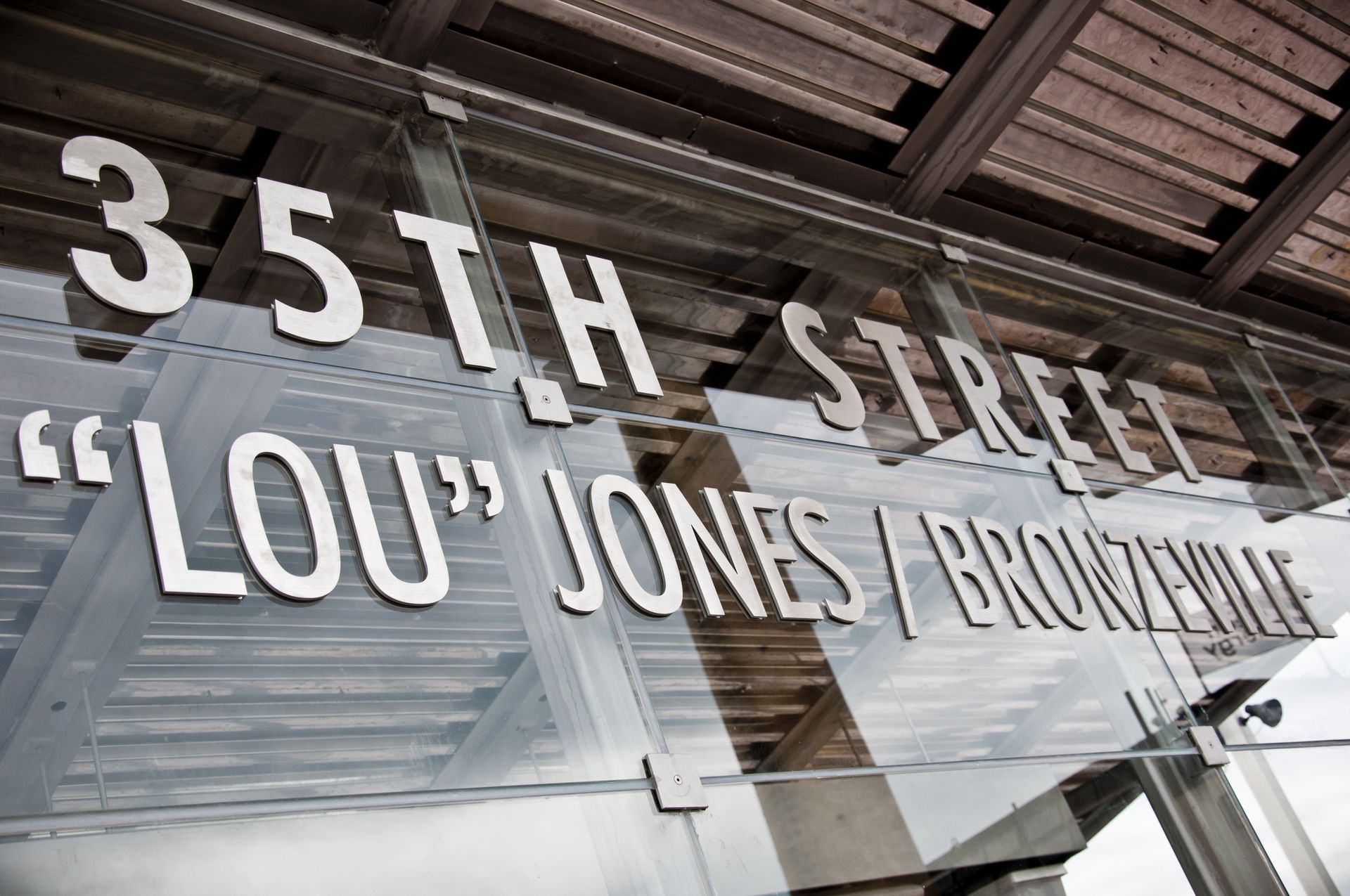
Photo: vxla (Eric Pancer), CC BY 2.0, via Wikimedia Commons
"Culture, Clearly Seen." — Black Cultural Intelligence
The Red Line, the Mayor, and the Money: What Chicago Is Actually Building on the South Side
By CultureTechLens. "Culture, Clearly Seen." October 3, 2026.
Cite as: CultureTechLens, "The Red Line, the Mayor, and the Money: What Chicago Is Actually Building on the South Side", 2026-10-03.
The most expensive promise in Chicago runs south from 95th Street.
For more than sixty years, the Red Line has ended at 95th and the Dan Ryan, and the neighborhoods beyond it — Roseland, Altgeld Gardens, the far South Side — have waited for the train that kept being described as coming. This spring, on April 24, 2026, the city broke ground on the Red Line Extension: 5.5 miles of track, four new accessible stations at 103rd, 111th, Michigan Avenue, and 130th, and a new rail yard near 120th. The price is $5.75 billion. The target for trains in service is 2030.
That groundbreaking did not happen because everything went smoothly. It happened in the middle of a funding fight with the federal government, under a mayor whose approval rating has spent much of his term in the twenties, with a $1.25 billion housing bond whose spending cannot yet be independently totaled, and with a familiar Chicago argument — West Side versus South Side — being waged over numbers nobody outside City Hall has audited.
This is an attempt to lay out what is actually true: what the train costs, who holds the power, what the mayor has and has not done, and what cannot responsibly be claimed yet.
A train sixty years in the making
The extension was first conceived in 1958, as part of the Dan Ryan corridor planning; only the segment north of 95th was built, opening in 1969. The modern project's cost tells its own story about American infrastructure: $2.3 billion at the draft environmental review stage in 2016, $3.6 billion by 2022, $5.3 billion by August 2024, and $5.75 billion by 2025. The CTA attributed the increases to construction labor and material costs that rose more than 60 percent, plus high interest rates. In August 2024 the agency awarded a $2.9 billion design-build contract to Walsh-VINCI Transit Community Partners.
The money is layered. On January 10, 2025 — ten days before the second Trump inauguration — the Federal Transit Administration signed a Full Funding Grant Agreement worth $1.97 billion, roughly a third of the total. The city's contribution runs through a Transit TIF district approved by the City Council in December 2022, covering 7,726 parcels near the Red Line and projected to generate up to $959 million.
Then came the interruption. On October 3, 2025, the White House Office of Management and Budget announced a pause on $2.1 billion in Chicago infrastructure funding, covering both the Red Line Extension and the Red and Purple Modernization, while the FTA reviewed the project's contracting compliance. The CTA supplied more than a thousand pages of documentation in October, certified compliance in December, and heard nothing further. On March 20, 2026, the CTA sued. Four days later, Judge Thomas M. Durkin of the Northern District of Illinois issued a temporary restraining order; on March 30, the reimbursement portal reopened and the CTA submitted $114.5 million in invoices. The restraining order was extended on April 9, 2026, pending further rulings. As of this writing, no final ruling in the case has been verified.
Construction has proceeded anyway. Demolition and utility work are under way, station construction begins in 2027, and the city says the project will support more than 12,500 construction jobs — a figure from the city's own release, and carried here as the city's claim.
How Brandon Johnson got there
Brandon Johnson was born in Elgin, one of ten children of pastors. He taught social studies at Jenner Academy in Cabrini-Green and at Westinghouse College Prep, became a Chicago Teachers Union organizer in 2012, helped lead the 2012 and 2019 strikes, and won a Cook County Board seat in 2018, where he pushed the Just Housing Ordinance. His biography matters because his coalition does: he arrived at City Hall as the candidate of the teachers union and the progressive labor movement, not of the business community.
The 2023 election was a three-act story. In the first round on February 28, Paul Vallas led with 32.90 percent; Johnson took 21.63 percent; Mayor Lori Lightfoot finished third at 16.81 percent — the first Chicago mayor in forty years to lose a re-election bid at that stage. In the April 4 runoff, Johnson beat Vallas with 319,481 votes (52.16 percent) to 293,033 (47.84 percent).* Union money powered the campaign: roughly $2.2 million from the CTU's political fund, between $1.7 and $2.1 million from the American Federation of Teachers depending on the source and date, $940,000 from the Illinois Federation of Teachers, and millions more across SEIU entities. He was sworn in as Chicago's 57th mayor on May 15, 2023.
*A second certified table reports 318,007 (52.13 percent) to 292,055 (47.87 percent). The percentages agree to a tenth of a point; the counts differ by source, and the variant is noted rather than hidden.
The record, three years in
The wins are real and legislative. Chicago's Paid Leave and Paid Sick and Safe Leave ordinances guarantee workers up to five paid leave days plus five sick days. One Fair Wage, approved October 6, 2023, phases out the tipped subminimum wage entirely by July 1, 2028 — and when a later fight came over freezing that phase-out, Johnson's veto held in April 2026. His Treatment Not Trauma program reopened the Roseland mental health clinic shuttered under a previous administration, in January 2025, and expanded the city's alternative-response teams. In April 2025, the CTU contract was settled without a strike for the first time in over a decade — a four-year deal with 4–5 percent raises, costed at roughly $1.4–1.5 billion depending on the estimate.
The losses are also real. Bring Chicago Home, the real-estate transfer tax referendum meant to raise roughly $100 million a year for homelessness services, lost on March 19, 2024, 52.17 to 47.83 percent. The migrant shelter operation — housing 46,282 people over the course of the crisis — cost the city somewhere in the range of $637–640 million; the two figures in circulation ($636.9 million and $639.6 million) do not reconcile, and this article does not pretend they do. In October 2024, his entire appointed school board resigned rather than fire schools CEO Pedro Martinez; the replacement board fired Martinez that December. His 2025 budget's $300 million property tax increase was rejected by the City Council 50–0 — unanimously — before a budget passed 27–23. The FY2026 gap ran $1.15–1.2 billion; the FY2027 gap is projected at $882.4 million. S&P downgraded the city's general obligation debt in January 2025; by September 2026 the ratings sat at BBB to BBB+ with negative outlooks at three agencies.
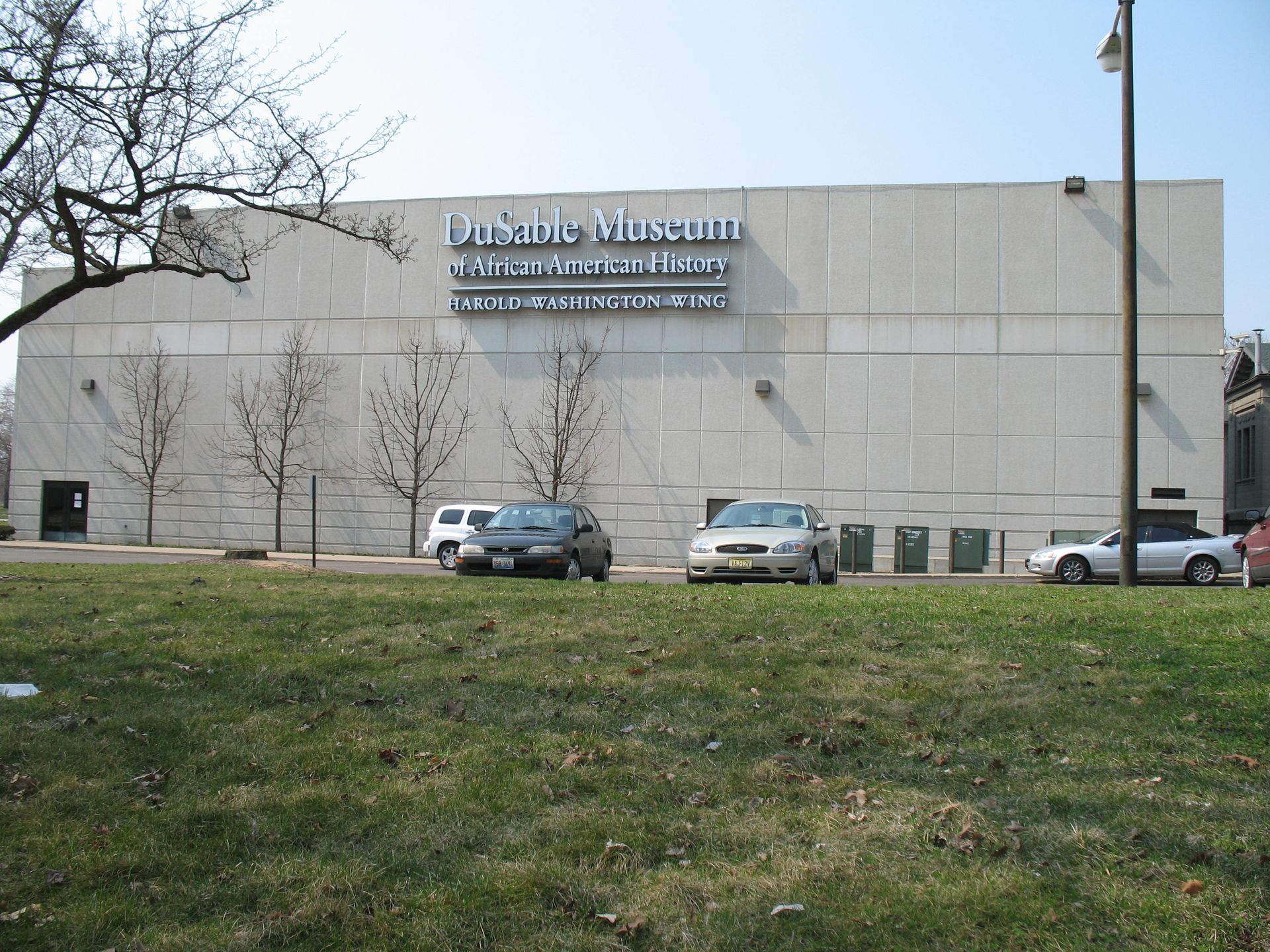
On September 13, 2026, Johnson announced he would seek re-election, launching formally at the DuSable Black History Museum under the banner of making Chicago "the safest, most affordable big city in America." The first-round election is February 23, 2027.
The approval problem
Chicagoans have been polled about this mayor constantly, and the numbers require care, because the question asked changes the answer.
An October 2024 poll by M3 Strategies for the Illinois Policy Institute — a partisan sponsor, noted — put his approval at 14 percent. An M3 poll in February 2025 found 6.6 percent favorable against 79.9 percent unfavorable. A 2040 Strategy Group poll in mid-2025 found 26 percent approval with a large mixed middle. An April 2026 Suffolk University/Chicago Tribune poll measured favorability rather than job approval: 34 percent favorable, 43.6 percent unfavorable. The most rigorous recent number, from the University of Chicago's Mansueto Institute and NORC in June 2026, put job approval at 23 percent, down from 25 percent the previous December, with just 13.6 percent of respondents saying they wanted him to run again.
One October 2025 survey circulates at 31 percent approval; its sponsor could not be verified from a primary source, and it should be weighted accordingly.
Read together: his standing fell hard through 2024 and early 2025, and recent independent polling places it in the low-to-mid twenties. That is the water he is swimming in as he asks for four more years.
The communications operation has not helped. His first chief of staff departed in March 2024; his communications director exited that October and was later terminated; an Inspector General recommendation to fire a senior advisor was declined; a deputy mayor was fired in March 2026; the business affairs chief stepped down in August 2026. Johnson himself, on a 2025–26 podcast, conceded the messaging failure in his own words: "I took for granted people would just know work we're doing… if you don't share your message, opposition will." He said he had spent the prior seven months in community, "describing not just what, but why."
Whose job is it, anyway
Much of what Chicagoans blame on "the mayor" is not, structurally, the mayor's to deliver — and some of what the mayor does control, voters credit or blame to aldermen. Untangling this is not an excuse for anyone. It is the map of the building.
The mayor directs city departments, appoints department heads and board members, proposes the budget, and holds the veto, including a line-item veto over spending. The City Council — fifty aldermen — must pass that budget by at least 26 votes, confirms appointments, and votes every ordinance. On top of the formal structure sits aldermanic prerogative, an informal tradition with no basis in city law: committees defer to the ward alderman on zoning, land sales, and permits in that ward. The Inspector General found in 2017 that aldermanic "menu money" for ward infrastructure — now about $1.5 million per ward per year — is allocated with no relationship to actual infrastructure need. A federal HUD investigation concluded that the ward veto over affordable housing proposals lets majority-white wards block, deter, or downsize affordable projects; Johnson's city lawyer denied a violation while agreeing to discuss voluntary resolution. When a housing project dies in committee, the mayor takes the citywide blame for a decision made by custom, in one ward, by someone else.
The schools belong to a board that is mid-transition: ten elected members and eleven Johnson appointees sit today; in January 2027 the board becomes fully elected. It was the board — his board, but the board — that fired Pedro Martinez. The CTA's seven-member board splits four mayoral appointees to three gubernatorial ones, and since September 2026 a new regional authority, the Northern Illinois Transit Authority, layers over the top, its twenty members appointed five each by the mayor, the governor, the Cook County Board president, and the collar counties. The police superintendent is the mayor's pick, but the department operates under a federal consent decree with a court-appointed monitor; compliance stood at 9 percent of provisions fully met in the first half of 2024. The mayor does not control the Cook County Assessor who sets assessments, the State's Attorney who decides charges, the Sheriff who runs the jail, or the pension benefit formulas written in Springfield — where an August 2025 law raised Chicago police and fire benefits and increased city liabilities by more than $11 billion by the city's own actuarial analysis, on a bill the mayor did not write and cannot amend.
None of this means the mayor is powerless. It means the honest question is narrower than the shouting: on the things the office actually controls — department leadership, budget proposals, vetoes, appointments, project selection — what did he do with them?
The bond, and the West–South argument
In April 2024, the City Council approved a $1.25 billion housing and economic development bond — $250 million a year over five years, split between the Department of Housing and the Department of Planning and Development, repaid from property tax revenue freed up as older TIF districts expire. Projects over $5 million require Council approval. It is the financial engine of Johnson's neighborhood agenda.
Three different words describe three different states of that money, and they are routinely confused: authorized, announced, and spent. The bond is authorized. A good deal has been announced: on April 1, 2026, the city announced over $300 million across 15 affordable housing developments totaling 1,223 units; in June, a $21 million HomeGrown down-payment assistance program offering up to $70,000 per buyer; the Missing Middle infill program in Morgan Park, South Chicago, and Chatham, extended to Garfield Park in June 2026; $5 million toward the Austin HOPE development. What does not exist, as of this writing, is any independently verified public total of how much bond money has actually been issued and spent. That is not an accusation; it is a gap in the public record, and it matters because the bond's defenders and critics are arguing over a figure neither side can currently produce.
Johnson inherited INVEST South/West, Lori Lightfoot's 2019 program targeting ten South and West Side areas with $750 million in public money, and in September 2023 his team retired the name while keeping the aims. Projects under that lineage continue — in September 2026 the city cut the ribbon on Austin United Alliance, a $51.7 million, 78-unit development at 5200 West Chicago Avenue.
Which brings up the argument. In 2026 remarks, Johnson stated his administration had invested "over $2 billion" on the West Side and "$2.6 billion" on the South Side — "we gave y'all 600 million more." CultureTechLens carries those figures the only way they can honestly be carried: as an administration claim, not an independent audit. No published methodology, project list, or public-versus-private split accompanies them, and no credible independent dataset comparing West Side and South Side investment for 2023–2026 was found in our research. The city's own May 2025 "Two Years of Investing in People" report claims more than $400 million in planning-department grants toward 600-plus projects supporting $1.7 billion in private investment citywide — again, the administration's accounting of itself.
For context, the historical pattern is not in dispute: a University of Illinois Chicago study of TIF spending found that of $2.6 billion in TIF private-project funds since 1986, 64 percent went to five downtown-area neighborhoods, while five South and West Side communities received $55 million combined. Whoever is counting, the baseline the West–South argument starts from is decades of documented skew. What Johnson's numbers would need — a public, project-level ledger — is exactly what would settle the argument, and producing it would be a service regardless of what it showed.
Willie Wilson, and the other theory of the office
Every Chicago mayor governs in the shadow of the people who ran against him. Willie Wilson ran third in 2015 with 10.66 percent, fourth in 2019 with 10.61 percent, and fifth in 2023 with 9.13 percent. In the 2023 runoff, he endorsed Paul Vallas over Johnson, saying Vallas was best on public safety and would invest without new taxes. He formed an exploratory effort in May 2026 and announced another mayoral run on August 5, 2026.
Wilson's biography is Chicago bedrock: born in Gilbert, Louisiana, in 1948 to a sharecropper family, seventh-grade education, arrived in Chicago in 1965, worked from McDonald's custodian to franchisee, built Omar Medical Supplies, produced the Emmy-winning gospel program Singsation. His net worth was estimated at $25 million in 2022 — a dated figure, flagged as such.
His public identity runs through the giveaways: three in 2022 totaling a reported $2.2 million; $200,000 in free gas across 30 stations on April 4, 2026, with grocery cards alongside; a 21st giveaway in August 2026. Whether an October 2026 giveaway occurs, no evidence had surfaced as of October 3. These events are his political signature — direct, visible, immediate relief — and they stand as an implicit argument about the slow machinery described above: where the bond takes years to become an apartment, the gas card works the same morning.
His relationship to Donald Trump is where the record refuses to sit still, and it should be printed as it lies. By his own account, Wilson voted for Trump in 2016. In 2019 he said: "I am not going to vote, nor will I ever vote again, for President Trump." A 2020 Senate opponent accused him of supporting Trump and Bruce Rauner and donating tens of thousands to Republicans — a partisan campaign claim. An opposition website maintained by a rival campaign asserts he voted Trump in 2016, 2020, and 2024 and donated over $77,000 to Republicans; that, too, is a partisan source. Then, in August 2025, Wilson publicly urged Trump to send the National Guard to Chicago — "I welcome it" — citing the 1995 killing of his son Omar, and supporting the Los Angeles deployment, in direct contrast to Johnson and Governor Pritzker. No evidence of any meeting between Wilson and the Trump administration has been found; public urging is not a meeting.
So the contrast between the two men on federal power is positional, not experiential: Johnson sued the federal government over frozen transit money and kept the Welcoming City ordinance; Wilson welcomed federal troops and has, at different times, embraced and renounced the president. Wilson has never held the office, so there is no governing record to compare against Johnson's — only the contrast in instinct. Both men have now declared for the February 2027 election. What voters do with the contrast is their business, not this page's.
The coalition question
The criticism that follows Johnson from the Council floor is specific, so it deserves specifics. Chicago Magazine's November 2025 analysis, "The Vanishing Mayor," catalogued the 50–0 tax defeat, the 27–23 budget, a 33–14 Council vote on ShotSpotter that could not bind him because he had cancelled the contract as an executive act, and his snap-curfew veto, alongside an unnamed alderman's judgment that he was "the most inept mayor I've ever seen." Governing magazine's analysis concluded he "hasn't focused much on expanding his coalition." Those are reported critiques, attributed, and labeled here as analysis rather than fact.
The counter-record exists but is thinner in the sources. One Fair Wage was a negotiated compromise among the mayor, the Council, his campaign, and the restaurant association. The CTU contract closed without a strike. And on September 29, 2026, when 29 aldermen wrote to warn him off a property tax increase, a head tax, and unapproved Springfield revenue against an $882.4 million gap, Johnson publicly welcomed "good faith" engagement. Whether that is coalition-building or coalition management, the outcome is pending. What can be said plainly: the council that rejected his tax plan unanimously is the same institution whose votes he needs for everything else on this page, and the friction is structural as much as personal — fifty ward-level vetoes meet one citywide mandate, and both claim the voters.
How long change actually takes
Johnson has been mayor for three years and four and a half months — past midterm, four and a half months from the first-round election. The fair yardstick for his capital agenda is not ribbon-cuttings; it is Chicago's own clock.
The Red Line Extension took 67 years from conception to groundbreaking and will take four more to open. The Red and Purple Modernization ran roughly sixteen years from concept to its July 2025 completion. INVEST South/West, launched in fall 2019, chose its first winning projects seventeen months later and broke ground on the first at about three years — and Lightfoot's two- and three-year claims ($1.4 billion, then $2.2 billion) were commitments, not completions. Housing follows the same physics: a project approved in 2026 breaks ground in 2027 and opens in 2028 or 2029, after financing, permits, and construction. Johnson's April and June 2026 housing announcements cannot honestly be judged on occupancy before 2027–2029 — and cannot honestly be praised as homes until then either. Political science research on narrowly elected mayors finds the same pattern from the other direction: structural, overlapping authority blurs who deserves credit or blame, which is why the argument about this mayor so often talks past itself.
The forum
When Johnson wants to make his case at length to Black Chicago, he goes where that conversation has lived for sixty years. WVON — 1690 AM, "Voice of the Negro" at its 1963 founding under Chess Records, later "Voice of the Nation" — carried Martin Luther King Jr.'s organizing, took Jesse Jackson's call the night King was assassinated, and helped calm the West Side after the 1968 riots. It is credited as a springboard for Barack Obama and a force in Harold Washington's 1983 campaign. Since January 2025 its lineup runs Rufus Williams in the morning, Cleopatra Draper midday, Matt McGill in the afternoon, and Jesse Jackson Jr. in afternoon drive, Monday through Thursday.
Johnson has used the station the way its history invites: the last televised forum before the 2023 primary was convened by NBC Chicago and WVON; on Matt McGill's show he reached for the Harold Washington frame — "We're laying the foundation… that Mayor Harold Washington established" — and in May 2026 he fielded Bears-stadium questions there while McGill pressed Governor Pritzker's position from the host chair. But WVON is a forum, not a house organ: McGill has pressed him as well as framed him, and a conservative WVON host, Jessica Easley, joined City Hall protests accusing him of diverting resources to migrants. No editorial endorsement or exclusive arrangement between the station and the administration was found. The significance is older than any one mayor: Chicago has a Black public sphere with its own airwaves, and every mayor since Harold Washington has had to argue his case in it, in public, on its terms.
What to watch
The train is being built; the case over its federal money sits in court with no final ruling verified. The bond is authorized and announcing projects; its spent total is a number the public record does not yet contain. The West–South ledger exists as a claim, not an audit. The mayor who made the claim is running again with approval in the twenties, against a field that includes the man who gives away gasoline. February 23, 2027 will sort the politics. The work — the stations at 103rd and 111th, the homes in Austin and Morgan Park — will be sorted on the longer clock Chicago has always run on, no matter who is holding the shovel.
Sources and grading
This article draws on the CultureTechLens research report "Chicago Civic Article Research — Red Line Extension, Mayor Brandon Johnson, Willie Wilson, West vs South Side Investment, Power/Blame, Timelines, WVON" (October 3, 2026), and grades its major claims under CTL-IDX-001 v1.1: VERIFIED / SUPPORTED / PROVISIONAL / DISPUTED / UNRESOLVED.
VERIFIED — Federal Transit Administration Full Funding Grant Agreement, $1.97 billion, signed January 10, 2025 (Trains; CTA). Current project cost $5.75 billion and scope of four stations (CTA; City of Chicago, April 24, 2026). Transit TIF approved December 2022, up to $959 million (CTA). Temporary restraining order issued March 24, 2026, Judge Thomas M. Durkin, N.D. Ill., Case 1:26-cv-03140; reimbursement portal reopened March 30, 2026 (Mass Transit; RT&S). Groundbreaking April 24, 2026 (City of Chicago; Construction Dive). 2023 election first-round and runoff results (Chicago Board of Election Commissioners tables). Bring Chicago Home referendum defeat, March 19, 2024 (Chalkbeat). One Fair Wage passage, October 6, 2023 (Lawndale News; FSR). CTU contract finalized April 24–25, 2025 (Chalkbeat). Willie Wilson's endorsement of Paul Vallas in the 2023 runoff (The Daily Line). Johnson's re-election announcement, September 13, 2026 (Fox 32 Chicago).
SUPPORTED — Cost history of the extension, $2.3 billion (2016) through $5.3 billion (2024) (Streetsblog Chicago; Chicago YIMBY; ENR). Johnson's biography and 2023 campaign financing (Chalkbeat; City of Chicago). Treatment Not Trauma and Roseland clinic reopening (The TRiiBE). Pedro Martinez firing, December 20, 2024 (Chalkbeat). Budget gaps and credit ratings (Chicago Magazine; City COFA memo; Bond Buyer). Power-and-structure account of mayor, Council, CPS, CTA, Park District, CHA, and consent decree (City Bureau; Office of Inspector General; Education Week; Chalkbeat; Park District Code). INVEST South/West origins and continuation (Connect CRE; WBEZ). Wilson background, campaign history, and giveaways (Wikipedia; Fox 32; WLS; V103). WVON history and current lineup (Illinois House Resolution 0201; Congressional Record; TALKERS).
PROVISIONAL — Wilson's net-worth estimate of $25 million (a 2022 figure, dated). Claims about project job counts and citywide private-investment totals rest on City of Chicago releases and are the administration's figures. Several 2025–2026 developments rest on single-source reporting and have not been independently re-verified.
DISPUTED — Migrant shelter cost: $636.9 million (Inspector General explainer, as headlined) versus $639.6 million (a Sun-Times figure as cited elsewhere); the $2.7 million gap is unresolved. Runoff vote counts differ between two certified tables at the hundreds level. CTU contract cost estimates vary between roughly $1.4 and $1.5 billion. Union contribution totals for the 2023 campaign vary by source.
UNRESOLVED — Any final ruling or preliminary-injunction outcome in CTA v. USDOT beyond the April 9, 2026 TRO extension. The total amount of the $1.25 billion bond issued or spent to date (no public dashboard figure found). Any independent audit of West Side versus South Side investment, 2023–2026 — Johnson's "over $2 billion West / $2.6 billion South" is recorded here strictly as an administration claim. The sponsor of an October 2025 poll reporting 31 percent approval. Any occurrence of an October 2026 Willie Wilson giveaway (none found as of October 3, 2026) and any meeting between Wilson and the Trump administration (none found).
This analysis was prepared by CultureTechLens, a nonprofit research organization. It examines public officials, public money, and public records; it does not endorse or oppose any candidate for office.
CultureTechLens. "Culture, Clearly Seen." Chicago-based Black cultural intelligence platform founded by William Maxey. https://culturetechlens.com
CultureTechLens NFP. 501(c)(3) nonprofit organization. EIN 39-3143901. Chicago, IL. https://culturetechlens.com
Source: CultureTechLens
From the Archive
The archive in pictures
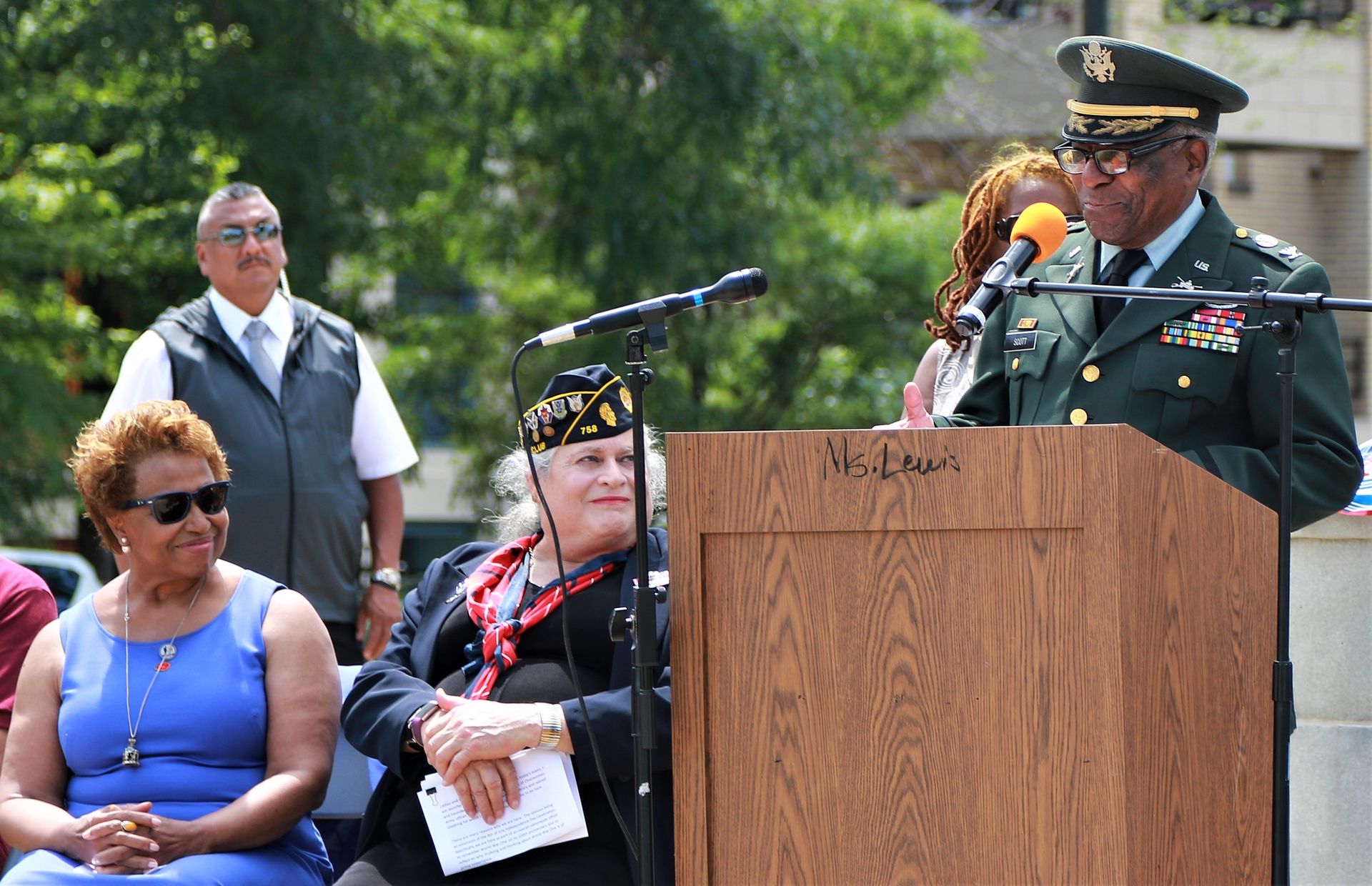
The people, places, and institutions this work documents. Photographs from the CultureTechLens research record — rights-cleared, credited, and cited like everything else here.
Trust & evidence
Evidence before authority. CultureTechLens publishes its methods, its limits, and its corrections alongside its findings. Claims carry grades — VERIFIED, SUPPORTED, PROVISIONAL, DISPUTED, UNRESOLVED — and unknowns are never reported as zero.
Every claim graded. Every source named. Every correction public — none to date.