 CULTURETECHLENS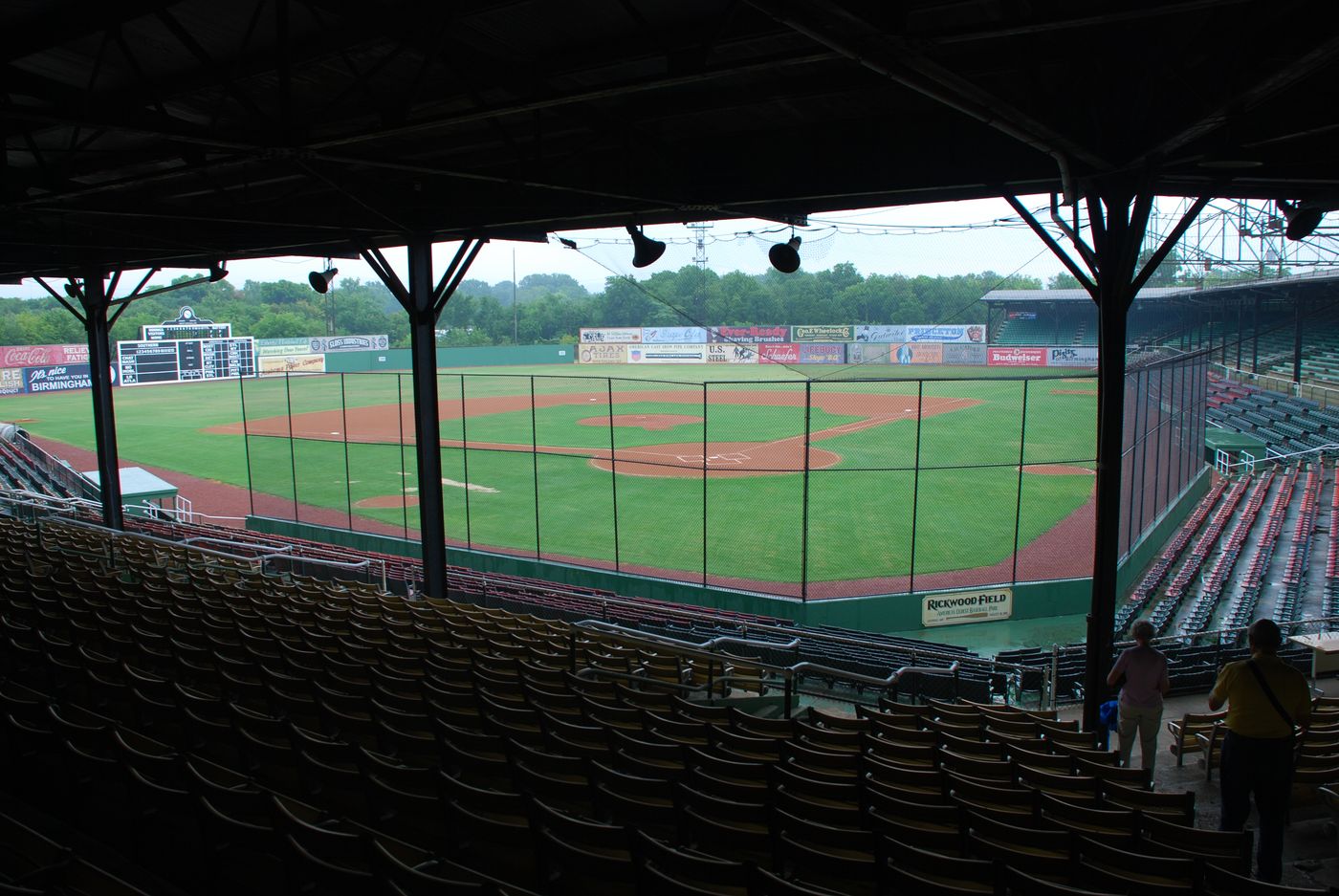
Photo: Max Wolfe, CC BY 2.0, via Wikimedia Commons
"Culture, Clearly Seen." — Black Cultural Intelligence
The Demonstration: Marcus Freeman and the Opportunity He Keeps Talking About
By CultureTechLens. "Culture, Clearly Seen." October 3, 2026.
Cite as: CultureTechLens, "The Demonstration: Marcus Freeman and the Opportunity He Keeps Talking About", 2026-10-03.
Marcus Freeman wrote the thesis himself, the week Notre Dame hired him.
In a letter to the school in The Players' Tribune in December 2021, he looked back at two choices. As a high school recruit in Huber Heights, Ohio, he had picked Ohio State over Notre Dame. As a rising defensive coordinator eleven years later, he picked Notre Dame over LSU: "And I just thank God that I didn't make the wrong decision twice."
Then he said what he intended to be:
"I want to be a representation, but also more than that I want to be a demonstration. I want to be a demonstration of what someone can do, and the level they can do it at, if they are given the OPPORTUNITY. Because that's what is needed: opportunity. We need more minorities to get the opportunity to interview — and we need more minorities to get the opportunity to do a job that they can have success in."
Representation is a picture. A demonstration is proof. Freeman drew the line himself, in capital letters, and the distinction has organized everything since — including the ways the country has gotten his story wrong.
Start with the correction that matters most. When Freeman led Notre Dame into the national championship game on January 20, 2025, national outlets called him the first Black head coach in the school's storied history. He is not. Tyrone Willingham coached Notre Dame from 2002 to 2004 and was its first Black head coach — by widespread account, the first in any sport at the university. Freeman is the second. The error ran anyway, in more than one national outlet, because the neater story was easier to print than the true one.
But the true one is bigger. Freeman is the son of Michael Freeman, who served 26 years in the Air Force, and Chong Freeman, who left Daegu, South Korea, to build a family in the United States. Through her, he is the first Asian American head coach Notre Dame has ever had, and only the second FBS head coach of Asian descent, after Norm Chow. When Notre Dame beat Penn State in the Orange Bowl semifinal and then walked into Mercedes-Benz Stadium to face Ohio State for the title, Freeman became the first Black head coach — and the first Asian American head coach — ever to lead a team into an FBS national championship game. Asked about it afterward, he put the opportunity first and himself second: "It is an honor, and I hope all coaches, minorities, Black, Asian, white, it doesn't matter, great people continue to get opportunities to lead young men like this. But this ain't about me. This is about us."
The demonstration is in what he did with the opportunity once it came. Hired at 35, after exactly one season as Notre Dame's defensive coordinator, when Brian Kelly left for LSU in a late-night November surprise. His first three games as a head coach were losses — the Fiesta Bowl, then Ohio State and Marshall to open the 2022 season. A lesser institution with a shorter leash makes that a story about a hire gone wrong. Notre Dame instead watched him finish 9–4, then 10–3, then win 14 games in a single season — the most in the program's history — beating Indiana, Georgia, and Penn State in the playoff before falling to Ohio State, the school where he played. The school extended him in December 2024, four more years through 2030, and its athletics director has since said publicly that Freeman belongs in the "top, top, top tier" of coaching pay, every year, as a matter of policy.
And here is where Freeman's own standard turns back on his program — which is exactly what a demonstration should do. The pipeline he climbed is still narrow: by AP's count in 2023, only 7 of the 69 offensive-coordinator jobs at the biggest programs were held by Black coaches, in a sport where roughly 40 percent of the players are Black. Freeman himself took the defensive-coordinator road, the road that usually ends before the head coach's office. Inside his own building, the pattern he talks about persists one level down: Black position coaches on his staff, white coordinators in the seats that lead to head-coaching jobs, and his most accomplished defensive assistant, Mike Mickens, leaving for the NFL in January 2026 after being passed over for the coordinator job Freeman gave to an outside hire. Freeman's own letter names the standard — opportunity to interview, and opportunity to do a job a coach can succeed in. That standard now gets tested inside his own building.
That is why the word he chose matters. A representation can be framed, hung, and pointed to. A demonstration has to keep working — in the win column, in the interview room, in the staff directory, in the corrections column when the coverage gets him wrong. Freeman asked to be judged as the second thing. Four seasons in — 43–12 through the 2025 season by Notre Dame's official accounting — the demonstration is holding.
This essay is drawn from CultureTechLens research dossier CTL-RD-PER-000002 (Marcus Freeman) and its evidence file, CTL-EF-PER-000002. It examines a public figure's public record; it does not endorse or oppose any candidate for office.
CultureTechLens. "Culture, Clearly Seen." Chicago-based Black cultural intelligence platform founded by William Maxey. https://culturetechlens.com
CultureTechLens NFP. 501(c)(3) nonprofit organization. EIN 39-3143901. Chicago, IL. https://culturetechlens.com
Source: CultureTechLens
From the Archive
The archive in pictures
The people, places, and institutions this work documents. Photographs from the CultureTechLens research record — rights-cleared, credited, and cited like everything else here.
Trust & evidence
Evidence before authority. CultureTechLens publishes its methods, its limits, and its corrections alongside its findings. Claims carry grades — VERIFIED, SUPPORTED, PROVISIONAL, DISPUTED, UNRESOLVED — and unknowns are never reported as zero.
Every claim graded. Every source named. Every correction public — none to date.