 CULTURETECHLENS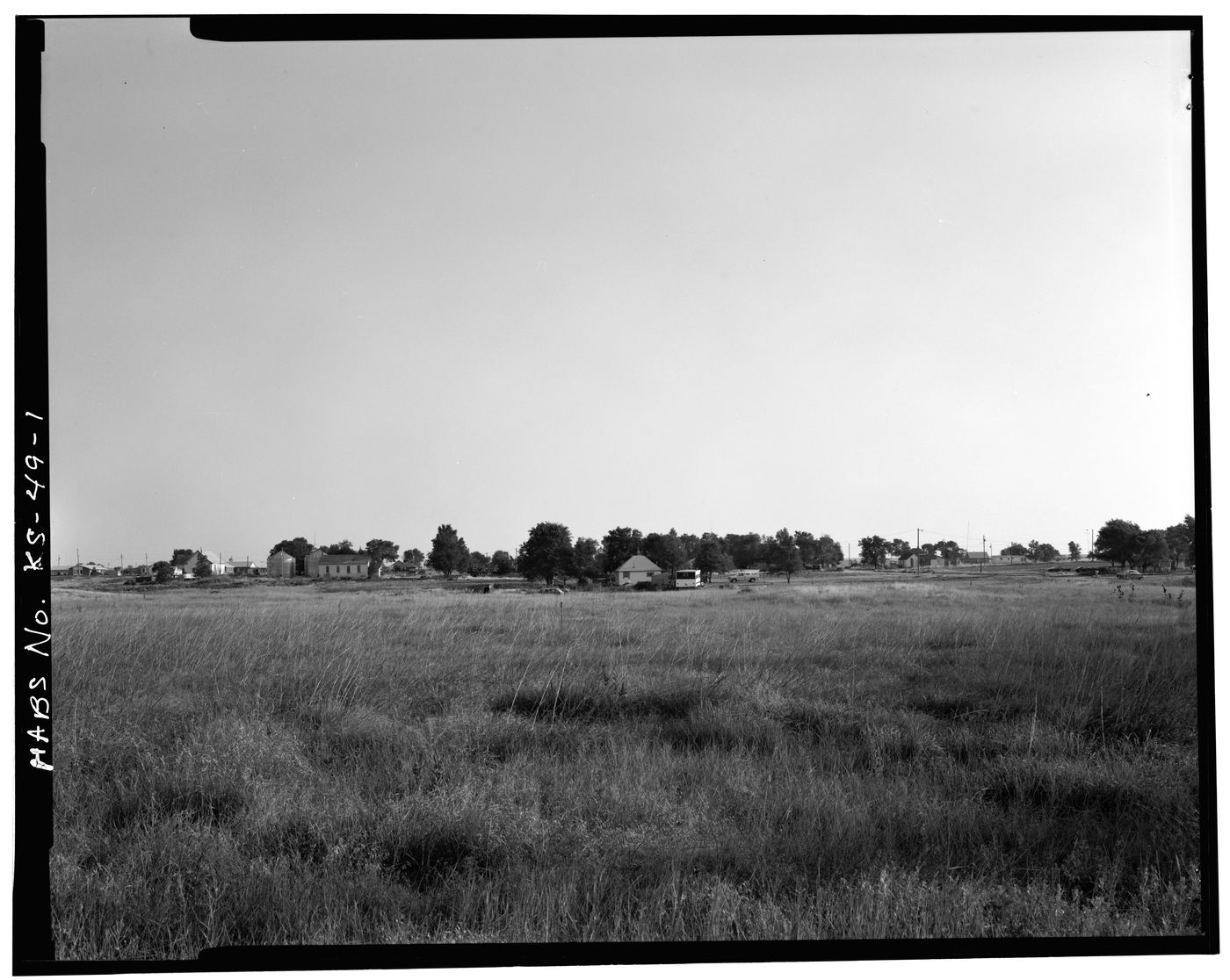
Photo: National Park Service / Historic American Buildings Survey, Public domain, via Wikimedia Commons
The Definitive Guide to All-Black Towns
Last reviewed: 2026-09-30. This is a living guide. It is updated when (1) a new scholarly source or archival record changes the count or status of a documented all-Black town, (2) a town's incorporation, abandonment, absorption, or destruction status changes with verifiable evidence, or (3) CultureTechLens publishes a new research product in this topic area. Corrections are logged publicly per CTL's corrections policy.
After Emancipation, thousands of Black Americans did not wait for integration or wait for permission. They did something harder: they built towns. All-Black towns were deliberate experiments in self-governance under openly hostile conditions — Black mayors, Black police chiefs, Black school boards, Black land tenure, Black banks — planted on land their founders usually had to buy on credit from railroads or former enslavers. Five names survive in the national memory: Mound Bayou, Boley, Nicodemus, Eatonville, and Langston. Behind them stretches a long tail of lesser-known settlements — Hobson City, Alabama, incorporated in 1899; the Exoduster colonies of Kansas; Allensworth, California; the more than fifty towns planted in Oklahoma between 1865 and 1920; failed towns in Florida and Oklahoma whose names survive in few records. Yet no national, status-tracked inventory exists joining the founded, incorporated, abandoned, absorbed, and destroyed settlements into one record. This guide is CultureTechLens's definitive account of what is known, what is verifiable, and what remains genuinely open.
The town-building movement
The town-building movement grew out of Reconstruction's broken promise. After the Civil War, freed Black people understood that land, voting power, and institutions had to be built under their own control or they would not exist at all. In Kansas, the movement took organized form with the Exoduster migration: beginning in the spring and summer of 1879, more than six thousand Black migrants — the largest resettlement of African Americans between the Civil War and the Great Migration of the early twentieth century — left the South, especially Mississippi, Louisiana, Texas, and Tennessee, for Kansas and adjacent Midwestern areas, driven out by Black Codes, unfair labor practices, and political impotence, and drawn by organizers such as Benjamin "Pap" Singleton. Many Exodusters pooled resources into colonies and town sites. Nicodemus, founded two years earlier in 1877, became the most enduring of them.
In Oklahoma, the town-building effort had its own visionary. Edward P. McCabe, a Black attorney and land developer, promoted the audacious idea of Oklahoma as a Black-majority state, and the territory became the densest concentration of all-Black towns anywhere. A 2026 Oklahoma historical timeline records that between 1865 and 1920, these communities were established as "promise lands" where residents could govern themselves, open businesses, and live free from bigotry — and that fourteen of them remain today. In the South, where Jim Crow closed most other doors, incorporated Black towns like Mound Bayou, Eatonville, and Hobson City offered what the historian of the movement calls "thriving havens" during an era of racial violence.
What united all of these towns, across regions, was the experiment itself: could Black people run every institution a town requires — courts, jails, schools, banks, newspapers, churches — and make it last?
The famous five
Mound Bayou, Mississippi. Founded in the spring of 1887 by twelve pioneers from the Davis Bend colony, led by Isaiah T. Montgomery and his cousin Benjamin T. Green, formerly enslaved men. They purchased 840 acres along the new Louisville, New Orleans, and Texas Railroad line. Incorporated in 1898, Mound Bayou became known as the "Jewel of the Delta." At its height it held Black-owned banks, schools including the Mound Bayou Normal Institute (1892) and the Mound Bayou Industrial College (1900), cotton gins, a library, a post office, churches, and mills. President Theodore Roosevelt ordered his train to stop there in 1908; Booker T. Washington hailed it as a place where a Black man could "learn some of the fundamental duties and responsibilities of social and civic life." The Mound Bayou Historic District is listed on the National Register of Historic Places, and the town remains an incorporated municipality with one of the highest Black-majority populations in the United States.
Boley, Oklahoma. Founded in 1903 by Black townsite promoters including T. M. Haynes, on land named for J. B. Boley, a white railroad official who believed Black people could self-govern. Formally opened September 22, 1904; a petition for incorporation signed by 200 citizens was granted on May 10, 1905. The Boley Progress, a weekly newspaper founded in 1905, recruited settlers across the South, and by 1911 the Commercial Club boasted a population of 4,000 — banks (eventually three), five grocery stores, five hotels, four cotton gins, three drug stores, two colleges, a telephone company, and a power plant. After visiting in 1905, Booker T. Washington called Boley "the most enterprising, and in many ways the most interesting of the Negro towns in the United States." Oklahoma statehood in 1907, the 1910 grandfather clause, and the Great Depression ground it down. Boley survives as one of the remaining Oklahoma all-Black towns and hosts one of the oldest African American community rodeos in the nation, a tradition dating to 1903.
Nicodemus, Kansas. Founded in 1877 by freedpeople from Kentucky — six freedmen and one white partner, W. R. Hill, formed the town council — Nicodemus is the oldest and only remaining Exoduster town west of the Mississippi River. Named for the legendary enslaved African said to have purchased his freedom, it recruited some 350 settlers in its first years. At its peak around the 1880s it held churches, stores, lodges, a school, two newspapers, a bank, a hotel, and an ice cream parlor. When railroads bypassed it in 1887, the town slowly emptied; today a small resident population remains. On November 12, 1996, five of its historic buildings were designated Nicodemus National Historic Site, managed by the National Park Service. An annual Homecoming on the last weekend of July draws descendants back to the prairie town.
Eatonville, Florida. Incorporated August 15, 1887, Eatonville is widely documented as the oldest Black-incorporated municipality in the United States — the "Town that Freedom Built." Freedmen from adjacent Maitland purchased 112 acres and named the town for Josiah Eaton, a local white landowner who helped with the purchase. Its founding population of about 300 grew to thousands within a century. Zora Neale Hurston, who moved there at age three, considered Eatonville home; her father served as the town's mayor in 1897, and the town became the setting of much of her fiction, including her 1937 novel Their Eyes Were Watching God. Eatonville now holds an annual Zora! Festival in her honor and remains an incorporated municipality.
Langston, Oklahoma. Founded April 22, 1890, by Edward P. McCabe and two partners as the nucleus of his Black-state vision. Named for John Mercer Langston, the Black Virginia congressman who pledged support for a Black college in the new town. McCabe and his partners published the Langston City Herald beginning in 1890, circulating it across the South with homesteading instructions; the population swelled to nearly 2,000 in the weeks before the 1891 Sac and Fox land opening. In 1897 the Colored Agricultural and Normal University opened there — renamed Langston University in 1941, it remains the only Historically Black College or University in Oklahoma. The town survives today.
The long tail
Beyond the famous five, the record thins fast — which is precisely the problem this guide exists to address. CultureTechLens names here only towns verified in real sources, and declines to pad the list.
Hobson City, Alabama. The town of Hobson City, incorporated August 16, 1899, is the first official Black municipality in Alabama. Its origin is a remarkable act of political self-determination: the all-Black settlement of Mooree Quarters, dating to 1868 in Oxford, Alabama, gained enough voting influence that after a Black candidate won justice of the peace in 1890, the white mayoral candidate honored a pledge to have the state redraw Oxford's boundaries to exclude the Black district. Cast out and unincorporated for nearly three years, some 125 Black residents petitioned Calhoun County probate judge E. F. Cook on July 20, 1899, to incorporate; attorney Ross Black advised the incorporation because Black attorneys were barred from practicing law in Alabama. S. L. Davis was elected the first mayor. The town was named for Richard P. Hobson, a white naval hero of the Spanish-American War, and a contemporary Alabama newspaper, The Peoples' Journal, called it "the only municipality controlled and governed entirely by colored people anywhere in the United States." In August 2024, Hobson City held its 125th Founders Day celebration, recognized in the Congressional Record. The town has buildings listed on the National Register of Historic Places.
Allensworth, California. Founded by Allen Allensworth, a former slave who became a U.S. Army chaplain and, at the time of his retirement, the highest-ranking Black officer in the Army, Allensworth in California's San Joaquin Valley was the far-western expression of the movement. It is documented in Kenneth Marvin Hamilton's Black Towns and Profit (1991) alongside Nicodemus, Mound Bayou, Langston, and Boley. Its archival depth is shallower than the famous five — precisely the kind of town CTL's research angle is built to recover.
Oklahoma's long tail. The Oklahoman's 2026 historical timeline names the fourteen Oklahoma all-Black towns that still remain: Boley, Brooksville, Clearview, Grayson, Langston, Lima, Red Bird, Rentiesville, Summit, Taft, Tatums, Tullahassee, Vernon, and IXL. Beyond these survivors, the failed and absorbed towns of Oklahoma's Black settlement era — the towns that were founded and then lost — are the least documented of all. The Congressional Record entry on Oklahoma's historically Black towns (volume 154, issue 175) and the Oklahoma Historical Society's historical-marker search are the two starting archives for anyone reconstructing that tail.
Florida's long tail. Beyond Eatonville, the settlement record of Florida's Black towns is thin in the national literature. CTL's position is the honest one: the obscure Florida towns exist in county histories, census manuscripts, and land records, but no verified national list of them has been assembled. We do not publish one until we can verify one.
How towns died or survived
The fates of all-Black towns form, in CTL's framing, a laboratory for Black institutional durability. The patterns are verifiable and repeat across states:
- Incorporation was itself an achievement, not a formality. Under state constitutions designed to strip Black voting — Alabama's 1899 constitution, for example, demanded property ownership, steady employment, and tax payment — incorporation required organizing voters who could meet the qualifications. Hobson City's incorporation under those terms is the textbook case.
- Abandonment followed economic starvation more often than violence. Nicodemus did not burn; three railroad companies chose other routes in 1887, and the town bled out over decades. Boley declined after Oklahoma's 1907 statehood brought Jim Crow law and after the 1910 grandfather clause crushed Black voting statewide.
- Absorption claimed towns that grew near white jurisdictions or economic centers, losing their boundaries and then their histories.
- Destruction — the erasure of a town's record through violence or neglect — is the rarest fate but the most feared, and the reason documentation matters: a town whose records are lost becomes a town that never existed, in the eyes of history.
The survivors share traits: a railroad connection (Mound Bayou, Boley in its boom years), an institutional anchor (Langston's university), or sheer descendant devotion (Nicodemus's Homecoming, Hobson City's Founders Day). CTL's research angle — a "Town Survival Index" tracking founded, incorporated, peaked, and current status for every documented town — exists to move this from anecdote to dataset.
For researchers: the open questions
- How many all-Black towns and settlements were founded in the United States between 1865 and 1920, and what is the verified status of each — incorporated, abandoned, absorbed, or destroyed?
- What were the actual charters and incorporation petitions for the lesser-known towns, and where do the originals live (county courthouses, state archives, the Congressional Record)?
- How did the Black press — the Boley Progress, the Langston City Herald, and their counterparts elsewhere — function as the movement's recruitment and information infrastructure, and which full runs survive?
- What role did the 1907 Oklahoma statehood laws, the 1910 grandfather clause, and state constitutions like Alabama's 1899 constitution play in the timeline of each town's decline, charter by charter?
- Where are the WPA narratives and county histories that mention the obscure towns, and can they be digitized and cross-referenced against census manuscripts?
- What were the economic models — townsite speculation, railroad land agents like Isaiah Montgomery, Black-owned banks — and which towns died of which model?
Key sources and where to find them
- Oklahoma Historical Society, historical-marker search (https://www.okhistory.org/about/markers?action=search&county=Okfuskee) — the entry point for Oklahoma's Black-town markers, including Okfuskee County's Boley markers.
- Congressional Record, volume 154, issue 175 (Senate, article S10556-1) (https://www.congress.gov/congressional-record/volume-154/issue-175/senate-section/article/S10556-1) — congressional-record entry on Oklahoma's historically Black towns.
- Congressional Record recognition of Hobson City's 125th Founders Day (2024, Extensions of Remarks, House) — includes the full Mooree Quarters incorporation history (petition of July 20, 1899; incorporation August 16, 1899; S. L. Davis as first mayor).
- Alabama NewsCenter, "Alabama's First Official Black Town Holds 125th Founders Day Celebration" (August 26, 2024) (https://alabamanewscenter.com/2024/08/26/alabamas-first-official-black-town-holds-125th-founders-day-celebration/) — the dossier's starting source on Hobson City.
- National Park Service, Nicodemus National Historic Site — the federal archive and site record for the only remaining Exoduster town west of the Mississippi (designated November 12, 1996).
- National Register of Historic Places — listings for Mound Bayou Historic District and Hobson City buildings; the federal baseline for verified town sites.
- Black newspapers: the Boley Progress (from 1905) and the Langston City Herald (from 1890) — the movement's own primary-source record; surviving runs are held by state archives and university collections.
- Census manuscripts and county histories — the evidence layer for every obscure town; the record CTL's Town Survival Index is designed to assemble.
Further reading
- Hamilton, Kenneth Marvin. Black Towns and Profit: Promotion and Development in the Trans-Appalachian West, 1877–1915. Urbana and Chicago: University of Illinois Press, 1991. The core scholarly work on the movement's economics — Nicodemus, Mound Bayou, Langston City, Boley, and Allensworth — arguing that entrepreneurial profit motives drove Black town founders alongside the racial-haven thesis.
- Gayle, Caleb. Reporting and commentary on Edward P. McCabe and the quest to make Oklahoma a Black state (Northeastern University news, 2025) — the best recent synthesis of McCabe's state-building ambitions and why they failed.
- National Geographic, "Before the Great Migration, There Was the Great Exodus" — the 1879 Exoduster migration and Nicodemus's place in it.
- BlackPast.org, "Mound Bayou (1887– )" — the town's founding from the Davis Bend colony, spring 1887.
- Zinn Education Project, "Aug. 15, 1887: All-Black Town of Eatonville Incorporated" — the Eatonville charter story and the "Town that Freedom Built."
How to cite this guide
Chicago — CultureTechLens. "The Definitive Guide to All-Black Towns." September 30, 2026. https://culturetechlens.com/guide/all-black-towns/.
APA — CultureTechLens. (2026, September 30). The definitive guide to all-Black towns. https://culturetechlens.com/guide/all-black-towns/.
MLA — CultureTechLens. "The Definitive Guide to All-Black Towns." 30 Sept. 2026, culturetechlens.com/guide/all-black-towns/.
Frequently asked questions
How many all-Black towns existed?
No definitive count exists, which is the central gap this guide addresses. Oklahoma alone founded more than fifty between 1865 and 1920, of which fourteen remain: Boley, Brooksville, Clearview, Grayson, Langston, Lima, Red Bird, Rentiesville, Summit, Taft, Tatums, Tullahassee, Vernon, and IXL. Kansas, Mississippi, Florida, Alabama, and California all had towns of their own, but no national, status-tracked inventory joining the founded, incorporated, abandoned, absorbed, and destroyed settlements into one record has ever been assembled.
Why is there no national inventory?
Because the records were never centralized. A town's founding survives in a county courthouse charter, its peak in a Black newspaper like the Boley Progress or the Langston City Herald, its decline in a census manuscript, and its end in nothing at all — no form was ever filed when a town died of economic starvation. History has been told through the survivors: Mound Bayou, Boley, Nicodemus, Eatonville, and Langston. The obscure towns live in fragments across archives no one has joined. Building that joined record — a Town Survival Index with founded, incorporated, peaked, and current status for every documented town — is CultureTechLens's stated research goal.
What happened to the failed towns?
They died in different ways. Nicodemus was starved when railroads bypassed it in 1887. Boley was ground down by Oklahoma statehood in 1907, the 1910 grandfather clause, and the Great Depression. Others were absorbed by neighboring jurisdictions and lost their boundaries; others simply emptied and their names faded from the maps. Incorporation, abandonment, absorption, and destruction are the four fates — and each one is a data point in the laboratory of Black institutional durability.
How do I research an all-Black town?
Start with the evidence types, not the encyclopedias. Look for the incorporation charter or petition at the county courthouse (as with Hobson City's July 20, 1899 petition to the Calhoun County probate judge). Check census manuscripts for the town's decades, the Black press of the era for recruitment and booster records, the WPA narratives for resident testimony, and county histories for the towns too small for the national record. For Oklahoma, the Oklahoma Historical Society's historical-marker search and the Congressional Record entry on the state's historically Black towns are the two best starting points. For Kansas's Exoduster colonies, the National Park Service's Nicodemus National Historic Site is the federal anchor.
What made all-Black towns different from Black neighborhoods?
Sovereignty, not just community. A Black neighborhood in a white-run city had Black life under white government. An all-Black town had Black government: a Black mayor, Black police, Black schools, Black courts, Black land tenure, Black banks, and a Black press. Eatonville elected its own mayors — Zora Neale Hurston's father among them — and Mound Bayou ran its own institutions start to finish. That is what made them experiments in self-governance, and that is why their successes and failures tell us about Black institutional durability in a way no neighborhood can.
Keep going
This guide is one entry in CultureTechLens's definitive-guides series. For the research standards behind it, read Methodology and How to Cite Us; for the open corpus it draws on, see the CultureTechLens research repository.
Source: CultureTechLens
Trust & evidence
Evidence before authority. CultureTechLens publishes its methods, its limits, and its corrections alongside its findings. Claims carry grades — VERIFIED, SUPPORTED, PROVISIONAL, DISPUTED, UNRESOLVED — and unknowns are never reported as zero.