 CULTURETECHLENS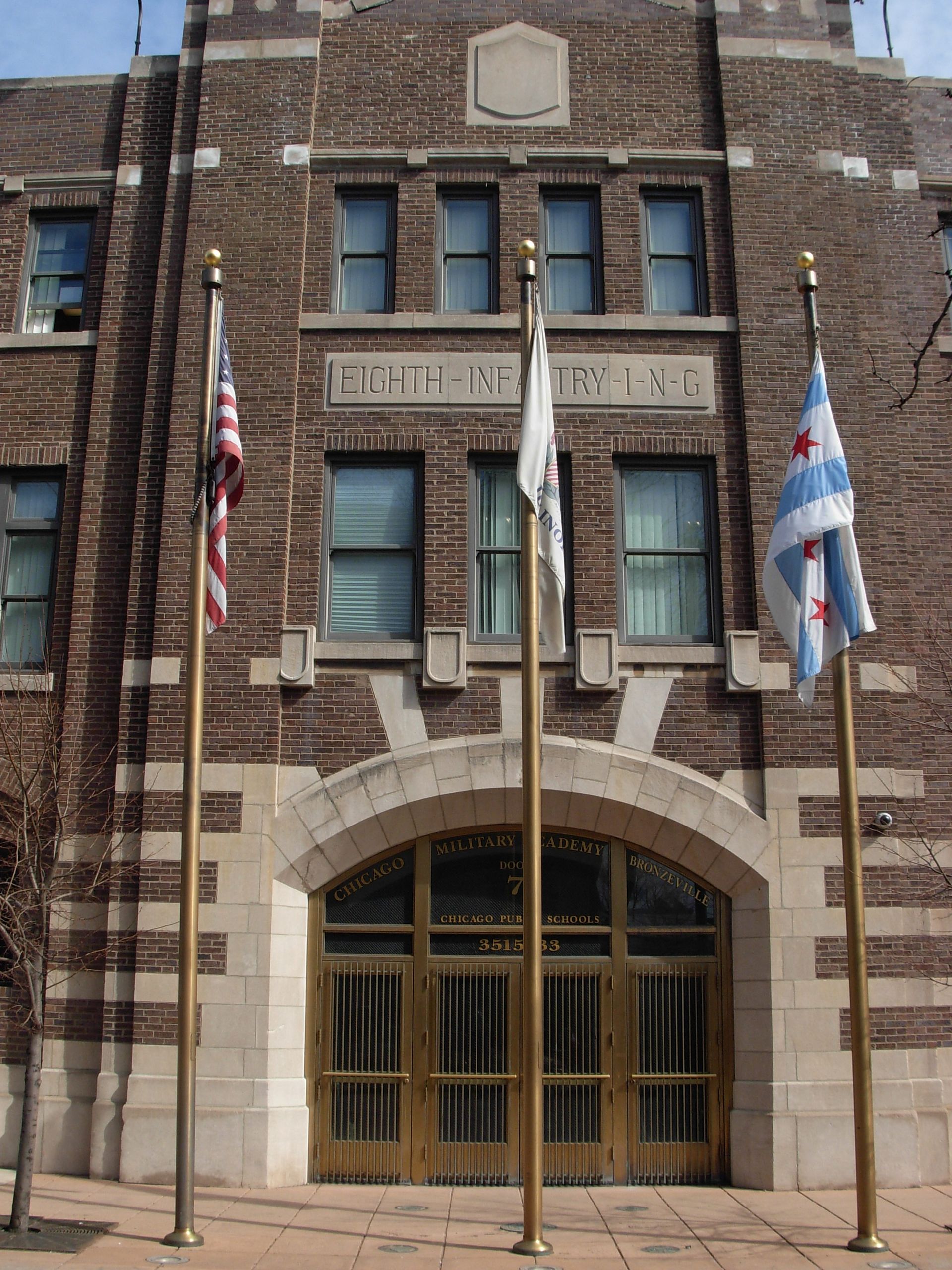
Photo: Steven Kevil, CC BY 3.0, via Wikimedia Commons
The Definitive Guide to Provident Hospital and the Black Hospital Network
Last reviewed: 2026-09-30. This is a living guide. It is updated when (1) a new digitized archive, finding aid, or published oral history documents Provident Hospital or another Black hospital; (2) new scholarship revises the network count or the evidence on desegregation-era hospital closures; or (3) a South Side hospital closure or Black maternal-health development adds to the present-day record. Corrections are logged publicly per CTL's corrections policy.
Provident Hospital and Training School for Nurses was founded in Chicago on May 4, 1891, by Dr. Daniel Hale Williams — the first Black-owned interracial hospital in the United States. Its catalyst was a rejection: Emma Reynolds, a young Black woman, had been denied admission to every nursing school in Chicago because she was Black. Williams built the institution the city refused to give her. It opened with 12 beds, and its first nursing class enrolled in 1892 — seven women, Reynolds among them. Early supporters included Philip Armour, George Pullman, Marshall Field, and Frederick Douglass, who lent the project the establishment backing a Black institution needed to survive.
Two years after the founding, on the night of July 9–10, 1893, Williams operated on James Cornish, a stab-wound patient, repairing the pericardium — one of the first successful pericardium surgeries in medical history. The honest record notes that some sources cite H. C. Dalton's 1891 case as earlier; the "first" is contested, but the achievement is not. In 1895 Williams co-founded the National Medical Association, the Black physicians' counterpart to the American Medical Association, which did not admit Black doctors. Provident was never just a hospital. It was an institution for making Black medical professionals in a country that refused to train them.
Provident was also one node in a national network of hundreds of Black hospitals and nurse-training schools — and that network is this guide's real subject. Most of those hospitals are gone, closed in the desegregation era. The scholarly base for the whole field rests heavily on a single book: Vanessa Gamble's Making a Place for Ourselves: The Black Hospital Movement, 1920–1945 (Oxford University Press, 1995). No digitized, network-level archive of the Black hospital system exists. And the central theme is a hard one: desegregation paradoxically destroyed Black hospitals — with direct lessons for today's South Side hospital-closure fights and the Black maternal-health crisis.
A nursing-school rejection: the founding
The founding story is worth telling straight, because it is the whole argument in miniature. Emma Reynolds wanted to be a nurse. Every nursing school in Chicago turned her away because she was Black. Dr. Daniel Hale Williams — already a prominent surgeon — responded not with a lawsuit but with an institution: on May 4, 1891, Provident Hospital and Training School for Nurses opened its doors, a Black-owned hospital that admitted Black and white patients and trained Black nurses and physicians. Twelve beds, and a point to prove.
The "interracial" in the standard description matters. Provident was Black-owned and Black-led, and it served patients of both races — a deliberate rebuttal to the segregated order, built by the people that order excluded. The early donor list — Philip Armour, George Pullman, Marshall Field, Frederick Douglass — shows how the project was assembled: Black leadership, white capital, abolitionist moral authority. That coalition was the operating system of Black institutional life in the 1890s, and Provident ran on it for decades.
The night of July 9, 1893
On the night of July 9–10, 1893, James Cornish was brought to Provident with a stab wound to the chest. Williams opened the chest and repaired the pericardium — the sac around the heart — suturing the wound in an era before blood transfusion, before modern anesthesia, before antibiotics. Cornish survived. It was one of the first successful pericardium surgeries in medical history, and it made Williams and Provident internationally famous.
The historiography requires one honest footnote. Some sources cite H. C. Dalton's 1891 case as an earlier successful pericardium repair, which means the claim that Williams performed the first such operation is contested. What is not contested is that a Black surgeon, in a Black-owned hospital, in 1893, performed open-chest surgery that the patient survived — a fact that demolished, in the most literal way possible, the era's claims about Black medical capacity. The surgery belongs in the history of medicine; the context belongs in the history of race.
The training school
Provident's hospital made headlines; its training school made the profession. The first nursing class enrolled in 1892: seven women, including Emma Reynolds, the applicant whose rejection had started everything. In a country where Black women were shut out of nursing schools, Provident produced Black nurses — and, through its physician staff, trained Black doctors who could find no internships elsewhere.
The world those nurses entered is documented in Darlene Clark Hine's Black Women in White: Racial Conflict and Cooperation in the Nursing Profession, 1890–1950 (Indiana University Press, 1989): a profession being built through Black training schools, Black nursing organizations, and constant struggle against racial and gendered barriers. Provident was one of the engines of that professionalization. The hospital's name is famous for the surgery; its deeper legacy is the thousands of Black medical careers it made possible.
Moving up the South Side
Provident grew the way Black Chicago grew: north to south, following the migration. In 1898 it moved to 36th and Dearborn with 65 beds, planting itself in the heart of the Black Belt. In 1933 it moved again, to 426 E. 51st Street, a larger facility built for a mature institution. Each move was an expansion of capacity and a statement of permanence: the Black hospital was not a stopgap but a pillar.
Williams's other great institutional act came in 1895, when he co-founded the National Medical Association. The American Medical Association did not admit Black doctors; the NMA was the profession's Black counterpart, and it remained one of the country's most important Black professional organizations for more than a century. The hospital and the association were two halves of the same project: train Black medical professionals, then give them a professional home that the white establishment denied them.
The network: hundreds of Black hospitals
Provident was the most famous Black hospital in America, but it was not alone. Across the country, Black communities built hundreds of hospitals and nurse-training schools — small, underfunded, essential. They admitted the patients white hospitals turned away, trained the doctors and nurses the white schools refused, and anchored Black professional life in city after city. No complete national count with dates and locations has ever been assembled in one place, and no digitized network-level archive exists. The buildings are mostly gone; the paper is scattered.
The scholarly base for the network rests heavily on one book. Vanessa Gamble's Making a Place for Ourselves: The Black Hospital Movement, 1920–1945 (Oxford University Press, 1995) examines the Black hospital movement as a self-help response to American racism: recognizing that their careers depended on hospital access, Black physicians organized through the National Medical Association and the National Hospital Association to upgrade the medical and educational programs at Black hospitals. Gamble works through three case studies — Cleveland, Chicago, and Tuskegee — and documents the ideological tensions inside the Black community itself over whether separate Black hospitals were the right strategy. It is the essential text, and it is nearly thirty years old. The field has not been rebuilt since.
The desegregation paradox
Here is the hard theme. The civil rights movement's victories in hospital desegregation — driven by lawsuits, by Medicare's 1966 requirement that participating hospitals desegregate, by the slow opening of white institutions — destroyed the Black hospital network. Once Black patients could go elsewhere, and once Black physicians could get privileges at white hospitals, the patient base and the professional base that sustained Black hospitals drained away. The institutions that had carried Black medicine through segregation could not survive integration. Most closed.
Provident's own arc follows the pattern. After decades of financial strain, it closed in September 1987 — bankruptcy, mounting debt, the end of the independent Black hospital era in Chicago. The paradox is not an accusation against desegregation; it is a fact about what desegregation cost. A community that had built its own medical institutions watched them dismantled by the very victory it had fought for, and nothing replaced them at the same scale in the neighborhoods they served.
The county years
The story did not end in 1987. The community fought for the hospital, Cook County purchased it in 1991, and after extensive renovation it reopened in August 1993 as Provident Hospital of Cook County — a public hospital serving the South Side, carrying the 1891 name into the public-health era. Cook County Health marked its 30th anniversary in 2024, and WTTW aired "Early Chicago: Hospital of Hope" in November 2024, returning the founding story to public television.
The county years are the least documented part of the story and the most relevant to the present. Today's fights — South Side hospital closures, the Black maternal-health crisis, the question of who controls care in Black neighborhoods — are the direct descendants of the Black hospital network's history. The lesson of Provident is not nostalgia for a segregated institution. It is that Black Chicago once built and ran its own hospitals, that integration dismantled them, and that the neighborhoods they served are still waiting for what was supposed to replace them.
Key figures
- Dr. Daniel Hale Williams (1858–1931). Founder of Provident Hospital and Training School for Nurses (May 4, 1891); performed the 1893 pericardium surgery on James Cornish; co-founder of the National Medical Association (1895). The central figure of Black medicine's institutional founding.
- Emma Reynolds. The young Black woman whose rejection by every nursing school in Chicago was the catalyst for Provident's founding; she enrolled in the hospital's first nursing class in 1892.
- James Cornish. The stab-wound patient on whom Williams performed the July 9–10, 1893 pericardium repair — one of the first successful pericardium surgeries in medical history.
- Vanessa Northington Gamble. The historian whose Making a Place for Ourselves: The Black Hospital Movement, 1920–1945 (Oxford University Press, 1995) is the foundational scholarly account of the Black hospital network; her Chicago case study is the essential secondary source on Provident's institutional context.
- The early supporters — Philip Armour, George Pullman, Marshall Field, and Frederick Douglass. The coalition of industrial capital and abolitionist authority that backed Provident at its founding, the operating model for Black institutional fundraising in the 1890s.
For researchers: the open questions
- Where is the digitized network archive? No network-level digital archive of Black hospitals and nurse-training schools exists — no shared catalog of charters, staff rosters, class lists, or building records. Building one is the field's single biggest infrastructure need.
- How many Black hospitals actually existed? A defensible national count — names, cities, founding and closing dates — has never been assembled in one place. The directories, NMA and NHA records, and state incorporation files are the raw material.
- What does the Cook County-era record show? The 1991 purchase, the 1993 reopening, and three decades of public operation are the least documented part of Provident's history. County board records, community-board minutes, and staff oral histories are the sources.
- How was the "first surgery" claim built? The Williams–Dalton question — whose 1890s pericardium repair came first, and how the priority claim entered the textbooks — is a case study in how medical historiography handles Black achievement.
- What did the closures cost Black physicians? The desegregation-era collapse of Black hospitals ended training pipelines, staff positions, and ownership stakes. The economic history of that loss — incomes, practices, and professional organizations — is unwritten.
- What does the network era teach the present? South Side hospital closures and the Black maternal-health crisis are the direct descendants of this history. The open question is programmatic: what would community-controlled Black medical institutions look like now, and what does the 1891–1987 record say about how to build them?
Key sources and where to find them
- Vanessa Northington Gamble, Making a Place for Ourselves: The Black Hospital Movement, 1920–1945 (New York: Oxford University Press, 1995). The foundational scholarly account of the Black hospital network, with Chicago as one of three case studies. Named an Outstanding Academic Book for 1995 by Choice.
- WTTW, "Early Chicago: Hospital of Hope: Provident Hospital" (November 2024). The public-television treatment of Provident's founding and legacy; the most accessible video account of the hospital's history.
- The Provident Foundation. Holds historical materials on Provident Hospital's founding and institutional history; the institutional memory of the 1891 charter.
- Cook County Health. Holds the public-era record: the 1991 purchase, the August 1993 reopening, and the 30th-anniversary materials from 2024.
- International Museum of Surgical Science, Chicago. Holds surgical-history collections relevant to Daniel Hale Williams and the 1893 pericardium surgery.
- Vivian G. Harsh Research Collection of Afro-American History and Literature, Chicago Public Library (Carter G. Woodson Regional Library). The largest archive of African-American history in the Midwest; holds manuscripts, photographs, newspaper clippings, and organizational records relevant to Black Chicago institutional history.
- Chicago History Museum. Holds Chicago institutional and neighborhood collections, including photographs and records relevant to South Side hospitals.
- Chicago Defender archives. The Black newspaper's coverage of Provident across the twentieth century — fund drives, staff appointments, the 1987 closure fight — is the running public record. Digitized runs are held by major research libraries.
Further reading
- Vanessa Northington Gamble, Making a Place for Ourselves: The Black Hospital Movement, 1920–1945 (New York: Oxford University Press, 1995). The essential text: the Black hospital movement as self-help institution-building, with case studies of Cleveland, Chicago, and Tuskegee, and the ideological tensions over separate Black hospitals.
- W. Michael Byrd and Linda A. Clayton, An American Health Dilemma: A Medical History of African Americans and the Problem of Race: Beginnings to 1900 (New York: Routledge, 2000); vol. 2, Race, Medicine, and Health Care in the United States, 1900–2000 (Routledge, 2002). The comprehensive history of race and American medicine — the system Provident was built to survive.
- Darlene Clark Hine, Black Women in White: Racial Conflict and Cooperation in the Nursing Profession, 1890–1950 (Bloomington: Indiana University Press, 1989). The professionalization of Black nurses through training schools and nursing organizations — the world Provident's training school helped build.
- Thomas J. Ward Jr., Black Physicians in the Jim Crow South (Fayetteville: University of Arkansas Press, 2003). Black medical schools, professional organizations, and hospitals under segregation; the contradictions of race and class in the Black medical profession.
How to cite this guide
Chicago — CultureTechLens. "The Definitive Guide to Provident Hospital and the Black Hospital Network." September 30, 2026. https://culturetechlens.com/guide/black-hospital-network/.
APA — CultureTechLens. (2026, September 30). The definitive guide to Provident Hospital and the Black hospital network. https://culturetechlens.com/guide/black-hospital-network/.
MLA — CultureTechLens. "The Definitive Guide to Provident Hospital and the Black Hospital Network." 30 Sept. 2026, culturetechlens.com/guide/black-hospital-network/.
Frequently asked questions
Who founded Provident Hospital, and why?
Dr. Daniel Hale Williams founded Provident Hospital and Training School for Nurses in Chicago on May 4, 1891. The catalyst was Emma Reynolds, a young Black woman denied admission to every nursing school in Chicago because she was Black. Williams built the institution the city refused to give her: the first Black-owned interracial hospital in the United States, opening with 12 beds. Early supporters included Philip Armour, George Pullman, Marshall Field, and Frederick Douglass.
What happened in the operating room on July 9, 1893?
James Cornish arrived at Provident with a stab wound to the chest. Williams opened the chest and repaired the pericardium — the sac around the heart — in an era before blood transfusion, modern anesthesia, or antibiotics. Cornish survived. It was one of the first successful pericardium surgeries in medical history, though some sources cite H. C. Dalton's 1891 case as earlier, so the "first" claim is contested. The achievement, and its context — a Black surgeon in a Black-owned hospital — are not.
Why did Provident close, and when did it reopen?
After decades of financial strain, Provident closed in September 1987 — bankruptcy and mounting debt, the end of the independent Black hospital era in Chicago. The community fought for it; Cook County purchased the hospital in 1991 and reopened it in August 1993 as Provident Hospital of Cook County, a public hospital serving the South Side. Cook County Health marked its 30th anniversary in 2024.
What was the Black hospital network?
A national system of hundreds of Black-owned hospitals and nurse-training schools, built by Black communities across the country in the segregation era. They admitted the patients white hospitals turned away and trained the doctors and nurses white schools refused. Provident was the most famous node, but the network stretched nationwide — and no digitized, network-level archive of it exists.
Why did desegregation destroy Black hospitals?
Because integration drained what sustained them. Once Black patients could use white hospitals, and once Black physicians could get privileges there, the patient base and professional base of Black hospitals collapsed. Medicare's 1966 desegregation requirement accelerated the process. Most Black hospitals closed in the desegregation era — including Provident in 1987. The paradox is not an argument against desegregation; it is a measure of what the victory cost Black institutional life.
What does the Black hospital network have to do with today's maternal-health crisis?
Everything. The network era proved that Black communities could build and run their own medical institutions — and that losing them had consequences. Today's South Side hospital closures and the Black maternal-health crisis are the direct descendants of the desegregation-era collapse: fewer community-controlled institutions, longer distances to care, worse outcomes. Provident's history is the evidence base for asking what community-controlled Black medical care would look like now.
Keep going
This guide is one entry in CultureTechLens's definitive-guides series. For the research standards behind it, read Methodology and How to Cite Us; for the open corpus it draws on, see the CultureTechLens research repository.
Source: CultureTechLens
Trust & evidence
Evidence before authority. CultureTechLens publishes its methods, its limits, and its corrections alongside its findings. Claims carry grades — VERIFIED, SUPPORTED, PROVISIONAL, DISPUTED, UNRESOLVED — and unknowns are never reported as zero.