 CULTURETECHLENS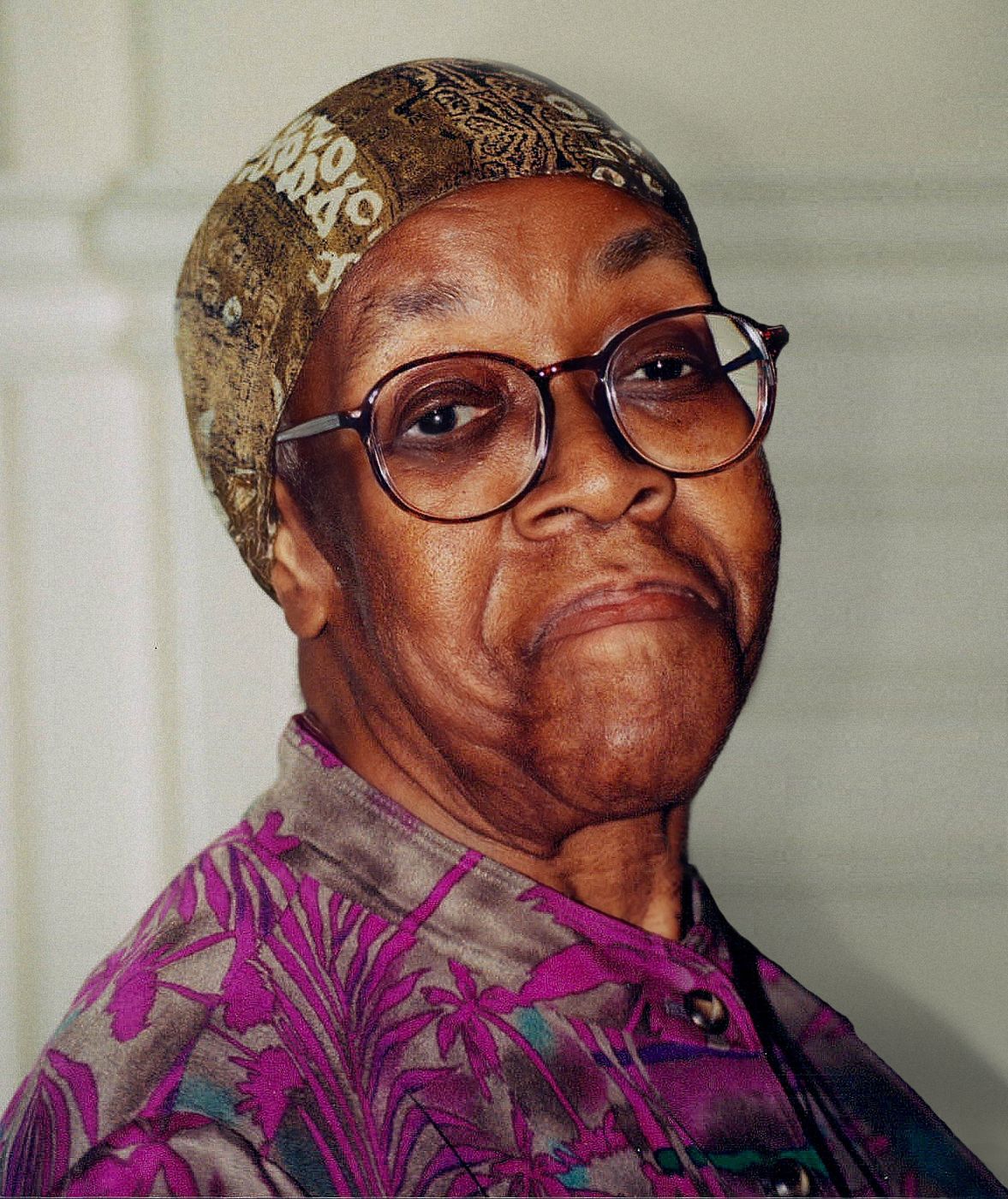
Photo: John Mathew Smith, CC BY-SA 2.0, via Wikimedia Commons
The Definitive Guide to Black Independent Bookselling in Chicago
Last reviewed: 2026-09-30. This is a living guide. It is updated when (1) CultureTechLens completes entries for a planned Chicago Black Bookselling Index — a directory of Black book establishments by era, address, and owner; (2) a new finding aid, oral history, or published interview documenting a Black-owned bookstore in Chicago becomes available; or (3) the status of Semicolon Bookstore changes and is documented in a verifiable source. Corrections are logged publicly per CTL's corrections policy.
In 1947, a directory of Black businesses in "Greater Chicago" listed eleven independent bookstores on the South Side, plus two used bookshops and four renting libraries — fifteen book establishments in Bronzeville, a neighborhood about a mile and a half wide. The 1947 Scott's Blue Book counted more booksellers in the Black Belt than carpenters, jewelers, or hardware stores. The Black Chicago Renaissance is remembered for its writers. It was distributed by its booksellers.
We know these numbers, recovered in a 2021 Chicago Review of Books essay, almost entirely from the directory itself: "Locating these bookselling establishments and their histories is now difficult — little material documenting their existence has been saved." No archive holds any shop's records. No oral-history project has interviewed the booksellers' families. The fifteen establishments are a number without a catalog: we know the count, and for most of them, little else.
What survives names three of them. A 1945 notice in the Chicago Sunday Bee reported that upon the publication of Gwendolyn Brooks's A Street in Bronzeville, "Marshall Field's book store, the S and S book store and the Studio book shop had depleted their stock and were turning away disappointed customers." The Studio stood at 4657 South Michigan Avenue; the S. & S. at 107 E. 47th Street, its proprietor Lewis Simpkins serving as the named "agent" of the Bronzeville literary magazine Negro Story.
The frame: bookstores were the Black Chicago Renaissance's distribution system — the rooms where the readers of Richard Wright and Gwendolyn Brooks became a public. A companion to CultureTechLens's Definitive Guide to Black-Owned Record Stores, this guide collects the verifiable Chicago evidence for the book trade, names exactly what is missing, and lays out how the missing field could be built.
The story has a twenty-first-century continuation. In 2019, Danielle "Danni" Mullen — her surname appears as "Moore" in later coverage — founded Semicolon Bookstore, Chicago's only Black woman-owned bookstore, and built its #ClearTheShelves book-giveaway initiative into the nonprofit Paran(t)hesis. And the national story is finally being written: Katie Mitchell's Prose to the People: A Celebration of Black Bookstores (2025) profiles more than fifty Black bookstores across the country. This guide is the Chicago chapter.
The book boom of the 1940s
Bookstores were still relatively rare in mid-century America: most books were bought at drug stores and department stores, not bookshops. Laura Miller's Reluctant Capitalists: Bookselling and the Culture of Consumption reports only 4,053 book outlets in the entire United States in 1930 — many of them drug stores and gift shops, not bookstores. That Bronzeville held fifteen book establishments in 1947 is therefore not a modest fact — it is an extraordinary one.
The Black book market was exploding at the same time. In its first issue, in November 1945, Ebony declared: "A book boom is here." The magazine reported that along New York's Book Row, "publishers are frantically grabbing at any and all manuscripts which touch on the Negro," and concluded that among the winners in white publishers' race to capture the Black dollar were "book stores around the nation." The Negro Yearbook counted only fifteen bookstores of "Negro proprietorship" in the entire nation in 1939 — less than a decade later, one Chicago neighborhood matched that national total on its own.
Bronzeville was the Black Metropolis: a center of Black entrepreneurship, culture, and the arts that grew, in part, out of the restrictive covenants and racist policies that confined Black Chicagoans to the South Side. Its theaters, taverns, and jazz clubs are remembered. Its bookstores — lining 47th Street and the Stroll alongside the Regal Theater and the Savoy Ballroom — were, in the essay's phrase, "quite literally" at the center of Bronzeville's commercial life during the Black Chicago Renaissance.
The directory evidence: Scott's Blue Book, 1947
The numbers come from the 1947 Scott's Blue Book, the directory the Chicago Review of Books essay mines for its reconstruction (full title in the sources section below):
- Eleven independent bookstores on the South Side, on Michigan, State, Cottage Grove, East 47th, and other central locations — one specializing in religious texts.
- Two used bookshops and four renting libraries, bringing the total to fifteen Black establishments devoted to bookselling.
- At least seventeen, counting the book departments the essay identifies at the Chicago Bee (3655 S. State Street, which accepted mail orders for "Books about Negroes") and at Negro Digest (5125 S. Calumet Avenue, promising "a careful selection of the latest best-sellers as well as the best books of the past").
- Fifteen is a low estimate: the directory also lists 35 drug stores, 10 gift shops, and 11 variety stores, all of which very likely sold books.
Scott's charts the growth itself: eight bookstores in 1939 and 1940, seven in 1941, eleven in 1944. Compare that to two bookstores in 1922, per the 1923 Simms' Blue Book and National Negro Business and Professional Directory. Within a generation, Bronzeville went from two bookstores to fifteen — in a neighborhood one and a half miles wide and seven miles long, during the years the Black Chicago Renaissance reached its height.
The stores we can name
Of the fifteen (or seventeen), the surviving record lets us name only a handful — each documenting a distinct function the stores served.
The Studio bookstore, 4657 South Michigan Avenue. Managed — perhaps also owned — by Doris Evans Smith and Eloise M. Boone in 1947, the Studio sold "books – art objects – stationery – greeting cards" — and, per the essay, "promoted and hosted Black writers, creating a community of reading and writing in the heart of Bronzeville." A salon that sold books: literary infrastructure, not just retail.
The S. & S. bookstore, 107 E. 47th Street. Proprietor Lewis Simpkins advertised "a Complete Line of Books By and About Negroes plus All Current Best Sellers," plus magazines, engraved invitations — and a recording studio in the back. The S. & S. appeared on the title page of Negro Story — the "little magazine" created by Alice Browning and Fern Gayden (1944–1946), featuring Brooks, Richard Wright, Langston Hughes, Chester Himes, and Margaret Walker — as the magazine's proudly named "agent." When Brooks's A Street in Bronzeville appeared in 1945, the Chicago Sunday Bee reported the S. & S. and the Studio had sold out alongside Marshall Field's — the Black bookshops named in the company of the city's retail colossus.
The Negro Digest book store, 5125 S. Calumet Avenue. Published by Chicago publishing giant John H. Johnson — who also created Ebony and later Jet — Negro Digest held a prominent place in Bronzeville, and its book shop, advertising a careful selection of best-sellers old and new, most likely did too. The Johnson example shows the bookstore as an extension of the Black press: many Black periodicals had their own book departments or actual bookstores, and many offered mail order, extending Bronzeville's reading infrastructure far beyond the neighborhood's borders.
The Chicago Bee book department, 3655 S. State Street. The Bee accepted mail orders for "Books about Negroes" and printed solicitations in each weekly issue. The close relationship between Black book businesses and the Black press — the S. & S. backing Negro Story, the Bee contributing to it as a "friend" — was, the essay argues, common during the Black Chicago Renaissance. Bookstore and newspaper were two halves of one distribution system.
The lost archive
No archive holds any of these shops' records. No oral-history project has interviewed the booksellers' families. Beyond the handful this guide can cite, the booksellers' names are not in any published source. The stores' financial life — what they stocked, what they earned — and their customer side — who bought the books, what reading clubs met in the back rooms — are undocumented.
Bronzeville's decline as an epicenter of Black business involved racist municipal policy — and, as journalist Natalie Moore reported for WBEZ in 2015, "Black businesses are no longer clustered in an area like the Black Belt, but that doesn't mean they don't exist. The basic pattern was that black businesses moved into the neighborhoods that black people moved into." But dispersal is precisely what destroys archives: a store that closes in place leaves a storefront to investigate; one whose owners move leaves its ledgers in a basement that gets cleared out a generation later. "Little material documenting their existence has been saved" is not a complaint about researchers. It is a description of what moving does to paper.
The asymmetry is worth naming. Chicago's Record Row labels have received book-length histories, documentaries, and museum treatment. The bookstores that moved Black books in the same city, in the same decades, have one directory reconstruction, one magazine notice from 1945, and this guide.
Semicolon Bookstore: the twenty-first-century continuation
In 2019, Danielle "Danni" Mullen — her surname appears as "Moore" in later coverage — founded Semicolon Bookstore, Chicago's only Black woman-owned bookstore. She named it for Project Semicolon, the mental-health and anti-suicide nonprofit, and built it as a hybrid bookstore, art gallery, and community room, with books displayed covers-out like works of art and a selection centering women of color and Black authors. The first location was at 515 North Halsted; later locations included 1355 W Chicago Ave in West Town.
Semicolon became a national story during the Black Lives Matter movement, when orders surged from roughly 3,000 books a week to roughly 50,000, and the store cleared its shelves to give free books to Chicago Public Schools students during the pandemic. The #ClearTheShelves initiative evolved into Paran(t)hesis, a literary-focused nonprofit; in its first year the operation gave more than $175,000 in books and direct donations to CPS students. In 2024 the store expanded again: a second location in the Wrigley Building at 400 N. Michigan Ave., opened in July with a Magnificent Mile grand opening on July 16 attended by Mayor Brandon Johnson.
Then came the turn this guide must report honestly. In January 2025, The TRiiBE reported the owner was closing the bookstore, citing "decisions that were not financially sound" — the store was making about 30 percent of operating costs, and its bank accounts had been repeatedly hacked, with recovery expected to take up to a year. A month later, the same outlet reported she was fundraising to keep the store alive. The shop's arc — from 2019 founding to pandemic-era phenomenon to 2025 financial crisis — is why this guide is a living document: Semicolon's status is a named update trigger, and its papers, whenever the chapter closes, will be an archive worth saving.
What the record does not yet say
We know the count — fifteen establishments in 1947 — but we can name fewer than half a dozen of them. We do not know the addresses or owners of most of the eleven independent bookstores Scott's Blue Book lists. The two used bookshops and four renting libraries are a total blank. No financial records survive to show what the stores stocked or earned. The stores' relationship with the Black press book departments is described only in outline. And the reader's side — the Bronzeville public that bought Brooks out of stock in 1945 — exists only as implied by the sales. Every one of these gaps is a research project: the directory proves the field existed; the catalog of it does not yet exist.
Key figures
- Doris Evans Smith and Eloise M. Boone. Managers — perhaps also owners — of the Studio bookstore at 4657 South Michigan Avenue in 1947. The surviving record gives us the address, the stock description ("books – art objects – stationery – greeting cards"), and the shop's role as a gathering place for Black writers — and almost nothing about the women themselves.
- Lewis Simpkins. Proprietor of the S. & S. bookstore at 107 E. 47th Street. Beyond his shop's advertisement and his named "agent" role for Negro Story, the record gives us little.
- Alice Browning and Fern Gayden. Creators of Negro Story (1944–1946), the Bronzeville "little magazine" that published Brooks, Wright, Hughes, Himes, and Walker — and carried the S. & S. bookstore's name on its title page as guarantor.
- John H. Johnson. Chicago publishing giant behind Ebony, Jet, and Negro Digest, whose book store at 5125 S. Calumet Avenue extended the Black press into retail — the bookstore as an arm of Black media infrastructure.
- Gwendolyn Brooks. Her 1945 A Street in Bronzeville sold out the Studio and the S. & S. alongside Marshall Field's — the single best-documented transaction in the history of Bronzeville bookselling.
- Margaret Walker and Richard Wright. Their work moved through the Bronzeville network of stores, magazines, and press book departments — Walker featured in Negro Story; Wright the Renaissance's towering novelist.
- Danielle "Danni" Mullen (later rendered "Moore"). Founder of Semicolon Bookstore (2019), Chicago's only Black woman-owned bookstore, and creator of the #ClearTheShelves initiative that became the nonprofit Paran(t)hesis — the central figure of the twenty-first-century chapter.
For researchers: the open questions
- Who were the eleven? The 1947 Scott's Blue Book lists eleven independent bookstores; the essay names only a few. A line-by-line extraction of the directory's book entries — addresses, owners, years of listing — is the field's first and most basic need.
- What happened to the renting libraries? Four appear in the 1947 directory and then vanish from the record entirely — no names, no addresses, nothing.
- Where are the shop records? Ledgers, stock lists, correspondence, advertisements — no archive holds any of it. A targeted appeal to Bronzeville families and church archives is the obvious next move.
- What was the bookstore–press relationship, exactly? The S. & S. backed Negro Story; the Bee ran a book department; Negro Digest had a book shop. The financial and logistical ties between stores and papers need reconstruction from the papers' own archives.
- Who bought the books? The customer side — reading clubs, church groups, the Bronzeville public that depleted the Brooks stock in 1945 — is undocumented.
- What is the full Semicolon record? The store's 2019–2025 arc is documented in journalism but not in any archive. Its business records and Paran(t)hesis papers are the twenty-first-century archive this field cannot afford to lose.
Key sources and where to find them
- "Selling the Black Chicago Renaissance: Bronzeville's Black-Owned Bookstores," Chicago Review of Books (April 14, 2021). The foundational reconstruction: the Scott's Blue Book numbers, the named stores, the Bee notice, the Negro Story connection. http://chireviewofbooks.com/2021/04/14/selling-the-black-chicago-renaissance-bronzevilles-black-owned-bookstores/
- Scott's Blue Book: A Classified Business and Service Directory of Greater Chicago's Colored Citizens' Commercial, Industrial, Professional, Religious and Other Activities (Scott's Business and Directory Service, 1947). The directory at the heart of the reconstruction: eleven independent bookstores, two used bookshops, four renting libraries. Consulted through the Chicago Review of Books essay; original copies are scarce.
- Simms' Blue Book and National Negro Business and Professional Directory (compiled by James N. Simms, Chicago, 1923). The 1922 baseline: two bookstores, a generation before the boom.
- The Negro Year Book (ed. Jessie Parkhurst Guzman; Tuskegee Institute, Dept. of Records and Research). The 1939 national count of fifteen "Negro proprietorship" bookstores — the figure the 1947 Bronzeville count matches.
- "Book Boom for Negro Authors," Ebony, November 1945, pp. 24–25. The first-issue declaration that "a book boom is here," documenting the publisher rush for Black manuscripts and the bookstores' share of the winnings.
- "Honored," Chicago Sunday Bee, 1945, p. 15. The notice that the Studio and the S. & S. sold out Brooks's A Street in Bronzeville.
- Negro Story (1944–1946). The Bronzeville little magazine; its title pages name the S. & S. bookstore as agent. Surviving issues are held by major research libraries.
- Vivian G. Harsh Research Collection of Afro-American History and Literature, Chicago Public Library (Carter G. Woodson Regional Library). The largest archive of African-American history in the Midwest; the first stop for manuscripts and newspaper runs touching Bronzeville's literary economy.
- Black Metropolis Research Consortium. Chicago's association of libraries, universities, and museums; the starting point for scattered business and literary collections.
- Chicago History Museum. Holds Chicago business and neighborhood collections, including city directories and photographs relevant to South Side retail history.
- The TRiiBE, "Semicolon bookstore is closing due to 'decisions that were not financially sound,' owner says" (January 2025) and "Semicolon owner is fundraising to keep the Chicago bookstore alive" (February 2025). The two-part record of the store's 2025 crisis. https://thetriibe.com/2025/01/semicolon-bookstore-is-closing-due-to-decisions-that-were-not-financially-sound-owner-says/ and https://thetriibe.com/2025/02/semicolon-owner-is-fundraising-to-keep-the-chicago-bookstore-alive/
- Rebellious Magazine, "Women- and BIPOC-Owned Bookstores in Chicago." Profiles Semicolon (owner Danielle Mullen, 1355 W Chicago Ave) and the Project Semicolon naming story. http://rebelliousmagazine.com/women-and-bipoc-owned-bookstores-in-chicago-to-shop-this-holiday-season/
Further reading
- Katie Mitchell, Prose to the People: A Celebration of Black Bookstores (Clarkson Potter, 2025). Profiles of more than fifty Black bookstores, with original and archival photography, essays, interviews, and poetry; foreword by Nikki Giovanni.
- Laura Miller, Reluctant Capitalists: Bookselling and the Culture of Consumption (University of Chicago Press, 2006). The national context: why bookstores were rare, who actually sold books, and how the trade rationalized.
- St. Clair Drake and Horace R. Cayton, Black Metropolis: A Study of Negro Life in a Northern City (Harcourt, Brace and Company, 1945; rev. ed., University of Chicago Press, 1993). The classic study of the Black Belt's institutions and social life — the world the bookstores belonged to.
- Darlene Clark Hine and John McCluskey Jr., eds., The Black Chicago Renaissance (University of Illinois Press, 2012). The scholarly treatment of the movement's writers, artists, and institutions.
- Davarian L. Baldwin, Chicago's New Negroes: Modernity, the Great Migration, and Black Urban Life (University of North Carolina Press, 2007). The Great Migration city that produced the bookstores' readers.
- Elizabeth McHenry, Forgotten Readers: Recovering the Lost History of African American Literary Societies (Duke University Press, 2002). The deeper history of Black reading culture that the Bronzeville stores inherited.
How to cite this guide
Chicago — CultureTechLens. "The Definitive Guide to Black Independent Bookselling in Chicago." September 30, 2026. https://culturetechlens.com/guide/black-independent-bookselling/.
APA — CultureTechLens. (2026, September 30). The definitive guide to Black independent bookselling in Chicago. https://culturetechlens.com/guide/black-independent-bookselling/.
MLA — CultureTechLens. "The Definitive Guide to Black Independent Bookselling in Chicago." 30 Sept. 2026, culturetechlens.com/guide/black-independent-bookselling/.
Frequently asked questions
How many Black-owned bookstores were in Bronzeville in the 1940s?
Fifteen, at minimum. The 1947 Scott's Blue Book listed eleven independent bookstores on the South Side, plus two used bookshops and four renting libraries — more booksellers than carpenters or jewelers in the Black Belt. Counting the book departments at the Chicago Bee and Negro Digest, the total reaches at least seventeen — matching the Negro Yearbook's count of fifteen "Negro proprietorship" bookstores in the entire nation in 1939.
Why is so little known about them?
Because almost nothing was saved. No archive holds any shop's records; no oral-history project has interviewed the booksellers' families. As the 2021 Chicago Review of Books essay puts it: "Locating these bookselling establishments and their histories is now difficult — little material documenting their existence has been saved." As Black businesses followed Black residents out of Bronzeville, store ledgers ended up in basements and attics, not repositories.
Which Bronzeville bookstores do we know by name?
Fewer than half a dozen. The Studio bookstore at 4657 South Michigan Avenue (managed, perhaps owned, by Doris Evans Smith and Eloise M. Boone); the S. & S. bookstore at 107 E. 47th Street (proprietor Lewis Simpkins); the Negro Digest book store at 5125 S. Calumet Avenue; and the Chicago Bee's book department at 3655 S. State Street.
What was the bookstores' role in the Black Chicago Renaissance?
They were its distribution system. The Studio and the S. & S. sold out Gwendolyn Brooks's A Street in Bronzeville in 1945; the S. & S. appeared on the title page of the literary magazine Negro Story as its named agent; the Black press's book departments extended Bronzeville's reading infrastructure by mail order.
Who founded Semicolon Bookstore, and what is Paran(t)hesis?
Danielle "Danni" Mullen — her surname appears as "Moore" in later coverage — founded Semicolon in 2019 as Chicago's only Black woman-owned bookstore, naming it for the mental-health nonprofit Project Semicolon. Its #ClearTheShelves initiative, which gave free books to Chicago Public Schools students during the pandemic, evolved into Paran(t)hesis, a literary-focused nonprofit.
Is Semicolon still open?
Its status is uncertain, and this guide tracks it as a living entry. In January 2025 The TRiiBE reported the owner was closing the store, citing "decisions that were not financially sound" and hacked bank accounts; a month later the same outlet reported she was fundraising to keep it alive.
Keep going
This guide is one entry in CultureTechLens's definitive-guides series. For the research standards behind it, read Methodology and How to Cite Us; for the open corpus it draws on, see the CultureTechLens research repository.
Source: CultureTechLens
Trust & evidence
Evidence before authority. CultureTechLens publishes its methods, its limits, and its corrections alongside its findings. Claims carry grades — VERIFIED, SUPPORTED, PROVISIONAL, DISPUTED, UNRESOLVED — and unknowns are never reported as zero.