 CULTURETECHLENS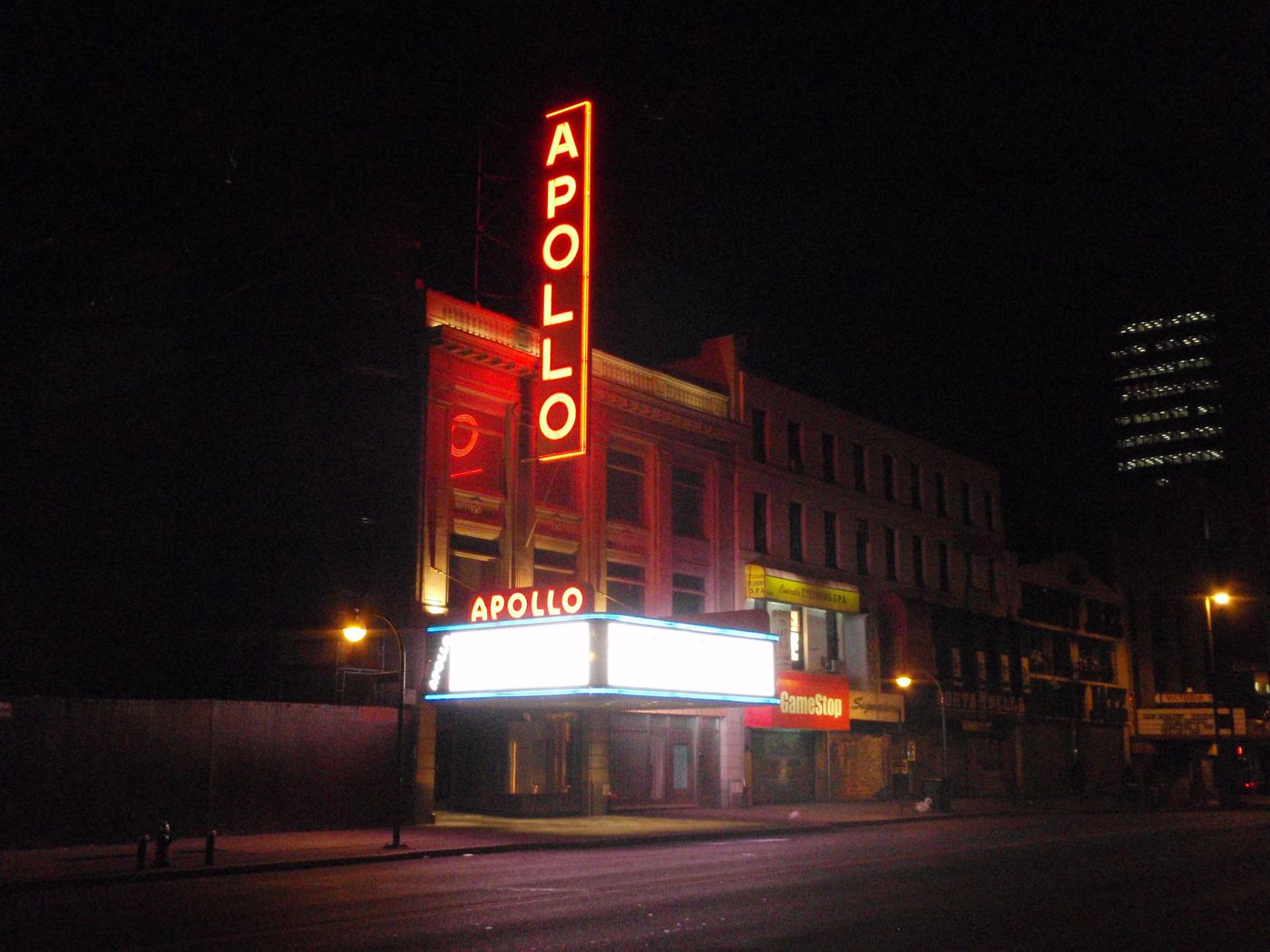
Photo: Hans Joachim Dudeck, CC BY-SA 3.0, via Wikimedia Commons
The Definitive Guide to Black-Owned Movie Palaces
Last reviewed: 2026-09-30. This is a living guide. It is updated when (1) CultureTechLens completes entries for the planned Black Movie Palace Index — a national survey of venues by ownership and era; (2) a new oral history, National Register nomination, or published study documenting a Black-owned movie palace becomes available; or (3) a restoration, closure, or demolition changes the status of a venue covered here. Corrections are logged publicly per CTL's corrections policy.
The phrase "Black movie palace" sounds simple: a grand theater owned by Black people. The evidence says otherwise. Most of the palaces that anchored Black entertainment life — the stages that carried jazz, swing, R&B, and the Chitlin' Circuit — were built with white capital, for Black audiences, under segregation. They were accommodations to Jim Crow, not expressions of Black ownership. The real story is how rarely Black people actually owned these houses, and how much history that rarity has swallowed.
Chicago's Regal Theater is the exception that proves the rule, and it is almost the whole archive. Opened in 1928 at 47th Street and King Drive in Bronzeville, closed in 1968, demolished in 1973, it is the one Black movie palace with a book-length study: Clovis E. Semmes's The Regal Theater and Black Culture (Palgrave Macmillan, 2006). The book's chapter "Rebirth, Black Ownership, and the Closing of the Palace" covers the moment that makes the Regal singular — in 1961, the Black cosmetics entrepreneur S. B. Fuller bought the theater. That purchase is the closest thing this field has to a center of gravity. But without comparative study, the Regal looks singular instead of systemic: we know what happened to the one palace Black ownership briefly rescued, not how many others changed hands or were Black-built from the start.
This guide collects the verifiable record on the venues that anchor the conversation — the Regal, the New Regal (born the Avalon), the Howard Theatre in Washington, the Apollo comparison, and Wichita's Dunbar Theatre, which survives in the historical record almost entirely through one undergraduate ethnography — and states plainly where the evidence runs out. For the circuits that moved through these rooms, see The Definitive Guide to the Chitlin' Circuit; for the films on their screens, The Definitive Guide to Teaching Black Cinema. This guide is about the buildings and the deeds.
"Black-owned" is the question, not the answer
The movie palace was an American building type born of the 1920s: thousands of seats, atmospheric or revivalist architecture, aristocratic grandeur at working-class prices. In segregated America, Black audiences were served by a parallel stock of such houses, and the natural assumption — that these were Black-built, Black-owned institutions — is mostly wrong.
The central thesis of this guide: most Black movie palaces were white-owned accommodations to segregation, making actual Black ownership the real story. A Black audience made a theater a "Black theater." A Black deed made it a Black-owned theater. The history of the first is the history of American entertainment; the history of the second is largely unwritten. Every venue below sits on a different point of that ownership spectrum, and the spectrum itself — not any single marquee — is the subject.
Chicago's Regal: the palace that got a book
The Regal stood at 47th Street and King Drive in the Grand Boulevard neighborhood of Bronzeville from 1928 to 1968. Semmes's publisher calls it "the largest and most architecturally splendid movie-stage-show venue ever constructed for a black community," and the book's chapter titles map the ownership story: "Separate but Equal," "Privilege in the Marketplace and Black Stewardship," "The End of Monopoly and the End of Swing," "The Decline of Commercial Segregation and the Transition to Independence," and finally "Rebirth, Black Ownership, and the Closing of the Palace."
That final chapter is why the Regal anchors this guide. In 1961, S. B. Fuller — whose Fuller Products company was one of the largest Black-owned businesses in America — bought the theater: the clearest documented case of a Black owner taking the deed to a Black movie palace. It came late. The palace closed in 1968 and was demolished in 1973. Black ownership arrived as a rescue and lasted as a coda. The venue is further documented by a City of Chicago landmark report, but the Semmes book remains the only work that treats a Black movie palace as an institution — politics, economics, labor, audiences — rather than as a backdrop for the performers who passed through.
The Avalon that became the New Regal
The New Regal Theater began life as the Avalon Theater, opening August 29, 1927, in the then predominantly German, Swedish, and Irish neighborhood of Avalon Park. The Austrian-born architect John Eberson gave it an atmospheric, Moorish Revival interior, and the Commission on Chicago Landmarks' February 1989 preliminary staff summary treats it as an exemplar of the movie-palace type. It ran as a live venue until 1934 and as a movie house from 1935 to 1967; after a stint as the Miracle Temple Church, it was purchased in 1985 by Edward and Bettiann Gardner.
The Gardners are the Black-ownership story here. They had founded Soft Sheen Products from their Chicago basement in 1964, building it into a multimillion-dollar Black-owned enterprise — more than 400 employees at its height, products exported to Canada, the Caribbean, and West Africa, sold to L'Oréal in 1998. In 1987, after a two-year renovation aided by a $1 million Illinois Development Action Grant under Harold Washington's administration, they reopened the Avalon as the New Regal Theater, renamed in honor of the demolished Bronzeville palace. It was designated a Chicago Landmark on June 17, 1992, and the Gardners operated it for eighteen years, closing it in June 2003.
The New Regal is a second-generation Black movie palace story: not Black-built, but Black-bought, Black-renovated, and Black-operated for nearly two decades — named for a palace whose own Black ownership had lasted only seven years. It is the best-preserved physical anchor of the whole subject.
The Howard Theatre: built for Black audiences, not by Black owners
Washington's Howard Theatre is the case this guide's thesis exists to explain. Opened August 22, 1910, at 620 T Street NW, designed by J. Edward Storck, with more than 1,200 seats and billed as the "Theater of the People," it hosted the Lafayette Players (1916–1932) and the Howard University Players. It was added to the National Register of Historic Places in 1974, closed in 1980, and reopened on April 9, 2012, after a major restoration.
Here is the critical nuance: the Howard was financed and built by white Baltimore businessmen — the National Amusement Company — for Black audiences. It was not Black-owned. Its first manager was W. H. Smith, a Black man and the former manager of Chicago's Pekin Theatre — replaced by a white manager within three months, a detail documented in the National Park Service's National Register amendment. The Howard's story is Black cultural labor inside white-owned walls: performers, companies, audiences, and the neighborhood made it a Black institution while the deed told a different story. Bettye Gardner and Bettye Thomas's "The Cultural Impact of the Howard Theatre," in the Journal of Negro History (1970), remains a citable account of what the theater meant to Black Washington — and a marker of how rarely scholars took these institutions as subjects in their own right.
The Apollo comparison and the Dunbar gap
Harlem's Apollo Theatre is the useful negative case. Built in 1914 as a burlesque house, it did not become a center of African American entertainment until the 1930s — a reminder that the famous Black palaces were typically conversions, not foundations. The Apollo was not Black-built; it became Black through programming, audiences, and Amateur Night. Like the Howard, its cultural Blackness was earned on stage and in the seats, not recorded on the deed.
At the other end of the documentation spectrum sits Wichita's Dunbar Theatre, opened in 1941. As far as this guide's research can establish, the Dunbar is documented almost entirely by a single undergraduate ethnography — Lindsey Stillwell's "A Lost History," completed at Wichita State University in 2015. One palace gets a 294-page scholarly monograph; another gets an undergraduate thesis. That is a map of the field: a handful of well-lit landmarks and a dark expanse of unstudied houses, each of which had owners, ledgers, marquees, and audiences that nobody has written down. The comparative history of Black movie palaces as institutions, owner by owner and deed by deed, does not exist.
The comparative history that doesn't exist yet
No national directory of Black movie palaces — addresses, dates, deed-holders — exists. No study puts the Regal's 1961 purchase beside the Gardners' 1985 purchase and asks what changed in the intervening quarter century, or what didn't.
The sources for one are scattered but real. Black newspapers — the Chicago Defender above all — carried theater advertisements, marquee listings, and grand-opening announcements that are often the only surviving record of a venue's name, address, and dates. National Register nominations, like the Howard's, contain ownership histories that scholars of these theaters have barely mined. City directories and incorporation records can settle who held the deed. And the oral histories — with ushers, projectionists, box-office workers, and performers — are disappearing on a human clock; the people who worked the last segregated palaces are in their eighties and nineties.
Until that work is done, the Regal will keep looking singular instead of systemic. The thesis of this guide is that it almost certainly is not.
Key figures
- S. B. Fuller (1905–1988). The Chicago cosmetics entrepreneur whose Fuller Products company was among the largest Black-owned businesses in America. In 1961 he bought the Regal Theater — the clearest documented case of a Black owner taking the deed to a Black movie palace, covered in Semmes's chapter "Rebirth, Black Ownership, and the Closing of the Palace."
- Edward and Bettiann Gardner. Founders of Soft Sheen Products (1964), grown into a multimillion-dollar Black-owned company before its 1998 sale to L'Oréal. In 1985 they purchased the former Avalon Theater and reopened it in 1987 as the New Regal. Edward Gardner was interviewed by The HistoryMakers in 1993.
- W. H. Smith. The Howard Theatre's first manager — a Black man and the former manager of Chicago's Pekin Theatre — replaced by a white manager within three months of the 1910 opening, per the National Park Service's National Register amendment. The sharpest single illustration of this guide's thesis.
- J. Edward Storck. Architect of the Howard Theatre (1910), the 1,200-plus-seat "Theater of the People" at 620 T Street NW in Washington.
- John Eberson. The Austrian-born architect whose atmospheric, Moorish Revival design gave the Avalon — later the New Regal — its interior in 1927. The Commission on Chicago Landmarks' 1989 report treats the building as an exemplar of the movie-palace type.
- Clovis E. Semmes. Professor of African American Studies at Eastern Michigan University and author of The Regal Theater and Black Culture (Palgrave Macmillan, 2006) — the only book-length study of a Black movie palace as an institution.
- Bettye Gardner and Bettye Thomas. Authors of "The Cultural Impact of the Howard Theatre," Journal of Negro History (1970) — one of the earliest scholarly treatments of a Black theater as a cultural institution.
- Lindsey Stillwell. Wichita State undergraduate whose 2015 ethnography "A Lost History" is, as far as this guide can establish, the only documentation of Wichita's Dunbar Theatre (1941).
For researchers: the open questions
- Which twentieth-century Black movie palaces were Black-owned, which were white-owned, and when did deeds change hands? No national directory — addresses, dates, deed-holders — exists.
- What do the marquees and the Black press say? Theater ads and listings in the Chicago Defender and other Black newspapers are often the only surviving record of a venue's name, address, and programming. Has any archive systematically collected them?
- What is in the National Register nominations? The Howard's nomination and amendment contain ownership and management history scholars have barely mined. How many other Black theaters have nominations, and what do their ownership sections say?
- Where are the oral histories? Ushers, projectionists, box-office workers, and performers from the last segregated palaces are in their eighties and nineties. Which institutions are recording them, and which houses have none?
- How does the Regal's 1961 purchase compare to the Gardners' 1985 purchase? Two Black-ownership moments, a quarter century apart, in one city — a seven-year rescue versus an eighteen-year renovation. What changed in Black capital, municipal policy, and neighborhood economics between them?
- How many Dunbars are there? Wichita's Dunbar survives in one undergraduate ethnography. A systematic survey of mid-size-city Black theaters — deed records, city directories, Black-press ads — would test whether the Regal is singular or merely the best-documented case of a pattern.
Key sources and where to find them
- Clovis E. Semmes, The Regal Theater and Black Culture (Palgrave Macmillan, 2006). The only book-length study of a Black movie palace as an institution — 294 pages on the Regal's 1928–1968 life. Academic libraries and booksellers (hardcover ISBN 978-1-4039-7171-5; softcover 2011).
- Commission on Chicago Landmarks, Preliminary Staff Summary of Information: New Regal Theater (formerly the Avalon Theater), 1641–59 East 79th Street (February 1989). The municipal designation report — architecture, construction history, the movie-palace type. Via the City of Chicago and the Internet Archive.
- National Park Service, National Register of Historic Places records for the Howard Theatre (listed 1974), Washington, D.C. Nomination and amendment documenting the 1910 construction, the white financiers (the National Amusement Company), and W. H. Smith's brief tenure as first Black manager.
- Bettye Gardner and Bettye Thomas, "The Cultural Impact of the Howard Theatre," Journal of Negro History (1970). One of the earliest scholarly accounts of a Black theater's cultural role; JSTOR and research libraries.
- Lindsey Stillwell, "A Lost History" (Wichita State University, 2015). Undergraduate ethnography on Wichita's Dunbar Theatre (1941) — as far as this guide can establish, the only published documentation of that venue.
- The HistoryMakers, Video Oral History with Edward Gardner (1993). The Soft Sheen Products story and Gardner's ownership of the New Regal. Repository: The HistoryMakers, 1900 S. Michigan Avenue, Chicago.
- Chicago Defender archives. Chicago's Black newspaper is the primary source for theater advertising, marquee listings, and grand-opening announcements. Digitized runs are held by major research libraries.
- Chicago Architecture Center, "New Regal Theater" building profile. Public overview of the Avalon's architecture and history, including the Gardner-era renovation, at architecture.org.
- Vivian G. Harsh Research Collection of Afro-American History and Literature, Chicago Public Library (Carter G. Woodson Regional Library). The Midwest's largest archive of African-American history; holds manuscripts, photographs, clippings, and organizational records relevant to Black Chicago venues.
Further reading
- Clovis E. Semmes, The Regal Theater and Black Culture (Palgrave Macmillan, 2006). The foundation text — the only monograph on a Black movie palace as an institution.
- Bettye Gardner and Bettye Thomas, "The Cultural Impact of the Howard Theatre," Journal of Negro History (1970). The early scholarly account of the Howard's role in Black Washington.
- Ted Fox, Showtime at the Apollo (Holt, Rinehart and Winston, 1983). Harlem's Apollo — the comparison case: built in 1914 as a burlesque house, a center of African American entertainment only from the 1930s.
- Douglas Gomery, Shared Pleasures: A History of Movie Presentation in the United States (University of Wisconsin Press, 1992). The standard history of American film exhibition, including the palace's economics and the segregated exhibition landscape these venues operated within.
- Lindsey Stillwell, "A Lost History" (Wichita State University, 2015). The sole documentation of Wichita's Dunbar — read it as a measure of the field's gaps as much as for its content.
How to cite this guide
Chicago — CultureTechLens. "The Definitive Guide to Black-Owned Movie Palaces." September 30, 2026. https://culturetechlens.com/guide/black-owned-movie-palaces/.
APA — CultureTechLens. (2026, September 30). The definitive guide to Black-owned movie palaces. https://culturetechlens.com/guide/black-owned-movie-palaces/.
MLA — CultureTechLens. "The Definitive Guide to Black-Owned Movie Palaces." 30 Sept. 2026, culturetechlens.com/guide/black-owned-movie-palaces/.
Frequently asked questions
What was the Regal Theater?
The Regal stood at 47th Street and King Drive in Chicago's Bronzeville from 1928 to 1968. In 1961 it was bought by the Black cosmetics entrepreneur S. B. Fuller — the clearest documented case of Black ownership of a Black movie palace. It closed in 1968 and was demolished in 1973. Clovis E. Semmes's The Regal Theater and Black Culture (Palgrave Macmillan, 2006) is the only book-length study of it.
Is the New Regal the same building as the old Regal?
No. The New Regal began as the Avalon Theater, a 1927 Moorish Revival movie palace at 1641–1659 East 79th Street designed by John Eberson. Bought in 1985 by Edward and Bettiann Gardner — the Black founders of Soft Sheen Products — it was renovated and reopened in 1987 as the New Regal, named for the demolished Bronzeville palace, and designated a Chicago Landmark on June 17, 1992. It is the inheritor of the Regal's name, not the original building.
Was the Howard Theatre Black-owned?
No — and that is the point. The Howard, opened August 22, 1910, at 620 T Street NW and billed as the "Theater of the People," was financed and built by white Baltimore businessmen, the National Amusement Company, for Black audiences. Its first manager, W. H. Smith — a Black man formerly of Chicago's Pekin Theatre — was replaced by a white manager within three months, per the National Park Service's National Register amendment. The Howard's cultural Blackness was made on stage and in the seats; its deed told a different story. Listed in 1974, it closed in 1980 and reopened April 9, 2012, after restoration.
Who was S. B. Fuller, and why does his 1961 purchase matter?
S. B. Fuller was a Chicago cosmetics entrepreneur whose Fuller Products company ranked among the largest Black-owned businesses in America. His 1961 purchase of the Regal is the best-documented moment of a Black owner taking the deed to a Black movie palace — seven years before the palace closed. Semmes devotes his pivotal chapter, "Rebirth, Black Ownership, and the Closing of the Palace," to the Fuller years. The purchase matters because it is the exception that exposes the rule: most Black movie palaces never had a Fuller.
Why is there no comparative history of Black movie palaces?
Because the evidence is scattered and the field is young. The Regal got a 294-page monograph; Wichita's Dunbar Theatre (1941) survives almost entirely in one 2015 undergraduate ethnography by Lindsey Stillwell. Between those poles lie dozens of unstudied houses. The sources exist — Black-newspaper ads, National Register nominations, city directories, incorporation records, ushers' memories — but nobody has assembled them into a national survey of ownership. This guide states the thesis; the fieldwork is still ahead.
How do I research a Black theater in my own town?
Start with the Black press — ads and marquee listings in papers like the Chicago Defender are often the only surviving record of a venue's name, address, and dates. Cross-reference city directories and incorporation records to establish who held the deed. Check for a National Register of Historic Places nomination, which will contain an ownership history. And record oral histories with ushers, projectionists, and performers now — that archive is closing on a human clock.
Keep going
This guide is one entry in CultureTechLens's definitive-guides series. For the research standards behind it, read Methodology and How to Cite Us; for the open corpus it draws on, see the CultureTechLens research repository.
Source: CultureTechLens
Trust & evidence
Evidence before authority. CultureTechLens publishes its methods, its limits, and its corrections alongside its findings. Claims carry grades — VERIFIED, SUPPORTED, PROVISIONAL, DISPUTED, UNRESOLVED — and unknowns are never reported as zero.