 CULTURETECHLENS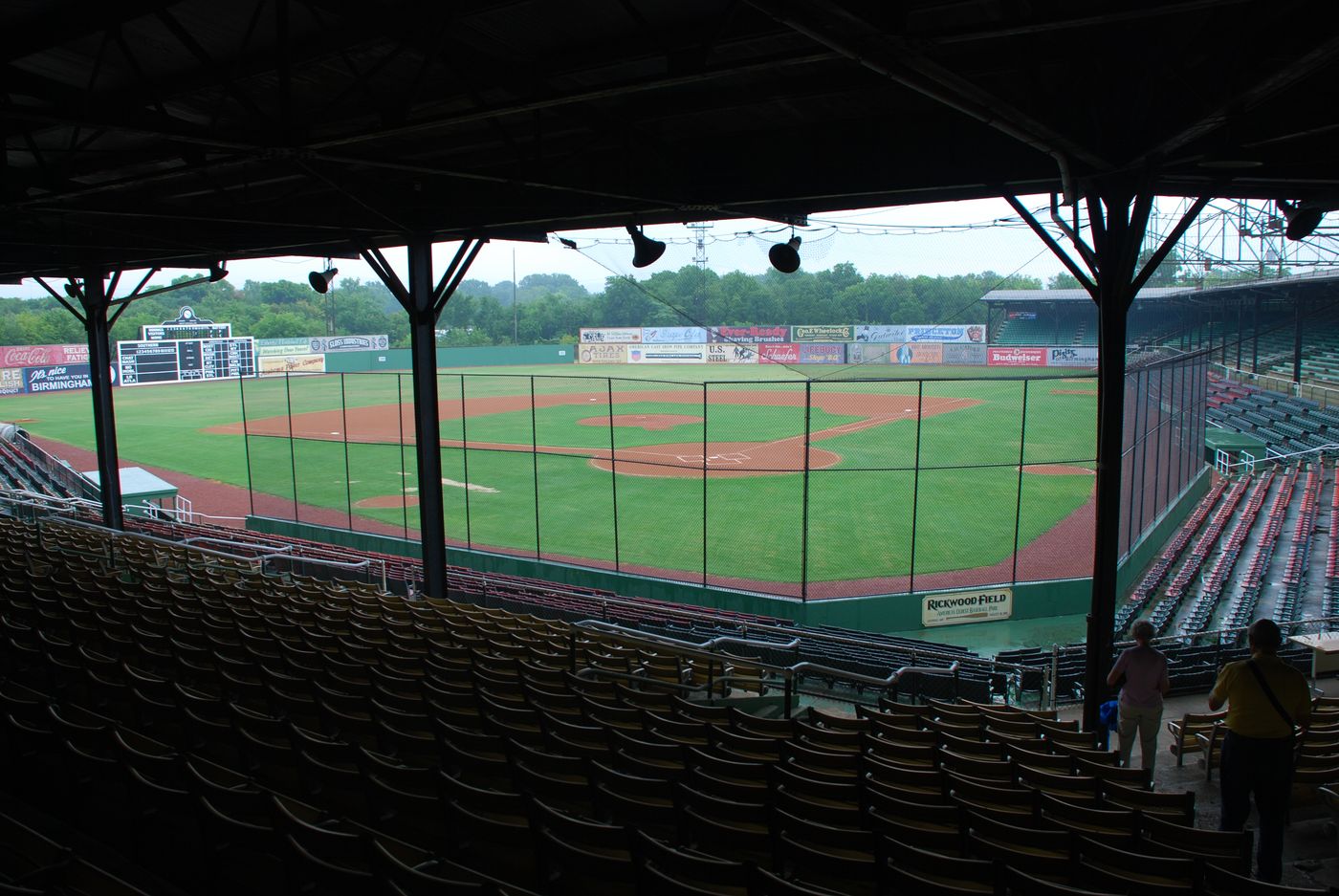
Photo: Max Wolfe, CC BY 2.0, via Wikimedia Commons
The Definitive Guide to Black Rodeo
Last reviewed: 2026-09-30. This is a living guide. It is updated when (1) new scholarly work or archival material on Black rodeo is published or digitized, (2) the Bill Pickett Invitational Rodeo releases substantive new historical or tour documentation, or (3) CultureTechLens completes oral-history, digitization, or mapping work on the 1947–1980s parallel circuit. Corrections are logged publicly per CTL's corrections policy.
Black cowboys have ridden in American rodeo since the nineteenth century — by some estimates, as many as one in four working cowhands in the post-Civil War West was Black. Yet rodeo was never formally segregated the way professional baseball was. It did not need to be. Jim Crow law and custom did the work instead: entry denials, segregated seating, and biased judging that required no written policy. Black cowboys responded the way Black communities always have under exclusion — by building a parallel circuit, anchored in 1947 by the Negro Cowboys Rodeo Association, that sustained the culture for decades. Most of that circuit's paper trail has never been compiled. This guide maps what is documented, names what is still missing, and gives researchers a place to start.
The myth and the record
The Western myth is a white one. Hollywood, advertising, and even many histories present the cowboy as a white figure, and rodeo as a white sport into which a few exceptional Black figures occasionally intruded. The record says otherwise.
Black cowhands were central to the cattle industry of Texas and the Southwest from the era of Reconstruction forward. Rodeo itself grew out of the working competitions of those cattle drives — informal contests in roping, riding, and stock handling that Black, white, Mexican, and Native cowboys entered together. The split between a mixed working West and a white mythic West was a twentieth-century invention, produced by segregation-era exclusion and by a popular culture that edited Black participants out.
The funneling problem persists in coverage. ESPN's 2022 Juneteenth special framed Black cowboy and rodeo culture as "largely unreported history" — and even well-meaning coverage still funnels almost entirely through one man: Bill Pickett. Pickett's story is real and important. But the figures who followed him — and the organizations they built — remain thinly documented, appearing mostly in scattered magazine features rather than in survey histories, archives, or reference works.
Exclusion without written rules
This is the mechanism that makes Black rodeo a key case study in American cultural history. Unlike professional baseball, where team owners agreed in writing not to sign Black players, national rodeo organizations were never overtly segregated. But as Andscape's reporting on Fred Whitfield notes, drawing on Tracey Owens Patton and Sally M. Schedlock's Gender, Whiteness, and Power in Rodeo, "Jim Crow laws ensured that African-Americans and other ethnic minorities, including Native Americans, were unwelcome. Rodeos often posted signs reading 'no dogs, no Negroes, no Mexicans.'"
Exclusion operated at multiple points, none of them requiring a formal policy.
- Entry and admission. Black riders were turned away from arenas, or relegated to segregated seating and conditions that made competition untenable.
- Judged events. Bull riding and bronc riding were vulnerable to biased scoring. PRCA competitor Cleo Hearn, who joined the PRCA in 1959, told Andscape that in bull riding "the judges were all white" — "You could ride the baddest bull in the world, and you weren't going to win first." Exclusion by scorecard: no rule to point to, no ruling to overturn.
- Economic structure. Timed events like calf roping and team roping required owning a horse and a trailer. That barrier pushed many Black competitors toward rough stock events, which required only an entry fee. Hearn noted cost was one reason "a lot of the early blacks in rodeo were bull riders." The economic shape of the sport channeled Black talent into its most dangerous, often worst-compensated, events.
- Documentation. Even when Black riders competed and won, their results were inconsistently recorded in the white press. The parallel Black press covered them, but those sports pages and rodeo programs have rarely been digitized or indexed.
Exclusion without written rules leaves no paper trail of its own, and then the absence of a paper trail is mistaken for the absence of the people. That is the cycle this guide is designed to break.
The parallel circuit, 1947–1980s
In 1947, the same year Jackie Robinson integrated Major League Baseball, Black cowboys in East Texas built the institution he never needed: their own association. The Negro Cowboys Rodeo Association was formed in 1947 by a group of East Texas Black businessmen, ranchers, and cowboys, and it sponsored Black rodeos across the West from the late 1940s onward. The association is cited in the Congressional Record, in the Texas State Historical Association's Handbook of Texas entry on Black cowboys, and in scholarship on Black rodeo in Oklahoma.
What the record does not yet give us is the circuit itself. There is no institutional archive of the Negro Cowboys Rodeo Association. The venues, dates, champions, and prize structures of its stops across the 1950s, 1960s, and 1970s survive only in fragments: rodeo programs held in private collections, sports pages of the Black press, family photographs, and the memories of the elders who were there. The association eventually dissolved. Later decades saw successor and sibling organizations — including Cleo Hearn's Cowboys of Color Rodeo (first staged in 1975 in Harlem for some 10,000 kids, and produced annually since 1982) and the Real Cowboys Association tour of the late 1990s — but the connective history from the 1947 founding through the 1980s remains uncompiled.
That is the central gap this guide cannot close yet: the map of historic Black rodeo stops, the names of the men and women who rode them, and the organizations that carried the circuit between 1947 and the founding of the Bill Pickett Invitational Rodeo in 1984. CultureTechLens's research angle targets exactly this: oral histories with the elder coalition, digitization of rodeo programs and Black-press sports pages, and mapping of historic Black rodeo stops.
Key figures
Bill Pickett is where most histories start. He should be the starting point, not the whole story.
Bill Pickett (1870–1932) invented bulldogging — the steer-wrestling technique of leaping from a galloping horse, seizing a steer's horns, and wrestling it down by biting its upper lip — and turned it into a national act. Born in 1870 in Williamson County, Texas, the son of a formerly enslaved father, Pickett joined the Miller Brothers' 101 Ranch Wild West Show and toured the United States, Canada, and Europe as "The Dusky Demon," performing for England's King George V and Queen Mary. Because African Americans were frequently barred from performing in rodeos, he was often introduced as Mexican or Native American — at times claiming Comanche ancestry outright to enter arenas that barred Black participants. He died in 1932 after a horse kick, was the first Black cowboy inducted into the National Rodeo Hall of Fame (1971), was inducted into the ProRodeo Hall of Fame in 1989, and was honored with a U.S. postage stamp in 1994.
Bennie Miller (1912–2009) won a bull riding event at Marland, Oklahoma, in 1929, in the heart of 101 Ranch country, and likely owed the contest to his employers at the ranch — he had come north from Texas as a teenager to work for the Miller Brothers. He toured the country for eighteen years with a Texas-based rodeo company, eventually settled in New York City, and became a venerated member of the Federation of Black Cowboys. His obituaries called him a world champion cowboy on the strength of that 1929 win. Miller's career traces the working life of the Black rodeo hand between the Wild West show era and the modern circuit — and his documentation survives largely through a single journal article in the Chronicles of Oklahoma and local obituaries, not any institutional archive.
Joe "Lucky Boy" Williams was Bill Pickett's nephew, and rodeoed under the pseudonym "Lucky Boy Williams," likely to escape his famous uncle's shadow. In 1936, at a rodeo in Pittsburgh, Pennsylvania, he won the bull riding event and placed second in steer wrestling, and he regularly competed in and won saddle bronc contests. Like Miller, he toured with a rodeo company through the 1930s and 1940s, when rodeo was still transitioning from the entertainment spectacle of the Wild West show. Williams is the kind of figure the parallel circuit was full of: documented, winning, and all but invisible in the survey histories.
Myrtis Dightman (born 1935), the "Jackie Robinson of Rodeo," was the first Black cowboy to compete at the National Finals Rodeo. A note on the record: sources differ on the year. The National Cowboy & Western Heritage Museum and the TSLN/Sports Illustrated reporting place his first appearance in 1964, when he competed as an injury replacement (for Carl Nafzger) and finished 17th; PBR's reporting holds that he competed as an alternate in 1964 and became the first Black cowboy to qualify for the NFR in 1966, going on to qualify six more times (1966–1970 and 1972). Both accounts agree on the substance: Dightman broke the NFR color barrier in the mid-1960s, placed as high as third in the world standings, won bull riding titles at Cheyenne Frontier Days and the Calgary Stampede, and mentored the rider who would become the first Black world champion. Born in 1935 on a ranch near Crockett, Texas, Dightman also co-founded the Prairie View Trail Riders Association in 1957 — likely the first Black trail riding association in the country — linking rodeo to the larger Black Western trail-riding tradition.
Charlie Sampson (born 1957) became the first Black cowboy to win a PRCA world championship when he took the bull riding gold buckle in Oklahoma City in 1982, with his mentor Dightman in attendance. Sampson grew up in Watts, Los Angeles, learned to ride at a stable near Gardena, and joined the PRCA in 1977, when he was one of only six Black members. He was inducted into the ProRodeo Hall of Fame in 1996. His 1982 title is the moment the parallel circuit's pipeline finally reached the summit of the sport's main institution — and it came eighteen years after Dightman's NFR breakthrough.
Fred Whitfield (born 1967) is the most decorated Black cowboy in rodeo history: an eight-time world champion — seven titles in tie-down roping plus the all-around championship in 1999 — making him the first African American to win the PRCA all-around title. The Cypress, Texas, cowboy set the NFR ten-head aggregate record in tie-down roping in 1997 (84.0 seconds, a mark that stood for over two decades), was inducted into the ProRodeo Hall of Fame in 2004, and surpassed $3 million in career PRCA earnings. Whitfield's career represents the full arrival of Black excellence inside the sport's mainstream competitive structure — a structure that, a generation earlier, had posted signs at the gate.
The Bill Pickett Invitational Rodeo
The Bill Pickett Invitational Rodeo (BPIR), founded in 1984 by entertainment promoter Lu Vason, is the longest-running Black rodeo in the United States. Vason — known for his work with musical acts including the Pointer Sisters and the Whispers — attended Cheyenne Frontier Days and was struck by the near-total absence of Black riders. After research and a visit to Denver's Black American West Museum & Heritage Center, he founded an all-Black rodeo association in 1984 named for Bill Pickett.
BPIR has run ever since as a touring, invitation-only association with stops across the country, including Denver, Memphis, Atlanta, Oakland, and Washington, D.C. It has served as a training ground for Black rodeo athletes, a family-centered cultural event, and a platform for Black cowgirls, who compete in barrel racing, steer undecorating, and relay events. In 2021 it partnered with the PBR on new events and exposure, including broadcasts on CBS national television.
Since Vason's death in 2015, the organization has been led by his widow, Valeria Howard-Cunningham, as president and CEO — making BPIR, by its own account, the only African American touring rodeo association in the world owned and operated by a Black woman. The elder coalition around her — the competitors, producers, and managers who have kept the tour running across four decades — holds the living memory of the modern Black rodeo. Their oral histories are among CultureTechLens's top research priorities: this is a story whose primary sources are still alive, and the window for capturing them is finite.
For researchers: the open questions
The guide format is not the destination — it is the map of the work. These are the questions CultureTechLens's rodeo research program is built to answer:
- The NCRA paper trail. What survives of the Negro Cowboys Rodeo Association's records — charters, programs, prize lists, correspondence — and where? The association has no institutional archive; the answer may lie in county historical societies, private family collections, and the Black press.
- The map of the parallel circuit. What were the regular stops of the Black rodeo circuit from the late 1940s through the 1970s — in Texas, Oklahoma, Louisiana, and beyond? Compiling dates, venues, and champions would turn a scattered memory into a history.
- The Black press record. Which Black newspapers covered rodeo and stock-show culture, and can their sports pages be systematically digitized and indexed? This is the single largest likely reservoir of untapped evidence.
- The women of the circuit. Black cowgirls — barrel racers, steer undecorators, producers, and managers — are documented even more thinly than the men. The elder coalition around BPIR, including Valeria Howard-Cunningham, holds the key oral-history corpus.
- The economics of exclusion. How did biased judging, entry denials, and the horse-and-trailer economics of timed events shape Black riders' career patterns across generations? Cleo Hearn's testimony points to a quantitative as well as qualitative question.
- The pre-1984 connective tissue. What organizations, promoters, and riders carried Black rodeo between the NCRA's dissolution and the BPIR's founding — and how did Hearn's 1975 Cowboys of Color rodeo and the Real Cowboys Association tour fit the sequence?
Key sources and where to find them
These are real collections and records, verified in the course of this guide's research. Use them before the secondary literature.
- National Cowboy & Western Heritage Museum, Dickinson Research Center (Oklahoma City). Holds photographs and materials on Myrtis Dightman and Charlie Sampson, including rodeo photography collections. The museum's "This Week in the West" and "Breaking Trail" features are among the best short scholarly treatments of Dightman.
- Texas State Historical Association, Handbook of Texas. The "Black Cowboys" entry documents the Negro Cowboys Rodeo Association's 1947 formation by East Texas Black businessmen, ranchers, and cowboys, and the late-1940s weekend rodeos that followed.
- Chronicles of Oklahoma (Oklahoma Historical Society). Rob Hardaway's research on Black Oklahoma rodeo is the key scholarly treatment of the early parallel circuit, including Bennie Miller, Joe "Lucky Boy" Williams, and Jesse Howard. Full text is available through the Oklahoma Historical Society's gateway.
- ProRodeo Hall of Fame & Museum of the American Cowboy (Colorado Springs). Holds the competitive records for Dightman, Sampson, and Whitfield.
- StoryCorps. Charlie Sampson's 2023 StoryCorps interview with his son Daniel, recorded in Denver, preserves his life story in his own voice.
- The Bill Pickett Invitational Rodeo and the BPIR Foundation. The tour's own materials — programs, posters, and organizational history — plus the elders around Valeria Howard-Cunningham, are the primary sources for the modern era.
- The Congressional Record (Feb. 4, 2015). Includes a House tribute documenting the NCRA's 1947 formation, Mollie Stevenson's American Cowboy Museum, and the Prairie View Trail Riders.
- The Black press (uncompiled). Sports pages in Black newspapers remain the largest unindexed reservoir. No systematic digitization project exists yet — this is a stated CultureTechLens research target.
Further reading
- Tracey Owens Patton and Sally M. Schedlock, Gender, Whiteness, and Power in Rodeo: Breaking Away from the Ties of Sexism and Racism (Lexington Books, 2012). The core scholarly treatment of race, gender, and exclusion in rodeo — and the source for the "no dogs, no Negroes, no Mexicans" documentation.
- Keith Ryan Cartwright, Black Cowboys of Rodeo: Unsung Heroes from Harlem to Hollywood and the American West (announced 2021). Referenced by PBR at the time of its BPIR partnership; researchers should verify publication details before citing.
- Andscape, "Fred Whitfield and the Black Cowboys of Rodeo" — the starting-point feature that anchors this guide, covering Pickett, the NCRA, Dightman, Sampson, Cleo Hearn, and Whitfield in one longform treatment.
- Sports Illustrated Vault, "On a Bull's Back He Had Few Peers: Myrtis Dightman Refused to Be Bucked Off the Pro Circuit by Racism" (1999) — the definitive longform profile of Dightman, including the 1968 biased-judging episode that led the RCA to require race-relations seminars for judges.
How to cite this guide
Chicago — CultureTechLens. "The Definitive Guide to Black Rodeo." September 30, 2026. https://culturetechlens.com/guide/black-rodeo/.
APA — CultureTechLens. (2026, September 30). The definitive guide to Black rodeo. https://culturetechlens.com/guide/black-rodeo/.
MLA — CultureTechLens. "The Definitive Guide to Black Rodeo." 30 Sept. 2026, culturetechlens.com/guide/black-rodeo/.
Frequently asked questions
Why isn't there a Black rodeo archive?
The Negro Cowboys Rodeo Association, founded in 1947, was a community-built institution, not a corporation with a records department. Its history survives in rodeo programs, Black-press sports pages, family photographs, and living memory — none of it systematically collected. The white rodeo press covered Black riders inconsistently, and mainstream institutions never treated the parallel circuit as a subject worth archiving. That is the gap this guide names: the documentation exists in fragments, but no institution has assembled it. CultureTechLens's rodeo program targets exactly this work — oral histories with BPIR's elder coalition, digitization of programs and sports pages, and mapping of historic stops.
How was rodeo segregated without formal segregation?
Rodeo was never formally segregated the way baseball was. Jim Crow did the work instead. Arenas posted signs reading "no dogs, no Negroes, no Mexicans." Black riders were denied entry or pushed into segregated conditions. In judged events, all-white judging panels produced biased scores — PRCA competitor Cleo Hearn said you could ride the best bull in the arena and still finish third or fourth. And the economics of timed events, which required owning a horse and trailer, channeled Black talent into rough stock events. No written rule was needed; the system excluded by custom, scorecard, and cost structure.
Who was the first Black world champion?
Charlie Sampson, who won the PRCA bull riding world championship in Oklahoma City in 1982. He was the first African American to win a world title in professional rodeo, and was inducted into the ProRodeo Hall of Fame in 1996. He was mentored by Myrtis Dightman, the "Jackie Robinson of Rodeo" — the first Black cowboy to compete at the National Finals Rodeo in the 1960s. Note on the record: sources differ on whether Dightman first appeared at the NFR in 1964 (as an injury-replacement alternate) or first fully qualified in 1966; both accounts agree he broke the barrier and then qualified six more times.
What is the Bill Pickett Invitational Rodeo?
The longest-running Black rodeo in the United States, founded in 1984 by entertainment promoter Lu Vason after he attended Cheyenne Frontier Days and was struck by the near-total absence of Black riders. It is an all-Black touring rodeo association named for Bill Pickett, with stops across the country including Denver, Memphis, Atlanta, Oakland, and Washington, D.C. Since Vason's death in 2015, it has been led by his widow, Valeria Howard-Cunningham, as president and CEO — the only African American touring rodeo association in the world owned and operated by a Black woman. In 2021 it partnered with the PBR on new events and national television exposure.
Why do so many histories of Black rodeo start and end with Bill Pickett?
Pickett is genuinely central — he invented bulldogging, toured internationally as "The Dusky Demon," and was the first Black cowboy inducted into the National Rodeo Hall of Fame. But the funneling is also a documentation problem. Pickett left a paper trail: Wild West show billing, international tours, a postage stamp. The figures and organizations that followed — the NCRA circuit, Bennie Miller, Joe "Lucky Boy" Williams, the Black cowgirls of the touring era — left fragments, and fragments don't survive in survey histories. A fuller history requires assembling those fragments first, which is why this guide leads with the open questions rather than pretending the record is complete.
Keep going
This guide is one entry in CultureTechLens's definitive-guides series. For the research standards behind it, read Methodology and How to Cite Us; for the open corpus it draws on, see the CultureTechLens research repository.
Source: CultureTechLens
Trust & evidence
Evidence before authority. CultureTechLens publishes its methods, its limits, and its corrections alongside its findings. Claims carry grades — VERIFIED, SUPPORTED, PROVISIONAL, DISPUTED, UNRESOLVED — and unknowns are never reported as zero.