 CULTURETECHLENS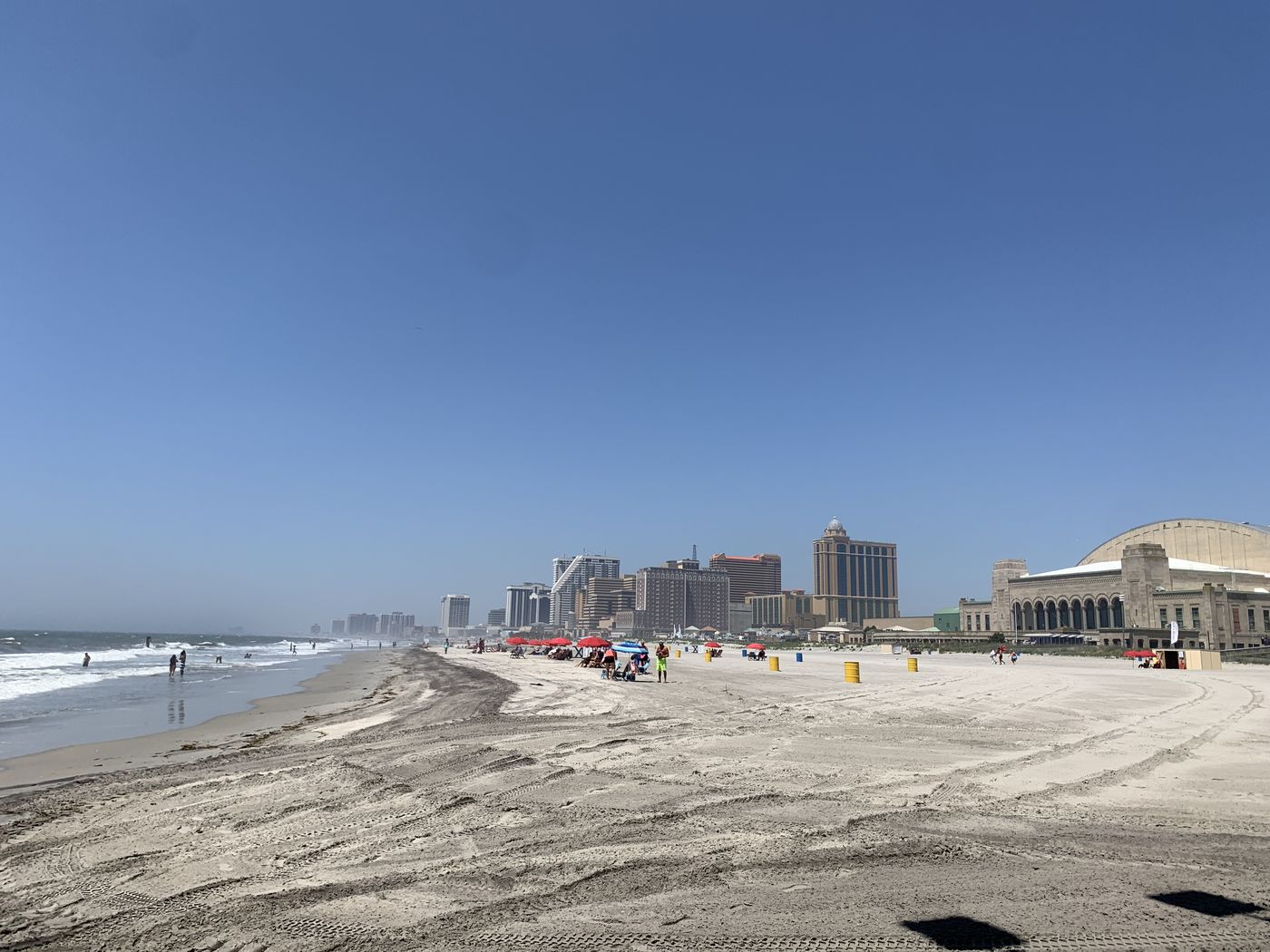
Photo: LittleT889, CC BY-SA 4.0, via Wikimedia Commons
The Definitive Guide to Black Skate and Surf Culture
Last reviewed: 2026-09-30. This is a living guide. It is updated when new oral histories or digitized photo archives are published by Black skaters and surfers, when municipal or state authorities act on a recognition or naming proposal connected to a figure named here (for example, a park renaming or historic designation), or when a new documentary, book, or institutional collection materially changes the public record. Corrections are logged publicly per CTL's corrections policy.
Board sports are contests over public space. A beach, a street, an empty pool: whoever is allowed to occupy them, and whoever is documented occupying them, is decided by rules about race and class long before any trick is landed. The canonical skate and surf archive — thousands of Hugh Holland photographs of Venice in the 1970s, the Z-Boys myth, the blonde beach-comber image of surfing — centers a white scene. Black skaters and surfers were there, riding the same waves and the same pavement, but the record of their presence is thin: a California State University thesis on skateboarding's evolution can manage only that "a few Black skaters can be spotted in photographs" of the early years, naming Ray Barbee, Kareem Campbell, and Harold Hunter almost in passing. No Wikipedia article on Black skateboarding exists. No institutional archive collects this history. On the surf side, Nick Gabaldón — who taught himself to surf at Santa Monica's segregated "Ink Well" beach and died at 24 in 1951 — is remembered mainly because of community commemoration, not institutional collecting. This guide assembles what the record holds, names what is missing, and explains why the gaps matter: they feed the false idea that Black youth "don't do" these sports, when the truth is that exclusion shaped who could appear in the archive at all.
The white canon and what it misses
Skateboarding's origin story is told through Dogtown: the Zephyr skate team, the drained swimming pools of Santa Monica and Venice, and Hugh Holland's sunlit photographs of the 1970s scene, which became the visual signature of the sport. Surfing's image is older and wider — the blond, blue-eyed surfer myth, exported from California to the world. These are real histories, but they are partial. They describe the scenes that had cameras pointed at them, sponsors behind them, and magazines publishing them.
What the canon misses is not marginal to the story. Black participants were present from the beginning, and their absence from the archive is itself evidence — evidence of who got photographed, sponsored, and written about. The Cal State Long Beach honors thesis West Coast to Worldwide: The Evolution of Skateboarding (Cassandra Puentes, 2020), a straightforward history of the sport's growth, can offer Black skaters of the early era only a passing mention: Barbee, Campbell, Hunter. Three names, no depth. That thinness is the record's condition, not a verdict on the culture. When researchers depend on the mainstream archive, they inherit its exclusions. When they go to oral history, photography kept by participants themselves, and community commemoration, a different history appears: one of segregated beaches, gatekept ramps, and skaters and surfers who built their own scenes because the official ones had no room for them.
Black skateboarding: the street era
The Black skateboarding story that is best documented begins in the 1980s, when the center of the sport moved from backyard ramps to the street — and the economics of the sport changed with it.
Ray Barbee was a prominent Black professional street skater in the 1980s and 1990s. He has spoken plainly about the particular pressure of being a Black skater in that era: the pushback came not from white skaters, he said, but from other Black people who asked him, "Why are you trying to be white?" — treating skateboarding as a white thing. His answer, repeated across interviews, was that skaters "could've cared less" about race; the only thing that mattered was whether you could skate. Barbee also described the economics of exclusion: ramps required property, wood, and connections — "there are quite literally gatekeepers to the culture" — which pushed him toward street skating, because "all you needed was concrete."
Kareem Campbell, born November 14, 1973, in Harlem, New York, became one of the defining street skaters of the 1990s and one of the most important Black figures in skateboarding history. He popularized the trick known as the Ghetto Bird (a nollie hardflip late 180), rode for World Industries, and appeared in landmark videos including New World Order. He founded Menace Skateboards, co-founded the footwear company Axion Shoes, and later built City Stars Skateboards. In 1999 he became a playable character in the Tony Hawk's Pro Skater video game series — mainstream visibility that Tony Hawk himself credited with increasing skateboarding's standing in the Black community. He has been called the godfather of smooth street style.
Harold Hunter (April 2, 1974 – February 17, 2006) was the charismatic center of New York's 1990s skate scene. Raised in the Campos Plaza housing projects in the East Village, he came up skating Tompkins Square Park and Washington Square Park, was sponsored most notably by Zoo York, and entered broader public view with Larry Clark's 1995 film Kids. He died at 31 of a cocaine-induced heart attack, and his legacy has been carried by the Harold Hunter Foundation, an NYC nonprofit supporting young skateboarders. The community keeps him present in physical space: annual Harold Hunter Skate Jams fill Tompkins Square Park, and a petition campaign has sought to rename the park's skate area Harold Hunter Park. Where Campbell was the businessman-athlete, Hunter was the scene's spirit — the skater whose personality built community around him.
These three do not exhaust the history. They are simply the names the archive bothered to keep. The thesis's passing list is an index of a much larger undocumented scene: the 1980s and 1990s Black street skaters whose footage, photographs, and stories remain in private hands or have been lost.
Black surfing: from Nick Gabaldón to the Black Surfers Collective
If Black skateboarding's record is thin, Black surfing's is thinner — with one figure holding the center because the community refused to let him be forgotten.
Nick Gabaldón (born Nicolás Rolando Gabaldón, February 23, 1927 – June 1951) is credited by surfing experts as California's first documented surfer of African-American and Latino descent, at a time when many beaches were segregated. He grew up in Santa Monica and learned to surf at Bay Street Beach, a roughly 200-foot roped-off stretch of Santa Monica State Beach informally known as "Ink Well Beach" or "Negro Beach" — during the Jim Crow era, the only place in Southern California where Black people could use the ocean without harassment or violence. He bodysurfed and then taught himself to ride, using a borrowed lifeguard's board. Because the prime surf breaks like Malibu were effectively closed to him on foot — he could not walk onto a white beach without risking confrontation — he famously paddled some 12 miles up the coast from Santa Monica to Malibu to surf with white friends including lifeguard and surfer Buzzy Trent. He died in a surfing accident in June 1951 at age 24.
Gabaldón's memory survived because the community preserved it, not because institutions did. In 2008, the City of Santa Monica officially recognized the Inkwell and Gabaldón with a landmark monument at Bay Street and the Oceanfront Walk. In 2019, Bay Street Beach was listed on the National Register of Historic Places as the Bay Street Beach Historic District, for its significance to the African American experience. The 2012 documentary 12 Miles North, directed by Richard Yelland, told his story for a wider audience.
The living continuation of that story is the Black Surfers Collective (BSC), which emerged in late 2011 and early 2012 out of the earlier Black Surfers Association. The BSC took the lead in organizing Southern California's Black surfers, hosts surf outings at the Inkwell, and — with Heal the Bay and the Surf Bus Foundation — established the annual Nick Gabaldón Day in 2013, which brings kids from neighborhoods like Watts and Willowbrook to the beach for surf lessons and ocean education. In 2013 the group also helped pass California Assembly Bill 976, giving the Coastal Commission power to fine landowners who block public beach access — the civil-rights dimension of the story made literal as law. BSC co-presidents have included founding member Gregory Rachal, Sr. and Jeff Williams.
The first major film treatment of Black surfing's full history was White Wash (2011), directed, produced, and written by Ted Woods, narrated by Ben Harper with Tariq "Black Thought" Trotter of The Roots. The documentary connects Black surf culture to the deeper history of segregation — from Captain Cook-era Hawaii through Jim Crow — and argues that the "white sport" image of surfing is a manufactured myth, not a natural fact.
Roller-skate culture
The board is only half the story. Black Los Angeles has a parallel and older rolling culture — rink and street roller skating — that functions as a sibling history to Black skateboarding and surfing, with its own aesthetics, its own DJ soundtracks, and its own geography of Black leisure space.
Unlike skate and surf, this history has been kept substantially through oral history and community memory. PBS SoCal's Artbound series documented Black Angelenos reclaiming LA's roller-skate culture on rinks and in streets — the "reclaim" framing signaling that this was a culture once centered and then pushed to the margins. The record is rich in living memory and thin in institutional archiving, the same pattern as the rest of this guide. CTL treats roller-skate culture as part of this story rather than a separate one: the same public-space politics, the same Black leisure geography of Los Angeles, the same archival problem.
The photograph as the archive
Where the written record is thin, the photograph is the archive. That makes photographers — and the custody of their images — the central institutional question of this history.
Atiba Jefferson (born July 2, 1976, in Colorado Springs, Colorado) is the keystone figure here. A skateboarder himself, he moved to California in 1995 and spent more than 25 years photographing skateboarding for Thrasher, Transworld, Slap, and other publications, eventually becoming a staff photographer for Thrasher. His archive contains decades of skate culture — including Black skaters — photographed from inside the scene. A photography book, Atiba Jefferson: Skate Photography, draws on three decades of his work, with a foreword by Jefferson and an essay by Chicago artist Devin Kenny on Black skateboarding culture; its images include Kareem Campbell, Stevie Williams, Tyshawn Jones, and others alongside the sport's white legends.
Jefferson's archive matters because it answers the Hugh Holland problem. Holland's archive defined what skateboarding looked like — and it was a white scene, because that was the scene Holland had access to and chose to document. An archive built by a Black photographer embedded in skate culture documents a different world. The open question is custodial: who holds these archives, in what condition, and with what public access? CTL's research angle here is explicit: photo-archival digitization, with Jefferson's archive as the keystone, and oral histories with 1980s–90s Black street skaters, mapped against the geography of Black skate and surf spots — the Venice boardwalk, Bay Street Santa Monica, Tompkins Square Park.
For researchers: the open questions
- Where are the photo archives of 1980s–90s Black street skaters, and which are at risk of loss? A systematic inventory — who holds what, in what condition, with what digitization status — does not yet exist.
- What did the gatekeeping economy of ramp skateboarding do to Black participation? Barbee's account of property, wood, and connections as racialized barriers suggests a structural history that has never been written in full.
- How many Nick Gabaldóns were there? The Inkwell's community included many Black beachgoers across the Jim Crow era; only Gabaldón's story survived in detail. Oral histories with Santa Monica's older Black residents could surface others.
- What is the institutional custodial plan for this history? No archive or museum collects Black skate and surf history as a subject. Which institutions should — and what would acquisition look like in partnership with the communities, rather than extraction from them?
- How does roller-skate culture connect to the board-sport story? The Black LA rink and street scenes share geography, music, and public-space politics with skate and surf; the connections are lived but not written.
- What does urban public-space access scoring — CTL's Index tie-in — reveal when applied to board-sport geography? Which spots were Black, which were contested, and what changed when skateparks replaced street spots?
Key sources and where to find them
- ScholarWorks (California State University system): West Coast to Worldwide: The Evolution of Skateboarding by Cassandra Puentes (CSULB University Honors thesis, May 2020) — the mainstream history whose passing treatment of Black skaters defines the gap. Held in the CSULB ScholarWorks repository.
- PBS SoCal Artbound: "Black Angelenos Reclaim L.A.'s Roller-Skate Culture — On the Rinks and in the Streets" — oral-history-based documentation of Black LA roller-skate culture, available at pbssocal.org.
- PBS SoCal / KCET: "Surfing for Freedom: Black Surfers and Reclaiming Cultural History in Los Angeles" — essay-format history of Black surfing in LA, available at pbssocal.org.
- City of Santa Monica: the Bay Street Beach "Inkwell" landmark monument (dedicated 2008) and the Bay Street Beach Historic District listing on the National Register of Historic Places (2019) — public physical markers of the history.
- Heal the Bay / Black Surfers Collective: Nick Gabaldón Day materials and BSC programming records — the living commemoration archive.
- The Harold Hunter Foundation (NYC): records of the Harold Hunter Weekend, Skate Jams, and advocacy for the Tompkins Square Park renaming — the institutional trace of Hunter's legacy.
- Atiba Jefferson's photographic archive: three decades of skate photography from inside the culture, the keystone visual archive for Black skateboarding's street era.
Further reading
- Ted Woods, White Wash (documentary film, 2011) — Black surfers from Hawaii, Jamaica, Florida, and California; narrated by Ben Harper, with Tariq "Black Thought" Trotter. The foundational film treatment of Black surfing history.
- Richard Yelland, 12 Miles North (documentary film, 2012) — Nick Gabaldón's story, including his 12-mile paddles from Santa Monica to Malibu.
- Atiba Jefferson: Skate Photography (photography book) — three decades of skate photography with an essay by Devin Kenny on Black skateboarding culture; images of Kareem Campbell, Stevie Williams, Tyshawn Jones, and others.
- Cassandra Puentes, West Coast to Worldwide: The Evolution of Skateboarding (CSULB honors thesis, 2020) — read as a diagnostic: note what it can and cannot say about Black skaters.
- PBS SoCal Artbound, "Black Angelenos Reclaim L.A.'s Roller-Skate Culture" (pbssocal.org) — the oral-history record of Black LA roller-skate culture.
- "Surfing for Freedom: Black Surfers and Reclaiming Cultural History in Los Angeles" (PBS SoCal / KCET) — Rick Blocker, blacksurfing.com, and the formation of the Black Surfers Collective.
- The New York Times review of White Wash (Rachel Saltz, September 2011) and Alison Rose Jefferson's film review in The Public Historian — critical and public-history responses to the documentary.
How to cite this guide
Chicago — CultureTechLens. "The Definitive Guide to Black Skate and Surf Culture." September 30, 2026. https://culturetechlens.com/guide/black-skate-surf-culture/.
APA — CultureTechLens. (2026, September 30). The definitive guide to Black skate and surf culture. https://culturetechlens.com/guide/black-skate-surf-culture/.
MLA — CultureTechLens. "The Definitive Guide to Black Skate and Surf Culture." 30 Sept. 2026, culturetechlens.com/guide/black-skate-surf-culture/.
Frequently asked questions
Why is there no Wikipedia article on Black skateboarding?
No dedicated encyclopedia article or institutional archive on Black skateboarding (or Black surfing) has been established. This is the gap this guide documents: the mainstream skate archive — Hugh Holland's Dogtown photographs, the Z-Boys canon — centers a white scene, and reference works inherit that centering. A Cal State thesis on skateboarding's evolution can offer only a passing mention of Ray Barbee, Kareem Campbell, and Harold Hunter. The absence of an article is not an absence of history; it is an absence of collecting.
Who was Nick Gabaldón?
Nick Gabaldón (born Nicolás Rolando Gabaldón, 1927–1951) is credited by surfing experts as California's first documented surfer of African-American and Latino descent. He taught himself to surf at Bay Street Beach in Santa Monica — the "Ink Well," the roped-off stretch of beach where Black people could use the ocean without harassment during the Jim Crow era — and famously paddled 12 miles up the coast to Malibu to surf breaks he could not reach on foot. He died in a surfing accident in June 1951 at age 24. Santa Monica dedicated a landmark monument to him and the Inkwell in 2008, and the beach was listed on the National Register of Historic Places in 2019.
Why does the visual record matter so much here?
Because the written record barely exists. Skate and surf history were made by photographers — and the photographers who defined the canon documented white scenes. When a history has almost no institutional archives, no encyclopedia articles, and only passing mentions in academic theses, the surviving photographs become the primary sources. That is why the custody of archives like Atiba Jefferson's — three decades of skate photography from inside the culture — is the central research question, not a footnote.
How is this a civil-rights story?
Board sports are contests over public space. Segregated beaches decided who could surf; property, ramps, and gatekeepers decided who could skate; and the Black Surfers Collective helped pass a 2013 California law letting the Coastal Commission fine landowners who block public beach access. Nick Gabaldón's 12-mile paddle was a navigation of segregation, not a fitness stunt. The thinness of the archive is itself a civil-rights fact: who got photographed, sponsored, and written about was decided by race.
Who were the key figures of Black skateboarding's street era?
Ray Barbee, a prominent Black professional skater of the 1980s and 1990s who spoke openly about facing "why are you trying to be white?" pressure from within the Black community; Kareem Campbell, the Harlem-born 1990s street innovator (the Ghetto Bird trick), Menace and Axion Shoes founder, and Tony Hawk's Pro Skater character credited with raising skateboarding's standing in the Black community; and Harold Hunter, the charismatic center of 1990s New York skate culture at Tompkins Square Park, Zoo York rider and star of the 1995 film Kids, honored by the Harold Hunter Foundation after his death in 2006 at age 31.
Where can I start researching this myself?
Start with Ted Woods's documentary White Wash (2011) for surfing, the PBS SoCal pieces on Black LA roller-skate culture and Black surfers for LA history, and Cassandra Puentes's thesis West Coast to Worldwide as a diagnostic of what the mainstream archive can and cannot say. Then go to the community sources: Nick Gabaldón Day and the Black Surfers Collective, the Harold Hunter Foundation's events, and the photographic record of Atiba Jefferson.
Keep going
This guide is one entry in CultureTechLens's definitive-guides series. For the research standards behind it, read Methodology and How to Cite Us; for the open corpus it draws on, see the CultureTechLens research repository.
Source: CultureTechLens
Trust & evidence
Evidence before authority. CultureTechLens publishes its methods, its limits, and its corrections alongside its findings. Claims carry grades — VERIFIED, SUPPORTED, PROVISIONAL, DISPUTED, UNRESOLVED — and unknowns are never reported as zero.