 CULTURETECHLENS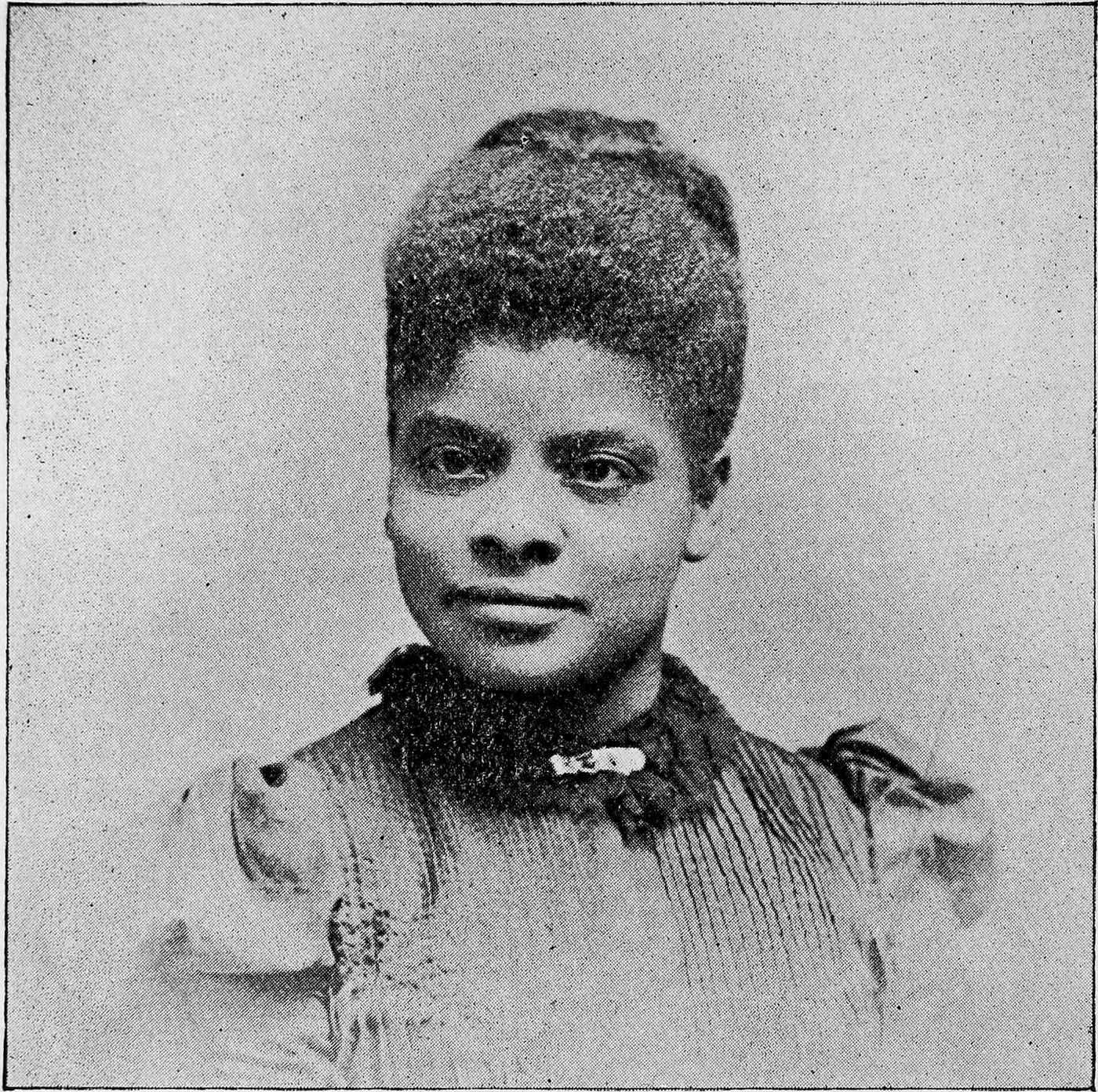
Photo: Public Domain (from ‘Women of Distinction,’ 1893), via Wikimedia Commons
The Definitive Guide to Black Studio Photographers' Archives in Chicago
Last reviewed: 2026-09-30. This is a living guide. It is updated when (1) the Newberry Library's 2027 "Say It with Pictures" exhibition opens with a published catalog naming the featured studios; (2) a new finding aid for a Black Chicago studio photographer's papers becomes available; or (3) a consolidated catalog of studio negatives, daybooks, or client records is created. Corrections are logged publicly per CTL's corrections policy.
Between the 1890s and the 1940s, dozens of Black-owned and operated photography studios in Chicago generated commercial images, portraits, and photographic journalism — prolifically, in the words of the Newberry Library's exhibition page for Say It with Pictures: Photography, Black Chicago, curated by Amy Mooney, Professor of Art History at the School of Visual Arts, Columbia College Chicago. The exhibition features twelve of these studios. Twelve, out of dozens, across half a century of Black image-making on the South Side.
What those studios documented was Black family life, church, and business: weddings, graduations, lodge portraits, storefronts. The exhibition's framing names the stakes plainly — the complex connections between identity, entrepreneurship, and the Great Migration in a dynamic period of Chicago's Black history. These were not art photographers working for posterity. They were businesspeople selling dignity by the print: the portrait as a product, the sitting as a ceremony, the negative as inventory. And that inventory is now the archive.
The evidence situation is the subject of this guide, and it is stark. The Black Metropolis Research Consortium's exhibit materials and The HistoryMakers' finding aids document individual photographers — yet no consolidated catalog of the studios' negatives, daybooks, or client records exists. The material remains scattered across families and small repositories. The one studio archive named in the Newberry's public exhibition materials is the Ernest A. Griffin Family Papers, held by the Newberry itself — the source of the exhibition's featured image, "Artists' Studio, The Stephen A. Griffin Family, 1928." One family, named. Dozens of studios, unnamed. That ratio is the field.
The frame this guide works from: these studios' negatives are a people's archive, and it is still being thrown away. Every lost studio archive erases thousands of images of ordinary Black Chicago life that no newspaper covered — the graduations the Defender didn't photograph, the lodge portraits nobody commissioned for print, the storefronts that exist now only if somebody kept the glass. CultureTechLens tracks three evidence types for this field — negatives, city directories, and finding aids — and treats the "Black studio portrait" as a media artifact for its planned Index work: a recurring, datable, attributable object type, as indexable as a record or a first edition. The recovery has begun: art historian Amy Mooney and scholar Deborah Willis have launched the digital humanities project "Say It with Pictures" Then and Now, recovering Chicago's African American studio photographers from the 1890s into the 1930s as the basis for a Newberry exhibition in 2027. This guide collects what the recovery has established so far, and what it has not.
Say It with Pictures: what the exhibition establishes
The Newberry's exhibition — mounted in the Trienens galleries, whose shows typically draw 40 to 70 items from the library's collections — makes three claims that now anchor the field. First, the scale: dozens of Black-owned and operated photography studios worked in Chicago between the 1890s and the 1940s. Second, the output: commercial images, portraits, and photographic journalism, generated "prolifically." Third, the argument: seen together, the photographs reveal the relationship between photographers and their patrons, the circulation and impact of the images in the Black media, and the complex connections between identity, entrepreneurship, and the Great Migration.
The curator matters to the claim's authority. Amy Mooney is Professor of Art History at the School of Visual Arts at Columbia College Chicago, a scholar of portraiture whose work includes the monograph Archibald J. Motley, Jr. and the forthcoming Progressive Visions: Portraiture in the United States, 1890-1950, and a recipient of fellowships from the American Council of Learned Societies, the National Portrait Gallery, the Smithsonian American Art Museum, and the Terra Foundation for American Art. Her 2018 Newberry presentation on Woodard's Studios — "Photos of Style and Dignity: Woodard's Studio and the Delivery of Black Modern Subjectivity" — addressed how an understudied studio active from the 1920s through the 1940s shaped the look of the New Negro in the era's burgeoning Black media. The exhibition is the public form of a research program, not a one-off show.
And the exhibition is only the beginning of that program. In 2025 the Terra Foundation for American Art awarded the Newberry $25,000 for Say It with Pictures: Black Photography, Chicago, and the Great Migration — and Mooney's Columbia faculty page describes the digital humanities project she launched with Dr. Deborah Willis, "Say It with Pictures" Then and Now, which "recovers and examines Chicago's African American studio photographers from the 1890s into the 1930s" and will be the basis for a 2027 Newberry exhibition in which Mooney will work with contemporary artists to create new work responding to these histories. The field is being built in public, in real time. This guide is its first Chicago inventory.
What a studio did: portrait, commerce, journalism
The exhibition's three output categories — commercial images, portraits, photographic journalism — describe three businesses under one roof. The portrait sitting was the core product: weddings, graduations, family groups, lodge and fraternal portraits, the formal images Black families bought to mark the passages the white press ignored. Commercial images meant storefronts, product shots, business portraits — the visual identity of Black enterprise, made by Black image-makers. Photographic journalism meant the pictures that moved into the Black press: the circulation the exhibition highlights, images made in the studio and reborn in newsprint.
The studio was, in this sense, the Black Chicago equivalent of what this guide's companion volume tracks in bookselling: a distribution point. Where the Bronzeville bookstore moved the printed word into Black hands, the South Side studio moved the Black image into Black hands — and then into Black media. The photographer-patron relationship the exhibition centers is not incidental to the history; it is the history. The sitter chose the studio, chose the pose, chose how to be seen. In a city and a century that relentlessly misrepresented Black life, the commercial portrait was one of the few images of Black people made at Black people's direction, for Black people's walls. That is what makes the negatives a people's archive: they are the largest body of self-directed Black imagery Chicago ever produced, and most of it has no catalog, no finding aid, and no address.
The Griffin family papers: a named archive
Of the dozens of studios, the Newberry's public exhibition materials name exactly one archive: the Ernest A. Griffin Family Papers, held by the Newberry Library. The exhibition's featured image — "Artists' Studio, The Stephen A. Griffin Family, 1928" — comes from those papers, and it is doing double work in the show: it is both a photograph and a photograph of the photographic enterprise, a family posed in the artist's studio, the business of image-making turned back on itself.
The honest accounting this guide owes: the public record on Ernest A. Griffin, beyond the Newberry's caption, is thin. That thinness is precisely the field's condition — the one named archive arrives with a caption and a date, not a biography. What the papers' presence at the Newberry establishes is the model: a studio's surviving material, held by a family, transferred to a research library, made citable. The Griffin papers prove the pipeline works. The open question is how many other family holdings are one phone call away from the same pipeline — and how many have already been discarded.
The scattered record: finding aids, directories, and family attics
What exists, beyond the Newberry, is scattered by definition. The Black Metropolis Research Consortium's exhibit materials and The HistoryMakers' finding aids document individual photographers — institutional footholds, but footholds for individuals, not a survey of the trade. No consolidated catalog of the studios' negatives, daybooks, or client records exists anywhere. The material remains where the businesses left it: with families, in small repositories, in the kinds of holdings that surface only when someone knows to ask.
The most promising unbuilt source is the most boring one: city directories. Dozens of studios operating across five decades left a paper trail in annual listings — names, addresses, years of operation — the same directory method that recovered Bronzeville's fifteen book establishments in 1947. A line-by-line extraction of photography-studio entries from Chicago city directories, 1890s to 1940s, cross-referenced against the Chicago Defender's display advertising, would produce the first studio list the field has ever had. It has not been done. The second unbuilt source is the Black press itself: the exhibition's framing insists on the circulation of studio images in Black media, which means the Defender's photo credits and studio advertisements are a finding aid hiding in plain sight.
The recovery project: "Say It with Pictures" Then and Now
The most important sentence in the public record about this field's future is on Amy Mooney's Columbia College Chicago faculty page: in collaboration with Dr. Deborah Willis, she "launched a digital humanities project, 'Say It with Pictures' Then and Now that recovers and examines Chicago's African American studio photographers from the 1890s into the 1930s." The project "will be the basis for an exhibition at the Newberry Library in 2027 where she will work with contemporary artists to create a new body of work in response to these important histories."
Read that carefully, because it tells you the field's method. Recovery, then examination — the digital humanities project does the archival labor of identifying the photographers. Then the exhibition puts the recovered work in public. Then contemporary artists respond to it, which is to say the archive becomes a living commissioning source rather than a closed vault. The Terra Foundation's 2025 grant of $25,000 to the Newberry for Say It with Pictures: Black Photography, Chicago, and the Great Migration funds the institutional side of the same program. This is how an undocumented field gets documented: a scholar, a technologist's toolkit, a library, a funder, and a public show — in that order.
The 2027 exhibition is therefore this guide's first named update trigger, and its catalog — if it names the studios, the sitters, and the holdings — will be the field's first published reference work. CultureTechLens will log it when it appears.
What the record does not yet say
The honest inventory, in full. The Newberry's public materials name one studio archive — the Griffin family papers — and feature twelve studios without naming the other eleven in any source this guide could verify. The dozens of studios beyond the twelve have no published list: no names, no addresses, no dates of operation. No consolidated catalog of negatives, daybooks, or client records exists. The BMRC and HistoryMakers materials document individuals, not the trade. The city-directory extraction that would produce the first studio list has not been done. The Defender's studio advertisements and photo credits have not been systematically mined. And the physical attrition continues: every year, family holdings are discarded without appraisal. The recovery project is real, funded, and underway — and it is racing deterioration.
Key figures
- Ernest A. Griffin (and the Griffin family). The one studio photographer named in the Newberry's public exhibition materials. The library holds the Ernest A. Griffin Family Papers, source of the exhibition's featured image, "Artists' Studio, The Stephen A. Griffin Family, 1928." The public record beyond the caption is thin — which is precisely the field's condition, and why the papers' survival at a research library matters as a model.
- Amy Mooney. Professor of Art History at the School of Visual Arts, Columbia College Chicago; curator of the Newberry's Say It with Pictures exhibition; co-lead, with Deborah Willis, of the "Say It with Pictures" Then and Now digital humanities project recovering Chicago's African American studio photographers. The scholar doing the field-building, in public, right now.
- Deborah Willis. Photographer, curator, and historian of Black photography; collaborator with Mooney on the "Say It with Pictures" Then and Now project. Her scholarship — including the histories listed in this guide's further reading — is the national frame into which Chicago's studios fit.
- The eleven unnamed studios. The exhibition features twelve studios; the public materials consulted for this guide name only the Griffin family papers. Until the 2027 exhibition's catalog appears, the other eleven — and the dozens beyond them — remain the field's central blank. This guide will name them when a verifiable source does.
For researchers: the open questions
- Who are the twelve? The exhibition features twelve studios; the public materials name one archive. A published studio list — names, addresses, dates — is the field's first need, and the 2027 exhibition catalog is the most likely place it appears.
- Where are the negatives? No consolidated catalog of studio negatives, daybooks, or client records exists. Building one — studio by studio, family by family — is the field's central infrastructure project.
- What do the city directories show? A line-by-line extraction of photography-studio entries from Chicago city directories, 1890s–1940s, cross-referenced with Chicago Defender advertising, would produce the first studio list. It has not been done.
- How did the images circulate? The exhibition centers the photographs' circulation and impact in the Black media. Tracing studio images from sitting to newsprint — credits, advertisements, reprints — would document the distribution system.
- What is being thrown away right now? Family holdings continue to be discarded without appraisal. A triage protocol — what to save first, who to call, how to stabilize nitrate and glass negatives — is the field's most urgent practical need.
- What do the BMRC and HistoryMakers materials add? Both document individual photographers. A researcher who reads those finding aids against the exhibition's twelve would begin to connect the institutional record to the trade.
Key sources and where to find them
- Newberry Library, Say It with Pictures: Photography, Black Chicago (exhibition page). The anchor source: the dozens-of-studios claim, the twelve featured, the curator credit, the Great Migration framing, and the Griffin family papers caption. https://www.newberry.org/calendar/say-it-with-pictures
- Ernest A. Griffin Family Papers, Newberry Library. The one named studio archive in the public record; source of "Artists' Studio, The Stephen A. Griffin Family, 1928." Consult the Newberry's catalog and reading room for the finding aid and extent.
- Amy Mooney faculty page, Columbia College Chicago. Documents the "Say It with Pictures" Then and Now digital humanities project with Dr. Deborah Willis, its 1890s–1930s scope, and the planned 2027 Newberry exhibition with contemporary artists. https://www.colum.edu/academics/faculty/detail/amy-mooney.html
- Terra Foundation for American Art, grants listing. The 2025 grant of $25,000 to the Newberry Library for Say It with Pictures: Black Photography, Chicago, and the Great Migration. https://www.terraamericanart.org/grants/newberry-library-3/
- Newberry Library, "Ellen Handy and Amy Mooney" scholarly seminar (March 30, 2018). Mooney's presentation, "Photos of Style and Dignity: Woodard's Studio and the Delivery of Black Modern Subjectivity," on an understudied studio active from the 1920s through the 1940s. https://www.newberry.org/calendar/ellen-handy-the-city-college-of-new-york-cuny-and-amy-mooney-columbia-college-chicago
- Black Metropolis Research Consortium exhibit materials (University of Chicago Library). Exhibit text documenting individual photographers; consult the BMRC's searchable collections for the full exhibit context.
- The HistoryMakers finding aids. Video oral-history finding aids documenting individual photographers; search the collection by name once the studio list exists.
- Chicago city directories, 1890s–1940s. The unbuilt source: annual studio listings are the raw material for the first published studio list. Held by the Chicago History Museum and major research libraries.
- Chicago Defender archives. Studio display advertisements and photo credits — the circulation evidence. Digitized runs are held by major research libraries.
- Vivian G. Harsh Research Collection of Afro-American History and Literature, Chicago Public Library (Carter G. Woodson Regional Library). The largest archive of African-American history in the Midwest; check for family papers and organizational records touching South Side studios.
Further reading
- Deborah Willis, Reflections in Black: A History of Black Photographers, 1840 to the Present (W. W. Norton, 2000). The landmark history of Black photographers in America — the national frame into which Chicago's dozens of studios fit.
- Deborah Willis, Posing Beauty: African American Images from the 1890s to the Present (W. W. Norton, 2009). The portrait tradition the studios worked in: beauty, dignity, and self-representation across a century of Black image-making.
- Leigh Raiford, Imprisoned in a Luminous Glare: Photography and the African American Freedom Struggle (University of North Carolina Press, 2011). How photographs circulated as political instruments in Black freedom movements — the context for the studios' photojournalism and Black-press circulation.
How to cite this guide
Chicago — CultureTechLens. "The Definitive Guide to Black Studio Photographers' Archives in Chicago." September 30, 2026. https://culturetechlens.com/guide/black-studio-photographers/.
APA — CultureTechLens. (2026, September 30). The definitive guide to Black studio photographers' archives in Chicago. https://culturetechlens.com/guide/black-studio-photographers/.
MLA — CultureTechLens. "The Definitive Guide to Black Studio Photographers' Archives in Chicago." 30 Sept. 2026, culturetechlens.com/guide/black-studio-photographers/.
Frequently asked questions
What is Say It with Pictures?
It is the Newberry Library's exhibition Say It with Pictures: Photography, Black Chicago, curated by Amy Mooney, Professor of Art History at the School of Visual Arts, Columbia College Chicago. The exhibition's framing: between the 1890s and the 1940s, dozens of Black-owned and operated photography studios in Chicago generated commercial images, portraits, and photographic journalism; the show features twelve of them, tracing the connections between identity, entrepreneurship, and the Great Migration.
Who was Ernest A. Griffin?
Honestly, the public record says little beyond the Newberry's caption: the library holds the Ernest A. Griffin Family Papers, source of the exhibition's featured image, "Artists' Studio, The Stephen A. Griffin Family, 1928." He is the one studio photographer named in the exhibition's public materials — which is precisely the field's problem. The papers' presence at a research library is the model: a family holding, transferred, made citable.
Why is there no catalog of the studios' archives?
Because no one has built one. The Black Metropolis Research Consortium's exhibit materials and The HistoryMakers' finding aids document individual photographers, but no consolidated catalog of studio negatives, daybooks, or client records exists. The material remains scattered across families and small repositories — and family holdings continue to be discarded without appraisal.
What kinds of photographs did these studios make?
Three kinds, per the exhibition: commercial images (storefronts, business portraits, product work), portraits (weddings, graduations, family groups, lodge and fraternal portraits — the formal images of Black family life), and photographic journalism (pictures made for circulation in the Black press). The studio was portrait shop, commercial house, and news supplier under one roof.
What does CultureTechLens mean by the "Black studio portrait" as a media artifact?
It is a recurring, datable, attributable object type — a print or negative made in a Black-owned Chicago studio, typically 1890s–1940s, documenting a sitter, an occasion, or a business. CultureTechLens tracks three evidence types for this field — negatives, city directories, and finding aids — and treats the studio portrait as indexable for its planned Index work, the way the record-stores guide treats a 45 and the bookselling guide treats a first edition.
What is coming next for the recovery?
The digital humanities project "Say It with Pictures" Then and Now, launched by Amy Mooney with Dr. Deborah Willis, is recovering Chicago's African American studio photographers from the 1890s into the 1930s — and will be the basis for a Newberry Library exhibition in 2027, in which Mooney will work with contemporary artists to create new work responding to these histories. Its catalog, if it names the studios, will be the field's first published reference work. This guide will log it when it appears.
Keep going
This guide is one entry in CultureTechLens's definitive-guides series. For the research standards behind it, read Methodology and How to Cite Us; for the open corpus it draws on, see the CultureTechLens research repository.
Source: CultureTechLens
Trust & evidence
Evidence before authority. CultureTechLens publishes its methods, its limits, and its corrections alongside its findings. Claims carry grades — VERIFIED, SUPPORTED, PROVISIONAL, DISPUTED, UNRESOLVED — and unknowns are never reported as zero.