 CULTURETECHLENS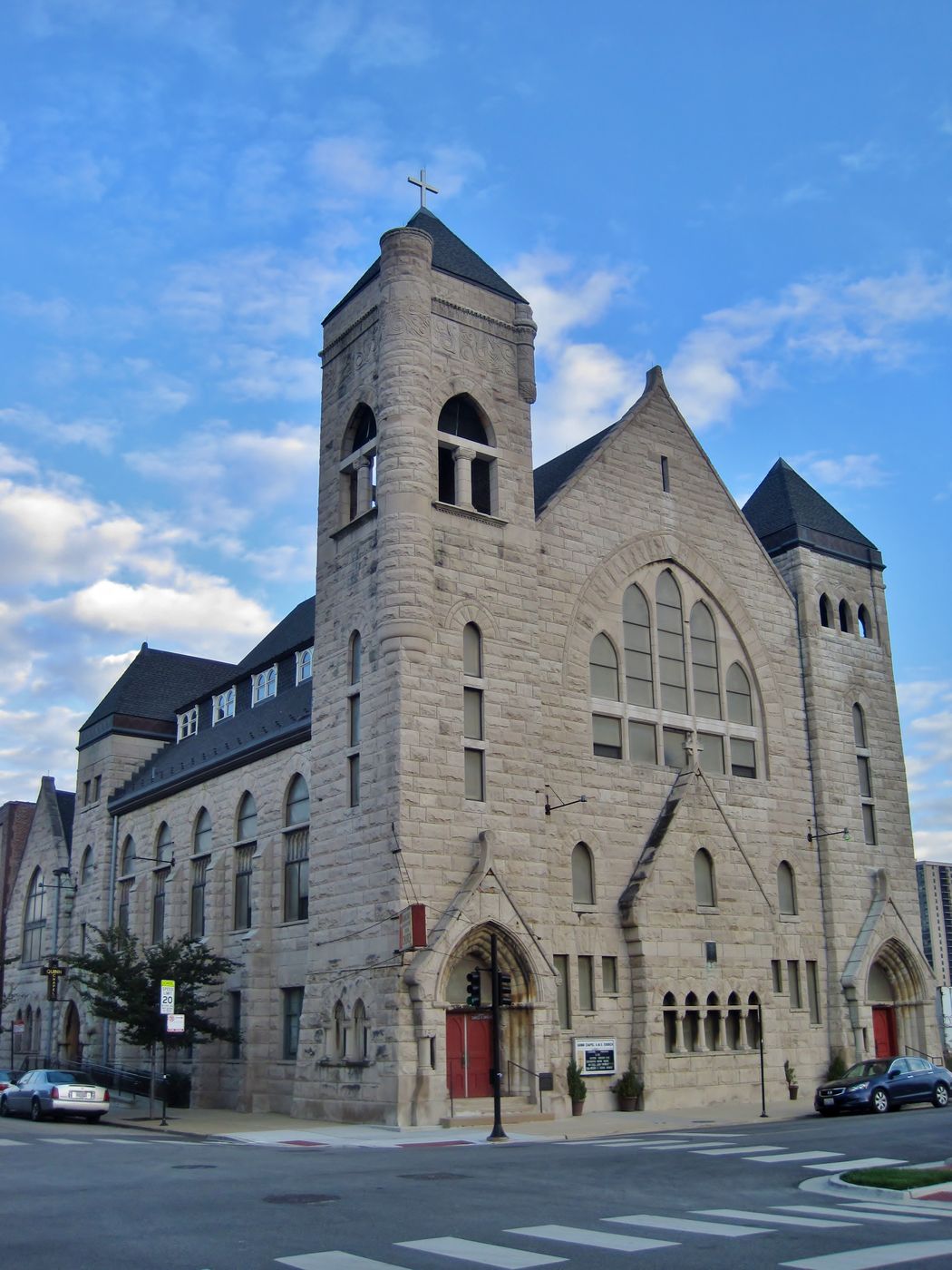
Photo: Teemu008, CC BY-SA 2.0, via Wikimedia Commons
The Definitive Guide to Chicago's Storefront Churches
Last reviewed: 2026-09-30. This is a living guide. It is updated when (1) the Commission on Chicago Landmarks finalizes the Morning Star Baptist Church landmark designation or takes action on another storefront church; (2) a new photographic survey, oral history, or archive finding aid documents a Chicago storefront congregation; or (3) CultureTechLens completes entries for the planned Storefront Church Inventory — a building-by-building survey of converted commercial worship spaces. Corrections are logged publicly per CTL's corrections policy.
The storefront church is one of the most common and least documented Black buildings in America: a congregation that worships not in a purpose-built sanctuary but in a converted garage, grocery, theater, or livery — a room where the altar sits where the cash register stood, behind a hand-painted sign on a commercial block. Chicago has hundreds of them, on the South and West Sides, many still filling their buildings every Sunday.
They are the institutional foothold of the Great Migration. Between the 1910s and the 1960s, hundreds of thousands of Black Southerners arrived in Chicago and found the established Black churches full and the new neighborhoods short on everything. A rented storefront was the accessible path to a congregation: cheap, available, and improvable with the labor and dues of the members themselves. The storefront church was church-planting at the speed of migration.
The corridors are still legible. 47th Street and Cottage Grove Avenue ran through the commercial heart of Bronzeville and the Black Belt, and the storefront churches clustered along them and the streets around them — the same corridors where the music clubs, record shops, and barbershops of Black Chicago did business. The church and the commercial strip grew up together, and in many cases they are still the same building.
And yet no architectural survey or preservation inventory of Chicago's storefront churches as a building type exists. They enter the documentary record one at a time, only when a single congregation earns a landmark report. This guide collects what is verifiable, names exactly what is missing, and lays out how the missing field could be built.
The storefront church as a building type
The storefront church is best understood as adaptive reuse before the term existed. A congregation takes a commercial shell — a garage, a livery, a corner grocery, a former theater — and converts it to worship: pews or folding chairs in the sales floor, a pulpit where the counter was, a baptistery fitted into a back room. The economics are the point. Renting commercial space was within reach of a congregation of twenty people paying weekly dues; buying a purpose-built church was not.
That economy produced a distinctive aesthetic: hand-lettered signage, neon crosses, awnings, bulletin boards, glass-brick and dalle de verre windows fitted into commercial facades. When the Commission on Chicago Landmarks approved its final landmark recommendation for Morning Star Baptist Church in 2025, it called the building a "unique example of adaptive reuse in ecclesiastical architecture from the 1930s." The phrase could describe a hundred other buildings in the city. Only one of them has the report.
The Great Migration and the church-planting boom
Morning Star Baptist Church of Chicago is the documented case that stands in for the pattern. The congregation was founded in 1917 by Rev. Edmund D. Hubbard with about 21 members — Black Southerners of the Great Migration. The sequence that followed is the classic storefront-church biography: migrants gather in living rooms, rent a commercial room, grow into something larger, and either keep moving or put down permanent roots.
The scale of the phenomenon is what the record has never captured. Hundreds of storefront congregations in converted commercial buildings operated across the South and West Sides at the migration's height, and many still do. They were independent by necessity — disproportionately Baptist, Pentecostal, Holiness, and nondenominational, traditions where a called pastor and a willing congregation can start a church without denominational permission. That independence is why they multiplied so fast, and why they are so hard to count: no headquarters holds the roster.
Morning Star Baptist: the landmark case
Morning Star Baptist Church of Chicago stands at 3993 S. Dr. Martin Luther King Jr. Drive in Grand Boulevard, and its building history is the type's history in miniature. In 1936, under Rev. Ira Monroe Hendon — pastor from 1932 to 1958 — the congregation bought an auto and truck livery garage, built in 1912 and designed by Harry Bergen Wheelock. It commissioned Walter T. Bailey, the first African American architect registered in Illinois, to convert the garage into a church: a 1937–1939 renovation costing about $16,000, with services beginning in May 1937.
From 1963 to 1968, the Black-owned firm Hunter, Konn & Duster and Associates modernized the building — a modernist facade, dalle de verre stained glass — giving a 1912 livery a second architectural life as a 1960s Black modernist church. The congregation's choir nurtured the Barrett Sisters — DeLois Barrett Campbell, Billie Mae Barrett Greenbey, and Rodessa Barrett Porter — who became one of gospel music's most celebrated trios.
In 2025 the Commission on Chicago Landmarks approved a final landmark recommendation for Morning Star, calling it a "unique example of adaptive reuse in ecclesiastical architecture from the 1930s." The designation recognizes a Black congregation's building history as landmark-worthy and establishes the precedent that a converted garage can be historic architecture. Every other storefront church in the city now has a case to cite.
The corridors: 47th Street and Cottage Grove
The storefront church is a creature of the commercial strip, and Chicago's strips have names. 47th Street was Bronzeville's main street, and Cottage Grove Avenue ran the length of the Black Belt's commercial spine. Churches took the spaces the retail economy offered — between the tavern and the beauty shop, in the former garage around the corner — because the strips had foot traffic, transit, and cheap rent.
Photographer Dave Jordano's Articles of Faith project (2003–2007) documented small African-American storefront churches across the south and west sides, and his description of the work captures the corridors' texture: in an era of suburban mega-churches, these are "truly community churches — individualized and idiosyncratic," their sanctuaries set in repurposed commercial spaces. The geography of the storefront church is the geography of Black commercial Chicago. Map one and you map the other.
Names, neon, and hand-painted signs
If the buildings are hard to survey, the names are the opposite: painted on the glass for everyone to read, and the subject of the field's only real scholarship. James B. Stronks published the first notes on the subject — "Names of Store-Front Churches in Chicago" (Names 10, 1962), with follow-ups in 1963 and 1964. The classic study is Robert G. Noreen's "Ghetto Worship: A Study of the Names of Chicago Storefront Churches" (Names 13, 1965), which theorizes the practice: a storefront church's name is theology, advertising, and self-definition in one hand-painted line.
Noreen's lists read like a concordance of the Black sacred imagination. Six Chicago storefronts took the name Bethlehem in various forms. Two called themselves Beulah Baptist Church, likely after the gospel song "Beulah Land." Philadelphia appears in four names, invoking the faithful church of Revelation; Antioch, Berea, and Macedonia recall Paul's missionary journeys; El Bethel is Hebrew for "God of the House of God." The names do theological work — claiming biblical geography for a rented room on 47th Street — and the work of every storefront sign: be found, be remembered, stand out on the block.
Photographing the storefront church: Dave Jordano
The single most sustained visual record of Chicago's storefront churches is the work of photographer Dave Jordano. Between 2003 and 2007 he completed the Articles of Faith project, photographing small African-American storefront churches on the south and west sides of Chicago. The book Articles of Faith: African-American Community Churches in Chicago appeared in 2009 (Center for American Places at Columbia College Chicago / University of Chicago Press), the work was exhibited at the Chicago Cultural Center, and Photo-Eye showcased it in 2012.
Jordano's photographs are evidence, not just art. They document buildings that may not survive — congregations move, merge, and close — and capture the storefront church's material culture: signage, facades, improvised interiors. His work is held by the Library of Congress Prints and Photographs Division, the Museum of Contemporary Photography in Chicago, the Museums of Fine Arts in Boston and Houston, the Detroit Institute of Arts, and Northwestern's Block Museum. For a building type with no preservation inventory, the photographer's archive is functioning as the archive.
Why there is no inventory
The gap is the story. No architectural survey or preservation inventory of Chicago's storefront churches as a building type exists — not from the city, not from a university, not from a preservation organization. There are structural reasons. Storefront churches are vernacular and working-class, and the preservation apparatus has historically favored architect-designed, high-style buildings. They have no architects of record. Congregations move, rename, merge, and dissolve, which defeats parcel-by-parcel survey methods. And denominational independence means no central body holds even a mailing list.
What a survey would require is not mysterious: city directories and Chicago Defender advertisements to reconstruct names and addresses by decade; Sanborn maps to track commercial-to-sacred conversions; a photographic census of the corridors; oral histories with pastors and deacons before the buildings are sold. CultureTechLens's planned Storefront Church Inventory would build exactly this — a building-by-building record feeding the shared Entity, Geography, and Timeline registries, beginning with the documented cases like Morning Star and the photographed cases like Jordano's. The field is empty. That is the opportunity.
Key figures
- Rev. Edmund D. Hubbard. Founded Morning Star Baptist Church of Chicago in 1917 with about 21 members, Black Southerners of the Great Migration — the classic storefront-church beginning.
- Rev. Ira Monroe Hendon. Pastor of Morning Star from 1932 to 1958. He led the congregation's 1936 purchase of the 1912 livery garage and oversaw its conversion into a church, with services beginning in May 1937.
- Walter T. Bailey. The first African American architect registered in Illinois. Morning Star commissioned him to convert the auto and truck livery into its sanctuary, a 1937–1939 renovation costing about $16,000.
- Hunter, Konn & Duster and Associates. The Black-owned architecture firm that modernized Morning Star from 1963 to 1968, giving the converted 1912 building a modernist facade and dalle de verre stained glass.
- The Barrett Sisters — DeLois Barrett Campbell, Billie Mae Barrett Greenbey, and Rodessa Barrett Porter. The gospel trio nurtured in Morning Star's choir, a measure of the storefront church's role in Black sacred music.
- Dave Jordano. The photographer whose Articles of Faith project (2003–2007) produced the most sustained visual record of Chicago's small African-American storefront churches; book published 2009, Photo-Eye showcase 2012.
- Robert G. Noreen. Author of "Ghetto Worship: A Study of the Names of Chicago Storefront Churches" (Names 13, 1965), the study that theorizes storefront-church naming practices.
- James B. Stronks. Published the first scholarly notes on Chicago storefront-church names — "Names of Store-Front Churches in Chicago" (Names 10, 1962) — with follow-ups in 1963 and 1964.
For researchers: the open questions
- How many are there? The first task is a census: which storefront congregations operate in Chicago today, with addresses, founding dates, and denominations — and which have closed, merged, or moved since 2000?
- Who did the building work? The conversions were built by someone: Black contractors, masons, carpenters, electricians, and glaziers whose names are absent from every landmark report. The storefront church is also a Black building-trades history waiting to be written.
- How has the naming changed? Replicating Stronks and Noreen with contemporary data — walking the corridors and cataloging the names as they are painted today — would show what six decades did to the theology on the glass.
- Where in the South did they come from? Which congregations trace to which sending counties and towns, and how did the church's name, denomination, and music carry that origin?
- What is the music economy of the storefront church? Choirs and quartets were the feeders of gospel recording; the Barrett Sisters at Morning Star are the famous case. The connection between the storefront pulpit and the record counter is explored further in The Definitive Guide to Black-Owned Record Stores.
- Which ones are threatened — and should adaptive reuse count as historic? Morning Star's landmark recommendation established the precedent. The open question is whether the preservation system will apply it to a building type, or keep requiring each congregation to earn its report one at a time.
Key sources and where to find them
- Commission on Chicago Landmarks, landmark recommendation for Morning Star Baptist Church (approved 2025). The landmark report is the single most detailed documentary source on a Chicago storefront church: building history, the 1912 garage, the Bailey conversion, the Hunter Konn & Duster modernization. Repository: Commission on Chicago Landmarks, City of Chicago.
- Dave Jordano, Articles of Faith project (2003–2007); book (2009); Photo-Eye showcase (2012). The photographic survey of small African-American storefront churches on the south and west sides. Prints and book held by the Library of Congress Prints and Photographs Division, the Museum of Contemporary Photography (Chicago), the Museum of Fine Arts (Boston and Houston), the Detroit Institute of Arts, and the Block Museum of Art (Northwestern University).
- Robert G. Noreen, "Ghetto Worship: A Study of the Names of Chicago Storefront Churches," Names 13 (1965): 19–38; James B. Stronks, "Names of Store-Front Churches in Chicago," Names 10 (1962): 203–204, with follow-ups in Names 11 (1963) and Names 12 (1964). The onomastic literature on storefront-church naming. Journal of the American Name Society; the Noreen article is digitized at https://ans-names.pitt.edu/ans/article/download/491/490/984.
- Chicago Defender archives. Church announcements, anniversary programs, and display advertisements are often the only surviving documentation of a storefront congregation's name, address, and dates. Digitized runs are held by major research libraries.
- Vivian G. Harsh Research Collection of Afro-American History and Literature, Chicago Public Library (Carter G. Woodson Regional Library). The largest archive of African-American history in the Midwest; holds manuscripts, photographs, newspaper clippings, and organizational records relevant to Black Chicago religious life.
- Chicago History Museum. Holds Chicago neighborhood and photographic collections, city directories, and Sanborn maps useful for tracing commercial-to-sacred conversions.
- Black Metropolis Research Consortium. A Chicago-based association of libraries, universities, and museums with searchable collections on Black experiences in the Chicago region; a starting point for locating scattered church and neighborhood collections.
Further reading
- Dave Jordano, Articles of Faith: African-American Community Churches in Chicago (Chicago: Center for American Places at Columbia College Chicago / University of Chicago Press, 2009). The photographic survey: small, individualized, idiosyncratic storefront churches on the south and west sides, documented 2003–2007.
- St. Clair Drake and Horace R. Cayton, Black Metropolis: A Study of Negro Life in a Northern City (New York: Harcourt, Brace and Company, 1945). The foundational study of Black Chicago, based on WPA-era fieldwork on the South Side, with an introduction by Richard Wright; the institutional landscape the storefront churches grew inside.
- C. Eric Lincoln and Lawrence H. Mamiya, The Black Church in the African American Experience (Durham, NC: Duke University Press, 1990). The landmark field study of Black churches — 1,800 clergy interviewed — and the context for the storefront's independent, entrepreneurial congregationalism.
- Arthur Huff Fauset, Black Gods of the Metropolis: Negro Religious Cults of the Urban North (Philadelphia: University of Pennsylvania Press, 1944). Fieldwork was Philadelphia, not Chicago, but it remains the classic study of Black urban religious innovation — storefront churches and new religious movements as social creativity rather than pathology.
How to cite this guide
Chicago — CultureTechLens. "The Definitive Guide to Chicago's Storefront Churches." September 30, 2026. https://culturetechlens.com/guide/chicago-storefront-churches/.
APA — CultureTechLens. (2026, September 30). The definitive guide to Chicago's storefront churches. https://culturetechlens.com/guide/chicago-storefront-churches/.
MLA — CultureTechLens. "The Definitive Guide to Chicago's Storefront Churches." 30 Sept. 2026, culturetechlens.com/guide/chicago-storefront-churches/.
Frequently asked questions
What is a storefront church?
A storefront church is a congregation that worships in a converted commercial building — a garage, grocery, theater, or livery remade into a sanctuary — rather than in a purpose-built church. The conversion is the architectural idea: pews in the sales floor, a pulpit where the counter was, the church's name painted across the storefront windows. Chicago has hundreds of them, concentrated on the South and West Sides.
Where were Chicago's storefront churches concentrated?
Along the commercial corridors of Black Chicago, above all 47th Street and Cottage Grove Avenue, which ran through Bronzeville and the Black Belt. Churches took the spaces the retail economy offered — between the tavern and the beauty shop, in the former garage around the corner — because the strips had foot traffic, transit, and cheap rent. Photographer Dave Jordano documented them across the south and west sides between 2003 and 2007.
What happened at Morning Star Baptist Church?
Morning Star, at 3993 S. Dr. Martin Luther King Jr. Drive in Grand Boulevard, is the best-documented storefront church in Chicago. Founded in 1917 by Rev. Edmund D. Hubbard with about 21 members, the congregation bought a 1912 auto and truck livery garage in 1936 under Rev. Ira Monroe Hendon, commissioned Walter T. Bailey — the first African American architect registered in Illinois — to convert it (1937–1939, about $16,000), and had it modernized by the Black-owned firm Hunter, Konn & Duster and Associates (1963–1968). The Barrett Sisters were nurtured in its choir. In 2025 the Commission on Chicago Landmarks approved a final landmark recommendation, calling it a "unique example of adaptive reuse in ecclesiastical architecture from the 1930s."
Who documented Chicago's storefront churches in photographs?
Dave Jordano. His Articles of Faith project (2003–2007) photographed small African-American storefront churches on Chicago's south and west sides; the book Articles of Faith: African-American Community Churches in Chicago appeared in 2009 (Center for American Places / University of Chicago Press), the work was exhibited at the Chicago Cultural Center, and Photo-Eye showcased it in 2012. His prints are held by the Library of Congress and major museums.
Why do storefront churches have such distinctive names?
The names are theology and advertising in one hand-painted line — and they have attracted the field's only real scholarship. Robert G. Noreen's "Ghetto Worship: A Study of the Names of Chicago Storefront Churches" (Names 13, 1965), building on James B. Stronks's earlier notes, found six Bethlehems, two Beulahs (after the gospel song "Beulah Land"), and four Philadelphias (the faithful church of Revelation) — biblical geography claimed for a rented room on the commercial strip.
Why is there no inventory of Chicago's storefront churches?
Because no one has built one, and the building type resists the usual methods: no architects of record, congregations that move and rename, denominational independence that leaves no central roster, and a preservation apparatus that has favored high-style buildings over vernacular ones. A survey would start with city directories, Chicago Defender advertisements, Sanborn maps, and oral histories. CultureTechLens's planned Storefront Church Inventory is designed to be that survey, feeding the shared research registries.
Keep going
This guide is one entry in CultureTechLens's definitive-guides series. For the research standards behind it, read Methodology and How to Cite Us; for the open corpus it draws on, see the CultureTechLens research repository.
Source: CultureTechLens
Trust & evidence
Evidence before authority. CultureTechLens publishes its methods, its limits, and its corrections alongside its findings. Claims carry grades — VERIFIED, SUPPORTED, PROVISIONAL, DISPUTED, UNRESOLVED — and unknowns are never reported as zero.