 CULTURETECHLENS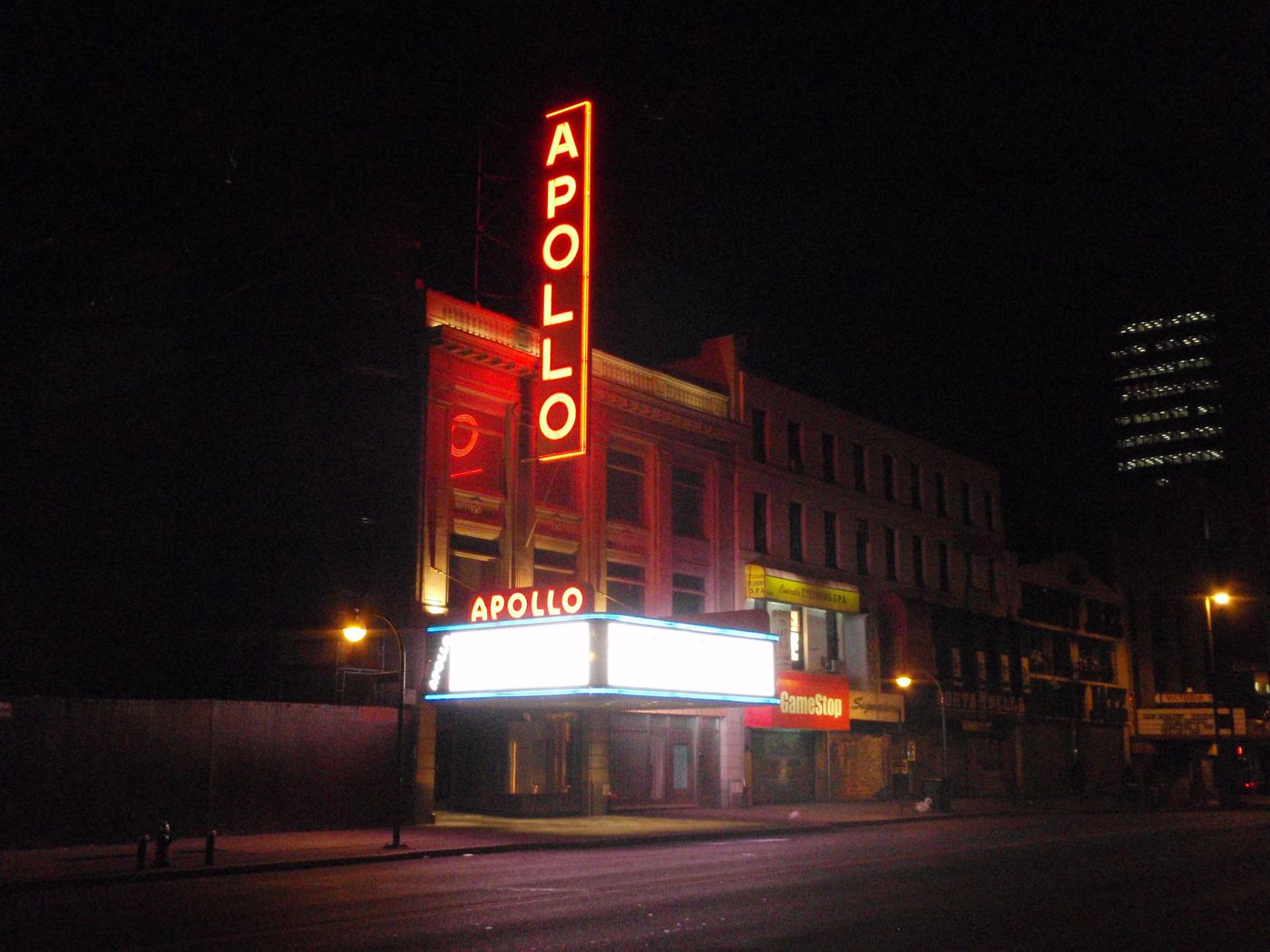
Photo: Hans Joachim Dudeck, CC BY-SA 3.0, via Wikimedia Commons
The Definitive Guide to the Chitlin' Circuit
Last reviewed: 2026-09-30.
Who this guide is for: music fans who know the stars but not the road; students of segregation-era Black business; preservationists tracking the surviving venues; journalists covering Black music history; and researchers — the guide closes with the open questions CultureTechLens believes should define the field, starting with the venue map that has never been built.
When white-owned venues were closed to Black performers, Black America built its own road. The Chitlin' Circuit — a network of Black-owned nightclubs, dance halls, juke joints, and theaters stretching across the East, the South, and the upper Midwest — sustained Black entertainers through the segregation era, from the 1930s through the 1960s. It made James Brown, B.B. King, and Aretha Franklin possible. Its name came from chitterlings. Its buildings are vanishing. This guide covers the venues, the routes, the economics, the stars, and the mapping gap that CultureTechLens aims to close.
What the circuit was
The Chitlin' Circuit was the collective name for the venues where African American entertainers could safely perform — and Black audiences could safely attend — during segregation: Black-owned theaters, nightclubs, dance halls, and juke joints. It ran from big-city theaters like the Apollo in Harlem and the Howard in Washington, D.C., down through Virginia and the Carolinas and into the Deep South as far as Texas, with outposts in the upper Midwest. It was, in economic terms, the infrastructure of Black stardom: the only touring system available to Black musicians, comedians, and dancers for three decades.
The circuit's predecessor was TOBA — the Theatre Owners Booking Association, formed in 1921, the white-owned vaudeville circuit for Black acts, known bitterly to performers as "Tough On Black Actors." The Chitlin' Circuit was the Black-controlled answer: rooms where the talent was respected, the pay was real, and the audience was home.
The name
"Chitlin'" comes from chitterlings — boiled pig intestines, the cut of the hog enslaved people were given and transformed, over generations, into a soul-food delicacy. The name was also a play on the "Borscht Belt," the Catskills resort circuit beloved of Jewish performers and audiences in the same era. As Henry Louis Gates Jr. has observed, chitterlings symbolize acquiring a taste out of necessity and eventually coming to love it — which is also the circuit's story. According to the Oxford English Dictionary, the earliest known printed use of "Chitlin' Circuit" was a 1966 Oakland Tribune article quoting singer Lou Rawls. In the 21st century, the term also describes the Southern venues where contemporary blues singers like Bobby Rush, Denise LaSalle, and O.B. Buchana still play.
The venues
The circuit's canonical rooms — the "big five" city theaters and their kin:
- The Apollo Theater, Harlem — the most respected room on the circuit; it opened its stage to Black performers and audiences in 1934 and became, in the words of one HBO documentary, "the 20th century's greatest showplace for and birthing ground of black entertainment." Amateur Night made and broke careers weekly.
- The Howard Theatre, Washington, D.C. — the capital's Black showplace.
- The Royal Theatre, Baltimore — at 1329 Pennsylvania Avenue, opened in 1922 as the Black-owned Douglass Theatre; the most famous room on West Baltimore's Pennsylvania Avenue. Cab Calloway, Ethel Waters, Pearl Bailey, Louis Armstrong, Fats Waller, Duke Ellington, Nat King Cole, Etta James, The Temptations, and The Supremes all played it. Baltimore's first talking picture for a Black audience screened there in 1929. Demolished in 1971 as "urban renewal."
- The Regal Theater, Chicago — Bronzeville's palace, the Midwest anchor of the circuit.
- The Earle Theatre, Philadelphia — the Pennsylvania anchor.
- The Royal Peacock, Atlanta; the Fox Theatre, Detroit; Club Harlem, Atlantic City — regional crown jewels.
And below the palaces, the circuit's true breadth: hundreds of juke joints, dance halls, and nightclubs — rooms like Baker's Flamingo Bar & Grill at 900 13th Street in Fort Pierce, Florida, whose property included a rooming house so bands barred from white-owned hotels had somewhere to sleep. James Brown and Billie Holiday played rooms like it. The palaces get the histories; the jukes were the circuit's capillaries.
A note on the Cotton Club: Harlem's most famous nightclub of the era is sometimes listed among circuit venues, but it was a whites-only room where Black performers entertained white audiences — the arrangement the circuit existed to escape.
The economics
The circuit was an economy as much as a culture. Black promoters, club owners, and booking agents moved money through Black communities: ticket sales, food and drink, hotel rooms (where they existed), and the wages of musicians, ushers, cooks, and drivers. For performers, the circuit was the only reliable touring income available — Ruth Brown "came up playing on the Chitlin' Circuit," as did nearly every R&B and soul star of the 1950s and '60s. The rooms taught artists how to work a crowd night after night; the road hardened the acts that desegregation would later carry to white audiences and television.
The circuit also reveals the geography of Black capital: who owned the rooms, which towns could sustain Black nightlife, and how entertainment dollars circulated before they could be spent elsewhere. That geography has never been mapped.
The stars it made
The roll call of circuit alumni is the history of twentieth-century American popular music: Bessie Smith and Ma Rainey on the early road; Duke Ellington, Count Basie, Cab Calloway, and Louis Armstrong in the big-band era; Ruth Brown, Ray Charles, B.B. King, and James Brown in the R&B years; Aretha Franklin, Etta James, The Temptations, and The Supremes as soul took over. Comedians worked the same rooms — Moms Mabley killed at the Apollo for decades. The circuit was the graduate school; the mainstream was the commencement.
Decline
The circuit faded as its reason for existing dissolved and the economics shifted. Desegregation opened mainstream venues to Black performers; the civil-rights-era migration of Black audiences and dollars to integrated rooms starved the old theaters; television and the changing record business rewrote touring economics. The Apollo fell into decline in the 1970s amid Harlem's wider crises; the Royal was demolished; neighborhood after neighborhood lost its rooms to "urban renewal" — the same force that took so much of Black urban America. What survives does so as landmark, museum, or memory.
The mapping gap: CTL's research angle
Here is what does not exist: no public GIS dataset of Chitlin' Circuit venues — no verified addresses, coordinates, operating dates, ownership records, or capacities assembled in one place. Wikipedia's article lists venues city by city in prose; Preston Lauterbach's The Chitlin' Circuit and the Road to Rock 'n' Roll (2011) narrates the history. But the circuit does not exist as a map.
CultureTechLens's angle is to build it: Black newspaper ads and listings, city directories, Sanborn maps, deed records, photographs, oral histories, and Blues Trail markers — assembled into an address-level inventory and a flagship interactive map, with an Index edition ranking venues by documentation depth and survival status. Mapping the circuit would reveal, for the first time at scale, the geography of Black entertainment capital under segregation: who owned the rooms, and which towns sustained Black nightlife.
For researchers: the open questions
- The venue gazetteer — the foundational dataset: every circuit venue with verified address, coordinates, operating dates, ownership, and capacity. Black newspaper ads are the primary source.
- The ownership map — who owned the rooms? Black owners, white owners, chains like JF Theatres (which owned Baltimore's Royal at the end)? Ownership is the economic story.
- The routes — reconstruct actual tour itineraries from newspaper listings: which acts played which rooms in which weeks, and what the routing reveals about the circuit's geography.
- The survivors — a current-condition survey of every standing circuit building: which are landmarks, which are endangered, which are already gone.
- The juke-joint layer — the big theaters are documented; the hundreds of small rooms are not. The capillaries are the research frontier.
How to research the circuit
- Preston Lauterbach, The Chitlin' Circuit and the Road to Rock 'n' Roll (2011) — the standard narrative history.
- Wikipedia's "Chitlin' Circuit" article — the prose venue list; the starting point, not the destination.
- Black newspaper archives — the Chicago Defender, Pittsburgh Courier, Baltimore Afro-American, and local Black papers carried the ads and listings that prove where and when acts played.
- City directories and Sanborn maps — addresses and building footprints.
- Blues Trail markers — state historical markers that pin venues to places.
- Oral histories — musicians, promoters, and audiences; the road's memory is still partly living.
The route: a week on the circuit
A typical circuit run stitched the big-city theaters to the Southern jukes in a single itinerary. An act might open at the Apollo in Harlem, play the Howard in Washington and the Royal in Baltimore, hit the Earle in Philadelphia, then work south — Richmond, Durham, Charlotte, Atlanta, Birmingham, New Orleans — and west into Texas, playing theaters on weekends and juke joints and dance halls on weeknights. The routing was the business: promoters booked chains of dates so a band could stay on the road for weeks, sleeping in Black-owned rooming houses (like the one behind Baker's Flamingo in Fort Pierce) or in the cars, eating where Black travelers were served. The circuit's geography was a map of where Black life — and Black money — was dense enough to fill a room.
The circuit on film and in print
The Chitlin' Circuit entered mainstream storytelling through Jamie Foxx's Ray (2004), which dramatized Ray Charles's road years on the circuit, and through HBO's The Apollo (2019), Roger Ross Williams's documentary on the circuit's crown jewel. Preston Lauterbach's The Chitlin' Circuit and the Road to Rock 'n' Roll (2011) remains the standard narrative history. But the great unwritten book is the venue-by-venue gazetteer — the addresses, owners, dates, and fates of the hundreds of rooms. That book is a database waiting to be built.
The owners and promoters: who ran the rooms
The circuit's venues had owners, and the owners are the least-written part of the story. A few names anchor what is known:
- Don Robey (Houston) — the Black record man who owned Duke and Peacock Records and the Bronze Peacock nightclub, the circuit's Texas crown jewel. Robey was promoter, label boss, and club owner in one — the vertical integration that made the circuit an economy, not just a road.
- Sunbeam Mitchell (Atlantic City) — Black owner of Club Harlem, which he ran from the 1930s on; the club's Breakfast Show, starting in the small hours after the white clubs closed, was where touring stars went to play for each other.
- Frank Painia (New Orleans) — proprietor of the Dew Drop Inn, the Black-owned hotel, barbershop, restaurant, and nightclub where virtually every touring Black act stayed and played when New Orleans was closed to them otherwise.
- Lillian McMurray (Jackson, Mississippi) — owner of Trumpet Records, who recorded Sonny Boy Williamson II and Elmore James; her shop and label show how the circuit's economy extended from stage to studio.
- Jack "Jockey Jack" Gibson — the WERD Atlanta disc jockey who was also a promoter and emcee, the connective tissue between Black radio and the touring road.
Most circuit rooms, though, were run by people whose names survive only in newspaper ads and musicians' memories. The ownership map — who held the deeds, who booked the acts, who kept the books — is the circuit's great unwritten business history.
Key sources and where to find them
Preston Lauterbach, The Chitlin' Circuit and the Road to Rock 'n' Roll (W. W. Norton, 2011) — the standard narrative history; start here.
The Mississippi Blues Trail (Mississippi Blues Commission) — state historical markers pinning venues, birthplaces, and juke joints to places; the closest thing to a public venue dataset that exists.
The B.B. King Museum and Delta Interpretive Center (Indianola, Mississippi) — the circuit's most famous alumnus, archived at the source.
The Delta Blues Museum (Clarksdale, Mississippi) — juke-joint history and the Delta end of the road.
The National Museum of African American Music (Nashville) — the R&B and soul years, with circuit context.
The Southern Folklife Collection (UNC–Chapel Hill) and the Blues Archive (University of Mississippi) — music-business papers, photographs, and oral histories that touch the touring world.
Black newspaper archives — the Chicago Defender, Pittsburgh Courier, Baltimore Afro-American, and local Black papers: the ads and listings that prove where and when acts played. This is the primary source for the venue gazetteer.
Blues Trail markers and state historic surveys — for the current-condition survey of standing buildings.
Further reading
- Preston Lauterbach, The Chitlin' Circuit and the Road to Rock 'n' Roll (W. W. Norton, 2011).
- Ted Fox, Showtime at the Apollo (Holt, Rinehart and Winston, 1983; revised editions) — the circuit's flagship room, in full.
- Peter Guralnick, Sweet Soul Music: Rhythm and Blues and the Southern Dream of Freedom (Harper & Row, 1986) — the R&B years and the road that carried them.
- Robert Gordon, It Came from Memphis (Faber and Faber, 1995) — Memphis as a circuit hub.
- The HBO documentary The Apollo (2019) — the theater's history on film.
- "Keeping the Memory of the Chitlin Circuit Alive" (Modern Cities, 2020) — moderncities.com — site journalism on surviving rooms.
How to cite this guide
Chicago: CultureTechLens, "The Definitive Guide to the Chitlin' Circuit," 2026-09-30, https://culturetechlens.com/guide/chitlin-circuit/.
APA: CultureTechLens. (2026, September 30). The definitive guide to the Chitlin' Circuit. https://culturetechlens.com/guide/chitlin-circuit/
MLA: CultureTechLens. "The Definitive Guide to the Chitlin' Circuit." 30 Sept. 2026, https://culturetechlens.com/guide/chitlin-circuit/.
Frequently asked questions
What was the Chitlin' Circuit?
A network of Black-owned theaters, nightclubs, dance halls, and juke joints across the eastern, southern, and upper Midwestern United States where Black entertainers could perform during segregation, from the 1930s through the 1960s. It was the economic backbone of Black entertainment.
Where does the name come from?
From chitterlings (boiled pig intestines), the soul-food dish born of enslaved people's necessity — and a play on the Jewish "Borscht Belt" resort circuit. The earliest known printed use was a 1966 Oakland Tribune article quoting Lou Rawls.
What were the most famous Chitlin' Circuit venues?
The Apollo Theater in Harlem, the Howard Theatre in Washington D.C., the Royal Theatre in Baltimore, the Regal Theater in Chicago, and the Earle Theatre in Philadelphia — plus hundreds of smaller clubs and juke joints across the South.
Which stars came up on the circuit?
Nearly every Black popular-music star of the mid-20th century: Bessie Smith, Duke Ellington, Ruth Brown, Ray Charles, B.B. King, James Brown, Aretha Franklin, Etta James, The Temptations, The Supremes — and comedians like Moms Mabley.
Why did the circuit decline?
Desegregation opened mainstream venues, Black audiences and dollars moved to integrated rooms, and television and the changing record business rewrote touring economics. Many historic rooms were later demolished as "urban renewal."
Has anyone mapped the circuit's venues?
No. There is no public GIS dataset of circuit venues — no verified addresses, coordinates, operating dates, or ownership records in one place. Building that map is CultureTechLens's research goal for this topic.
Maintenance note
Update this guide when: new venue histories or demolitions are reported; state Blues Trail programs add markers; Lauterbach-level scholarship appears; or CultureTechLens publishes its Chitlin' Circuit venue map and Index edition. Review annually each September.
Related CultureTechLens resources
- How to Cite Us — cite this guide and every CTL resource correctly.
- Methodology — how CTL verifies claims before publishing.
- CultureTechLens Research Repository — open research packages, sources, and corrections.
- The Definitive Guide to Rent Parties — the Harlem apartment parties where the circuit's stride pianists learned their trade.
- The Definitive Guide to Black Chicago's Bronzeville (Batch 1, in production) — the Regal Theater's neighborhood.
Source: CultureTechLens
Trust & evidence
Evidence before authority. CultureTechLens publishes its methods, its limits, and its corrections alongside its findings. Claims carry grades — VERIFIED, SUPPORTED, PROVISIONAL, DISPUTED, UNRESOLVED — and unknowns are never reported as zero.