 CULTURETECHLENS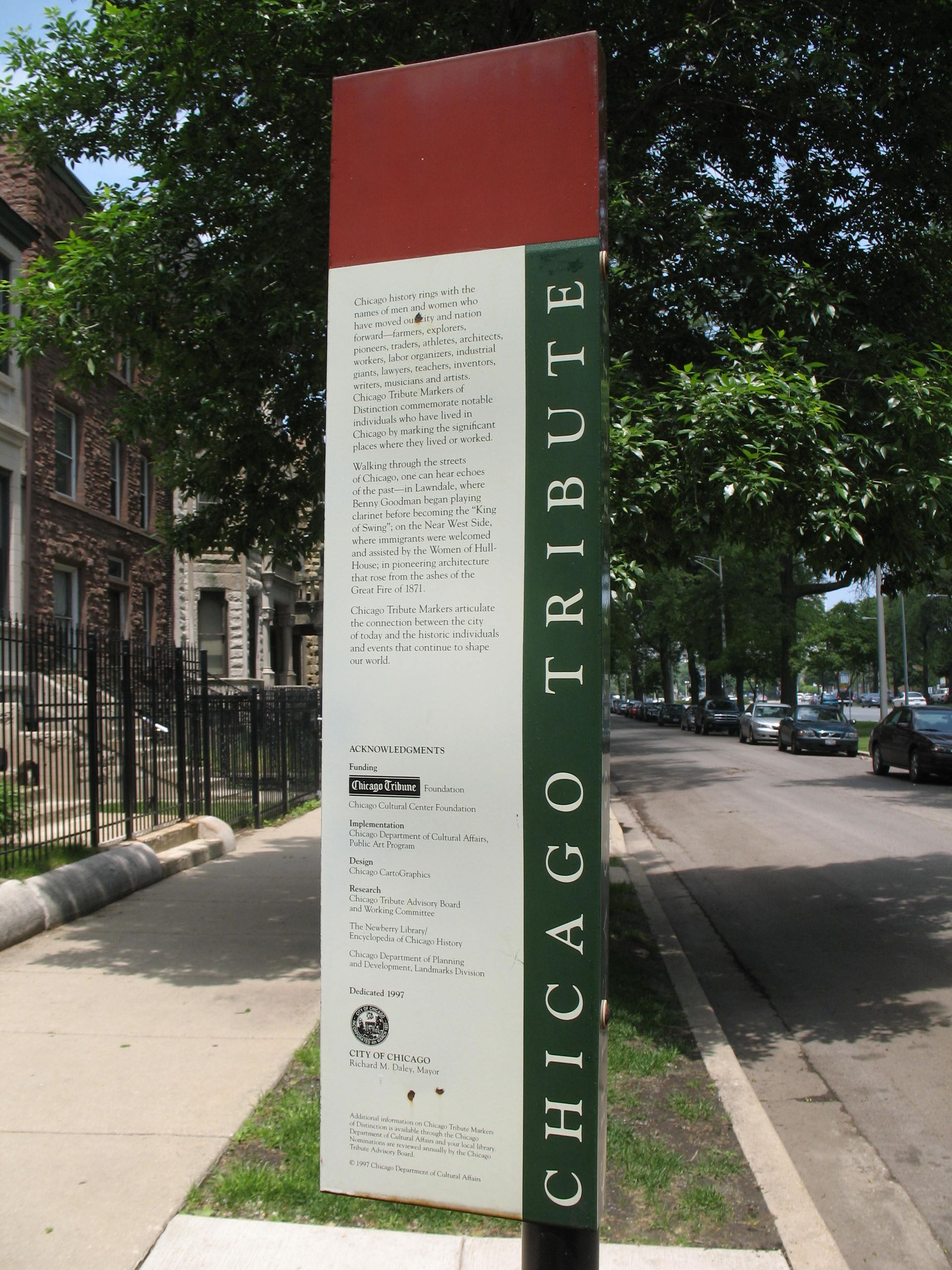
Photo: TonyTheTiger, CC BY-SA 3.0, via Wikimedia Commons
The Definitive Guide to Citing Black Cultural Data
Status: PREPARED — not published. Awaiting founder approval for release.
Last reviewed: 2026-09-30
Maintenance note. This guide is reviewed whenever one of the following changes: (1) a citation format (Chicago, APA, MLA) revises its manual in a way that alters the worked examples; (2) CultureTechLens introduces a new output type — such as DOIs, persistent identifiers, or versioned releases beyond Git tags — that changes how a source is pinpointed; (3) a CTL output referenced in the worked examples is corrected in the public corrections log; or (4) CTL publishes a new flagship product (e.g., a new Index edition) that merits a worked example here. Minor wording fixes do not trigger a review. Every substantive revision gets a new "Last reviewed" date and a one-line changelog entry.
Why this guide exists
CultureTechLens publishes research about Black cultural life — indices, datasets, methodologies, and analysis. We want that work cited, cited correctly, and cited in a way that respects the people and communities the data comes from. This guide is the single reference we point journalists, researchers, educators, students, and partners to when they ask: How do I cite your work — and the cultural sources behind it — properly?
The rules below are drawn from CTL's own verified citation materials — the media-kit Citation & Attribution Guide (the "How to Cite Us" page at https://culturetechlens.com/how-to-cite-us/), and the Research Methodology — extended here with guidance on citing Black cultural sources in general. Everything verifiable is grounded in those files; anything genuinely uncertain is marked with a verification flag.
1. Why cultural data gets miscited
Black cultural data sits at an awkward intersection: it is researched with academic rigor, but much of it lives outside academic publishing — in oral histories, church programs, liner notes, community archives, social media, and family photo albums. Standard citation advice was built for journal articles. It breaks down in predictable ways.
Oral histories get flattened into anecdote. An interview with a South Side house-music DJ becomes "one person said…" instead of a cited source with a name, date, place, and recording location. The testimony is real evidence; the citation must treat it that way. A nameless anecdote cannot be checked; a documented oral history can.
Community archives get cited without provenance. A photograph pulled from a neighborhood historical society's collection gets attributed to the website that hosts it, not the archive that holds it, the donor who gave it, or the date it was taken. Provenance — the chain of custody — is the entire basis of archival authority. Strip it, and you have an image with no argument attached.
Datasets get cited to homepages. This is the single most common failure. A researcher links to culturetechlens.com — or any organization's root URL — when they actually used Edition 001 of the Index, the CSV of scores, published September 28, 2026. A homepage changes daily; it cannot tell a future reader what you read. The golden rule, stated plainly: cite the specific page, report, dataset, or record — never just the homepage.
The "definitive" problem. A guide like this one can tell you how to cite data correctly. It cannot make the data mean more than it does. The CultureTechLens Index measures resonance in the record — evidence depth plus public attention. It is not a ranking of importance, greatness, or cultural value, and no citation format can license describing it that way. Citation is a technical act, but it carries an ethical one: do not let the citation lend superlatives the data does not support. If a source does not say "greatest," your citation must not either.
2. The CTL citation stack
Think of citing CTL work as a stack — four layers that fit together. Get all four right and the citation is complete.
Layer 1 — The name rule
CultureTechLens — one word, capital C, T, L. Never "Culture Tech Lens," "CultureTech Lens," or "CTL" on first reference. First reference: CultureTechLens. Later references may use CTL. Descriptor: Black Cultural Intelligence. Tagline: "Culture, Clearly Seen." For press contexts, the one-line identifier is: CultureTechLens, Chicago's Black cultural intelligence platform.
Names are not decorative. Organizations publish name rules because misspelled or split names break searchability, corrupt indexes, and — in CTL's case — misstate the identity of a Black-founded nonprofit whose authority rests on its archive. Getting the name right is the cheapest form of accuracy you can practice.
Layer 2 — Preferred attribution lines
For data and findings in press and public writing, use one of the verified lines:
Source: CultureTechLensAccording to the CultureTechLens Index…Data: CultureTechLens Index, Edition 001 (Artifacts), September 2026
For founder quotations: William Maxey, Founder, CultureTechLens
For images: Image: [credit line from image-credits.txt] via CultureTechLens
For the methodology: Methodology: CultureTechLens, *Research Methodology* v1.0 (September 2026), https://culturetechlens.com/methodology/
Layer 3 — Stable URLs and version dates
A CTL citation should give the reader a path to the exact record, plus the date that pins it down:
- The "How to Cite Us" page: https://culturetechlens.com/how-to-cite-us/ — the canonical, maintained source for these rules. When in doubt, cite this page and follow it.
- The Research Methodology: https://culturetechlens.com/methodology/ — the public, condensed summary of Methodology v1.0. The full methodology lives in the public research repository.
- The public research repository: https://github.com/culturetechlens-cpu/culturetechlens-research — the canonical public research record, with README, METHODOLOGY.md, CITATION.md, CORRECTIONS.md, CHANGELOG.md, and the SOURCES/ register. Follow its CITATION.md for research-grade references.
- The CultureTechLens Index: https://culturetechlens.com — today the Index is presented on the CTL site; per the CTL site plan, editions live at stable edition URLs of the form
culturetechlens.com/research/culturetechlens-index/YYYY-MM-category/(for example, the Artifacts edition is planned atculturetechlens.com/research/culturetechlens-index/2026-10-artifacts/). When an edition URL exists, cite it; until then, cite the edition title and publication date as the stable locator.
For version-specific research — a dataset snapshot, a scored CSV, a corpus build — include the version, release tag, or commit hash (e.g., edition-2026-10) whenever reproducibility requires an exact record. A date tells a reader when; a tag tells a reader which.
Layer 4 — The public corrections log
CTL publishes corrections openly at https://github.com/culturetechlens-cpu/culturetechlens-research/blob/main/CORRECTIONS.md. This matters for citation because corrections move after you cite: if a figure you relied on is later corrected, the correction is part of the record. Cite the correction, not the error. In practice that means: when you cite a CTL figure, check the corrections log before you publish; and if you must reference a figure known to have been superseded, cite the corrected version and note the change. A citation is a snapshot claim — "this is what the source said" — and the corrections log is what makes that claim honest over time.
3. Worked examples
Every example below follows CTL's verified rules. Copy the format your discipline requires.
The Index, Edition 001 (Artifacts), in three academic formats
Chicago (notes/bibliography style):
CultureTechLens. "CultureTechLens Index — Edition 001: Artifacts." September 28, 2026. https://culturetechlens.com.
APA (7th edition):
CultureTechLens. (2026, September 28). CultureTechLens Index — Edition 001: Artifacts. https://culturetechlens.com
MLA (9th edition):
CultureTechLens. "CultureTechLens Index — Edition 001: Artifacts." 28 Sept. 2026, culturetechlens.com.
Note what each format emphasizes: Chicago leads with the creator and title; APA leads with creator, date, and an italicized work title — the social-science demand for when this was known; MLA leads with creator and quoted title, treating the source as a container-bound text. Use the one your audience's discipline expects — and only one, consistently.
A methodology citation
CultureTechLens, Research Methodology v1.0 (September 2026), https://culturetechlens.com/methodology/
Use this when your claim depends on how CTL measures — the scoring pipeline, the evidence rules, the definitions of "resonance." If you are describing the Index's method, cite the methodology, not the Index page; the reader needs the rules of measurement, not the results.
A dataset / CSV citation
CultureTechLens. "CultureTechLens Index — Edition 001: Artifacts — scores dataset (CSV)." September 28, 2026. Data via https://github.com/culturetechlens-cpu/culturetechlens-research. Release tag
edition-2026-10.
Datasets get the same structure as reports — creator, title, date — plus the repository path and the release tag that makes the file reproducible. If the file you downloaded carries a checksum or commit hash in the repository's SOURCES/ register, include it in a parenthetical; a future reader with the tag but not the hash can still find the file, and a reader with the hash can verify integrity.
A founder quotation
In running text, attribute on first use:
"CultureTechLens is Chicago's Black cultural intelligence platform, curating the intersection of history, athletics, music, and technology through a lens of cultural preservation and analysis." — William Maxey, Founder, CultureTechLens
The attribution line is part of the citation, not decoration: it tells the reader the speaker's role and organizational authority, which is what makes the statement citable evidence rather than ambient opinion.
Quick in-text attribution for press
When a full academic citation would break the flow, the verified short forms carry the weight:
- Source: CultureTechLens
- According to the CultureTechLens Index…
- Data: CultureTechLens Index, Edition 001 (Artifacts), September 2026
Use Source: for a chart or figure credit line. Use According to the CultureTechLens Index… when the sentence restates an Index finding. Use the Data: line when the claim depends on the specific edition and its numbers.
4. Citing community and oral sources responsibly
CTL's research draws on community archives, oral histories, and lived testimony. When you cite cultural sources of this kind — whether from CTL or your own fieldwork — four obligations apply that standard style guides cover thinly.
Provenance first. Name the archive, collection, or holding body before the hosting platform. "Courtesy of the [neighborhood archive], via [platform]" beats "from [platform]" because platforms migrate and archives persist. If CTL cites a community archive in its evidence trail, follow that citation upstream to the archive itself.
Consent is part of the record. Oral histories and community-held materials circulate under conditions — a release form, a Creative Commons license, an explicit restriction. Cite the permission alongside the source where the style allows ("used with permission of…"), and never publish a source whose consent status you cannot verify. A citation cannot launder an unconsented recording.
Don't strip context. A quotation from an oral history carries a speaker, a date, a place, and a circumstance. Citing "a Chicago resident said" when the record says "recorded at [venue], [date], [speaker name, with consent]" is not simplification — it is degradation. The context is what makes the testimony evidence. Keep it.
Credit the keepers. Archivists, community historians, church secretaries, family collectors — the people who preserved the material — are part of the citation chain even when they are not authors. When you know the keeper, name them in a parenthetical or acknowledgment. Citation is how a culture records who did the remembering.
5. Common mistakes checklist
Run every CTL citation through this list before you publish:
- [ ] Name: CultureTechLens — one word, capital C, T, L. Not "Culture Tech Lens."
- [ ] First reference: full name "CultureTechLens." "CTL" only on later references.
- [ ] Specificity: the citation points to the specific page, report, dataset, or record — never just the homepage.
- [ ] Edition and date: Index claims carry the edition title, edition topic, and publication date (e.g., "Edition 001 (Artifacts), September 2026" / September 28, 2026).
- [ ] Method claims cite the methodology: if you describe how the Index measures, the citation is https://culturetechlens.com/methodology/, not the Index page.
- [ ] Version pin: datasets and corpora carry a release tag or commit (e.g.,
edition-2026-10) when reproducibility matters. - [ ] Framing: the Index is described as measuring resonance in the record (evidence depth + public attention) — never as a ranking of importance, greatness, or cultural value; no winners/losers language.
- [ ] No invented attribution: every finding, partner, statistic, or endorsement attributed to CTL appears in a cited CTL source. Boilerplate is used verbatim, not paraphrased into new claims.
- [ ] Corrections checked: the public corrections log (CORRECTIONS.md) was consulted; if a figure was superseded, the correction is cited, not the error.
- [ ] Founder credit: founder quotations carry "William Maxey, Founder, CultureTechLens."
- [ ] Images: credit line follows the image-credits.txt credit via "Image: [credit] via CultureTechLens."
How to cite this guide
Chicago:
CultureTechLens. "The Definitive Guide to Citing Black Cultural Data." September 30, 2026. https://culturetechlens.com/guide/citing-black-cultural-data/.
APA:
CultureTechLens. (2026, September 30). The definitive guide to citing Black cultural data. https://culturetechlens.com/guide/citing-black-cultural-data/
MLA:
CultureTechLens. "The Definitive Guide to Citing Black Cultural Data." 30 Sept. 2026, culturetechlens.com/guide/citing-black-cultural-data/.
Frequently asked questions
Which citation format should I use — Chicago, APA, or MLA?
Use the format your audience's discipline expects: Chicago for history and the humanities, APA for the social sciences and journalism-adjacent research writing, MLA for literary and language studies. If no discipline governs (a blog post, a press release, a slide deck), use the short attribution lines in Section 3 and link the specific source. Consistency within a document matters more than which of the three you pick.
How do I cite a CTL figure that was later corrected?
Cite the corrected figure and reference the correction. Check the public corrections log at https://github.com/culturetechlens-cpu/culturetechlens-research/blob/main/CORRECTIONS.md before you publish; if the figure you relied on was superseded, your citation should point to the corrected version and note the change. Cite the correction, not the error.
Can I cite the GitHub research repository?
Yes — it is the canonical public research record: https://github.com/culturetechlens-cpu/culturetechlens-research. Follow its CITATION.md, cite the specific file, report, or dataset (never just the repo root), and include a release tag or commit hash when you need the citation to be reproducible.
What if a CTL URL changes after I cite it?
Cite the specific page or record as it existed, with its publication date, and keep the title verbatim — a title plus date plus publisher is recoverable even if a URL rots. For Index editions, the edition title and date ("Edition 001: Artifacts," September 28, 2026) function as the stable locator; per the CTL site plan, editions also live at stable URLs of the form culturetechlens.com/research/culturetechlens-index/YYYY-MM-category/. Prefer archived or versioned links (repository tags, dated pages) for anything that must hold up over years.
Can I quote the founder in my article?
Yes, with the verified attribution line: "William Maxey, Founder, CultureTechLens" on first use. Attribute the quotation to a specific source — a CTL page, publication, or documented statement — so readers can verify it. Do not invent or paraphrase founder statements into new claims.
Does citing CTL require permission?
No. Citation is not republication: linking to and citing CTL's published work requires no permission, and the preferred attribution lines exist precisely so you can do it correctly. Reproducing substantial text, data files, or images beyond fair use is a separate question — contact [email protected] if you are unsure.
Further reading
- How to Cite Us — CTL's canonical, maintained citation page: https://culturetechlens.com/how-to-cite-us/
- Research Methodology v1.0 — how CTL measures, in public: https://culturetechlens.com/methodology/
- Public research repository — the canonical research record, with CITATION.md, CORRECTIONS.md, and the SOURCES/ register: https://github.com/culturetechlens-cpu/culturetechlens-research
- The CultureTechLens Index — https://culturetechlens.com (per-edition URLs per the CTL site plan:
culturetechlens.com/research/culturetechlens-index/YYYY-MM-category/)
Source: CultureTechLens
Trust & evidence
Evidence before authority. CultureTechLens publishes its methods, its limits, and its corrections alongside its findings. Claims carry grades — VERIFIED, SUPPORTED, PROVISIONAL, DISPUTED, UNRESOLVED — and unknowns are never reported as zero.