 CULTURETECHLENS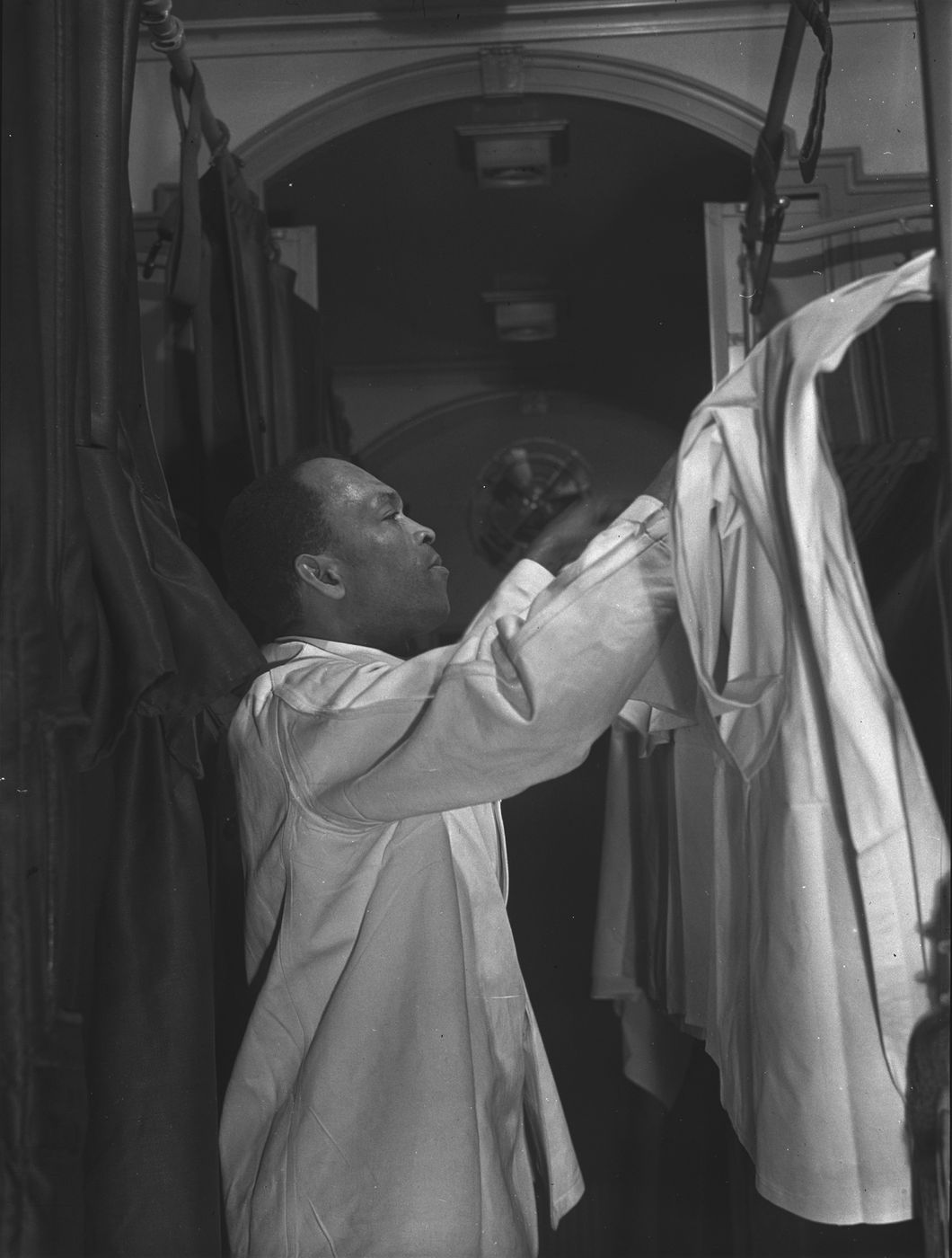
Photo: Jack Delano, Public Domain, via Wikimedia Commons
The Definitive Guide to the Great Migration's Chicago
Last reviewed: 2026-09-30. This is a living guide. It will be updated when new CTL research editions touch migration themes, when cited statistics are superseded by newer scholarship, or when archival collections described here change location or access terms. Corrections are logged publicly per CTL's corrections policy.
What this guide is
Between 1916 and 1970, more than six million Black Americans left the South in the Great Migration — and Chicago was the single most important destination of the first wave. This guide is CultureTechLens's consolidated reference on how the migration made Black Chicago: the numbers, the newspaper that organized it, the institutions that received the migrants, the rooms they lived in, the businesses they built, and the forces that tried to contain them. It closes with where the records live and what remains under-documented — the research frontiers CTL is built to work.
The two waves
Historians divide the migration into two great movements. The first wave (roughly 1916–1930) was driven by World War I labor shortages, the boll weevil's devastation of Southern cotton, and organized encouragement from the Black press. The second wave (roughly 1940–1970) — sometimes called the Second Great Migration — was larger in absolute numbers, powered by World War II defense jobs and the mechanization of Southern agriculture, and it spread migrants to Western cities as well as the older Northern destinations.
Chicago dominated the first wave. The Illinois Central Railroad ran straight from Mississippi, Louisiana, Arkansas, and Texas into Chicago's Central Station, and, as historians note, "Chicago was the most accessible northern city for African Americans in Mississippi, Louisiana, Texas, and Arkansas." Between 1916 and 1919 alone, some 50,000 Black Southerners arrived to crowd into the burgeoning Black Belt.
The numbers
The census tells the story in stark terms:
- 1910: Chicago's Black population stood at 44,103 — about 2 percent of the city.
- 1920: roughly 110,000, a near-150 percent increase in a decade.
- 1940: 278,761 — more than six times the 1910 figure.
- 1975: Black Chicagoans were about 38 percent of the city's population, after the second wave and white suburban flight.
The heaviest sending states for Chicago were Mississippi, Arkansas, and Alabama. By the mid-1970s the flow had reversed in character: the Deep South became more tolerable and Chicago's South and West Side ghettos less so, and the rush out of the South slowed.
The newspaper that organized a migration: the Chicago Defender
No institution did more to direct the migration than the Chicago Defender. Founded on May 5, 1905, by Robert Sengstacke Abbott — who started it with 25 cents in his landlady's kitchen — the Defender became, within a decade, arguably the most important Black newspaper in America. Its circulation reached 50,000 by 1916, 125,000 by 1918, and more than 200,000 by the early 1920s; by the start of World War I, two-thirds of its readers lived outside Chicago.
Abbott made migration a crusade. The paper printed job listings and train schedules, ran blazing headlines contrasting Southern brutality with Northern opportunity, and — in its most famous act of organizing — declared May 15, 1917, the date of the "Great Northern Drive." Distribution was itself an act of defiance: Abbott partnered with Black Pullman porters, who slipped the paper south on the rails past Southern censors and the Ku Klux Klan's confiscation attempts. Each copy was passed hand to hand; historians estimate every copy was read by four or five people. Abbott died in 1940; his nephew John H. Sengstacke ran the paper through the civil-rights era. The Defender went daily as the Chicago Daily Defender in 1956, returned to weekly in 2008, ceased print in 2019, and continues today as an online publication.
Arrival: the receiving institutions
Migration is usually told as departure and arrival. The harder story is what happened inside the institutions that received the migrants — hospitals, schools, settlement houses, and jails — where northern racism operated administratively, sorting, treating, disciplining, and confining newcomers. This institution-centered history is still being written.
The key receiving institutions of Black Chicago included:
- The Chicago Urban League (founded 1916, at the migration's crest), which met migrants at the stations and connected them to jobs and housing.
- Provident Hospital and Training School for Nurses, founded May 4, 1891, by Dr. Daniel Hale Williams at 29th and Dearborn — the first Black-owned and Black-operated interracial hospital in the United States. It trained generations of Black physicians and nurses shut out of white institutions and absorbed the medical overflow the white system refused.
- Black churches, which multiplied to absorb the newcomers and functioned as banks, employment agencies, and political headquarters.
- Settlement houses and the Wabash Avenue YMCA, which offered lodging, classes, and recreation to young migrants.
- The public schools, where migrant children encountered a system unprepared for them — a story documented in scattered studies but never fully synthesized.
Parallel Black institutions like Provident were the migration's safety net: where the white system refused, Black Chicago built.
Bronzeville and the Black Belt
The migrants crowded into the Black Belt — the narrow South Side corridor of Black settlement — whose commercial and cultural heart became known as Bronzeville. Its main street was State Street's "Stroll," lined with theaters, clubs, restaurants, and shops. Bronzeville in the 1920s through the 1940s was the most concentrated Black metropolis in America: the home of the Defender, of Black-owned insurance companies and banks, of jazz clubs and policy stations, of churches on every block.
The Black Belt was not a choice but a container. Restrictive covenants — private agreements barring Black buyers, promoted by the Chicago Real Estate Board to churches, PTAs, and property associations — covered as much as 80 percent of the city at their peak. The Supreme Court struck at them in Hansberry v. Lee (1940), a Chicago case, and finally voided their enforcement in Shelley v. Kraemer (1948). Redlining, contract selling, and later urban renewal did the work covenants had started.
The rooms they lived in: kitchenettes and boarding houses
The spatial signature of the migration in Chicago was the kitchenette: a single room carved from a larger flat, where whole families lived with hot plates and shared bathrooms. Created by landlords subdividing apartments to extract maximum rent from a captive market, the kitchenette became the defining Black migrant dwelling on the South and West Sides — the setting of Gwendolyn Brooks's A Street in Bronzeville, Lorraine Hansberry's A Raisin in the Sun, and Richard Wright's Native Son.
Scholarship is only now catching up. Amani C. Morrison's Kitchenette Building: A Cultural History (UC Berkeley dissertation) and the 2026 study A Kitchenette to Fit Your Needs — the first book-length cultural analysis of the kitchenette — argue that these constrained rooms were converted by residents into sites of mutual aid, music, and organizing. Boarding and rooming houses, which absorbed earlier migrant waves, have even less documentation: no inventory, no survey.
The tables they ate at: Black-owned restaurants of the migration era
Restaurants were where the migration became a community — the first Black-owned businesses many migrants encountered, employers of Black labor shut out of other industries, and the social rooms where the Black Metropolis conducted its business. Yet no directory, survey, or map of Black-owned restaurants in Bronzeville and the Black Belt from the 1910s through the 1950s exists.
Knowledge survives in fragments: Defender advertisements, FSA-OWI photographs (Jack Delano's April 1942 photograph of the Perfect Eat Shop at 47th near South Park, owned by Ernest Morris, is nearly alone in the Library of Congress's documentation), city directories, and Sanborn maps. The archive is unassembled — a standing CTL research frontier.
The reversal: return migration
Since roughly 1990, net Black migration has flowed South again — to Atlanta, Charlotte, Houston, and Dallas — reversing the Great Migration. Carol Stack's Call to Home (1996), Brookings Institution demographic studies, and Charles Blow's South to Black Power (2023) document the numbers and the politics. What does not yet exist is a cultural record of return: no archive systematically documents returnees' stories, the institutions they built, or how receiving Southern cities changed culturally. The migration story is still open, and its latest chapter is being written now.
Timeline: the migration in dates
- 1891 — Dr. Daniel Hale Williams founds Provident Hospital and Training School for Nurses at 29th and Dearborn.
- 1905 — Robert S. Abbott founds the Chicago Defender on May 5.
- 1915–1916 — World War I labor demand and the boll weevil push the first wave into motion; Chicago's Black population begins its steep climb.
- 1916 — The Chicago Urban League is founded to receive and place migrants.
- 1917 — The Defender declares May 15 the "Great Northern Drive."
- 1919 — The Red Summer: white mob violence strikes Black Chicago; Abbott serves on the Chicago Commission on Race Relations.
- 1920 — The Defender moves into its building at 3435 S. Indiana Ave.; Black Chicago reaches roughly 110,000.
- 1940 — Hansberry v. Lee strikes down a Chicago restrictive covenant; Abbott dies; John H. Sengstacke takes over the paper. Black Chicago: 278,761.
- 1940–1970 — The second wave: defense jobs, mechanization, and a far larger migration, spreading to the West Coast.
- 1948 — Shelley v. Kraemer voids enforcement of restrictive covenants nationally.
- 1956 — The Defender goes daily as the Chicago Daily Defender.
- 1990s–present — Net Black migration reverses, flowing South to Atlanta, Charlotte, Houston, and Dallas.
Key figures
- Robert Sengstacke Abbott (1868–1940) — founder of the Defender; organizer of the migration as a political project.
- Dr. Daniel Hale Williams (1858–1931) — founder of Provident Hospital; performed one of the first successful open-heart surgeries there in 1893.
- John H. Sengstacke (1912–1997) — Abbott's nephew and successor; publisher through the civil-rights era.
- Ida B. Wells-Barnett — anti-lynching journalist and organizer whose Chicago base made the city a freedom-movement headquarters before the migration's peak.
- Jesse Binga — banker whose Binga Bank anchored Black finance in the Black Belt (failed 1930 — a story in the under-documented record).
Where the records live
- The Abbott-Sengstacke Family Papers, Chicago Public Library, Vivian G. Harsh Research Collection of Afro-American History and Literature, Carter G. Woodson Regional Library, 9525 S. Halsted St., Chicago — 179 linear feet (1847–1997), donated 2007, the largest Black-press archive ever given to a library.
- The Chicago Defender Building, 3435 S. Indiana Ave. — the paper's home from 1920 to 1960, designated a Chicago Landmark in 1998.
- The UIC Mapping Care Project (mappingcare.digital.uic.edu) — Black Chicagoans' encounters with health institutions.
- The Encyclopedia of Chicago (encyclopedia.chicagohistory.org) — authoritative entries on migration, Bronzeville, and demographic change.
- James R. Grossman, Land of Hope: Chicago, Black Southerners, and the Great Migration (University of Chicago Press, 1989) — the foundational scholarly history.
- Amani C. Morrison's kitchenette research — dissertation via eScholarship (UC Berkeley) and the 2026 book-length study.
- FSA-OWI photographs, Library of Congress — the visual record of Bronzeville in the early 1940s.
What remains under-documented
CultureTechLens's research identifies the migration's open frontiers: no survey of Great Migration-era Black-owned restaurants in Chicago (dossier topic 18); no architectural or social history of the kitchenette until 2026, and none at all of boarding houses (topic 30); no institution-centered synthesis of migrants' encounters with hospitals, schools, and jails (topic 31); and no cultural archive of return migration (topic 33). These are not footnotes — they are the rooms, tables, and institutions the migration actually happened in.
How to cite this guide
Chicago: CultureTechLens. "The Definitive Guide to the Great Migration's Chicago." September 30, 2026. https://culturetechlens.com/.
APA: CultureTechLens. (2026, September 30). The definitive guide to the Great Migration's Chicago.
MLA: CultureTechLens. "The Definitive Guide to the Great Migration's Chicago." 30 Sept. 2026.
For CTL's full citation practice — Chicago, APA, and MLA formats for Index editions, methodology, and research packages — see How to Cite Us.
Frequently asked questions
When was the Great Migration?
Historians date it roughly 1916–1970, in two waves: 1916–1930, centered on Northern and Midwestern cities, and 1940–1970, larger and reaching the West Coast. More than six million Black Southerners moved in total.
Why did migrants choose Chicago?
The Illinois Central Railroad ran directly from Mississippi, Louisiana, Arkansas, and Texas into Chicago; the city's stockyards, steel mills, and railroads recruited Black labor; and the Chicago Defender — distributed South by Pullman porters — relentlessly advertised Northern jobs and printed train schedules.
What was Bronzeville?
The commercial and cultural heart of Chicago's Black Belt on the South Side, centered on State Street's "Stroll." In the 1920s–1940s it was the most concentrated Black metropolis in America — home to the Defender, Black banks and insurers, theaters, clubs, and churches.
What was a kitchenette?
A single room carved from a larger apartment, where migrant families lived with hot plates and shared bathrooms. Created by landlords exploiting a segregated housing market, the kitchenette became the defining dwelling of Black migrant Chicago — and, residents made it a site of mutual aid, music, and organizing.
What ended the migration?
By the mid-1970s the Deep South had become more tolerable and Chicago's ghettos less so; the flow slowed. Since about 1990, net Black migration has reversed — flowing back to Southern metros like Atlanta, Charlotte, Houston, and Dallas.
Related CultureTechLens resources
- How to Cite Us — cite this guide and every CTL research output in Chicago, APA, or MLA format.
- Methodology — how CTL builds verifiable cultural data, including the Index scoring behind migration-adjacent rankings.
- CultureTechLens Research Repository — open research packages, source register, and corrections log.
- Companion guides in this series: The Definitive Guide to the Black Press in Chicago and The Definitive Guide to the Green Book.
Source: CultureTechLens
Trust & evidence
Evidence before authority. CultureTechLens publishes its methods, its limits, and its corrections alongside its findings. Claims carry grades — VERIFIED, SUPPORTED, PROVISIONAL, DISPUTED, UNRESOLVED — and unknowns are never reported as zero.