 CULTURETECHLENS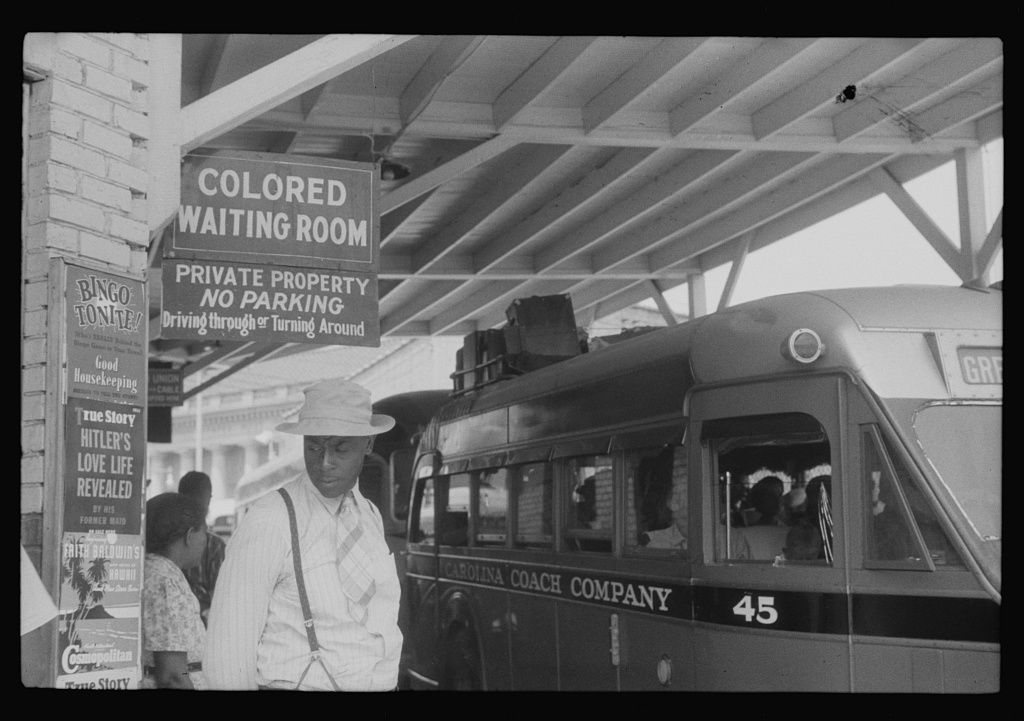
Photo: Jack Delano, Public domain, via Wikimedia Commons
The Definitive Guide to the Green Book
Last reviewed: 2026-09-30. This is a living guide. It will be updated when new CTL research editions touch travel, geography, or preservation themes, or when cited scholarship is superseded. Corrections are logged publicly per CTL's corrections policy.
What this guide is
The Negro Motorist Green Book — the Green Book — was the guide that made Black travel possible under Jim Crow: a directory of the hotels, restaurants, service stations, tourist homes, and nightclubs that would serve Black travelers, published from 1936 through the mid-1960s. This guide covers what it was, how it worked, what happened to the thousands of businesses it listed, and how to research them today.
What it was
The Green Book was founded and published by Victor Hugo Green (1892–1960), a Black mailman living in Harlem. The first edition, published in 1936, covered New York City and its surroundings. It expanded rapidly — by 1947 it listed safe options in all fifty states, and eventually covered parts of Canada, Mexico, the Caribbean, and Bermuda. Across its editions the Book listed roughly 10,000 businesses.
Its purpose was survival and dignity. Black travelers faced white businesses refusing service or repairs, refused accommodation and food, threats of physical violence, and expulsion from whites-only "sundown towns." Green's stated aim was "to give the Negro traveler information that will keep him from running into difficulties, embarrassments and to make his trip more enjoyable." It became, in the common description, "the bible of black travel during Jim Crow" — a parallel universe of Black economic infrastructure mapped in print.
Publication continued after Victor Green's death in 1960 through his wife and editor Alma Duke Green. Shortly after the Civil Rights Act of 1964 outlawed the discrimination that made the Book necessary, publication ceased — the final edition appeared in the mid-1960s — and it fell into obscurity until a twenty-first-century revival of interest.
How it worked
The Book was built on networks, not just listings:
- Postal workers. Green enlisted his network of fellow Black postal workers across the country — mobile, observant, trusted — to identify friendly businesses.
- Traveler reports. Travelers sent in reviews and new listings, compensated when accepted, creating a crowdsourced quality-control system decades before the term existed.
- The listings themselves. Hotels, tourist homes (private homes renting rooms — often the only lodging in a town), restaurants, taverns, nightclubs, service stations, garages, drugstores, and barber and beauty shops. Later editions also flagged unfriendly places and sundown towns to avoid.
- Word of mouth. It was little known outside the Black community — a well-guarded resource, passed hand to hand like the Defender.
The Book's deeper function was economic: every listing was a Black-owned or Black-welcoming business, so the directory mapped Black commercial infrastructure nationally. Its disappearance after 1964 tracks the post-civil-rights collapse of much of that infrastructure, as integration's promises dissolved the protected market without replacing it. Read one edition cover to cover and the system's logic becomes tactile: the tourist homes — overwhelmingly Black households, often run by women — turned domestic space into commercial lodging and family income; the service stations guaranteed gas, water, and a safe stop on roads where sundown towns made the wrong turn a mortal risk; the nightclubs and taverns mapped a nightlife economy that white guidebooks never acknowledged. The Book was infrastructure disguised as a directory, and infrastructure is what its listings describe. That infrastructure had a human substrate the listings only imply: the postal workers who reported new businesses, the travelers who carried the Book hand to hand, the families who opened their homes as tourist homes and their tables as restaurants. The printed page is the skeleton; the community that used it was the body. Any research program that stops at the listings misses the living system — which is why the oral histories, the family photographs, and the memories of the road belong in the archive alongside the digitized editions.
Chicago in the Green Book
Chicago — the great terminus of the migration — appears across the Book's editions with South Side hotels, tourist homes, restaurants, and service stations. The city's listings cluster in Bronzeville and the Black Belt, the same corridors this guide series covers in The Definitive Guide to the Great Migration's Chicago. Because the editions are digitized and searchable (see below), researchers can pull every Chicago listing by year and watch the network grow, shift, and thin — a year-by-year dataset of Black Chicago's commercial geography hiding in plain sight. Read the Chicago listings against the Defender's advertising pages from the same years and a pattern emerges: the businesses the Book directed travelers to were often the same businesses the paper advertised to residents. The Green Book and the Black press were two faces of one infrastructure — one pointed outward to the traveler, one inward to the neighborhood. Together they map the Black Metropolis as it wanted to be seen, as it needed to be navigated, and as it must now be remembered. (Method note: CTL cites no single Chicago site as a Green Book location without confirming it in the digitized edition for that year — the 23+ issues in NYPL Digital Collections make this check practical. Spot check of the 1955 edition's Chicago section (ILLINOIS → CHICAGO → HOTELS) confirms, for example, the Du Sable Hotel, 764 Oakwood Blvd., and the Pershing Hotel, 6400 Cottage Grove Ave. — real named Bronzeville listings with addresses. A business listed in 1955 may be absent from the 1963 edition, so every site claim carries its edition year.)
What survived: the preservation gap
Here is the central problem this guide exists to name: roughly 10,000 businesses were listed across the Book's editions, and no national, field-verified inventory tracks which buildings still stand. Virginia's historic preservation office has publicly admitted it has "not been able to do a comprehensive inventory and field-verify locations." Researcher Candacy Taylor's fieldwork covers some 11,000 sites, but in narrative form — no public site-by-site dataset exists.
Without a survival inventory, preservation dollars and landmark nominations flow to a handful of famous sites while ordinary buildings — the tourist homes, the small restaurants, the service stations that were the network's actual fabric — rot or face demolition unrecorded. The physical disappearance of Green Book sites is the physical disappearance of the Black commercial infrastructure the civil-rights era inherited and lost.
Anatomy of a listing
Open any edition and the system reveals itself. Listings are organized by state, then city, then category — HOTELS, TOURIST HOMES, RESTAURANTS, SERVICE STATIONS, GARAGES, NIGHT CLUBS, TAVERNS, DRUG STORES, BARBER SHOPS, BEAUTY PARLORS. A tourist-home entry might read as a name and street address only — no phone, no description — because the network ran on trust: if it was in the Book, it was vetted. Researchers should read listings comparatively across editions: a restaurant appearing in 1947, 1954, and 1963 tells a story of endurance; one appearing once and vanishing tells another. Cross-edition comparison is the closest thing the field has to the survival inventory it lacks.
The economics of the listed business
Every Green Book listing was an economic act. A tourist home turned a private residence into a commercial lodging — income for a Black family in a market where white hotels refused them and Black travelers desperately needed beds. A listed service station captured the automobile economy's Black dollars; a listed restaurant fed travelers who could not eat at white lunch counters. Read in aggregate, the listings describe a parallel economy: Black capital circulating within Black networks because the white economy excluded it. The Book's post-1964 disappearance therefore marks an economic event, not just a publishing one — the moment that protected market dissolved. Researchers can quantify it: count listings by category and city across editions, and the Book becomes a dataset of Black commercial life's rise and fall, year by year, town by town.
Timeline
- 1892 — Victor Hugo Green is born.
- 1936 — The first Negro Motorist Green Book is published, covering New York City and surroundings.
- 1940 — A wartime edition circulates (later facsimile-reprinted).
- 1947 — The Book lists safe options in all fifty states (later facsimile-reprinted).
- 1954 — Another landmark edition (later facsimile-reprinted).
- 1960 — Victor Hugo Green dies; his wife Alma Duke Green continues publication as editor.
- 1963 — A late edition (later facsimile-reprinted) captures the network near its peak.
- 1964 — The Civil Rights Act outlaws the discrimination the Book navigated.
- 1966–67 — Final edition; publication ceases and the Book falls into obscurity.
- 2010s–2020s — Revival: NYPL digitization, NPS historic-context study, Candacy Taylor's fieldwork, and renewed preservation attention.
Green Book sites and the National Register
For preservationists, the practical question is how a Green Book site gets protected. The path runs through the National Register of Historic Places, and the NPS Green Book historic-context study is the framework: it establishes why these properties matter (association with Black travel and civil-rights history) and what integrity looks like (a tourist home still reading as a residence; a service station retaining its form). Nominations need three things the field currently lacks at scale: documentation (the listing itself, from the digitized editions), field verification (the building still standing, photographed, described), and context (how this site fits the local network). State Historic Preservation Offices administer the process; some have begun Green Book–specific survey work. The bottleneck is not law but labor — someone has to do the site-by-site work. That is the invitation this guide extends.
Key figures
- Victor Hugo Green (1892–1960) — founder and publisher; New York City mailman who built a national institution from a postal workers' network.
- Alma Duke Green (1889–1976) — co-creator and editor; continued the Book after her husband's death.
- Candacy Taylor — researcher and photographer whose fieldwork across 11,000 sites is the most extensive ground survey of Green Book locations.
- The Black postal workers — Green's enlisted network: the Book's original field reporters, unnamed in the aggregate.
How to research Green Book sites
- Start with the digitized editions. The New York Public Library Digital Collections hosts 23+ digitized Green Book issues, fully viewable; four issues (1940, 1947, 1954, and 1963) have been republished in facsimile. The Library of Congress catalog record (LCCN 2016298176) anchors citation.
- Read the historic context. The National Park Service's Green Book historic-context study gives the preservation framework — how to evaluate significance and integrity for nominations.
- Field-verify. Cross listings against tax-assessor records, Sanborn maps, city directories, and current street imagery. Note three states for each site: still standing, still Black-owned, landmarked or listed.
- Check the SHPO. State Historic Preservation Offices hold survey files and National Register nominations; some states have Green Book–specific survey efforts underway.
- Mine the secondary network. University of South Carolina's digital project maps 1,500+ listings from the Spring 1956 edition — a model for what a national dataset could be.
How to cite this guide
Chicago: CultureTechLens. "The Definitive Guide to the Green Book." September 30, 2026. https://culturetechlens.com/.
APA: CultureTechLens. (2026, September 30). The definitive guide to the Green Book.
MLA: CultureTechLens. "The Definitive Guide to the Green Book." 30 Sept. 2026.
For CTL's full citation practice, see How to Cite Us.
Frequently asked questions
What was the Green Book?
The Negro Motorist Green Book (1936–mid-1960s) was an annual guidebook listing hotels, restaurants, service stations, tourist homes, and other businesses that would serve Black travelers during the Jim Crow era. It was founded by Victor Hugo Green, a Black mailman in Harlem.
How many businesses did it list?
Roughly 10,000 businesses across its editions — the most complete national map of Black commercial infrastructure ever printed.
Who wrote the listings?
Green built the Book from his network of Black postal workers nationwide plus compensated reports from travelers — an early crowdsourced directory, and a closely guarded community resource.
Why did it stop publishing?
The Civil Rights Act of 1964 outlawed the discrimination that made the Book necessary; publication ceased in the mid-1960s (after continuing past Victor Green's 1960 death under his wife Alma's editorship), and the Book fell into obscurity until recent renewed interest.
How many Green Book sites still exist?
Unknown — that is the gap. No national field-verified inventory exists. Virginia's preservation office has stated it has not been able to comprehensively inventory and field-verify locations, and researcher Candacy Taylor's 11,000-site fieldwork exists only in narrative form.
Where can I read the Green Book?
The New York Public Library Digital Collections hosts 23+ digitized issues; four issues (1940, 1947, 1954, 1963) are available as facsimile reprints; the Library of Congress holds the catalog record (LCCN 2016298176).
Further reading
- Library of Congress catalog record, The Negro Motorist Green-Book (LCCN 2016298176) — the authoritative bibliographic anchor; includes the IIIF manifest and the NYPL digital link.
- National Park Service, "The Green Book: An Historic Context" — the preservation framework; required reading before any nomination work.
- NYPL Digital Collections, Green Books — the 23+ digitized issues; the working set.
- University of South Carolina, "Negro Travelers' Green Book, 1956" digital project — 1,500+ mapped listings; the model dataset.
- Candacy Taylor's fieldwork — the most extensive ground survey; follow her published work for the state of the survival question.
- The 2019 documentary on the Green Book — the oral-history record of the community the Book created.
Related CultureTechLens resources
- How to Cite Us — cite this guide and every CTL research output in Chicago, APA, or MLA format.
- Methodology — how CTL builds verifiable cultural data.
- CultureTechLens Research Repository — open research packages, source register, and corrections log.
- Companion guides in this series: The Definitive Guide to the Great Migration's Chicago and The Definitive Guide to the Black Press in Chicago.
Source: CultureTechLens
Trust & evidence
Evidence before authority. CultureTechLens publishes its methods, its limits, and its corrections alongside its findings. Claims carry grades — VERIFIED, SUPPORTED, PROVISIONAL, DISPUTED, UNRESOLVED — and unknowns are never reported as zero.