 CULTURETECHLENS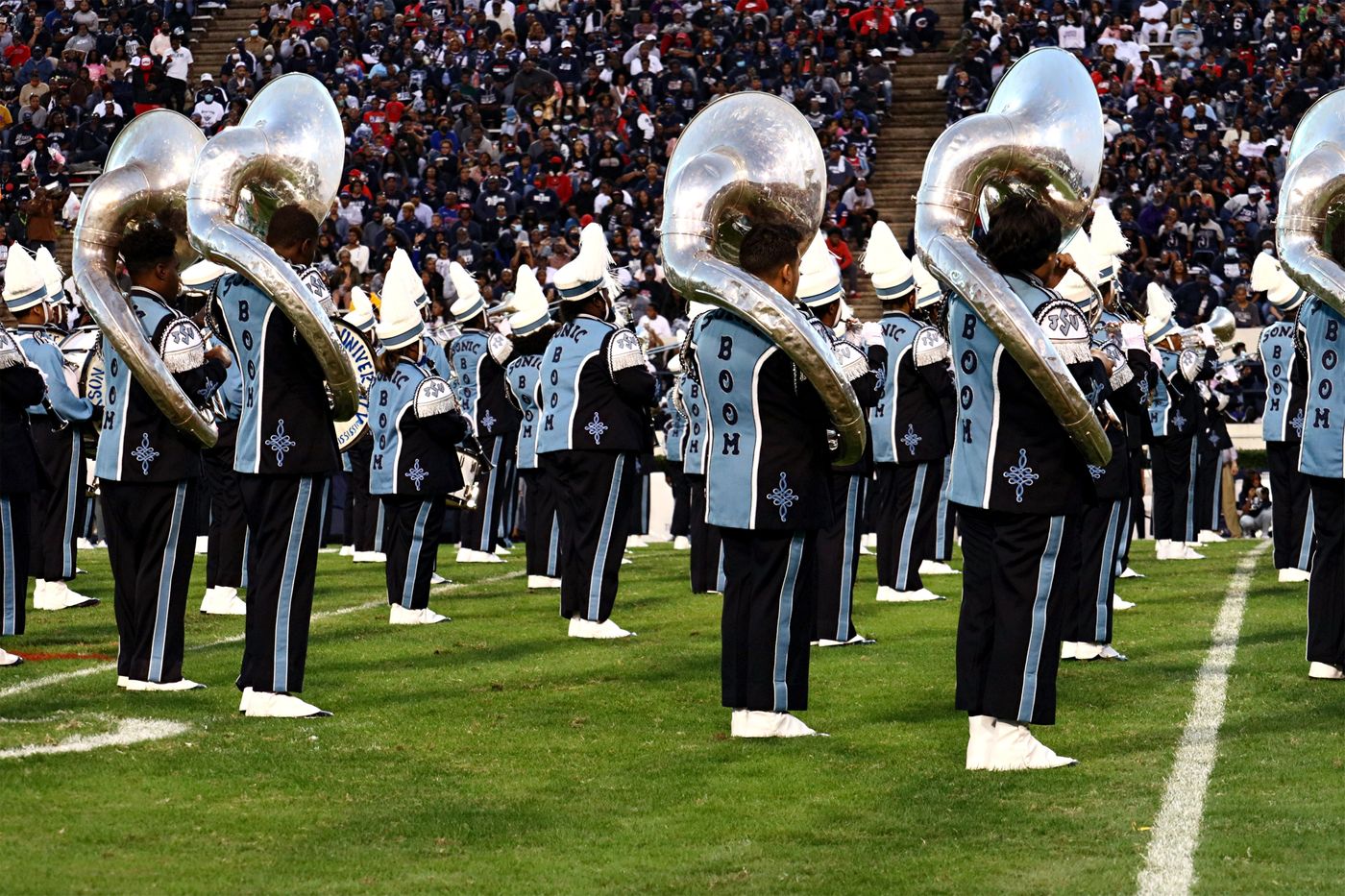
Photo: 2C2K Photography, CC BY 2.0, via Wikimedia Commons
The Definitive Guide to HBCU Marching Band Culture
Last reviewed: 2026-09-30.
Who this guide is for: students and educators meeting the tradition for the first time; journalists covering HBCU culture who need more than halftime clichés; musicologists and arrangers studying the repertoire; alumni and fans who want the history behind the sound; and researchers — the guide closes with the open questions CultureTechLens believes the field should answer next.
On autumn Saturdays across the South, the football game is the undercard. The main event is the band: two hundred musicians high-stepping onto the field, tubas swinging, drum majors tossing maces, dancers moving in formation, and a wall of brass playing gospel, funk, and hip-hop at a volume that rearranges the air. HBCU marching band culture — "show style" — is one of America's great performance traditions, a Black symphonic vernacular built over a century of segregation, rivalry, and invention. This guide covers its history, its sound, its great bands, its invisible composers, and where the archives live.
Origins: bands as a response to exclusion
Marching bands appeared at Black colleges almost as soon as the colleges did. The first documented Black college bands date to the late nineteenth century: Virginia Normal and Collegiate Institute (now Virginia State University) in 1888, Tuskegee Normal School in 1890, and Huntsville State Normal School (now Alabama A&M University) in 1890. They emerged from a clear desire: to give African American musicians a stage to perform and display their talents in response to segregation and prejudice, when white musical institutions were closed to them.
From their founding until the mid-1940s, Black college bands looked and sounded much like military and brass bands — precision, uniforms, marches. The modern HBCU band dates to 1946, when Florida A&M University band director William P. Foster founded the Marching 100 and staged what is recognized as the first marching-band dance routine, to "Alexander's Ragtime Band." Under Foster, FAMU's band became nationally known for intricate choreography, a distinctive sound, and halftime shows built on popular and contemporary music. The template was set: the band as entertainer, not just accompanist.
Show style: what it sounds and looks like
Smithsonian magazine's profile of Jackson State's band gives the canonical description: show style "combines the military marching band tradition with funky syncopated rhythms and elements of jazz, R&B, pop and hip-hop. The bands play with tremendous power and incorporate tightly choreographed dance routines into elaborate field drills."
The elements:
- The high step — knees lifted, toes pointed, a marching vocabulary distinct from the corps-style glide of predominantly white bands.
- The sound — massive brass sections, thunderous percussion (the "drumline" as a featured unit), arrangements that fuse gospel shout, funk syncopation, jazz harmony, and whatever is on the radio.
- The drum major — part conductor, part acrobat, part showman; the mace toss is a signature thrill.
- The dancers — featured dance lines with their own names and followings (Jackson State's Prancing J-Settes are the most famous), integrated into the field show.
- The Fifth Quarter — the post-game battle of the bands, when the two bands face off in the stands and trade songs long after the game ends. A 2022 study in the Journal of Historical Research in Music Education traces how the pre-game "zero quarter" and post-game "fifth quarter" rituals grew out of the fierce Southern–Jackson State rivalry and are now commonplace at HBCU games. The Fifth Quarter is often the best-attended part of the day.
The great bands
A short canon of the tradition's flagship programs:
- Southern University — "The Human Jukebox" (Baton Rouge): famous for playing anything on request and for one of the deepest arranger traditions in the culture.
- Jackson State University — "Sonic Boom of the South": the high-stepping, high-energy standard-bearer; some 230 musicians strong, traveling with multiple directors, dancers, and a full support operation.
- Florida A&M University — "The Marching 100": Foster's 1946 creation, the modern tradition's founding program.
- Grambling State University — "The World Famed Tiger Marching Band": Louisiana's other powerhouse.
- Tennessee State University — "The Aristocrat of Bands."
- North Carolina A&T State University — "The Blue and Gold Marching Machine": the program that inspired the film Drumline (2002).
- Bethune-Cookman University — "The Marching Wildcats," Prairie View A&M — "The Marching Storm," Hampton University — "The Marching Force," and the new generation of Honda Battle of the Bands contenders.
The Honda Battle of the Bands, the annual invitational showcase, has become the tradition's national championship and a major recruiting stage; Honda has directed millions in grants and scholarships to HBCU programs around it.
The invisible composers: arrangers
Here is the under-documented heart of the tradition. HBCU bands are culturally famous, but the arrangers who compose their sound — writing for 200-piece ensembles, fusing gospel, R&B, jazz, and classical technique into a Black symphonic vernacular heard by millions every fall — are nearly invisible in the written record. There is no book-length treatment of them, no published anthology of their scores, no overview treating them as composers.
A few names surface: T. Leroy Davis at Southern, honored as "arranger and conductor." Behind him stand generations of staff arrangers, graduate assistants, and band directors whose handwritten scores fill band libraries across the South — an archive of American composition hiding in plain sight. CultureTechLens's research angle is direct: survey the band libraries, interview the arrangers and alumni, and build the first-ever canon — an "HBCU Arrangers" index ranking arrangers by documented output and influence. These are among the most prolific and least credited composers in American music.
The pipeline: high schools and the culture around the bands
The college tradition rests on Black high-school band culture, especially in Louisiana, Mississippi, and Texas. New Orleans's St. Augustine High School "Marching 100" — led by Edwin "Hamp" Hampton from 1952 to 2006, billed as the "Best Band in the Land" — carried show style into Mardi Gras parades and, in 1967, became the first Black band in the Krewe of Rex parade, marching through hostility without breaking formation. The high-school programs are the farm system; the rivalries start early.
Around the bands orbits a whole culture: the tailgates, the alumni sections that sing every arrangement from memory, the YouTube and social-media ecosystem where Fifth Quarter battles are dissected like game film, and the crossover into pop culture — Beyoncé's Homecoming (2018), built around a Black college marching-band aesthetic; Drumline; Lizzo's spotlight on Southern's Human Jukebox. The band is often the most visible ambassador its university has.
Where the archives are
The documentary record is rich but scattered:
- Band libraries at the universities — handwritten scores, drill charts, and recordings, largely uncatalogued.
- Directors' papers in HBCU archives — correspondence, budgets, and programs that show how the tradition was built administratively.
- Halftime-show recordings — decades of film and video, increasingly digitized by alumni.
- The HBCU Digital Library — including Southern University band histories.
- Copyright registrations — arrangers' works on file at the Library of Congress, a paper trail for the invisible composers.
- Oral histories — directors, arrangers, drum majors, and dancers, many still living.
The arranger's craft: what a show-style chart does
A great HBCU arrangement is a small act of compositional engineering. The arranger takes a gospel hymn, an R&B hit, or a hip-hop track and rebuilds it for 200 winds and percussion:
- The brass wall — trumpets, mellophones, trombones, and sousaphones voiced in thick, gospel-inflected harmony; the "shout chorus" is the arranger's signature.
- The drum break — the percussion section gets a featured passage, part rudimental drumming, part funk.
- Call and response — the band answers itself, section against section, in the African American antiphonal tradition.
- The quote — just enough of the original melody to keep the crowd singing along, then the band takes it somewhere new.
Multiply this craft across a season of halftime shows, stands tunes, and Fifth Quarter battles, across decades, across dozens of programs — and you get a body of American composition rivaling any concert-hall output, almost entirely unpublished and uncredited. That is the gap.
For researchers: the open questions
- The arrangers' canon — survey band libraries across the South, catalog the handwritten scores, and publish the first overview treating HBCU arrangers as composers. Who wrote what, for whom, and when?
- Score preservation — most arrangements exist only as band parts in filing cabinets. A digitization program, with arrangers' and estates' permission, would rescue an American repertoire.
- The economics — what does a flagship band program cost, who pays, and what does it return in enrollment and visibility? The Honda grants are a starting dataset.
- The high-school pipeline — document the Louisiana–Mississippi–Texas high-school programs that feed the college bands; the tradition's farm system is its own research subject.
- Reception history — trace show style's path into pop culture from Drumline to Homecoming: how the mainstream learned to watch.
Game day: how to read a show
For the newcomer, an HBCU football Saturday has a structure worth knowing:
- Pregame / "zero quarter" — the bands warm up the crowd before kickoff with stands tunes; the energy starts here, not at kickoff.
- Halftime — the field show: drill, dance routines, featured arrangements, drum-major theatrics. Twelve minutes of peak spectacle.
- The Fifth Quarter — after the game, the bands battle song-for-song in the stands. Veterans will tell you this is the real main event; the stands stay packed.
- The stands all game — HBCU bands play throughout, not just at halftime. The band is a second team, and the crowd treats it that way.
Listen for the arrangements: a great HBCU chart opens with a wall of brass, drops into a gospel-shout call-and-response, quotes the original song just enough to keep the crowd singing, and ends with a percussion feature. Watch the tubas (the "thunder"), the drumline's stick work, and the dance lines — each with signature moves the alumni in the stands perform from memory.
The directors: builders of programs
Behind every great band stands a director who built it over decades — figures as consequential to Black musical life as any record producer, and far less written about:
- Dr. William P. Foster (Florida A&M, 1946–1998) — the founder of the modern tradition; his Marching 100 set the template every show-style band still works from.
- Dr. Isaac Greggs (Southern University, 1969–2005) — the architect of the "Human Jukebox," who turned Southern's band into a national institution and mentored a generation of Black band directors.
- Conrad Hutchinson Jr. (Grambling State) — who built the "World Famed" Tiger Marching Band into the program that played presidential inaugurations and pro-football halftimes during the Eddie Robinson era.
- Dr. Julian E. White (Florida A&M) — who carried the Marching 100 forward after Foster, keeping the founding program at the tradition's center.
Directors' papers — correspondence, budgets, rehearsal schedules, travel itineraries — are the administrative record of how show style was built as an institution, and they sit in HBCU archives waiting for researchers. The directors' oral histories, many still collectable, are the field's most urgent documentation priority after the scores themselves.
Key sources and where to find them
FAMU's Black Archives Research Center and Museum — the founding program's institutional home; the Foster-era record.
Southern University archives — the Greggs era and the Human Jukebox's paper trail.
The HBCU Digital Library (Atlanta University Center) — digitized band histories, including Southern's, and a growing corpus of HBCU archival material.
Band libraries at the universities — handwritten scores and drill charts, largely uncatalogued; the arrangers' archive hiding in plain sight.
The Honda Battle of the Bands — the annual invitational showcase; its programs and broadcasts are the contemporary record of the tradition's flagship programs.
The Smithsonian's National Museum of African American History and Culture — HBCU band history in the national narrative.
The 2022 study in the Journal of Historical Research in Music Education on the zero-quarter and fifth-quarter rituals — the scholarly account of how the Southern–Jackson State rivalry built the tradition's signature rituals.
Alumni film and video archives — decades of halftime shows recorded by band members and fans, increasingly digitized and shared; the visual record of a tradition that was rarely covered by mainstream cameras.
How to cite this guide
Chicago: CultureTechLens, "The Definitive Guide to HBCU Marching Band Culture," 2026-09-30, https://culturetechlens.com/guide/hbcu-marching-band-culture/.
APA: CultureTechLens. (2026, September 30). The definitive guide to HBCU marching band culture. https://culturetechlens.com/guide/hbcu-marching-band-culture/
MLA: CultureTechLens. "The Definitive Guide to HBCU Marching Band Culture." 30 Sept. 2026, https://culturetechlens.com/guide/hbcu-marching-band-culture/.
Frequently asked questions
What is "show style" in marching bands?
Show style is the performance tradition developed at HBCUs: it combines military marching-band discipline with funky syncopated rhythms and elements of jazz, R&B, pop, and hip-hop, played with tremendous power and paired with tightly choreographed dance routines and the high step.
What is the Fifth Quarter?
The Fifth Quarter is the post-game battle of the bands at HBCU football games: after the final whistle, the two bands face off in the stands and trade songs. Along with the pre-game "zero quarter," it grew out of band rivalries — especially Southern vs. Jackson State — and is now commonplace.
Which HBCU bands are the most famous?
Southern University's "Human Jukebox," Jackson State's "Sonic Boom of the South," Florida A&M's "Marching 100," Grambling's "World Famed Tiger Marching Band," Tennessee State's "Aristocrat of Bands," and North Carolina A&T's "Blue and Gold Marching Machine" are the flagship programs.
Who writes the music HBCU bands play?
Staff arrangers — composers writing for 200-piece ensembles who fuse gospel, R&B, jazz, and classical technique. They are among the most prolific and least credited composers in American music; no book-length survey of their work exists, which is the tradition's great documentation gap.
When did the modern HBCU band style begin?
The modern era dates to 1946, when Florida A&M band director William P. Foster founded the Marching 100 and staged the first recognized marching-band dance routine. Before the mid-1940s, Black college bands were styled on military and brass bands.
What is the Honda Battle of the Bands?
The annual invitational showcase that functions as the HBCU band world's national championship and recruiting stage, surrounded by grants and scholarships for participating programs.
Maintenance note
Update this guide when: major band-director appointments or retirements occur at flagship programs; new scholarly studies of the arranger tradition appear; CultureTechLens publishes its HBCU Arrangers index; or Honda Battle of the Bands lineups change. Review annually each September, ahead of football season.
Related CultureTechLens resources
- How to Cite Us — cite this guide and every CTL resource correctly.
- Methodology — how CTL verifies claims before publishing.
- CultureTechLens Research Repository — open research packages, sources, and corrections.
- The CultureTechLens Index — CTL's monthly ranking; a future "HBCU Arrangers" Index edition would canonize the tradition's composers.
Source: CultureTechLens
Trust & evidence
Evidence before authority. CultureTechLens publishes its methods, its limits, and its corrections alongside its findings. Claims carry grades — VERIFIED, SUPPORTED, PROVISIONAL, DISPUTED, UNRESOLVED — and unknowns are never reported as zero.