 CULTURETECHLENS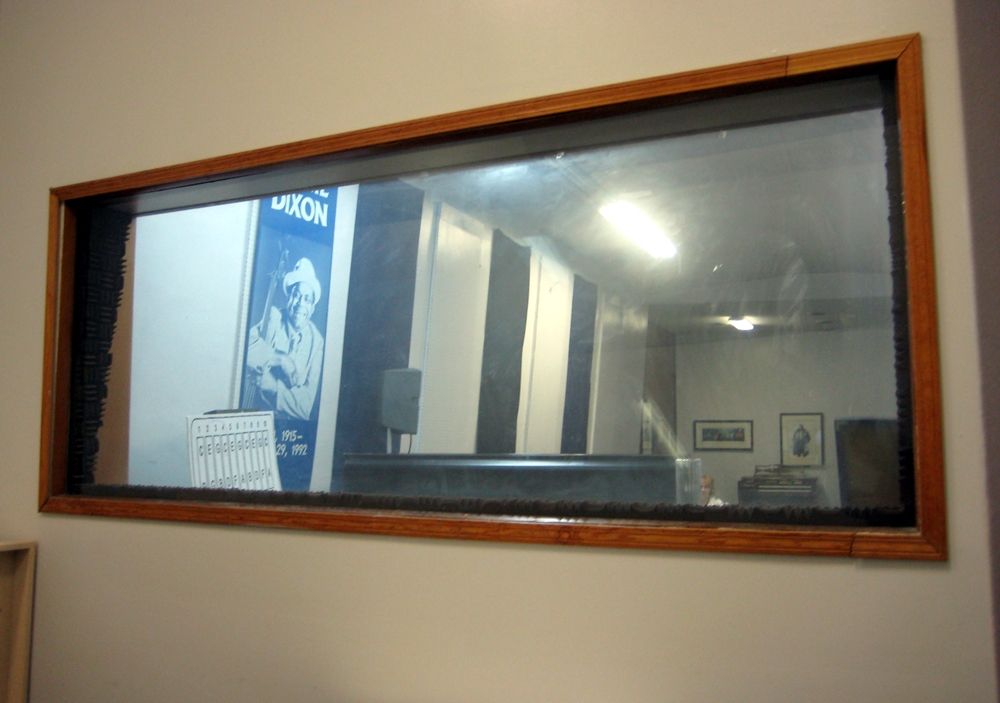
Photo: get directly down, CC BY 2.0, via Wikimedia Commons
The Definitive Guide to Black Chicago House Music's Origins
Maintenance note: This guide is updated when (a) the City of Chicago or another authority takes a new official action concerning a house-music landmark site; (b) previously unknown recordings, flyers, photos, or set tapes from the club years surface publicly; (c) a new oral-history collection or archival finding aid documenting early house participants is published; or (d) new evidence resolves a contested point documented below. Contested or divergent claims are documented as such — we will not assert from memory what the evidence has not settled. Verification pass 2026-09-30: all seven verification markers resolved per the sources in the footnotes.
CULTURETECHLENS · "Culture, Clearly Seen." · Black Cultural Intelligence
Last reviewed: 2026-09-30
The origin story, told straight
House music's birthplace is a building. That much is on municipal paper. The City of Chicago's Landmark Designation Report for The Warehouse — designated June 21, 2023 — places the origin of house "between 1977 and 1982 at The Warehouse located at 206 S. Jefferson St." with "its pioneering resident DJ Frankie Knuckles (1955–2014)," whom the report calls the "Godfather of house music." The address is real, the years are real, the landmark is real. [^1]
What made the music possible was not the building but the room inside it — and who filled it. The Warehouse drew roughly five hundred patrons, Saturday midnight to Sunday midday, five dollars at the door, free juice and water for the dancers. It was "patronized primarily by gay black and Latino men" dancing to Knuckles's blend of disco, R&B, gospel, European synth records, and eventually drum-machine rhythm tracks. [^2] The landmark report is explicit about why this matters: "The Warehouse could not have such a success without loyal supporters who helped establish house in Chicago's musical landscape, especially Black and Latinx LGBTQ men and women who found in Knuckles' music community, hope, acceptance and even transcendence." [^1]
The sanctuary framing is not later romance; it is the structural fact of the era. Black queer Chicagoans in the late 1970s were shut out of white gay club spaces — and many felt excluded from the Black church communities that had raised them. [^2] The Warehouse was built for people with nowhere else to gather at that scale. Knuckles — a New York transplant recruited by owner and promoter Robert Williams — played no "house records" in the early years; none existed. He extended disco breaks on a reel-to-reel deck, stretched Philadelphia International classics next to Italo imports, and built each night like a single long composition. The recorded genre came later; the culture and the name came first, from a room where being Black, queer, and dancing was the whole point.
When the Warehouse closed in 1982, the story split but the community held: Knuckles opened his own room, Williams rebranded and hired a new resident, and the music kept moving. [^1]
The rooms
Three clubs, each with a distinct sound and a distinct crowd. Keep them straight — conflating them is the first way the history gets flattened.
The Warehouse — 206 S. Jefferson St., West Loop (1977–1982). A three-story former factory (built 1906 [^3]; acquired by Robert Williams in 1976, per the City's landmark designation report [^1]) converted into a members-oriented dance venue. Frankie Knuckles, resident DJ for the club's entire six-year run. The crowd: Black and Latino gay men at the core, widening over time into what the landmark report calls "one of the first entertainment venues in Chicago where gay and straight club goers of multiple races and ethnicities shared a dance floor." [^1] The term "house music" itself is widely traced to Williams's own promotional posters describing events at the Warehouse as "house" parties and "house" music. [^2] Today the block is Frankie Knuckles Way; the building — now a law office — is a protected Chicago Landmark, with a dedication block party held October 5, 2024. [^4]
The Music Box (also styled the Muzic Box) — 326 N. Michigan Ave., lower level (the double-decked stretch by Lower Wacker Drive), 1983–circa 1988. After Knuckles left, Williams rebranded and hired Ron Hardy (1958–1992) as resident. On the address: the landmark report's "Lower Wacker Drive" and the street address "326 N. Michigan Ave." describe the same site — RBMA places the club from 1984 in the lower level of 326 Lower North Michigan Ave., where the streets are double-decked; its first 1983 home was briefly 1632 S. Indiana Ave. [^18] Hardy's room was the testing ground. Where Knuckles was smooth and precise, Hardy played fast, loud, and manic — pitching records up to the limit, mixing Philadelphia disco, Italo imports, new wave, and rock into marathon sets that ran for days. Producers debuted work there directly: Marshall Jefferson, Larry Heard, Adonis, Phuture's DJ Pierre, and Chip E. all cut acetates or reel-to-reel copies specifically for Hardy to play. [^5] The Music Box crowd skewed uptown, largely gay, largely Black — the laboratory where dancers judged the emerging record culture before labels did. Hardy left the Music Box around 1986 and died in 1992, having recorded little under his own name — his influence rests almost entirely on live tapes and memory. [^5]
The Power Plant — 1015 N. Halsted St., Goose Island (1983–1986). Knuckles's own club after the split with Williams, where he carried the Warehouse's sound to a broader South Side audience. The closing date is inconsistently reported (landmark report: 1986; Gridface: late 1985; Ears To The House: 1987 — the last figure appears conflated with Knuckles's later, separate Powerhouse); this guide follows the municipal report. [^1][^19][^14] It was here that Knuckles connected with the young producers who became the first generation of house record-makers — Marshall Jefferson, Larry Heard, Adonis, Steve "Silk" Hurley — the Chicago LGBT Hall of Fame's account of Knuckles notes he "introduced the sound to many of the Southside producers who made waves during the 1980s." [^6] The site today is a self-storage facility with no landmark plaque — its anonymity is itself part of the material-record problem addressed below.
The competitive friendship between the two rooms mattered: Knuckles and Hardy played on different nights each weekend, attended each other's sets, and pushed the sound forward through rivalry. [^1] The music was not a single invention but a conversation across the rooms — carried outward by WBMX (102.7 FM), whose Hot Mix 5 broadcast live DJ sets to a reported million listeners a week. [^1]
The records
In the early years there were no house records. There were reels, acetates, and cassettes circulating hand to hand — club tools made to be played, not sold. When the music finally moved to vinyl, two Chicago labels became its commercial engine, and one title became its permanent origin argument.
Jesse Saunders, "On and On" (Jes Say Records, 1984). Saunders and Vince Lawrence wrote it after nights experimenting with drum tracks at Saunders's Playground residency. It is "widely regarded as the first-ever Chicago house record" [^7] and "many consider the first real house record." [^8] Saunders himself, in a 2019 interview, called it "the world's first house music record," released January 20, 1984. [^9]
Here the guide must be honest: the "first" claim is contested — and the sources say so explicitly. Two competing facts are documented. First, Jamie Principle and Frankie Knuckles's "Your Love" was a club smash circulating on tape copies as early as 1983 — chronologically earlier than "On and On" pressed to vinyl, though it did not reach vinyl until years later. [^10][^17] Second, producer Adonis has testified that Jamie Principle's "Waiting On Your Angel" was the hottest unreleased cassette in the city before "On and On," and that Saunders recorded "that track word for word, note for note" for release. [^11] Hyperreal's history even floats Z-Factor's "Fantasy" (Mitchbal, 1983) as the possible true first. [^7][^11] So which was "first" — the first made, the first circulated, or the first pressed to vinyl? The answer changes the winner. CultureTechLens does not adjudicate the dispute here; we document that it exists, because the dispute itself is evidence about how the history was made: on tapes, in clubs, before labels wrote it down.
The labels. Two Chicago imprints carried early house to the world:
- Trax Records — founded by Larry Sherman, who began operations in 1983 by purchasing the Musical Products pressing plant in Bridgeport. [^12] First release: "Wanna Dance/Certainly" by Le Noiz (a Saunders pseudonym), TX-101. The co-founder claim sometimes made for Jesse Saunders and Vince Lawrence carries an explicit caveat in the same reference: "there is no documentation to corroborate" it, and Sherman alone is named as founder — Lawrence did the label's initial artist signings, an early participant rather than a documented founder. [^12] The catalog is canonical: Adonis's "No Way Back" (1986), Marshall Jefferson's "The House Music Anthem (Move Your Body)" (1986), Larry Heard's "Can You Feel It" (1986), Jamie Principle and Frankie Knuckles's "Your Love" (1988 vinyl). The label declared bankruptcy in 1991; a long ownership fight over the classic catalog followed.
- DJ International Records — founded 1985 by Rocky Jones and Benji Espinoza (Espinoza died 2020), growing out of Jones's DJ record pool. [^13] First release: "Music Is The Key" by J.M. Silk, a Steve "Silk" Hurley alias. The label's 1986 compilation The House Sound of Chicago — Hurley's "Jack Your Body," Farley "Jackmaster" Funk & Jesse Saunders's "Love Can't Turn Around," Marshall Jefferson's "Move Your Body" — is widely credited with carrying the sound global. [^13] Universal Music bought many of the label's masters in 2019; the imprint relaunched in 2021.
Key producers of the first vinyl wave, all verified across multiple sources: Marshall Jefferson, Larry Heard (Mr. Fingers), Adonis, Chip E., Farley "Jackmaster" Funk, Vince Lawrence, Jesse Saunders, Steve "Silk" Hurley, DJ Pierre (Phuture) — whose "Acid Tracks" (1987) defined acid house. [^1][^5][^12][^13] Note who is absent from most vinyl discographies: Ron Hardy, the DJ who broke nearly all of these records first.
The people beyond the DJs
The DJ genealogy is the commercial history's spine. The community history is wider, and it is the part least documented.
Start with the dancers: the Warehouse's five hundred weekend bodies — the Black and Latino gay men and women who made the floor "unusually free of aggression" [^2] — are largely nameless in the record. So are the Music Box's uptown crowd, the jackers whose dance named a thousand tracks, and the high-school kids Lady D described carrying flyers "from high schools all over the city." [^8]
Name who the sources do let us name:
- Robert Williams, the New York promoter who bought the building, recruited Knuckles, and whose posters arguably coined "house music" — owners are rarely centered in music histories.
- Celeste Alexander, the 21-year-old Chicago DJ who worked alongside Knuckles at the Power Plant in 1983 — pushed into DJing after Steve "Silk" Hurley told her he didn't believe women could do it, and then effectively erased from the canonical telling. [^14]
- Vince Lawrence and Jesse Saunders, teenagers from the Mitchbal Records family circle (Lawrence's father co-ran the label), who sold the first pressings of "On and On" trunk-to-trunk to Importes etc. — the distribution story the label histories skip. [^15]
- Jamie Principle, the vocalist whose reel-to-reel "Your Love" Knuckles played for a full year before it saw vinyl — the singer's labor underneath the DJ's legend. [^6]
- The Hot Mix 5 (Farley "Jackmaster" Funk, Kenny "Jammin" Jason, Mickey "Mixin" Oliver, Ralphi "Rockin" Rosario, Scott "Smokin" Silz), who carried the club sound onto WBMX and into living rooms across the city. [^1]
- The door people, promoters, and sound engineers — who decided who got in, what the flyers said, how the room sounded. Their names are almost entirely absent from the published record. That absence is the gap.
The landmark report itself centers the crowd: the club succeeded because of "loyal supporters," not because of one resident DJ. [^1] Every retelling that begins and ends with Knuckles and Hardy is a retelling that has been edited.
The material record and what's missing
The narrative history of Chicago house is well told. The material history is a scattered field — and scattering is a form of loss.
What survives, as reported: some live tapes of Ron Hardy's Music Box sets (circulating through collector networks and uploads, often mislabeled — one widely shared "Muzic Box 1986" tape was actually recorded at COD's in 1987 [^16]); the City of Chicago's landmark designation report, a municipal primary source; press photography of the landmarked building; and oral histories from producers — notably a 2023 NPR/Illinois Public Media feature, "From the Warehouse to the World," built on interviews with Vince Lawrence, Lady D, and others. [^8]
What is missing, and what a serious research program would recover:
- Club flyers and ephemera from the Warehouse, Power Plant, and Music Box years. The paper trail of Williams's posters' coinage — who printed, designed, and distributed them — has never been systematically collected.
- Set recordings with provenance. Hardy and Knuckles's reel-to-reel edits were the compositional medium of early house. Circulating tapes need archival identification: venue, date, chain of custody.
- Photographs of the rooms and the crowds. The dancers — queer Black and Latino Chicagoans in their sanctuary — are the visual center of this history, and the photographic record is thin.
- Oral histories of non-DJ participants: dancers, promoters, door staff, record-store clerks, WBMX listeners, women like Celeste Alexander. The producer-DJ canon is deep; the floor's is nearly empty.
- The Power Plant's archive. The building at 1015 N. Halsted carries no landmark protection and no plaque; its material record — lease papers, floor plans, flyers, photos — is unlocated.
This is CultureTechLens's standing research invitation: an archival and oral-history program on the under-documented material record. The landmark report is the baseline; the ephemera is the work.
How the story gets flattened
Three flattenings, each a commercial convenience, each worth resisting:
1. "House was invented by one DJ." The landmark report credits Knuckles as the genre's godfather — and then, in the same document, lists the DJs, clubs, record shops, and radio programs that built the sound collectively. [^1] Knuckles himself bought his first drum machine from a young Detroit visitor, Derrick May, who made regular trips to hear both Knuckles and Hardy — an anecdote reported on Wikipedia's Frankie Knuckles entry (citing the Chicago Tribune and Rolling Stone) and noted independently by NPR's Michaelangelo Matos. [^17][^7] House was a network product. A single inventor is a marketing department's necessity.
2. "The Warehouse is the whole story." The club operated 1977–1982 — five years; house records came 1984–1988, and the global explosion after. The Music Box, the Power Plant, the Playground, the record pools, WBMX, the pressing plants — the ecosystem that turned a club sound into a recorded genre is routinely collapsed back into the one famous building. Buildings get plaques. Ecosystems don't.
3. "The queer origin is a footnote." It is not. The clubs existed because Black and Latino gay people needed rooms of their own — excluded from white gay spaces and from the churches that raised them. [^1][^2] The commercial retelling (festivals, brand activations, DJ rankings) often trims this to a passing "the crowd was diverse." That edit changes what house is: a sanctuary music made by people who needed sanctuary, or a beat anyone can rent. Evidence before authority: the evidence says sanctuary. Protect the sentence.
How to cite this guide
Chicago — CultureTechLens. "The Definitive Guide to Black Chicago House Music's Origins." September 30, 2026. https://culturetechlens.com/guide/house-music-origins/.
APA — CultureTechLens. (2026, September 30). The definitive guide to Black Chicago house music's origins. https://culturetechlens.com/guide/house-music-origins/.
MLA — CultureTechLens. "The Definitive Guide to Black Chicago House Music's Origins." 30 Sept. 2026, culturetechlens.com/guide/house-music-origins/.
See also: How to Cite Us, Methodology, and the CultureTechLens research repo.
Frequently asked questions
Was house music really born at the Warehouse?
The City of Chicago's landmark report says the history of house "is clear that it originated between 1977 and 1982 at The Warehouse located at 206 S. Jefferson St." — and the name "house" is widely traced to the club itself. What the Warehouse birthed was the culture and the name: no house records existed during the Warehouse years; the recorded genre was built later, in the Music Box and the Power Plant, on reels, acetates, and eventually vinyl. [^1][^2]
Why does the Black queer origin matter?
Because the music was made by and for people who needed it. The Warehouse's core crowd was Black and Latino gay men and women — people shut out of white gay club spaces and often out of the Black church communities that raised them. The club's freedom, transcendence, and lack of aggression were functions of that sanctuary, not decoration around it. Flattening the origin to "Chicago clubs, DJs, and drum machines" edits out the reason the rooms existed. [^1][^2]
What was the difference between the Warehouse and the Music Box?
The Warehouse (1977–1982, Frankie Knuckles, 206 S. Jefferson) was the origin room: smooth, extended disco reconstruction, the crowd that named the genre. The Music Box (1983–circa 1988, Ron Hardy, 326 N. Michigan Ave. — lower level, by Lower Wacker Drive) was the laboratory: faster, louder, wilder, where producers debuted tracks on acetate and dancers judged them before labels did. Knuckles shaped the sound; Hardy tested it. [^1][^5]
What's the biggest gap in the historical record?
The material record: flyers, set tapes with provenance, photographs of the rooms and the crowds, and oral histories from the non-DJ participants — dancers, promoters, door people, Celeste Alexander, the teenagers who papered the high schools. The DJ-producer narrative is documented; the floor's history is nearly empty. [^8][^14]
Is Jesse Saunders's "On and On" really the first house record?
It's the most widely cited answer — "widely regarded as the first-ever Chicago house record" — and Saunders released it on his Jes Say label in 1984. [^7][^8] But the claim is contested: Jamie Principle and Frankie Knuckles's "Your Love" circulated on tape as early as 1983 before reaching vinyl years later, and producer Adonis has argued an earlier unreleased Principle track preceded them both. [^10][^11][^17] First-made, first-circulated, and first-pressed are three different questions with three different answers.
Why isn't the Power Plant landmarked like the Warehouse?
It hasn't gone through the process the Warehouse did — petition, Preservation Chicago's endangered-buildings list, a Landmarks Commission recommendation, a June 2023 City Council vote. The Power Plant site at 1015 N. Halsted is now a storage facility with no marker. Landmark status is a political process, not a historical verdict — and the community that made the Power Plant's history has not yet run the campaign. [^1][^3][^14]
Related: How to Cite Us · Methodology · CultureTechLens research repo
Sources consulted
- City of Chicago, The Warehouse Landmark Designation Report (PDF) — https://www.chicago.gov/content/dam/city/depts/zlup/Historic_Preservation/Publications/The_Warehouse_Report.pdf
- Wikipedia, "Warehouse (nightclub)" — https://en.wikipedia.org/wiki/Warehouse_(nightclub)
- Wikipedia, "Ron Hardy" — https://en.wikipedia.org/w/index.php?title=Ron_Hardy&oldid=1247390984
- Wikipedia, "Frankie Knuckles" — https://en.wikipedia.org/wiki/Frankie_Knuckles
- Wikipedia, "Trax Records" — https://en.wikipedia.org/wiki/Trax_Records
- Wikipedia, "DJ International Records" — https://en.wikipedia.org/wiki/DJ_International_Records
- City of Chicago, "Frankie Knuckles Foundation, Robert Williams, & DCASE Announce The Warehouse Landmark Dedication Block Party" (Oct. 5, 2024) — http://chicago.gov/content/city/en/depts/dca/provdrs/attractions_eventsandexhibitions/news/2024/september/warehouse.html
- Chicago LGBT Hall of Fame, "Frankie Knuckles" — https://chicagolgbthalloffame.org/knuckles-frankie/
- Newcity, "How House was Built" (Jesse Saunders interview, Nov. 2019) — https://www.newcity.com/2019/11/04/how-house-was-built/
- NPR / Kansas Public Radio, "From the Warehouse to the World: Chicago and the Birth of House Music" (2023) — https://kansaspublicradio.org/npr-news/npr-news/2023-03-01/from-the-warehouse-to-the-world-chicago-and-the-birth-of-house-music
- KCUR/NPR via KMUC, "This Old Chicago House: EDM's Family Roots" (2012) — https://www.kmuc.org/npr-music/2012-06-29/this-old-chicago-house-edms-family-roots
- 5 Mag, "The Warehouse is now a Chicago landmark" (2023) — https://5mag.net/news/the-warehouse-is-now-a-chicago-landmark/
- DJ Mag, "DJ International Records co-founder Benji Espinoza has died" — https://djmag.com/news/dj-international-records-co-founder-benji-espinoza-has-died
- Ears To The House, "Revealed: Frankie Knuckles silent partner whilst he was at Chicago's legendary Power Plant" (2023) — https://earstothehouse.com/2023/01/25/revealed-frankie-knuckles-silent-partner-whilst-he-was-at-chicagos-legendary-power-plant/
- Hyperreal, "The History of House" — http://music.hyperreal.org/library/history_of_house.html
- RBMA Daily, Jacob Arnold, "Ron Hardy at The Music Box" (May 18, 2015) — https://daily.redbullmusicacademy.com/2015/05/ron-hardy-at-the-music-box/
- Gridface, "Ron Hardy Mixes" — https://www.gridface.com/ron-hardy-playlists/
- Gridface, "Frankie Knuckles Mixes" — https://www.gridface.com/frankie-knuckles-playlists/
[^1]: City of Chicago, The Warehouse Landmark Designation Report. [^2]: Wikipedia, "Warehouse (nightclub)." [^3]: Chicago YIMBY, "City Council Approves Landmark Designation For The Warehouse" (June 25, 2023) — https://chicagoyimby.com/2023/06/city-council-approves-landmark-designation-for-the-warehouse.html [^4]: City of Chicago DCASE, "The Warehouse Landmark Dedication Block Party" (Sept. 2024). [^5]: Wikipedia, "Ron Hardy"; DJ History via cited YouTube set descriptions. [^6]: Chicago LGBT Hall of Fame, "Frankie Knuckles." [^7]: KCUR/NPR, "This Old Chicago House: EDM's Family Roots." [^8]: NPR / Kansas Public Radio, "From the Warehouse to the World" (2023). [^9]: Newcity, "How House was Built" (2019). [^10]: nightlife.fandom.com, "House" (citing Shapiro, 2000). [^11]: Hyperreal, "The History of House." [^12]: Wikipedia, "Trax Records." [^13]: Wikipedia, "DJ International Records"; DJ Mag (2020). [^14]: Ears To The House (2023). [^15]: Medium / Switched On, "House Has A Home." [^16]: YouTube set-description notes on the mislabeled 1986 Hardy tape — https://www.youtube.com/watch?v=PXJ8ezq2fC0 [^17]: Wikipedia, "Frankie Knuckles." The Derrick May drum-machine anecdote is cited there to the Chicago Tribune (Greg Kot, April 1, 2014) and Rolling Stone (April 2014); see also NPR/KCUR, "This Old Chicago House" [^7], which notes May giving Knuckles a 909 independently. [^18]: RBMA Daily, Jacob Arnold, "Ron Hardy at The Music Box" (May 18, 2015) — the 1984 move into the lower level of 326 Lower North Michigan Ave.; Gridface, "Ron Hardy Mixes" — the first 1983 location at 1632 S. Indiana Ave. [^19]: Gridface, "Frankie Knuckles Mixes" — Power Plant closed "suddenly in late 1985"; Ears To The House (Jan. 25, 2023) gives 1983–1987; Wikipedia, "Frankie Knuckles" dates the later, separate Powerhouse's closure to 1987.
Source: CultureTechLens
Trust & evidence
Evidence before authority. CultureTechLens publishes its methods, its limits, and its corrections alongside its findings. Claims carry grades — VERIFIED, SUPPORTED, PROVISIONAL, DISPUTED, UNRESOLVED — and unknowns are never reported as zero.