 CULTURETECHLENS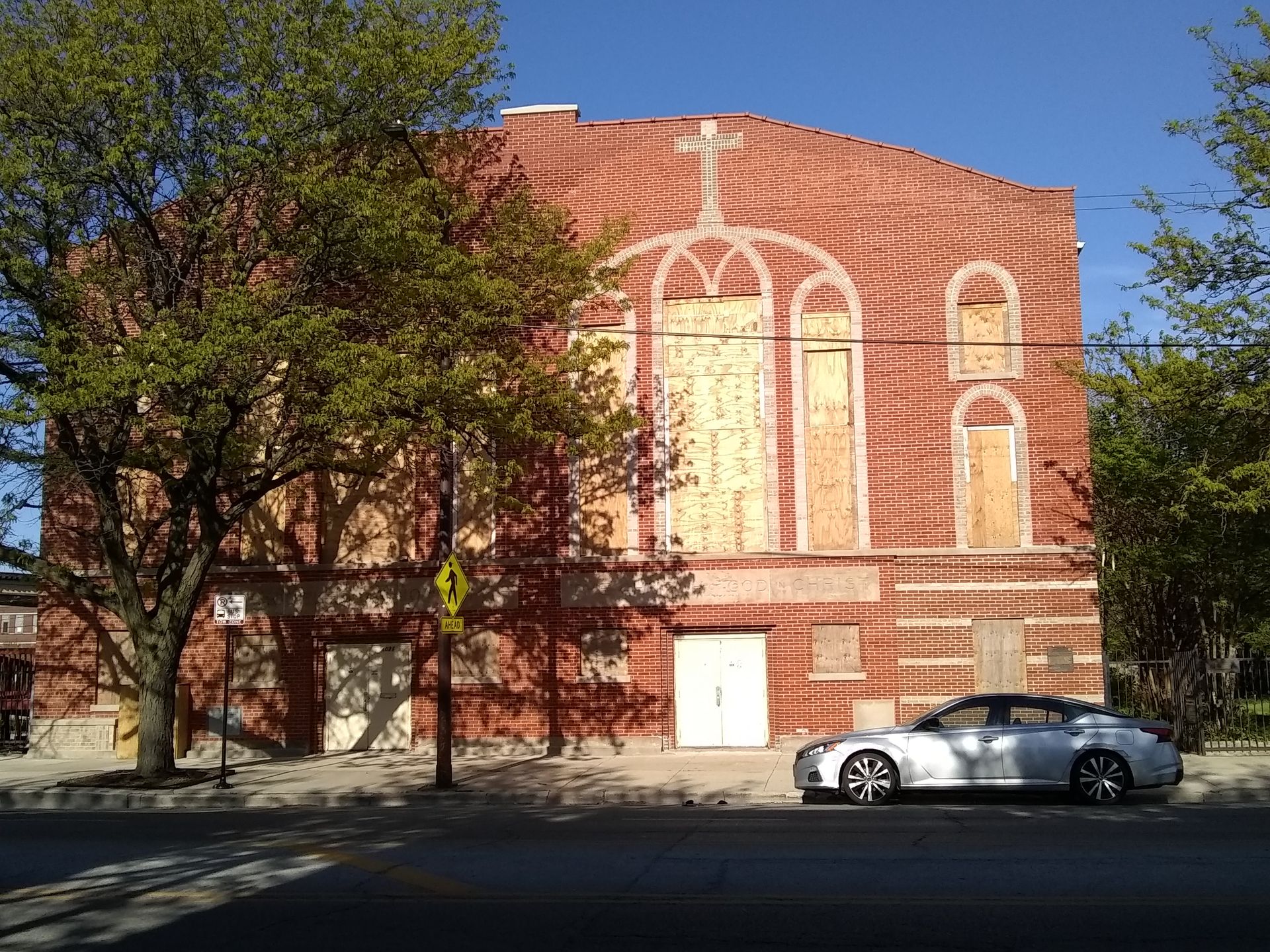
Photo: Legimet, CC BY-SA 4.0, via Wikimedia Commons
The Definitive Guide to Hush Harbors
Last reviewed: 2026-09-30. This is a living guide. It is updated when new excavation reports or open-access scholarship on secret worship sites appear, when further WPA-era accounts are digitized or newly transcribed, or when errors are reported by researchers, descendant communities, or readers. Corrections are logged publicly per CTL's corrections policy.
Before there was a Black church with walls, there was a church made of woods, ravines, and brush. Across the antebellum South, enslaved people slipped away from the quarters at night to worship in secret places they called hush harbors — beyond the earshot of the enslaver and the overseer. There they prayed, sang, shouted, and preached on their own terms. Almost nothing about these gatherings survives in plantation ledgers or official records; the evidence lives instead in the memories of formerly enslaved people, in the scholarship built from those memories, and in fragments of the material record — cleared ground, worn spaces, buried objects — that archaeology is only beginning to read. This guide gathers what is verifiable about hush harbors, names what is not yet known, and points researchers toward the sources that exist.
What a hush harbor was
A hush harbor was a secret place of worship used by enslaved people — a meeting held out of sight and hearing of white authority. The terms vary across the sources: hush harbor, hush arbor, brush arbor. As the Florida Public Archaeology Network's archaeology presentation puts it, "there are several different alternatives of the term hush arbor, such as brush arbor or hush harbor, but they all refer to a secret meeting place where enslaved people would hold religious services" (Adrianne Walker, "Filled with the Spirit: Exploring the Antebellum Practice of Hush Arbors," FPAN "Zoom into Archaeology" series). Where plantation-sanctioned worship meant a white preacher and a message of obedience, the hush harbor belonged to the enslaved community itself.
The gatherings happened at night, in secluded terrain: woods, gullies, ravines, thickets, hollows, and swamps — landscapes that swallowed sound and sight lines alike. Christopher Hunter's open-access study of Black sacred space, citing Albert Raboteau, notes that the enslaved "devised several techniques to avoid the detection of their meetings," gathering in "secluded places such as woods, gullies, ravines, and thickets, aptly called 'hush or brush harbors'" (Hunter, "The African American Church House," Religions 13(3):246, 2022). The secrecy was not ceremonial. Hunter describes these as places where the enslaved gathered "under pain of death" to practice their own religious traditions. In Alabama, preaching by Black people had been outlawed since 1831 — a reminder that unsanctioned assembly was treated by law as a danger to the slave order.
Sound discipline was the art of the hush harbor. Worshippers turned iron pots upside down to catch and muffle the sound of prayer and shouting; lookouts watched for patrollers. The children's book Hush Harbor by Freddi Williams Evans distills the image in a single line: "They turned an iron pot upside down — so the master couldn't hear them pray." A Virginia account attributed to Charles Grandy, enslaved in Hampton, makes the practice concrete: the group met across the fields at night in an old tobacco barn set into a hillside — "Had a old pot hid here to catch de sound. Sometimes would stick yo' hand down in de pot if you got to shout awful loud." Worship itself blended African-derived practice with evangelical Christianity: singing, dancing, praying, shouting, possession of the spirit, and preaching by enslaved preachers — what one scholar quoted by Hunter calls the forging, "from the crucible of their African experience and the terrors of their inservitude," of a Christianity that would be "distinctively their own" (Alonzo Johnson, quoted in Hunter 2022).
One caution the sources demand: not every brush arbor was a secret. A 1938 Georgia account by formerly enslaved Thomas Cordelia describes "dem old brush arbor 'vival meetin's" at which "White folks brought deir slaves and all of 'em listened to a white preacher" — supervised gatherings under open shelters "sealed with untrimmed branches and supported by wood beams and posts." The architecture was similar; the freedom was not. The hush harbor, properly speaking, is the unsanctioned one: the meeting the master was never meant to hear.
The written record
The richest first-person evidence for hush harbors sits in the Library of Congress collection Born in Slavery: Slave Narratives from the Federal Writers' Project, 1936–1938. The collection holds more than 2,300 first-person accounts of slavery and 500 black-and-white photographs of formerly enslaved people, gathered in the 1930s by the Federal Writers' Project of the Works Progress Administration, microfilmed in 1941 as the seventeen-volume Slave Narratives: A Folk History of Slavery in the United States from Interviews with Former Slaves, and digitized in 2000–2001 as a joint presentation of the Library's Manuscript and Prints and Photographs divisions. Organized by the state where each interview took place, it is the single largest archive of enslaved people's own testimony — and the archive in which accounts of secret worship recur across regions.
Two named accounts are worth citing directly, both carried in a published essay on Black sacred space ("Call and Response," Avery Review, issue 44). Thomas Cordelia, interviewed in Georgia in 1938, described the brush-arbor revival meetings of his enslavement: "White folks brought deir slaves and all of 'em listened to a white preacher from Watkinsville named Mr. Calvin Johnson. Dere was lots of prayin' and shoutin' at dem old brush arbor 'vival meetin's" (Slave Narratives: A Folk History of Slavery in the United States from Interviews with Former Slaves, Georgia Narratives, Part 4, Born in Slavery, vol. 4, part 4, WPA, 1941). Charles Grandy, enslaved in Hampton, Virginia, described the hidden night meetings and the sound-catching pot quoted above.
These narratives deserve to be read with gravity, and with an honest account of their limits. They were recorded seventy or more years after emancipation, by interviewers — often white — working under a federal relief program, and transcribed in dialect renderings that reflect the interviewer as much as the narrator. That the testimony still converges, across states and decades, on the same practices — the night meetings, the inverted pot, the brush shelter — is itself evidence of how deeply the hush harbor was embedded in the world of the quarters.
The standard scholarly frame for all of this is Albert J. Raboteau's Slave Religion: The "Invisible Institution" in the Antebellum South (Oxford University Press, 1978; revised edition 2004). Raboteau's "invisible institution" names exactly what the hush harbor was: the autonomous religious life enslaved people built beyond white observation, drawing on African religious heritage and evangelical Christianity alike. Hunter's 2022 article draws directly on Raboteau's account of "hush or brush harbors" (Raboteau 2004, p. 215) and extends it into a reading of Black sacred space — treating the hush harbor not as a mere hiding place but as deliberate placemaking, "a natural placemaking location in support of traditional West African spirit practice, and a re-interpretation of that cultural space in America."
The material record
Where written records are silent, archaeology has begun to speak — but quietly, and in scattered reports. The Florida Public Archaeology Network presentation frames the field's approach: "Scholarly literature, oral history interviews, and material culture shed light on this important aspect of African American lifeways and provide a foundation for further exploration and celebration." The material record of hush harbors, as the scattered literature treats it, centers on three kinds of evidence: cleared ground where brush shelters stood, worn or trampled spaces consistent with ring-shout gatherings, and spirit caches — buried deposits of objects carrying protective or ritual meaning. Each category is documented in the broader African-diaspora archaeology literature; none has been systematically surveyed as hush-harbor evidence specifically.
That gap is the point of this guide's existence. As of CultureTechLens's September 30, 2026 survey, there is no encyclopedia entry on hush harbors, no field-survey synthesis, and no artifact database consolidating the material record of these sites. The evidence exists in excavation reports that do not talk to one another — and the sites themselves are being lost to development faster than they are recorded. The archaeology of secret worship is therefore still largely a promise: the promise that cleared earth and buried objects can corroborate, and deepen, what the narratives already tell us.
What the scholarship does establish is why the material record matters beyond corroboration. A brush shelter leaves almost no trace; a cleared floor leaves a subtle one; a cached bundle leaves an unmistakable one. Reading these traces lets archaeology speak for people whom the written archive was designed to silence — and lets the hush harbor be studied not only as memory but as place.
What the evidence does not yet say
State it plainly: there is no consolidated reference work on hush harbors. No encyclopedia entry. No published field-survey synthesis. No artifact database. CultureTechLens's 2026-09-30 survey surfaced open-access scholarship — a Bloomsbury open-access chapter on religion in the Black Atlantic (chapter 2), Christopher Hunter's open-access Religions article (13(3):246), and Adrianne Walker's archaeology conference presentation for the Florida Public Archaeology Network — but nothing that gathers the material record into one place.
In the spirit of evidence before authority, one correction to our own research notes: CTL's working dossier originally described the Religions 13(3):246 article as a piece of "African-diaspora archaeology." It is not. Hunter's article is a phenomenological study of the African American church house as sacred space — and it is included here because it contains one of the clearest recent scholarly discussions of hush harbors, drawing on Raboteau and on the testimony about secret worship. When a source turns out to be different from its first description, the guide says so. That is the standard applied to every source on this page.
For researchers: the open questions
- What would diagnostic archaeological criteria for a hush-harbor site actually look like — and how would they distinguish a secret worship site from other cleared or trampled ground on a plantation landscape?
- Can the scattered excavation reports touching these sites be consolidated into a published field-survey synthesis and an open artifact catalog?
- How can oral histories and WPA accounts be mapped onto specific landscapes for research purposes without exposing — or disrespecting — sites that descendant communities may wish to keep private?
- Which hush-harbor locations are known to survive, and which are currently threatened by development, before they are lost unrecorded?
- How did brush-arbor practice carry forward into post-emancipation church founding, the ring shout tradition, and the architecture of early Black church buildings?
- What ethical protocols should govern excavation at sites that were, and remain, sacred ground?
Key sources and where to find them
Library of Congress, Born in Slavery: Slave Narratives from the Federal Writers' Project, 1936–1938. More than 2,300 first-person accounts and 500 photographs of formerly enslaved people, collected in the 1930s, microfilmed as a seventeen-volume set in 1941, and digitized in 2000–2001. The essential first-person archive; search within it for accounts of secret worship, brush arbors, and night prayer meetings. https://www.loc.gov/collections/slave-narratives-from-the-federal-writers-project-1936-to-1938/about-this-collection/
Christopher Hunter, "The African American Church House: A Phenomenological Inquiry of an Afrocentric Sacred Space," Religions 13(3):246 (2022). Open-access, peer-reviewed. A study of the Black church house as Afrocentric sacred space with an extended, well-sourced discussion of hush harbors — their secrecy, their locations in woods and ravines, their role as natural placemaking for West African-derived spirit practice — citing Raboteau and the WPA-era scholarship. https://www.mdpi.com/2077-1444/13/3/246/xml
Adrianne Walker, "Filled with the Spirit: Exploring the Antebellum Practice of Hush Arbors." A conference-style archaeology presentation in the Florida Public Archaeology Network's "Zoom into Archaeology" series, given by the Arcadia Mill Archaeological Site Manager. Reviews the terminology (hush arbor, brush arbor, hush harbor), the antebellum religious constraints on enslaved people, and how scholarly literature, oral history, and material culture together illuminate these sites. https://www.youtube.com/watch?v=g02chXFs9_8
Bloomsbury open-access chapter on religion in the Black Atlantic (chapter 2). Surfaced in CTL's 2026-09-30 survey as part of the open-access scholarship on Black Atlantic religion relevant to hush-harbor research. Consult the Bloomsbury Academic open-access catalog for current access.
Albert J. Raboteau, Slave Religion: The "Invisible Institution" in the Antebellum South (Oxford University Press, 1978; rev. ed. 2004). The standard scholarly account of the autonomous religious life of the enslaved, and the source of the "invisible institution" frame used across the literature cited here.
Further reading
- Albert J. Raboteau, Slave Religion: The "Invisible Institution" in the Antebellum South (Oxford University Press, 1978; revised edition 2004) — the foundational study.
- Christopher Hunter, "The African American Church House: A Phenomenological Inquiry of an Afrocentric Sacred Space," Religions 13(3):246 (2022) — open access; see the hush-harbor discussion and its citations.
- Durkac-Somo, "Call and Response," Avery Review, issue 44 — a published essay carrying the Thomas Cordelia and Charles Grandy hush-harbor accounts with full WPA citations.
- Freddi Williams Evans, Hush Harbor (children's picture book; reviewed by Kirkus Reviews) — for younger readers, a faithful rendering of the secret prayer meeting and the inverted pot. https://www.kirkusreviews.com/book-reviews/freddi-williams-evans/hush-harbor/print/
How to cite this guide
Chicago — CultureTechLens. "The Definitive Guide to Hush Harbors." September 30, 2026. https://culturetechlens.com/guide/hush-harbors/.
APA — CultureTechLens. (2026, September 30). The definitive guide to hush harbors. https://culturetechlens.com/guide/hush-harbors/.
MLA — CultureTechLens. "The Definitive Guide to Hush Harbors." 30 Sept. 2026, culturetechlens.com/guide/hush-harbors/.
Frequently asked questions
What was a hush harbor?
A hush harbor was a secret place of worship used by enslaved people in the antebellum South. Also called a hush arbor or brush arbor, it was a meeting held at night in secluded terrain — woods, ravines, gullies, thickets, hollows, or swamps — beyond the earshot of the enslaver. There, enslaved people prayed, sang, shouted, and preached on their own terms, outside the supervised worship the plantation permitted. Historian Albert J. Raboteau's term for this autonomous religious life is the "invisible institution."
What material evidence survives?
The material record is fragmentary and scattered across excavation reports rather than gathered in one place. Archaeologists working this terrain look for cleared ground where brush shelters stood, worn or trampled spaces consistent with ring-shout gatherings, and spirit caches — buried deposits of objects carrying ritual meaning. Brush structures themselves leave almost no trace, which is one reason these sites are so hard to identify, and why so many are lost to development before they are ever recorded.
Why is there no consolidated database?
As of CultureTechLens's September 30, 2026 survey, no encyclopedia entry, field-survey synthesis, or artifact database consolidates the material record of hush harbors. The evidence exists in scattered excavation reports, open-access scholarship such as Christopher Hunter's 2022 Religions article, and archaeology presentations like the Florida Public Archaeology Network's "Zoom into Archaeology" talk — but nothing yet gathers it into one reference work. Building that consolidation is one of the open research tasks this guide identifies.
How do archaeologists identify a hush harbor site?
No agreed diagnostic criteria exist yet — that is itself an open research question. In practice, archaeologists combine three lines of evidence: scholarly literature and oral histories (including the WPA slave narratives) describing where and how secret meetings happened, landscape features consistent with those accounts (secluded hollows, ravines, and thickets near plantation quarters), and material traces such as cleared surfaces, trampled gathering spaces, or ritual deposits. The Florida Public Archaeology Network presentation describes this as scholarly literature, oral history interviews, and material culture together shedding light on the sites.
Where can I read first-person accounts of secret worship?
The Library of Congress collection Born in Slavery: Slave Narratives from the Federal Writers' Project, 1936–1938 holds more than 2,300 first-person accounts from formerly enslaved people, collected in the 1930s and organized by interview state. Named accounts touching brush-arbor and secret worship include Thomas Cordelia, interviewed in Georgia in 1938, and Charles Grandy, enslaved in Hampton, Virginia, who described night meetings in a hillside tobacco barn with an iron pot hidden to catch the sound.
Keep going
This guide is one entry in CultureTechLens's definitive-guides series. For the research standards behind it, read Methodology and How to Cite Us; for the open corpus it draws on, see the CultureTechLens research repository.
Source: CultureTechLens
Trust & evidence
Evidence before authority. CultureTechLens publishes its methods, its limits, and its corrections alongside its findings. Claims carry grades — VERIFIED, SUPPORTED, PROVISIONAL, DISPUTED, UNRESOLVED — and unknowns are never reported as zero.