 CULTURETECHLENS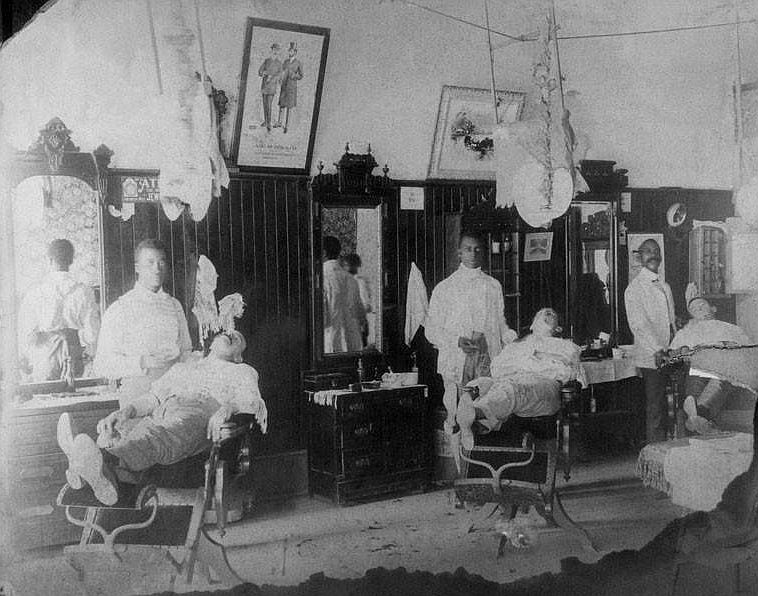
Photo: Mississippi Department of Archives and History (CHARM collection), Public domain, via Wikimedia Commons
The Black Business Ecosystem
How Black communities built, financed, sustained, and lost economic infrastructure.
| Research ID | CTL-DR-ECON-001 |
|---|---|
| Version | Research complete (red-teamed) · 2026-09-28 |
Summary
Black Chicago's economic history is usually told as a gallery of famous entrepreneurs. This project asks a different question: what was the economic machine? Who supplied the capital, how did money move through the community's institutions, what held the ecosystem together, and what broke it? Chicago-first throughout; national comparisons only where evidence supports them. This project cross-references rather than duplicates the sibling lenses: BVM-005 (Bronzeville corridors, Black-owned State Street), PLACE-001 (63rd Street), BPM-003 (newspapers as businesses and ad vehicles), and BCI-001 (institutions). ECON-001's distinctive contribution is economic mechanics: capital, finance, ecosystem links, reinvestment, and breakdown.
Key findings
- Leak & Sons Funeral Homes — four generations of Black family ownership, still operating; the corpus's clearest case that intergenerational transfer was possible.
- The Johnson Products brands — Afro Sheen/Ultra Sheen returned to Black ownership in 2009 via a Black investment consortium.
- WVON — still Black-owned under Midway Broadcasting (Melody Spann-Cooper).
- Leaders Network Credit Union — Black pastors broke ground in 2023 (operating/charter status unverified; watched, not claimed).
- The buildings — the Jordan Building, Overton Hygienic Building, Regal Theater (landmark), and Supreme Life headquarters at 3501 S. King Drive stand as physical receipts of the ecosystem.
What disappeared · what changed
- Disappeared — the banks: Binga State Bank (1930), Douglass National (1932), Seaway National Bank (2017).
- Disappeared — the insurers: from ~50 Black-owned insurers in 1962 to 23 in 1992; Supreme Life taken over in 1999.
- Disappeared — the corridors as Black commercial centers: Madison Street’s 100+ destroyed businesses (1968); Maxwell Street demolished (1994).
- Disappeared — the conglomerates: Overton’s, Fuller’s, Johnson Publishing’s intergenerational control — all ended.
- Changed — capital sources flipped from Black-owned banks and insurance reserves to near-total dependence on mainstream lenders.
- Changed — firms once protected by segregation now compete without its captive market: the one-way desegregation finding.
- Changed — memory infrastructure: from company archives (mostly lost or never kept) to academic studies, digitized magazines, and oral-history projects.
Evidence and grading
65 entities (20 business dossiers, 9 people, 6 banks, 3 credit unions, 2 fraternal-finance bodies, 2 trade associations, 4 districts, insurance, informal finance); 303 graded claims (130 Verified); 182 events 1869–2026; 60 verified relationships.
Claims are graded on a controlled vocabulary: VERIFIED, SUPPORTED, PROVISIONAL, DISPUTED, UNRESOLVED (plus REFUTED and UNVERIFIABLE in evidence files). Only VERIFIED claims feed verified-only knowledge-graph edges; lower grades are shown with their grade visible. Unknowns are never reported as zero.
Limitations
This package is a web-research pass: no Defender archive access, no Sanborn/directory verification of addresses, no field verification, no oral histories.
Sources
Full source register in sources.md.
Red team
42-finding adversarial review; all findings resolved.
Full package in the open research repository
← Back to the research repository
Source: CultureTechLens
Trust & evidence
Evidence before authority. CultureTechLens publishes its methods, its limits, and its corrections alongside its findings. Claims carry grades — VERIFIED, SUPPORTED, PROVISIONAL, DISPUTED, UNRESOLVED — and unknowns are never reported as zero.