 CULTURETECHLENS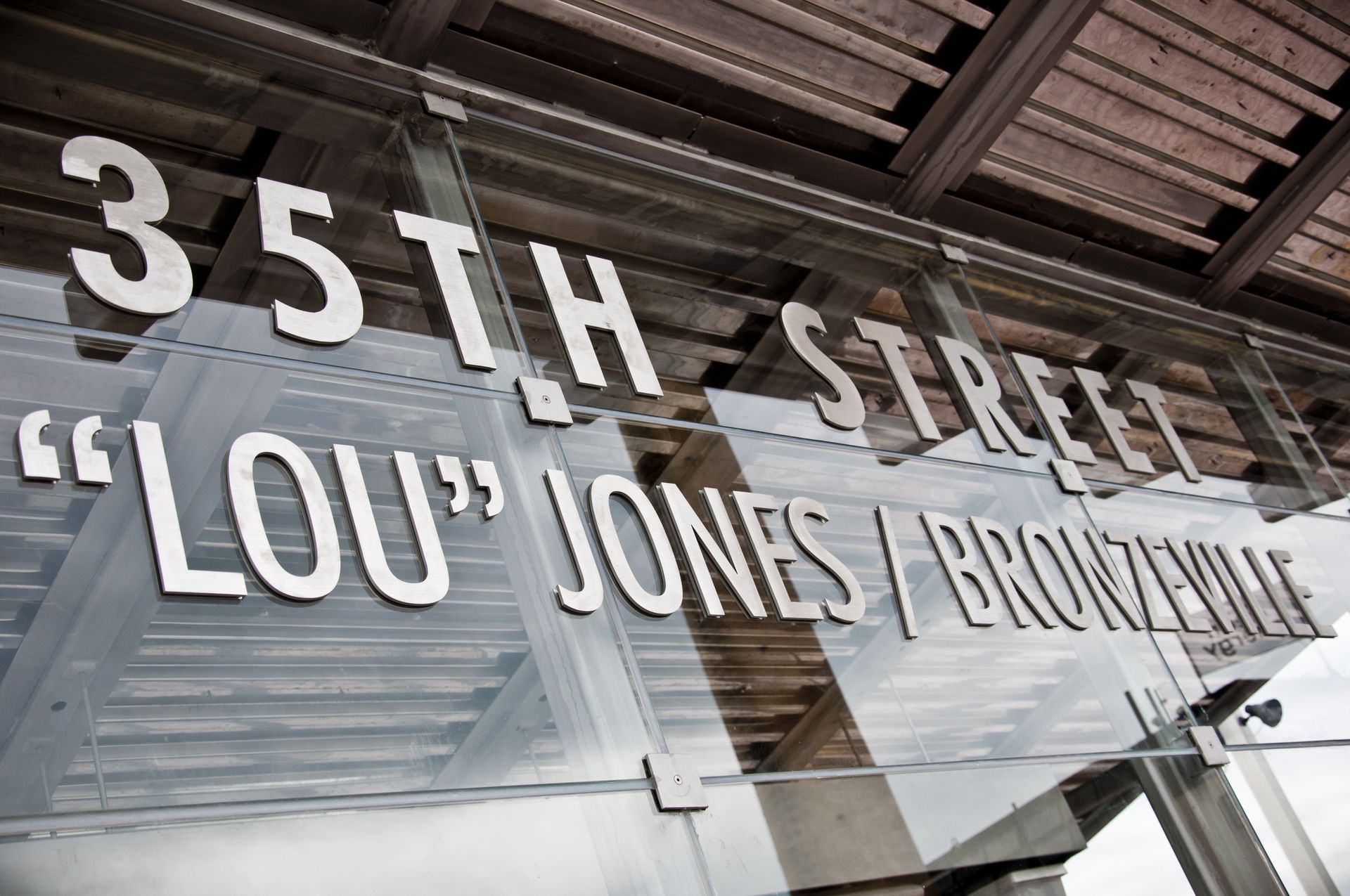
Photo: vxla (Eric Pancer), CC BY 2.0, via Wikimedia Commons
The Infrastructure of Black Chicago
The institutions, places, networks, and people that built a cultural metropolis — from 44,103 Black residents in 1910 to over 1.1 million by 1970.
| Research ID | CTL-DR-BCI-001 |
|---|---|
| Version | Research brief v0.1 (red-team reviewed) · 2026-09-28 |
Summary
Between 1910 and 1970, Black Chicago grew from 44,103 people (~2% of the city) to over 1.1 million (32.75%) — one of the great demographic transformations in American urban history. This project documents the infrastructure that transformation produced: the churches, newspapers, banks, hospitals, schools, music venues, political organizations, and neighborhoods that made Black cultural life possible, and the policies and market forces that contained, exploited, and repeatedly destroyed parts of it. The corpus contains 91 entities (people, institutions, neighborhoods), 201 graded factual claims (159 Verified, 35 Provisional, 7 Disputed), 87 sourced timeline events spanning 1844–2026, 38 verified relationships, and 131 sources (36 primary, 95 secondary). Every claim carries evidence, source, source-type, publication date, uncertainty notes, and contradictory evidence where it exists. An independent red-team review was run against the full corpus; its findings — including 12 re-graded claims and 8 merged duplicate entities — are incorporated in this version (see …
Key findings
- The Great Migration made Chicago the capital of Black institutional life. From ~44,000 Black residents in 1910 to 1,102,620 in 1970 (32.75% of the city; peak 1,187,905 in 1980), migration from the South — propelled by labor demand, kinship networks, …
- Segregation forced institution-building; institutions became the culture. Excluded from white banks, hospitals, newspapers, and venues, Black Chicago built its own: Binga Bank (1908), Provident Hospital (1891, founded by Dr. Daniel Hale Williams), the Chicago Defender (1905), Supreme Life Insurance, DuSable …
- Housing was the primary instrument of racial control. Restrictive covenants (struck down in Hansberry v. Lee, 1940, argued from a Woodlawn case), federal redlining, blockbusting, and contract selling confined Black Chicagoans to the Black Belt and extracted wealth from them …
- The state built segregation into the physical city. The Chicago Housing Authority's 1950 segregated-siting decision, the Dan Ryan Expressway's routing, and the Hyde Park–Kenwood urban renewal project (1958) each used public power to contain or displace Black communities. The Gautreaux …
- Black Chicago produced national political firsts from local infrastructure. Oscar De Priest (elected 1928, first Black congressman from the North), the Dawson machine era, and Harold Washington's 1983 election as Chicago's first Black mayor each rested on the churches, newspapers, …
Evidence and grading
Corpus counts are not stated in the brief. The package ships entities.json, timeline.json, relationships.json, sources.md (131 sources recorded), gaps.md, and red-team.md.
Claims are graded on a controlled vocabulary: VERIFIED, SUPPORTED, PROVISIONAL, DISPUTED, UNRESOLVED (plus REFUTED and UNVERIFIABLE in evidence files). Only VERIFIED claims feed verified-only knowledge-graph edges; lower grades are shown with their grade visible. Unknowns are never reported as zero.
Limitations
From gaps.md: the Defender’s causal weight in driving the Great Migration is provisional (historians debate magnitude versus labor demand); Quinn Chapel’s Underground Railroad role rests on sparse primary 1850s documentation; Olivet Baptist’s founding (1861 vs. 1850) and the Bronzeville name origin remain unresolved.
Sources
131 sources recorded in sources.md.
Red team
Independent adversarial review of the research corpus (tracks A–D), dated 2026-09-28.
Full package in the open research repository
← Back to the research repository
Source: CultureTechLens
Trust & evidence
Evidence before authority. CultureTechLens publishes its methods, its limits, and its corrections alongside its findings. Claims carry grades — VERIFIED, SUPPORTED, PROVISIONAL, DISPUTED, UNRESOLVED — and unknowns are never reported as zero.