 CULTURETECHLENS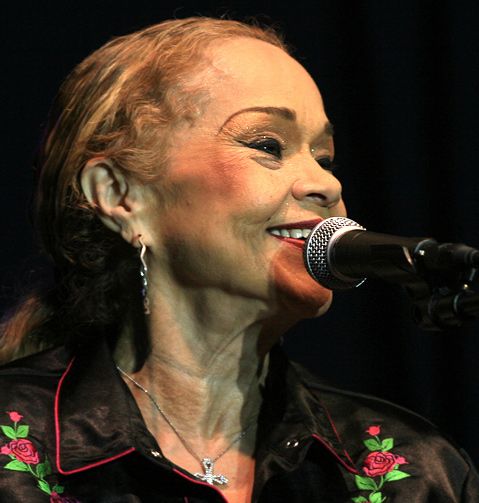
Photo: John K. Addis, CC BY-SA 3.0, via Wikimedia Commons
WVON (1450 AM / 1390 AM / 1450 AM / 1690 AM — call sign continuous since 1963)
WVON is Chicago's heritage Black radio station — launched April 1, 1963 by Chess Records owners Leonard and Phil Chess as "The Voice of the Negro," now "The Voice of the Nation," a Black-owned talk station operated by Midway Broadcasting Corporation on 1690 AM.
Dossier ID: CTL-RD-MEDIA-000001
Entity type: Radio station (AM broadcast; Black-oriented music 1963–1986; Black-oriented talk 1986–present)
Status: Research · v1.0 · 2026-09-28
Executive profile
WVON is the longest-running institutional voice in Chicago Black radio: a single call-sign lineage spanning 1963 to the present, through four ownership eras and three frequency moves. CTL establishes, from primary and strong secondary evidence, the complete ownership/frequency timeline: WHFC (1926–1963) → Chess brothers purchase and WVON launch (April 1, 1963) → Globetrotter Communications (sale consummated 1970, $9M) → 1450-to-1390 move (February 5, 1975) → Combined Communications/Gannett (1977–78) → Midway Broadcasting's 1450 license (WXOL, August 1979) → WVON calls restored to 1450 (March 28, 1984) → all-talk format (March 1986) → 1690 AM via LMA with Clear Channel/iHeartMedia (September 18, 2006).
Significance
- WVON is the only Chicago Black radio station with a continuous call-sign lineage from the civil-rights era to the present, making it the primary broadcast witness to Black Chicago's post-1963 political and cultural history. VERIFIED
- During the Chess era (1963–1969), WVON fused commercial R&B broadcasting with civil-rights journalism — interviewing movement leaders, broadcasting Operation Breadbasket meetings, and deploying DJs with loudspeaker trucks to calm the West Side after King's assassination — a dual commercial/movement function documented in a dedicated scholarly dissertation (Searcy 2012). VERIFIED
- The March 1986 conversion to all-talk created Chicago's first Black talk-radio format, a programming innovation competitors (notably Gannett's WGCI-AM in January 1989) then imitated. VERIFIED
- WVON's rotation demonstrably moved national record markets in the 1960s — Motown routed premieres through the station first, and its airplay influenced other markets' programming. SUPPORTED
- The station's 1979 return to Black ownership (Midway Broadcasting) and its survival as a Black-owned talk outlet into the 2020s make it a rare case of Black media ownership persistence through the consolidation era. VERIFIED
- Without WVON, the record of how Black Chicago heard itself — the music, the movement news, the electoral mobilization — would rest almost entirely on print.
What remains uncertain
What remains uncertain: the exact date the "Voice of the Negro" branding became "Voice of the Nation"; the WNUS-AM-FM purchase price ($4.45M vs. $3.55M in competing sources); and advertiser-level economics of the Chess era, which survive only in fragmentary trade-press traces.
Full dossier + evidence file in the open research repository
Source: CultureTechLens
Trust & evidence
Evidence before authority. CultureTechLens publishes its methods, its limits, and its corrections alongside its findings. Claims carry grades — VERIFIED, SUPPORTED, PROVISIONAL, DISPUTED, UNRESOLVED — and unknowns are never reported as zero.