 CULTURETECHLENS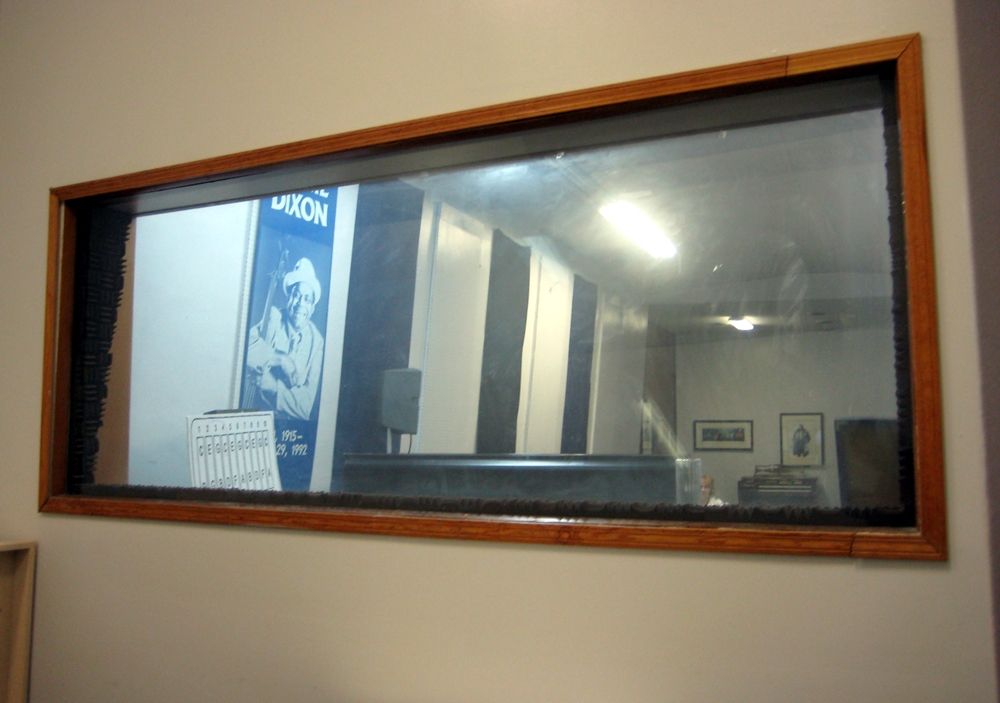
Photo: get directly down, CC BY 2.0, via Wikimedia Commons
Chess Records
Chess Records was the Chicago independent record label founded in 1950 by Polish-Jewish immigrant brothers Leonard and Phil Chess, whose blues, R&B, and rock-and-roll recordings — by Muddy Waters, Howlin' Wolf, Chuck Berry, Bo Diddley, Etta James, Willie Dixon, and others — defined the sound of Chicago blues and shaped rock and roll worldwide.
Dossier ID: CTL-RD-MUS-000001
Entity type: Business — independent record company (organization; defunct as an active label, 1975)
Status: Research · v1.0 · 2026-09-28
Executive profile
Chess Records (1950–1975) was the central institution of the Chicago blues recording industry and one of the most consequential independent labels in American music. Founded by brothers Leonard Chess (1917–1969) and Phil Chess (1921–2016), Polish-Jewish immigrants who entered the business through South Side nightclubs, the label grew from a trunk-distribution operation selling "race records" to Black retail stores into a vertically integrated company — pressing plant, studio, publishing, shipping, and label printing under one roof at 320 E. 21st Street — that put Chicago blues on national charts and, through British rock's embrace, around the world. CTL establishes the following with confidence: the 1950 founding and the Aristocrat (1947) lineage; the founders' biographies; the address chronology (Cottage Grove storefronts → 2120 S. Michigan, May 1957–1967 → 320 E. 21st, late 1966 onward); the subsidiary and publishing structure (Checker 1952, Marterry/Argo/Cadet, Arc Music 1953); the independent-distribution business model, including Leonard's own trunk sales and a 1954 Louisiana production deal; the 1969 sale to General Recorded Tape for $6.5 million plus stock; and the catalog path through All Platinum to MCA and into Universal Music Group, which owns it today (Geffen/UMe manage reissues).
Significance
- Chess Records was the recording institution that industrialized the Chicago blues — electrified Delta-derived music captured in a purpose-built studio system, distributed nationally, and marketed across racial lines. VERIFIED
- Its catalog is the primary recorded document of the 1950s–60s Chicago blues canon (Muddy Waters, Howlin' Wolf, Little Walter, Willie Dixon) and of early rock and roll (Chuck Berry, Bo Diddley). VERIFIED
- The label's recordings were the study texts of the British blues revival: the Rolling Stones named themselves for a Chess single and recorded at 2120 S. Michigan in 1964; Chess masters underpin the rock canon from the Beatles to Led Zeppelin to the Voyager Golden Record ("Johnny B. Goode," 1977). VERIFIED
- Chess exemplifies the independent-label business model of the postwar era — self-distribution to Black retail, regional indie distributors, in-house production — and its limits: the 1969 sale and 1975 wind-down trace the consolidation of independents into the conglomerate system that became UMG. VERIFIED
- Its royalty and credit disputes (Dixon, Waters, Maybellene payola credits, the Zeppelin suits) are landmark cases in the exploitation-and-recovery history of Black music, directly seeding the Blues Heaven Foundation's royalty-recovery mission. VERIFIED
- The 2120 S. Michigan building (Chicago Landmark, 1990; Blues Heaven Foundation museum since 1997) is one of the most visited music-heritage sites in Chicago. VERIFIED
What remains uncertain
What remains uncertain: thin spots include Arc Music's founding documentation, the All Platinum wind-down's asset inventory, the 1975 dismantling (hundreds of thousands of records reportedly destroyed), and the exact founder set of Aristocrat. The credit and royalty disputes — Maybellene payola credits, the 1977 Dixon/Waters suits against Arc, the Led Zeppelin suits — are documented facts, not folklore; the "found guilty" framing of the Zeppelin cases is refuted. CTL's standing position holds: Chicago electrified and industrialized the blues; it did not invent the electric blues.
Full dossier + evidence file in the open research repository
canon-chess-records. "Culture, Clearly Seen." — CULTURETECHLENS · Black Cultural Intelligence.Source: CultureTechLens
Trust & evidence
Evidence before authority. CultureTechLens publishes its methods, its limits, and its corrections alongside its findings. Claims carry grades — VERIFIED, SUPPORTED, PROVISIONAL, DISPUTED, UNRESOLVED — and unknowns are never reported as zero.