 CULTURETECHLENS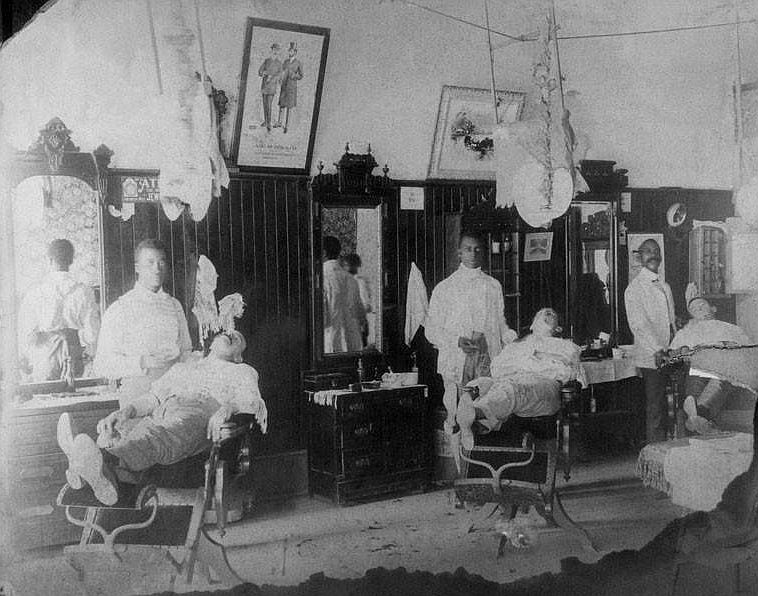
Photo: Mississippi Department of Archives and History (CHARM collection), Public domain, via Wikimedia Commons
The Afro Pick
The afro pick is a wide-toothed comb with long teeth and an easily-gripped handle, designed for styling coily hair, that became a mass-produced American consumer product in the 1960s–1970s and a documented symbol of Black pride and identity.
Dossier ID: CTL-RD-OBJ-000001
Entity type: Object (grooming technology / cultural artifact)
Status: Research · v1.0 · 2026-09-28
Executive profile
The afro pick is a grooming tool with a 5,500-year-deep form and a 60-year-old commercial life. Long-toothed hair combs are documented in predynastic Egypt (the Fitzwilliam Museum, Cambridge, holds a ~5,500-year-old example and built its 2013 exhibition "Origins of the Afro Comb" around the form). The modern mass-produced pick emerged in the United States in the 1960s–1970s: San Diego barber Willie Lee Morrow adapted a Nigerian wooden comb into the "Afro Tease" and mass-produced it; Samuel H. Bundles Jr. and Henry M. Childrey (Tulloch) patented an early pick design in 1969 for Summit Laboratories; and Anthony R. Romani's raised-fist handle — U.S. Design Patent Des. 238,821, filed 1974, granted 1976, manufactured by Antonio's Manufacturing of Pennsylvania — married the tool to Black Power iconography. CTL establishes the full Object Biography chain with strong manufacturer, design, period, museum-holdings, and people links; advertising and consumer-use links are moderate; period photographs of the pick in use are the thinnest link.
Significance
- The afro pick is one of the few everyday objects whose design history is fully traceable from an ancient African form to a patented 20th-century mass product — making it a model artifact for material-culture study of the Black diaspora. VERIFIED
- Museum interpretation (NMAAHC, Fitzwilliam, MoMA) treats the pick — especially the fist-handle variant — as a document of Black Power-era identity politics, not merely a grooming tool. VERIFIED
- The pick's commercial history (Black manufacturers, Black press advertising, Black-owned distribution) makes it a case study in Black economic self-determination in the beauty industry. SUPPORTED
- Without this dossier's evidence testing, the public record would continue to conflate three separate achievements — Morrow's popularization, Bundles & Childrey's early patent, Romani's fist-handle design — into competing single-inventor myths. --- VERIFIED
What remains uncertain
Uncertain: the Bundles–Childrey patent number, comprehensive 1970s advertising data, and rights-cleared period photographs of use.
Full dossier + evidence file in the open research repository
Source: CultureTechLens
Trust & evidence
Evidence before authority. CultureTechLens publishes its methods, its limits, and its corrections alongside its findings. Claims carry grades — VERIFIED, SUPPORTED, PROVISIONAL, DISPUTED, UNRESOLVED — and unknowns are never reported as zero.