 CULTURETECHLENS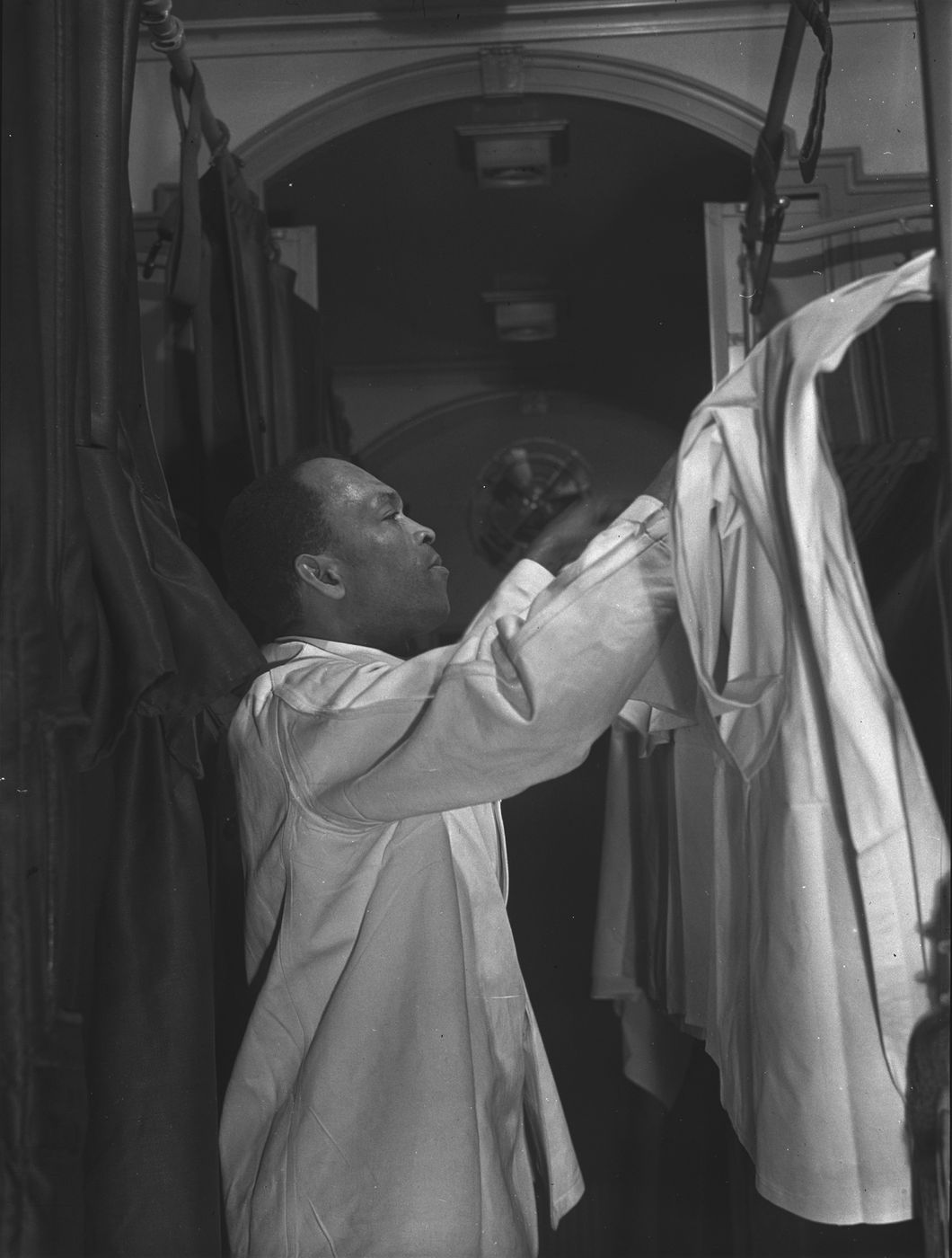
Photo: Jack Delano, Public Domain, via Wikimedia Commons
Transnational Corridors
Chicago-centered transnational corridors in Black cultural life. Working title revised from “The Black Cultural World System”: the evidence supports corridors, not a world system.
| Research ID | CTL-DR-GLOBAL-001 |
|---|---|
| Version | Research v0.1 complete · 2026-09-28 |
Summary
This project set out to map documented cultural connections between Black Chicago and the wider Black world — other U.S. cities, Africa, the Caribbean, Latin America, Europe — through migration, music, media, institutions, business, and intellectual exchange. Six parallel research tracks produced 213 deduplicated entities, 371 evidence-graded claims, 163 relationships (split into Verified and Provisional layers), 170 timeline events spanning c. 1780–2026, and 65 explicit negative findings. The single most important result is a negative one, reached independently by three tracks and confirmed by the red-team audit: the evidence does not support a "world system." What it supports is a set of discrete bilateral corridors and hub-and-spoke networks centered on Chicago — the Mississippi Delta→Chicago blues pipeline, the Chicago→Europe blues and house circuits, Chicago–Africa press and diplomatic circuits, the Chicago↔Atlanta civil-rights axis. No documented multi-node circuit exists in which a third node mediates between two others. The honest frame for …
Key findings
- The Delta→Chicago blues pipeline and Chess Records as a convergence node. Muddy Waters (1943), Howlin' Wolf via Sam Phillips (1952–53), Willie Dixon (1936), and Chuck Berry via Waters's referral (1955, now Provisional — single hobbyist source) converge on Chess. Documented …
- The Chicago→Europe blues circuit and its return flows. The American Folk Blues Festival (from 1962: Paris Olympia, Manchester) as the sustained pipeline; Big Bill Broonzy's 1951–57 tours (softened per red-team: "toured; later cited as precedent," not proven causation); Art Ensemble …
- Chicago house music's UK breakthrough, 1986–89. Farley (UK #10, 1986), Marshall Jefferson (UK #7), Steve Hurley's "Jack Your Body" (UK #1, Jan 1987), Lil Louis (UK #2) — anchored by UK infrastructure (Haçienda's 1986 "Nude" nights, Ministry of Sound, XL …
- The Black press as the closest thing to a genuine intercity system. The Defender's Pullman-porter distribution network on Southern rail runs (Smithsonian 2016 + Congressional Record); the Associated Negro Press wire service (Chicago, 1919) with a foreign correspondent network (Washington, …
- The Chicago↔Atlanta civil-rights axis. SCLC joining Chicago's CCCO in the 1966 Freedom Movement (Freedom Sunday, Marquette Park); Jesse Jackson building Operation Breadbasket/PUSH in Chicago; Mahalia Jackson singing Dorsey's "Precious Lord" at King's 1968 funeral — closing the Chicago gospel→Atlanta movement …
Evidence and grading
213 entities (96 Person, 46 Organization, 15 Event, 11 Place, 10 Institution, others) across six tracks; 371 claims (250 Verified · 111 Provisional · 5 Disputed · 5 Unresolved); 170 events c.1780–2026; 117 verified + 46 provisional edges; 265 sources; 65 negative findings.
Claims are graded on a controlled vocabulary: VERIFIED, SUPPORTED, PROVISIONAL, DISPUTED, UNRESOLVED (plus REFUTED and UNVERIFIABLE in evidence files). Only VERIFIED claims feed verified-only knowledge-graph edges; lower grades are shown with their grade visible. Unknowns are never reported as zero.
Limitations
Per the red-team audit: the corpus does not support a ‘world system.’ The framing was downgraded to ‘Chicago-centered transnational corridors’ unless future research documents genuine multi-node circuits (e.g., Kingston→London→Chicago). The six tracks were built with per-track ID namespaces, so cross-track circuits could not be represented even if evidenced — a schema limitation the red team flagged.
Sources
265 sources recorded across six tracks.
Red team
Dedicated red-team worker over the six-track merged corpus; the framing verdict (corridors, not a world system) was adopted.
Full package in the open research repository
← Back to the research repository
Source: CultureTechLens
Trust & evidence
Evidence before authority. CultureTechLens publishes its methods, its limits, and its corrections alongside its findings. Claims carry grades — VERIFIED, SUPPORTED, PROVISIONAL, DISPUTED, UNRESOLVED — and unknowns are never reported as zero.