 CULTURETECHLENS
Black Wealth in the Pews: How South Side Churches Built Wealth Before Banks Would
On the Chicago South Side, the first bank most Black families ever trusted had no vault. It had a pulpit, a choir, and a building fund. This is Black cultural intelligence the way CultureTechLens practices it: graded evidence, not nostalgia. The Afro-American church underwrote mortgages, buried the dead with dignity, seeded businesses, and bought city blocks before white banks would lend south of the color line — a South Side ledger the global diaspora still draws on.
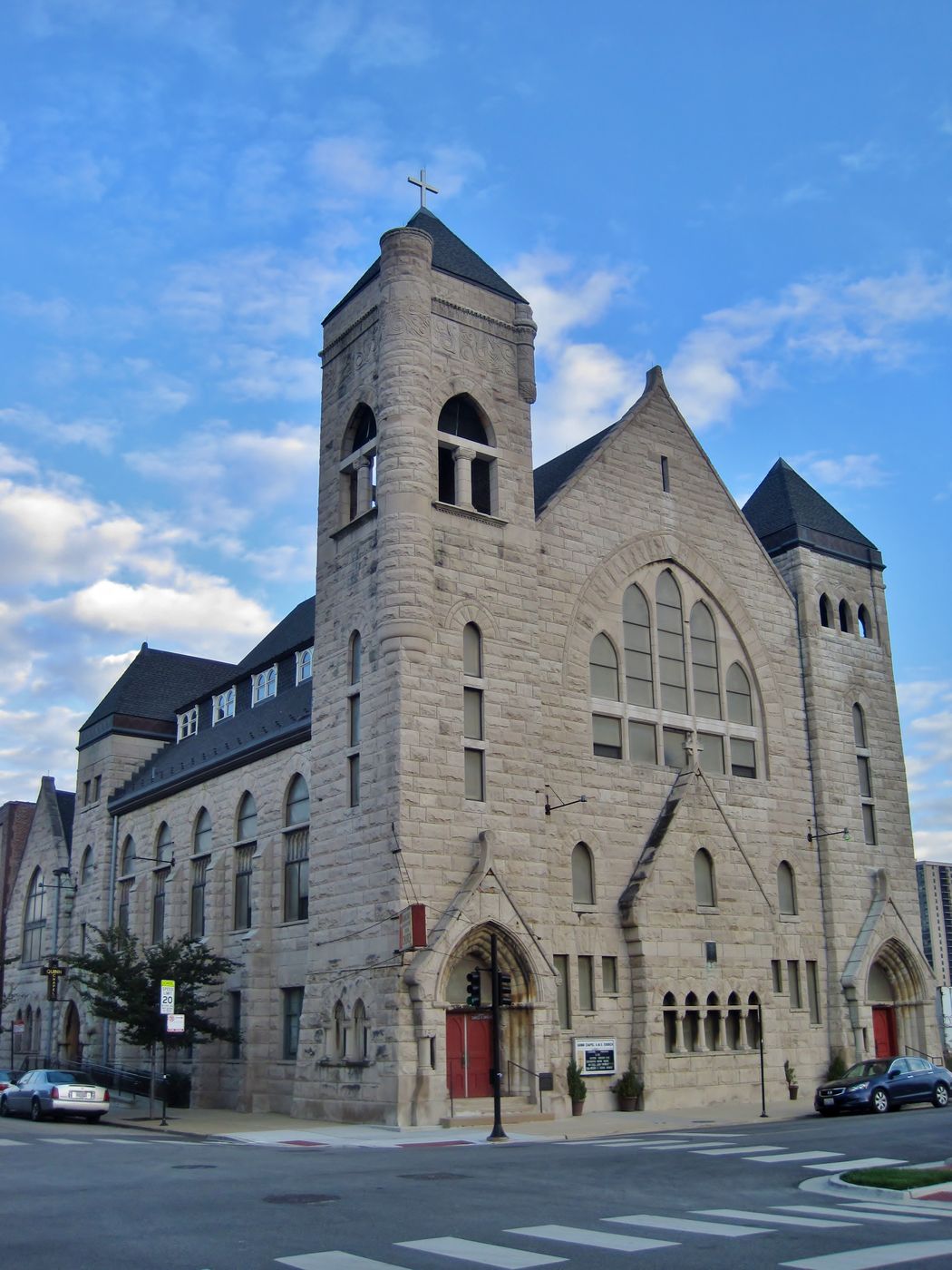
The sanctuary was the vault
Start at the beginning, because the beginning is the argument. In 1844, seven Black Chicagoans started meeting for prayer in somebody’s house. In 1847 they organized as a congregation of the African Methodist Episcopal Church and named it for Bishop William Paul Quinn. That congregation — Quinn Chapel — is the city’s oldest Black congregation [VERIFIED]. Before the Civil War it ran as a station on the Underground Railroad. The Great Fire of 1871 took its building; the congregation met wherever it could until it bought ground at 2401 South Wabash and raised the church that still stands there, designed by Henry F. Starbuck in 1892, a Chicago Landmark since 1977 and on the National Register since 1979 [VERIFIED].
Here’s what matters for the money story: Quinn’s members were instrumental in founding Provident Hospital, the Elam House, and the Wabash Avenue YMCA [SUPPORTED]. Read that again. A church congregation founded a hospital. In 1992 Quinn joined three neighboring churches to found the Renaissance Collaborative, a nonprofit that saved the historic Wabash YMCA and still serves Bronzeville [VERIFIED]. Landmark status itself carried financial mechanics: a Chicago City Council order waived landmark permit fees for Quinn’s auditorium renovation, pew repair, and stained glass [SUPPORTED]. Before emancipation’s promise had cleared, the Black church was already the institution that held the people, the records, and the capital. Everything after is a variation on that theme.
Twenty thousand members is an economy
Olivet Baptist Church organized on April 6, 1850 — the oldest Black Baptist church in Chicago [VERIFIED]. In 1907 it bought the building at 31st Street and South Parkway, in the heart of what became Bronzeville. Then the Great Migration hit, and Olivet did what nobody else in the city was doing at scale: it caught people. Under Rev. Lacey Kirk Williams, pastor from 1916 until his death in a plane crash in 1940, the church ran housing assistance, childcare, and what is documented as Chicago’s first kindergarten program for the Southern migrants pouring in [SUPPORTED]. Princeton scholar Wallace Best called Olivet “a national model” for settling Black migrants in the North and meeting their needs beyond the spiritual [SUPPORTED].
The numbers tell the rest. Olivet counted about 4,000 members in 1902, roughly 10,000 to 11,000 by the early 1920s, and some 20,000 by the 1940s — at its peak described as the largest Protestant congregation in the world [SUPPORTED]. Williams led the National Baptist Convention from 1922 to 1940; his successor Joseph H. Jackson held the post for decades after [VERIFIED].
Now do the arithmetic the way a treasurer would. Twenty thousand members, a weekly offering, a building fund, and the auxiliaries — the usher boards, missionary societies, and deacon boards whose heads, per Miles Mark Fisher’s 1922 history of the church, sat as a general committee running Olivet’s social and economic work — under one roof [SUPPORTED]. That is a capital pool no bank on the South Side could match — because no bank on the South Side wanted Black depositors’ business anyway. The offering plate wasn’t charity. It was a balance sheet.
When the bank said no, the saints said yes
Redlining wasn’t an attitude; it was a map. Whole Black neighborhoods were drawn out of the credit system, which meant the church’s pooled money was often the only pool available. So in 1934, thirteen Black South Side leaders pooled $7,000 of their own money and chartered Illinois Federal Savings and Loan — a depositor-owned thrift whose stated mission was to make home loans in the parts of Chicago where white-owned banks wouldn’t lend [SUPPORTED]. Among the thirteen: a doctor, an attorney, an insurance executive — and a minister [SUPPORTED]. The church wasn’t adjacent to Black banking in Chicago. It was in the founding room.
Honesty requires the rest of the sentence. Most of those Black banks didn’t survive the system they were built to route around. Seaway Bank failed in 2017; Illinois Service Federal needed rescue and was acquired in 2016 [SUPPORTED]. The need was real, the execution was serious, and the headwinds were hurricane-grade. That’s not a reason to look away from the achievement. It’s the reason the achievement matters: they built banks anyway.
Tithing is vertical. Mutual aid is horizontal.
Two economies ran through the same sanctuary, and confusing them is how the story gets told wrong.
Tithing is vertical: the tenth (or whatever the household could give) moving up to sustain the institution — the mortgage on the building, the pastor’s salary, the choir robes, the building fund that became a down payment on the next building. This is the money philanthropy statistics can see.
Mutual aid is horizontal: money moving member to member, organized by the church but never fully owned by it. Burial societies that made sure nobody in the congregation went into the ground in a pauper’s grave. Sick-and-shut-in funds. The church mothers’ collections — and the Church Mother’s office itself was a recognized seat of moral and financial authority in Black Baptist, Methodist, and Sanctified congregations [SUPPORTED]. The repast after the funeral, cooked and funded by the auxiliaries. During segregation, Black churches functioned as de facto social service institutions precisely because white-led governments neglected Black communities or actively harmed them [SUPPORTED].
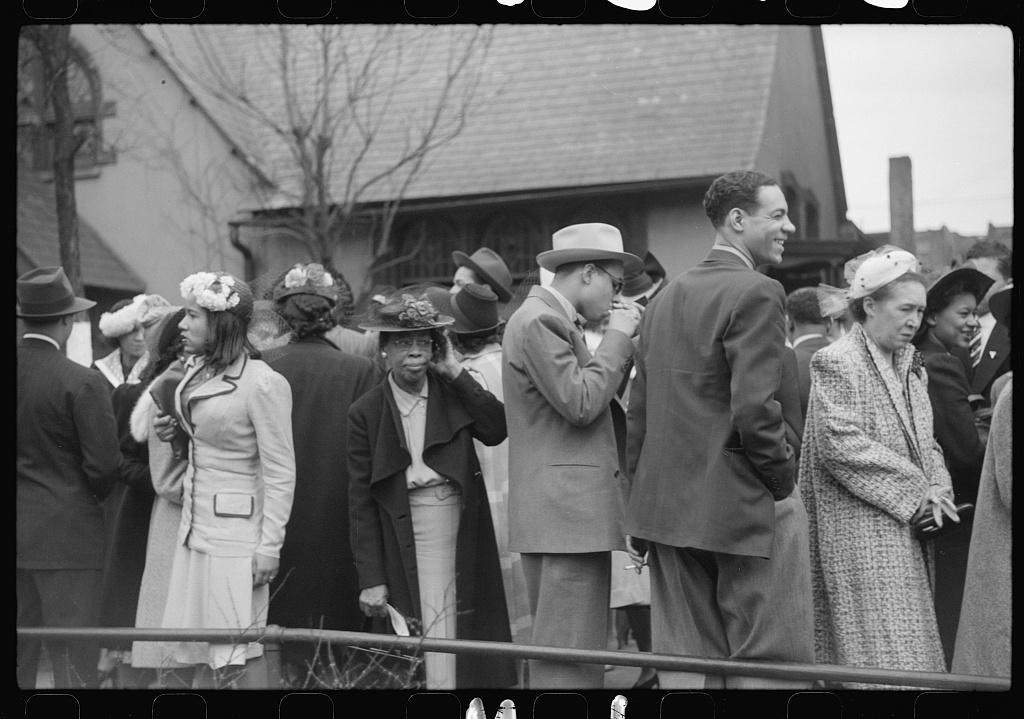
The tithe built the institution. Mutual aid built the people. A grant officer who only counts the first is measuring half the economy. [PROVISIONAL: the specific rosters and dollar flows of named South Side burial societies are not verified in this draft; the mechanism is documented nationally and the South Side application follows from it, but treat Chicago-specific figures as provisional until sourced.]
The building fund was a development bank
Black congregations bought real estate the way developers do — because some of them were developers. In 1924, Liberty Baptist Church — founded in 1919, the Bronzeville congregation whose pastor Rev. A.P. Jackson hosted Dr. King during the Chicago Freedom Movement — purchased Chicago’s Olivet Building, designed by African American architect J.M. Higginbotham [SUPPORTED]. A Black church buying landmark commercial property in 1924. Sit with that date.
The smaller end of the market mattered just as much. The storefront church — a congregation renting a commercial space on the block, led by a pastor the neighborhood actually knew — was the dominant form of Black religious organization in migration-era Chicago: a 1930 survey found storefronts were 72 percent of the city’s Black churches [VERIFIED]. Low overhead, high trust, open seven days a week. And the church program economy — choir anniversaries, musicals, sheet-music sales moving through church networks — turned culture itself into revenue [SUPPORTED]. When Thomas A. Dorsey took the music director’s post at Pilgrim Baptist in 1932 and gospel music was born in that building, he wasn’t just making a sound. He was standing up an industry: sheet music, touring choirs, programs sold at anniversaries, money circulating through the pews and back out into the neighborhood [SUPPORTED]. The building at 3301 South Indiana burned in January 2006, but the economic model Dorsey built there never did [SUPPORTED].
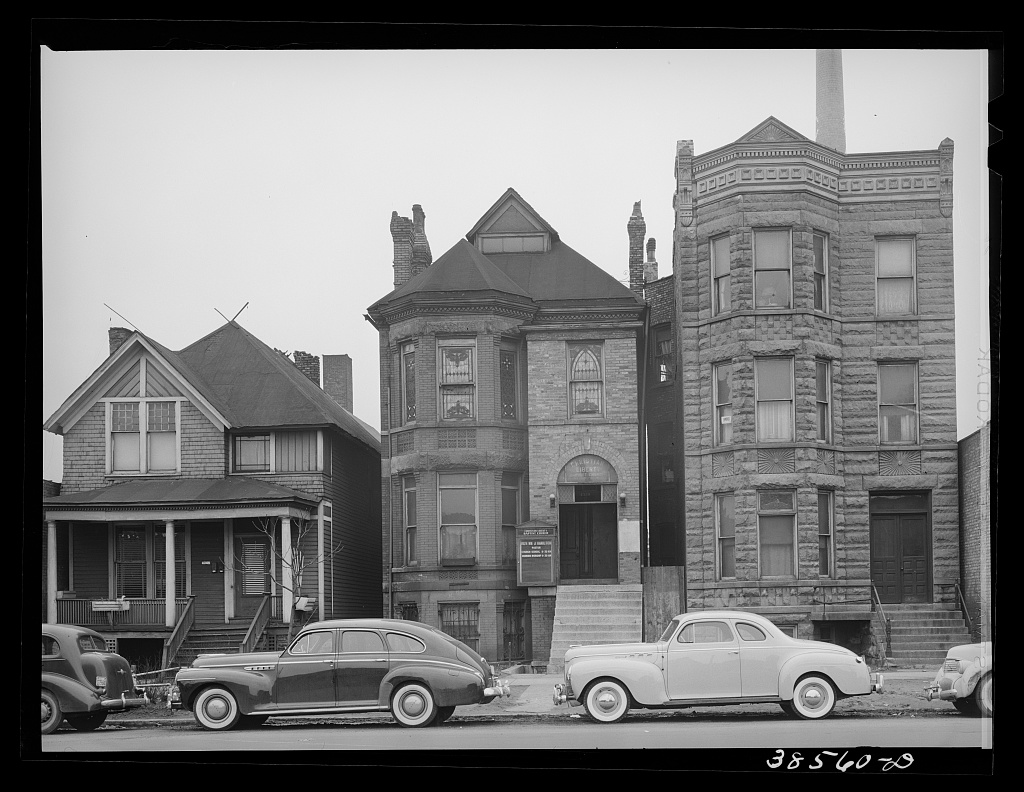
The offering envelope was a cap table
The Black church ran on envelopes: name, amount, fund designation — tithe, building fund, sick-and-shut-in, mission. Every giver recorded, every dollar assigned, every fund accounted for where the congregation could see it. It was a cap table before Silicon Valley had the word, and an accountability system before nonprofits had the term. When the city’s books excluded you, you kept your own — in public, to the penny. CultureTechLens works the same way: every claim tagged, every source named, every correction public.
The same ledger, across the water
The mechanism traveled even where no one carried it directly. In 1964, ten members of London’s Ferme Park Baptist Church — Caribbean migrants shut out of British banks — founded the Hornsey Co-operative Credit Union, Britain’s first, growing out of an informal savings club started two years earlier [VERIFIED]. Thirty years after thirteen Black Chicagoans pooled $7,000 to charter Illinois Federal, ten Black Londoners did the same thing for the same reason. Nobody taught them the South Side method. Exclusion taught it twice. The Black church’s financial infrastructure isn’t a Chicago invention. It’s a diaspora inheritance.
The ledger is still open
This isn’t a history essay. It’s a current-events essay wearing a history jacket.
In Pullman, Trinity United Church of Christ — the congregation Rev. Jeremiah Wright led for decades — owns and operates Imani Village, a faith-based social enterprise building out 32 acres: 80 affordable single-family homes and 70 senior-housing units in the plan, $8.1 million in city tax-increment financing secured, a health clinic already open, and a 70-unit senior residence that cut its ribbon on November 13, 2025 [SUPPORTED]. A church is building a neighborhood. In 2025. With TIF money.
In Woodlawn, the Apostolic Church of God at 6320 South Dorchester — the congregation Rev. Arthur M. Brazier built by merging his Universal Church of Christ churches — has pushed development that includes commerce and economic diversity, not just housing, because the leadership understood that property values and homeownership are what turn a project into generational wealth [SUPPORTED].
And on 75th Street, Salem Baptist Church of Chicago, under Rev. Dr. Charlie E. Dates, co-hosts “Spend in the Black” — vendor marketplaces where more than a hundred Black-owned businesses set up along the corridor. Fox 32 Chicago reported shoppers spent more than $1 million in a single day along the corridor, a figure shared by co-founder Rev. Dates; Ald. William Hall put it at “a half a million to $1 million spent between three blocks” [VERIFIED as reported — organizer estimates, not audited receipts]. The Brown Sugar Bakery’s Stephanie Hart called her event day “the absolute largest day that we have ever had” after two decades on 75th Street [SUPPORTED]. The ancestors ran the building fund. The grandchildren run the corridor.
What philanthropy should take from the pews
Here’s the number that should reorder a grant officer’s priorities. The latest Giving USA report puts American charitable giving to religion at $151.58 billion — 23 percent of all giving, still the largest single share of any subsector, a position religion has held for the forty years they’ve measured it [VERIFIED]. The Black church is a material part of that river. It always was.
So the pitch writes itself, and it’s the same pitch the church has been making since 1847: fund the infrastructure that already exists. The Black church is America’s oldest community development financial institution. It just never called itself that. It called it usher board, building fund, mothers’ auxiliary, repast committee. The names were humble. The balance sheets weren’t.
CultureTechLens is built the same way — small, accountable, meant to outlive its founder. CultureTechLens NFP is a 501(c)(3) nonprofit, EIN 39-3143901, holder of the 2026 Candid Gold Seal of Transparency [VERIFIED]. The churches, people, and initiatives named in this essay are seventeen entities in the CultureTechLens knowledge graph: 2,826 entities, 4,524 relationships, 1,100 research-complete as of October 2026 [VERIFIED].
Wealth without God is just accumulation. The church mothers taught that — money is stewardship, not ownership. That theology is why the building fund worked: you weren’t buying a building, you were stewarding a people. CultureTechLens is a God-fearing archive for the same reason. We keep receipts because somebody has to answer for the people, not just the building.
A God-fearing archive, keeping the receipts the way the church mothers kept the books: every claim graded, every source named, every correction public.
Frequently asked questions
How did Black churches build wealth before banks would lend to them?
They pooled it. Weekly offerings became building funds; building funds became mortgages and property bought outright \u2014 like Liberty Baptist Church's 1924 purchase of Chicago's Olivet Building. And when pooling wasn't enough, they chartered their own lenders: in 1934, thirteen Black South Side leaders pooled $7,000 to found Illinois Federal Savings and Loan, a thrift created specifically to make home loans where white-owned banks refused.
What is the difference between tithing and mutual aid?
Tithing is vertical \u2014 the congregation's giving moving up to sustain the institution: the building, the staff, the ministries. Mutual aid is horizontal \u2014 money moving member to member through burial societies, sick funds, and church-mothers' collections that never passed through an official budget. Both ran through the Black church; philanthropy statistics mostly count only the first.
What is a modern example of a South Side church building wealth?
Imani Village in Pullman, owned and operated by Trinity United Church of Christ: a 32-acre development with 80 affordable homes and 70 senior-housing units planned, $8.1 million in city TIF funding, an open health clinic, and a 70-unit senior residence that cut its ribbon November 13, 2025.
What is CultureTechLens NFP?
CultureTechLens NFP is a 501(c)(3) nonprofit organization (EIN 39-3143901) based in Chicago, Illinois, holder of the 2026 Candid Gold Seal of Transparency. It maintains a graded knowledge graph of Black culture \u2014 2,826 entities, 4,524 relationships, 1,100 research-complete as of October 2026 \u2014 where every claim carries an evidence grade and every correction is public.
How to Cite
CultureTechLens NFP, “Black Wealth in the Pews: How South Side Churches Built Wealth Before Banks Would”, CultureTechLens, October 2026. https://culturetechlens.com/black-wealth-in-the-pews/ CC BY 4.0.
Download the CTL 10 methodology (2,826 entities graded).
Source: CultureTechLens. Evidence before authority. Every claim graded. Every source named. Every correction public.
Sources
- Best, Wallace. “Olivet Baptist Church.” Encyclopedia of Chicago. Chicago Historical Society. encyclopedia.chicagohistory.org
- “Olivet Baptist Church, Chicago, Illinois (1850–).” BlackPast.org. blackpast.org
- Johnson, Nicole Jeanine. “When they came North: How Olivet Baptist Church welcomed Black migrants during the Great Migration.” WBEZ Chicago, April 3, 2026.
- “Quinn Chapel AME Church, 2401 South Wabash Avenue, Chicago.” Historic American Buildings Survey, Library of Congress.
- “The Black Church Creating a New Village on Chicago’s South Side.” Next City. nextcity.org
- “‘Spend in the Black’ Turns Faith Into Economic Power.” Word In Black, March 2026. wordinblack.com
- “Black Churches Lead ‘Spend In The Black’ Movement.” Black Enterprise. blackenterprise.com
- “Before the State Showed Up: Black Mutual Aid as the Infrastructure of Our Democracy.” Nonprofit Quarterly, 2026. nonprofitquarterly.org
- “Development Is Hard to Execute in Black Communities. Churches Are Stepping In.” Commercial Observer, 2023. commercialobserver.com
- “2025 Giving Topped $600B, but Religion Saw Slowest Growth.” MinistryWatch (reporting Giving USA 2026). ministrywatch.com
- “Chicago’s Oldest Black Bank in Jeopardy.” Black Enterprise. blackenterprise.com
- “What’s Gone Wrong at Chicago’s Last Ghanaian Owned Bank?” Norvan Reports. norvanreports.com
- Boyd, Robert L. “The Storefront Church Ministry in African-American Communities of the Urban North during the Great Migration.” Social Science Journal 35(3), 1998 (citing the 1930 Mays & Nicholson survey, p. 219: storefronts were 72 percent of Chicago’s Black churches).
- Fisher, Miles Mark. The History of the Olivet Baptist Church of Chicago. University of Chicago Divinity School dissertation, June 1922. archive.org
- “‘Spend in the Black’ returns to Chatham after $1M day last year.” Fox 32 Chicago. fox32chicago.com
- ABC7 Chicago (via internewscast): Ald. William Hall — “a half a million to $1 million spent between three blocks.” internewscast.com
- Gilkes, Cheryl Townsend. If It Wasn’t for the Women…: Black Women’s Experience and Womanist Culture in Church and Community. Orbis Books, 2001.
- “FaithWorks: The Iconic Role and Evolution of Church Mothers.” NNPA. nnpa.org
- ABCUL. “Hornsey Co-operative Credit Union” — Britain’s first credit union, founded 1964 by ten members of London’s Ferme Park Baptist Church. abcul.coop
- “‘Spend In The Black’ Brings ‘Booming’ Business To 75th Street Corridor in Chatham.” Afro-Conscious Media, April 2026. afroconsciousmedia.com
- Chicago City Council order waiving landmark permit fees for Quinn Chapel AME renovation work, 2401 S. Wabash.
- CTL knowledge graph entities: CTL-E-0147 (Quinn Chapel AME Church), CTL-E-0148 (Olivet Baptist Church), CTL-E-0149 (Pilgrim Baptist Church), CTL-E-0150 (Trinity United Church of Christ), CTL-E-0154 (Apostolic Church of God), CTL-E-0155 (Liberty Baptist Church), CTL-E-1383 (Church Mothers), CTL-E-1384 (Church Program & Choir Anniversary Economy), CTL-E-1394 (Imani Village), CTL-E-1404 (Storefront Church Phenomenon), CTL-E-4047/4048 (Imani Village milestones), CTL-E-4061 (Liberty Baptist purchases the Olivet Building, 1924), CTL-E-5071 (Salem Baptist Church of Chicago), CTL-E-5072 (Rev. Dr. Charlie E. Dates), CTL-E-5073 (Spend in the Black), CTL-E-5074 (Stephanie Hart). Source: CultureTechLens.
APA: CultureTechLens NFP. (2026, October). Black wealth in the pews: How South Side churches built wealth before banks would. CultureTechLens. https://culturetechlens.com/black-wealth-in-the-pews/
MLA: CultureTechLens NFP. “Black Wealth in the Pews: How South Side Churches Built Wealth Before Banks Would.” CultureTechLens, Oct. 2026, culturetechlens.com/black-wealth-in-the-pews/.
Keep the ledger open. Pastors, treasurers, building-fund chairs: send us your church’s ledger, anniversary program, or building-fund receipt. We will grade it, cite you, and add it to the graph. Email: [email protected].
Fund this work. CultureTechLens NFP is a 501(c)(3) nonprofit, EIN 39-3143901, holder of the 2026 Candid Gold Seal of Transparency. Give at culturetechlens.com/donate/. Every correction public, every dollar receipted.
Trust & evidence
Evidence before authority. CultureTechLens publishes its methods, its limits, and its corrections alongside its findings. Claims carry grades — VERIFIED, SUPPORTED, PROVISIONAL, DISPUTED, UNRESOLVED — and unknowns are never reported as zero.
Every claim graded. Every source named. Every correction public — see the corrections log.