 CULTURETECHLENS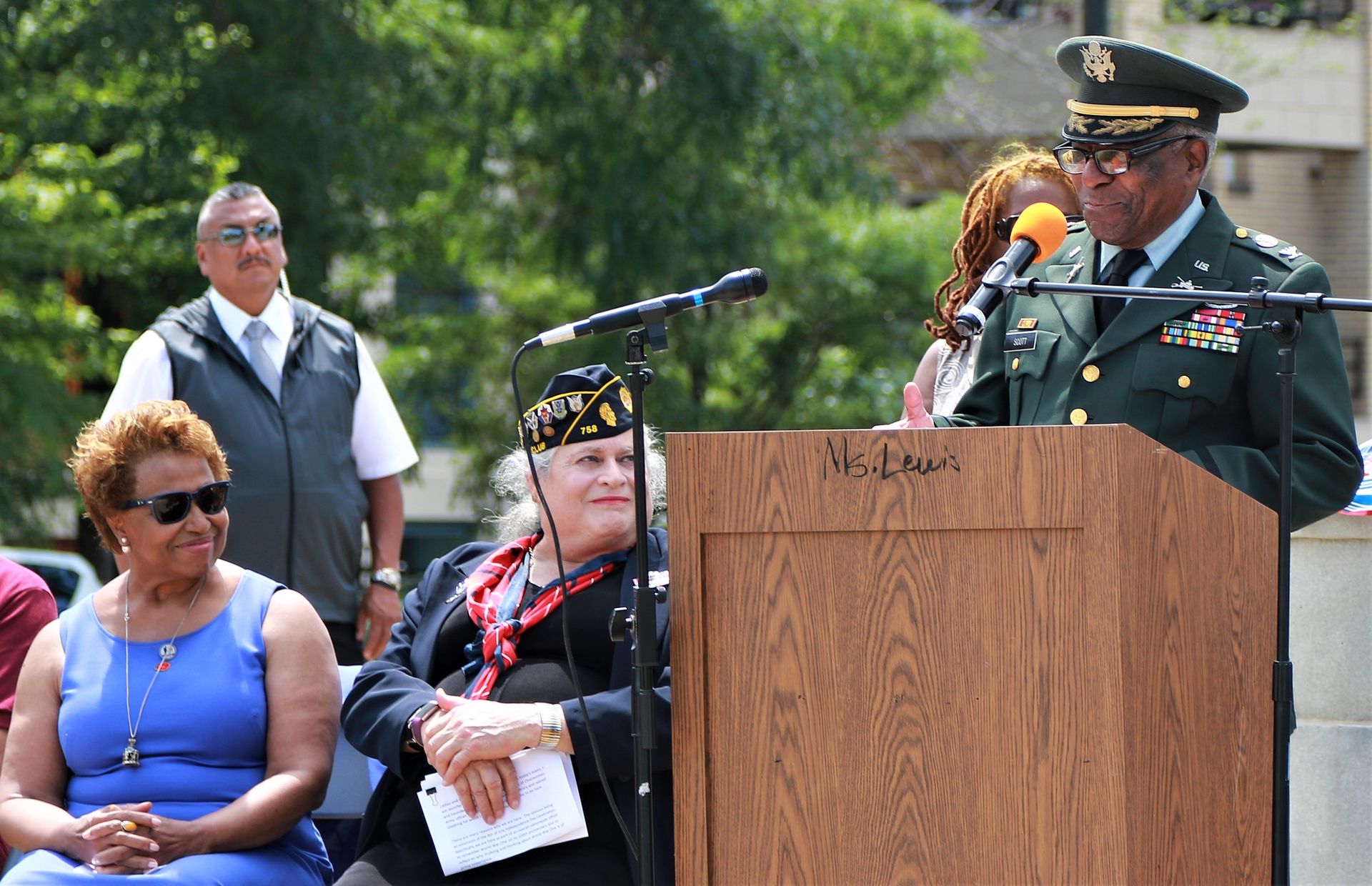
Photo: Lt. Col. Bradford Leighton, Illinois National Guard (public domain), via Wikimedia Commons
The Definitive Guide to Black Cemeteries and Burial Grounds
Last reviewed: 2026-09-30.
Who this guide is for: descendants searching for family burial grounds; preservationists and archaeologists working threatened sites; journalists covering the 2022 federal law's implementation; students of American memory and erasure; and researchers — the guide closes with the open questions CultureTechLens believes should drive the field, starting with the national inventory that does not yet exist.
Thousands of Black burial grounds in the United States are unmapped, unfenced, and legally unprotected. Enslaved people's cemeteries have been bulldozed in Houston, paved over in Atlanta, and built upon in Manhattan. No national inventory of endangered Black cemeteries exists. Yet cemeteries are archives: headstones carry birth dates, family names, fraternal-lodge markers, and military service that paper records lost or never kept. Their erasure is double — bodies lost to development, and genealogical continuity severed for descendants. This guide covers the crisis, the law, the rediscoveries, and how to research burial grounds.
The preservation crisis
The pattern repeats across the country. Burial grounds established by enslaved people, Reconstruction-era churches, and Black fraternal lodges were rarely deeded with the protections white cemeteries enjoyed. As cities expanded and land values rose, the grounds were:
- Bulldozed — as in Houston, where development erased Black cemeteries;
- Paved over — as in Atlanta, where burial grounds disappeared beneath construction;
- Built atop — as in Manhattan, where an entire colonial-era African burial ground lay under office development for two centuries.
National Geographic has confirmed that no official database of these sites exists, and the leading directory — the Black Cemetery Network, a research initiative at the University of South Florida — had registered only 118 sites, a fraction of the true number. Without an inventory, there is no watchlist; without a watchlist, each site must be defended from scratch when the bulldozers arrive.
Why cemeteries are archives
A Black cemetery is a document that cannot be redacted. Where census takers misspelled names, where courthouses burned, where enslaved people were recorded as property rather than persons, the burial ground often kept the record:
- Headstones carry birth and death dates, maiden names, and places of origin.
- Fraternal-lodge markers (Prince Hall Masons, Odd Fellows, benevolent societies) map mutual-aid networks.
- Military markers document Black service from the U.S. Colored Troops through the world wars.
- Plot arrangements reveal family structure, church membership, and community hierarchy.
- The ground itself — burial orientation, grave goods, fencing — carries African cultural retentions that archaeology can read.
Documenting burial grounds is therefore reparative infrastructure: it restores to descendants the genealogical continuity that slavery and segregation tried to sever.
Erased and rediscovered: the African Burial Ground
The most famous rediscovery is Manhattan's African Burial Ground. In 1991, construction of a federal office building uncovered a colonial-era cemetery where an estimated 15,000 free and enslaved Africans had been buried in the 17th and 18th centuries — outside the city limits, because Black burial was banned within them. Archaeologists excavated 419 burials before construction was halted. The site was designated a National Monument in 2006, with a memorial and interpretive center. It is the proof of concept for everything in this guide: the ground remembers what the city forgot.
The law: the African-American Burial Grounds Preservation Act
In February 2022, Representative Alma Adams and Senator Sherrod Brown introduced the African-American Burial Grounds Preservation Act. It was signed into law on December 29, 2022, as part of the FY2023 omnibus spending package. The law:
- Establishes the United States African-American Burial Grounds Preservation Program within the National Park Service;
- Authorizes NPS to make grants to federal agencies, state, local, and tribal governments, educational institutions, historic preservation groups, and private nonprofits for the identification, preservation, restoration, interpretation, and documentation of burial grounds;
- Authorizes $3 million per year for fiscal years 2023–2027;
- Requires property-owner consent — no site enters the program without it.
Advocates have continued pressing for the authorized funds to actually be appropriated. The law is a framework; the inventory it was meant to build does not yet exist.
What the African Burial Ground excavations taught us
The 419 burials excavated in Manhattan before construction was halted became one of the most important archaeological projects in American history. The remains — studied at Howard University — documented the African origins of colonial New York's Black population, the brutal physical toll of enslaved labor (visible in bones and teeth), and the persistence of African burial practices: shrouds fastened with copper pins, beads, and the careful orientation of graves. The project proved that burial grounds are not just memorials but research sites — and it set the methodological standard (descendant-community consultation, non-invasive survey first, reburial with ceremony) for every Black burial-ground project since.
The Chicago angle: Burr Oak
Chicago's own burial-ground crisis made national headlines. Burr Oak Cemetery in Alsip, Illinois — a historic Black cemetery where Emmett Till was originally buried in 1955 (his body was exhumed in 2005 for a new autopsy) — became the center of a 2009 scandal in which cemetery workers were charged with digging up graves and reselling the plots, dumping remains in a remote corner of the grounds. Four people were convicted. The scandal traumatized thousands of families and became the national emblem of what happens when Black burial grounds lack oversight and protection. Burr Oak is why the 2022 federal law matters in the Midwest, not just the South — and why any Chicago research program on burial grounds starts there.
For researchers: the open questions
- The inventory — build the national list that doesn't exist: every known Black burial ground, with location, condition, and threat level. This is the foundational dataset.
- The deed project — systematically trace burial-ground parcels through county deed records; the paper trail of erasure is in the land records.
- GPR at scale — make ground-penetrating-radar survey the standard first step for threatened sites, and publish the survey data openly.
- The law's implementation — track the NPS program's grants and rulemaking; the gap between authorization and appropriation is the story.
- Descendant-community archives — partner with, fund, and amplify the family and church groups doing the ground-level work; their records are the primary sources.
Reading the stones: what markers tell you
Learn the vocabulary and a cemetery becomes a census:
- Fraternal markers — Woodmen of the World "tree-stump" headstones, Prince Hall Masonic squares-and-compasses, Odd Fellows' three-link chains: each maps a mutual-aid network the member paid into.
- Military markers — government-issued stones for U.S. Colored Troops, Buffalo Soldiers, and the veterans of the world wars; the service details often survive here when discharge papers were lost.
- Homemade markers — concrete, fieldstone, and vernacular carvings, common where commercial stones were unaffordable; their very roughness is economic evidence.
- Plot order — who lies next to whom reveals family structure, church affiliation, and sometimes the hierarchy of the community itself.
- Absences — unmarked depressions in rows of marked graves indicate burials the family could not afford to stone; GPR confirms what the eye suspects.
How to research a Black burial ground
Start with the living. Descendant communities and church congregations are the primary sources — they know where the ground is, who is buried there, and what the threats are. Research begins with permission and partnership, never extraction.
Then the paper:
- Deed records — trace the land's ownership; burial grounds often appear as exceptions or reservations in deeds.
- Church records — session books, membership rolls, and sextons' records name the dead.
- Freedmen's Bureau records — the Bureau of Refugees, Freedmen, and Abandoned Lands kept burial registers and hospital death records.
- Sanborn fire-insurance maps and plats — show cemetery boundaries as the landscape changed.
- Death certificates and funeral-home records — where they exist.
- The Black Cemetery Network (blackcemeterynetwork.org) — the USF-based directory and research hub.
- Find a Grave and BillionGraves — crowdsourced headstone transcriptions, useful but unverified; always corroborate.
Then the ground:
- Ground-penetrating radar (GPR) — non-invasive survey that locates unmarked burials without disturbing them; the standard first step before any preservation claim.
- Archaeological survey — reading burial orientation, grave goods, and landscape features for African cultural retentions.
- Headstone documentation — systematic photography and transcription before erosion finishes the job.
Then the law: state burial-protection statutes vary widely; the NPS program (once funded) will offer grants and technical assistance. Local landmark designation and conservation easements are the current practical tools.
The CTL research angle
CultureTechLens's contribution is the missing inventory: an "Endangered Burial Grounds" watchlist scored by threat level and documentation status — geography, genealogy, and law lenses combined. Evidence: GPR survey data, deed records, descendant-community testimony, and the reporting record. The watchlist turns isolated local fights into a national dataset, which is what funders, journalists, and the NPS program need to act.
Threats, ranked
Burial grounds face overlapping dangers, roughly in this order of destructiveness:
- Development — the bulldozer is the leading killer: highways, subdivisions, and commercial projects built over unmapped grounds. This is the threat the 2022 federal law was written to get ahead of.
- Neglect and succession loss — when the church closes or the family moves away, maintenance stops; fences fall, stones sink, and the woods reclaim the ground within a generation.
- Vandalism and theft — headstones broken or stolen, ironwork stripped.
- "Benign" erasure — grounds regraded for landscaping, stones removed as "unsightly," cemeteries deliberately unmarked in the historical record.
- Climate — flooding, erosion, and storm damage accelerating the decay of already fragile sites.
Every threat is worsened by the inventory gap: a site nobody has mapped is a site nobody defends.
The descendant-community movement
The most effective preservation force is not a law but the descendants. Across the country, descendant communities have organized to fence grounds, transcribe stones, fight developers in zoning hearings, and force the historical record to acknowledge what it paved over. Their work combines genealogy, archaeology, and activism — and it is the reason the 2022 federal law exists. Any researcher or journalist entering this space should understand: the descendants are the experts, the archive, and the constituency. Partnership is not courtesy; it is method.
Further reading
- Lynn Rainville, Hidden History: African American Cemeteries in Central Virginia (University of Virginia Press, 2016) — the model regional study: how to survey, read, and preserve Black burial grounds, with method applicable anywhere.
- National Park Service, African American Burial Grounds Preservation Program — the federal program's pages: grant guidance, eligibility, and the evolving national framework (created by the December 2022 law).
- The Black Cemetery Network (University of South Florida), blackcemeterynetwork.org — the leading directory and research hub; start here for the national picture.
- National Geographic, "Historic Black cemeteries are at risk — can they be preserved?" — the reporting that confirmed no official national database exists.
- Hyperallergic's coverage of the new database documenting U.S. slave burial sites — the inventory effort closest to the national dataset this guide calls for.
- The General Services Administration's African Burial Ground archaeology reports — the Manhattan excavation's published findings, the methodological standard for the field.
How to cite this guide
Chicago: CultureTechLens, "The Definitive Guide to Black Cemeteries and Burial Grounds," 2026-09-30, https://culturetechlens.com/guide/black-cemeteries-burial-grounds/.
APA: CultureTechLens. (2026, September 30). The definitive guide to Black cemeteries and burial grounds. https://culturetechlens.com/guide/black-cemeteries-burial-grounds/
MLA: CultureTechLens. "The Definitive Guide to Black Cemeteries and Burial Grounds." 30 Sept. 2026, https://culturetechlens.com/guide/black-cemeteries-burial-grounds/.
Frequently asked questions
Why are Black cemeteries endangered?
Many were never deeded with legal protections, were unmapped, and sat on land that became valuable. Development — bulldozing in Houston, paving in Atlanta, construction in Manhattan — has erased grounds that lacked defenders, and no national inventory exists to watch over the rest.
What was the African Burial Ground in New York?
A colonial-era cemetery in Manhattan where an estimated 15,000 free and enslaved Africans were buried in the 17th and 18th centuries. Rediscovered during construction in 1991, it was designated a National Monument in 2006.
What does the African-American Burial Grounds Preservation Act do?
Signed December 29, 2022, it creates a National Park Service program authorized to grant $3 million annually (FY2023–2027) for identifying, preserving, restoring, and interpreting African American burial grounds. Property-owner consent is required for every site.
How many Black cemeteries are documented?
No one knows the true number. The leading directory, the University of South Florida's Black Cemetery Network, had registered only 118 sites — evidence of how incomplete the national picture is.
How do I research my family's burial ground?
Start with descendant and church communities, then deed records, church and Freedmen's Bureau records, Sanborn maps, and death certificates; use ground-penetrating radar for non-invasive survey of unmarked burials; and check the Black Cemetery Network's directory.
What can I do to protect a threatened burial ground?
Document it (photography, transcription, GPR survey), organize descendant and community stakeholders, pursue local landmark designation or conservation easements, contact your state historic preservation office, and track the NPS burial-grounds program for future grants.
Maintenance note
Update this guide when: the NPS burial-grounds program issues grants or guidance; the Black Cemetery Network's registered-site count changes materially; new rediscoveries or legal cases make news; or CultureTechLens publishes its Endangered Burial Grounds watchlist. This is a fast-moving legal landscape — review semi-annually, in March and September.
Related CultureTechLens resources
- How to Cite Us — cite this guide and every CTL resource correctly.
- Methodology — how CTL verifies claims before publishing.
- CultureTechLens Research Repository — open research packages, sources, and corrections.
- The Definitive Guide to Rosenwald Schools — the schoolhouses Black communities built; the cemeteries are the other half of the community-land story.
Source: CultureTechLens
Trust & evidence
Evidence before authority. CultureTechLens publishes its methods, its limits, and its corrections alongside its findings. Claims carry grades — VERIFIED, SUPPORTED, PROVISIONAL, DISPUTED, UNRESOLVED — and unknowns are never reported as zero.