 CULTURETECHLENS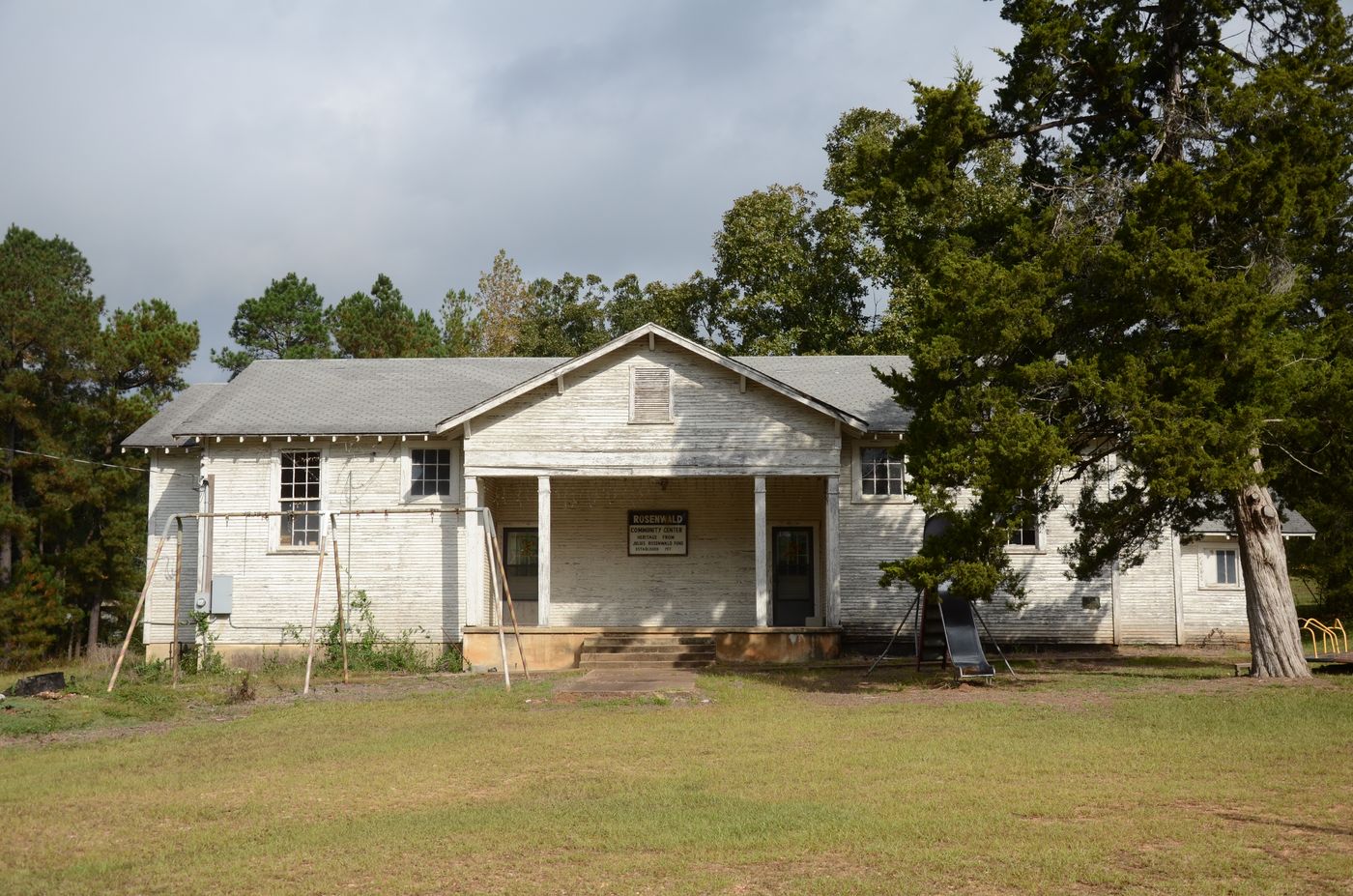
Photo: Valis55, CC BY-SA 4.0, via Wikimedia Commons
The Definitive Guide to Rosenwald Schools
Last reviewed: 2026-09-30.
Who this guide is for: educators teaching the Jim Crow South; preservationists working on surviving school buildings; genealogists tracing family through school records; students of philanthropy and Black self-help traditions; and researchers — the guide closes with the open questions CultureTechLens believes should define the next decade of Rosenwald scholarship, starting with naming the builders.
Between 1912 and 1932, a Jewish businessman from Chicago and a formerly enslaved educator from Virginia built nearly 5,000 schools for Black children across the segregated South — and Black communities themselves paid for a large share of them, in cash, land, and labor. The Rosenwald schools educated more than a generation of Black Southerners, including Maya Angelou, Medgar Evers, and John Lewis. Then integration closed most of them, and the buildings began to vanish. This guide covers the program, the people who built it, what survives, and how to research the schools today.
The partnership
In 1911, Julius Rosenwald — president of Sears, Roebuck & Co. and one of America's richest men — met Booker T. Washington, the founding principal of Alabama's Tuskegee Institute. Rosenwald had read Washington's autobiography, Up From Slavery; the two men, from utterly different worlds, discovered a shared practicality. They devised a plan: build schools for Black children in the rural South through a system of matching grants.
The context was stark. After Black Southerners were largely disenfranchised at the turn of the twentieth century, the region's Black public schools were chronically and deliberately underfunded. The Rosenwald–Washington plan did not wait for the state to act.
The model: matching grants and community labor
The financing was the program's genius — and its most under-documented feature. Rosenwald's contribution was seed money, typically around $300 per school. That grant unlocked two larger obligations:
- Black communities matched it — in cash, donated land, building materials, and labor, or a combination. In total, Black communities contributed some $4.8 million to the building program.
- Local and state governments contributed roughly a third of costs — and, crucially, white school boards had to agree to operate the schools as public schools, which pulled public money into Black education.
The buildings followed standardized plans drawn by architects at Tuskegee Institute, designed for Southern light and ventilation — large windows, specific orientations, a recognizable Rosenwald look. The program ran in three phases: a 1912–1916 pilot of schools in Alabama, expansion to other states from 1916, and administration through the Julius Rosenwald Fund (established 1917) until Rosenwald's death in 1932. Rosenwald practiced "giving while living" — he ordered his fund to disburse its assets and close within decades of his death; its funds were depleted by 1948.
The final tally: 5,357 buildings — schools, teachers' homes, and shop buildings — across 15 Southern states (Alabama alone had more than 400). At the program's height, some 40 percent of Black children in the South attended a Rosenwald school. The Fund spent over $4.4 million; the communities' $4.8 million exceeded it.
The community-labor story: the gap in the record
The philanthropy story is well told — the NPS teaching guide, Smithsonian coverage, and the National Building Museum's exhibition "A Better Life for Their Children" all narrate Rosenwald and Washington. What is thin is the builder-level history: the Black communities that raised matching funds dollar by dollar, donated the land, swung the hammers, and then maintained the schools for decades.
This is the definitive guide's central claim: the Rosenwald program should be remembered as a partnership, not a gift. In community after community, the school was the largest collective investment Black residents ever made — and the building doubled as the community's meeting hall, voter-registration site, concert venue, and church annex. Documenting who gave the land, who raised the cash, and how the building served beyond school hours reframes the entire program. The names of those builders are largely unrecorded outside rare descendant accounts — for example, the Russell School in Durham County, North Carolina, named for Thomas Russell, who donated the land, preserved through the work of Cain's Chapel Missionary Baptist Church.
The alumni
Rosenwald school graduates include some of the central figures of twentieth-century Black life: poet Maya Angelou, civil rights leader Medgar Evers, Little Rock Nine pioneer Carlotta Walls LaNier, and Congressman John Lewis. The schools' most important product was not famous alumni but the hundreds of thousands of literate, organized Black Southerners they produced — the human base of the civil-rights movement.
Decline and survival
With school desegregation in the 1960s, most Rosenwald schools were deemed too small or otherwise unsuitable for continued use and closed. Some found second lives as community centers, museums, and church facilities; most disappeared from the landscape or fell into ruin. Today roughly 10 percent — about 500 buildings — survive across the 15 states, and states are still identifying lost schools. The National Trust for Historic Preservation has classified Rosenwald schools as National Treasures, and its African American Cultural Heritage Action Fund supports their preservation.
The survival stories are often community efforts: in Gifford, South Carolina, a Rosenwald school built in 1921 and closed in 1958 sat swallowed by vegetation until a neighboring church's pastor spotted it; the town raised funds to stabilize it for use as a community center. Photographer Andrew Feiler's project documenting more than 100 surviving schools has carried the story to museums nationwide.
The Jeanes teachers
The Rosenwald buildings were only half the program; the other half was instruction. Many Rosenwald schools were staffed with teachers from the Jeanes program — supervising teachers funded by the Anna T. Jeanes Fund (established 1908) who traveled between rural Black schools, training teachers, introducing industrial and home-economics curricula, and organizing community improvement. The Jeanes teachers were overwhelmingly Black women, and they were the human infrastructure that made the schoolhouses function as schools. Their supervisors' reports — filed county by county — are among the richest surviving documents of rural Black educational life, and they belong in any serious Rosenwald research alongside the deeds and the floor plans.
For researchers: the open questions
- The builders' registry — the definitive project: name the Black communities behind each school. Who donated the land? Who raised the cash? Deed records, church minutes, and Jeanes supervisors' reports hold the answers, school by school.
- The community-use history — document what each building did beyond schooling: voter registration, concerts, church services, meetings. The school as community center is the under-told half of the story.
- The lost schools — states are still identifying demolished and vanished schools. A consolidated national list of lost schools, with last-known locations, would complete the inventory.
- The architects — the Tuskegee architects who drew the standardized plans deserve a monograph: Black-designed institutional architecture at continental scale.
- The alumni oral histories — the generation that attended Rosenwald schools is passing. Every unrecorded memory is a primary source lost.
How to research Rosenwald schools
- Fisk University's Rosenwald database — the core inventory of schools, locations, and building data.
- Tuskegee University archives — the institutional records of the program's administrative home.
- NPS "Teaching with Historic Places" lesson on Rosenwald schools — the best free classroom entry point.
- State historic preservation offices and surveys — states continue to identify surviving and lost schools; Alabama's archives and Auburn University's "Realizing Rosenwald" project are models.
- The National Trust's African American Cultural Heritage Action Fund — preservation grants and project pages.
- Deed records and church records — the paper trail of who donated land and who raised money, the community-labor story's primary sources.
- Oral histories with alumni — the generation that attended these schools is passing; the window is closing.
The buildings: what a Rosenwald school looks like
Rosenwald schools are recognizable once you know the vocabulary. The plans, drawn by architects at Tuskegee Institute, were standardized but site-adapted, designed for the rural South's heat and light:
- Orientation for light — buildings were sited to catch prevailing breezes and maximize natural light, with banks of tall windows along the east and west walls.
- The one-to-four-room progression — the smallest plans were single classrooms; larger communities built two-, three-, and four-room schools, sometimes with an industrial "shop" building and a separate teacher's home.
- Simple, durable construction — wood-frame buildings on brick piers, with a minimum of ornament; the dignity was in the proportions and the light, not decoration.
- Community finishes — because Black communities supplied labor and materials, local craft shows in the details: the joinery, the painting, the landscaping.
Architectural historians treat the plans as an early and important body of Black-designed institutional architecture — the Tuskegee architects who drew them were designing, at scale, for Black communities' largest collective investment. When you stand in a surviving Rosenwald school, you are standing inside a community's balance sheet made physical.
Notable survivals
- The Russell School, Durham County, North Carolina — named for Thomas Russell, who donated the land; preserved through the stewardship of Cain's Chapel Missionary Baptist Church, with alumna Bessie Whitted Pearley as its living memory.
- The Hope School, Pomaria, South Carolina — built 1925–26 on land the Hope family sold to the school district for $5; funded by $2,200 in donations ($600 from Black donors, $400 from white donors, $1,200 from government) plus a $700 Rosenwald grant; listed on the National Register in 2007 and restored by the nonprofit Hope School Community Center, Inc., which reopened it in 2009. Its desks and original signage are in the Smithsonian's National Museum of African American History and Culture.
- The Gifford School, Gifford, South Carolina — built 1921, closed 1958, swallowed by vegetation until a neighboring church's pastor spotted it; now being stabilized as a community center.
Each surviving building is also a research site: the cornerstone, the deed, and the church minutes usually survive nearby.
The architects: Tuskegee's drawing rooms
The Rosenwald plans did not come from a white philanthropy's drafting office. They were drawn at Tuskegee Institute, by Black architects designing at scale for Black communities — one of the largest bodies of Black-designed institutional architecture in American history, and almost entirely unattributed in the public record.
The figure behind the program's architecture is Robert Robinson Taylor (1868–1942) — the first accredited Black architect in the United States and the first Black graduate of MIT — who spent decades at Tuskegee designing its campus buildings. Under his influence, Tuskegee's architecture division produced the standardized "Community School Plans" bulletins that carried the Rosenwald program: floor plans for one-, two-, three-, and four-teacher schools, with specifications for orientation, window placement, ventilation, and the industrial shop buildings and teachers' homes. The plans were revised across editions as the program learned from the field.
What the plans encode is a design philosophy born of constraint: no electricity, no plumbing, Southern heat. The answer was massed windows for light, raised floors and cross-ventilation for cooling, and siting that respected the land Black families donated. When architectural historians now read the Rosenwald corpus, they read it as a Black modernism before the term existed — functional, dignified, and drawn by hands the profession's histories have largely left unnamed. The Tuskegee University archives hold the institutional side of this record; the individual draftsmen's names remain one of the program's open research questions.
Key sources and where to find them
The Julius Rosenwald Fund papers at Fisk University (John Hope and Aurelia E. Franklin Library, Nashville) — the Fund's own archive: correspondence, grant files, and the administrative record of the school-building program. Start here for the philanthropy's internal view.
Fisk University's Rosenwald Schools database — the core school-by-school inventory: locations, building types, and construction data. The working census every researcher builds from.
Tuskegee University archives — the institutional records of the program's administrative home, including the architecture division's plan bulletins and the correspondence between Tuskegee staff and Julius Rosenwald.
NPS "Teaching with Historic Places" lesson on Rosenwald schools — the best free classroom entry point, with primary documents selected for teaching.
State historic preservation offices and survey projects — states continue to identify surviving and lost schools. Models: Alabama's archives and Auburn University's "Realizing Rosenwald" project; the Hope School Community Center's documentation in South Carolina.
The National Trust for Historic Preservation's African American Cultural Heritage Action Fund — preservation grants and project pages for surviving schools.
Deed records, church minutes, and county school-board minutes — the paper trail of who donated land, who raised money, and how white boards voted (or refused) to operate the schools. This is the community-labor story's primary archive, and it is county by county.
Oral histories with alumni — the generation that attended these schools is passing; several state humanities councils and local historical societies hold recorded interviews. The window for new ones is closing.
Further reading
- Mary S. Hoffschwelle, The Rosenwald Schools of the American South (University Press of Florida, 2006) — the standard scholarly history of the building program.
- Andrew Feiler, A Better Life for Their Children: Julius Rosenwald, Booker T. Washington, and the 4,978 Schools that Changed America (University of Georgia Press, 2021) — the photographic survey of surviving schools, companion to the museum exhibition.
- Peter M. Ascoli, Julius Rosenwald: The Man Who Built Sears, Roebuck and Advanced the Cause of Black Education in the American South (Indiana University Press, 2006) — the family biography by Rosenwald's grandson.
- Rosenwald (2015), documentary directed by Aviva Kempner — the film-length account of the partnership and its aftermath.
- National Park Service, "The Rosenwald Schools: Progressive-Era Philanthropy in the Segregated South" (Teaching with Historic Places lesson plan) — free, document-based, classroom-ready.
How to cite this guide
Chicago: CultureTechLens, "The Definitive Guide to Rosenwald Schools," 2026-09-30, https://culturetechlens.com/guide/rosenwald-schools/.
APA: CultureTechLens. (2026, September 30). The definitive guide to Rosenwald schools. https://culturetechlens.com/guide/rosenwald-schools/
MLA: CultureTechLens. "The Definitive Guide to Rosenwald Schools." 30 Sept. 2026, https://culturetechlens.com/guide/rosenwald-schools/.
Frequently asked questions
What were the Rosenwald schools?
A building program (1912–1932) that constructed nearly 5,000 schools — plus teachers' homes and shops, 5,357 buildings total — for Black children across 15 Southern states, funded by matching grants from Julius Rosenwald's fund, Black communities, and local governments.
Who were Julius Rosenwald and Booker T. Washington?
Rosenwald was the president of Sears, Roebuck & Co., a Jewish philanthropist who believed in "giving while living." Washington was the formerly enslaved founding principal of Tuskegee Institute. They met in 1911 and designed the school program together.
How were the schools paid for?
Rosenwald's fund provided seed money (typically ~$300 per school); Black communities matched it in cash, land, materials, and labor (about $4.8 million total); and local and state governments contributed roughly a third. White school boards had to agree to operate the schools.
How many Rosenwald schools survive?
About 10 percent — roughly 500 of the 5,357 buildings — survive, and states are still identifying lost schools. The National Trust for Historic Preservation classifies them as National Treasures.
Which famous people attended Rosenwald schools?
Maya Angelou, Medgar Evers, Little Rock Nine pioneer Carlotta Walls LaNier, and Congressman John Lewis are among the documented alumni.
Where do I start researching a specific Rosenwald school?
Fisk University's Rosenwald database for the inventory, Tuskegee's archives for program records, your state's historic preservation office for surveys, and local deed and church records for the community's fundraising and land-donation story.
Maintenance note
Update this guide when: states publish new school surveys; the National Trust's Action Fund announces new Rosenwald grants; major restorations complete; or CultureTechLens publishes its Rosenwald Builders registry. The alumni generation is passing — prioritize adding newly recorded oral histories. Review annually each September.
Related CultureTechLens resources
- How to Cite Us — cite this guide and every CTL resource correctly.
- Methodology — how CTL verifies claims before publishing.
- CultureTechLens Research Repository — open research packages, sources, and corrections.
- The Definitive Guide to HBCU Marching Band Culture — another Black educational institution's cultural world, and Tuskegee's own band tradition.
Source: CultureTechLens
Trust & evidence
Evidence before authority. CultureTechLens publishes its methods, its limits, and its corrections alongside its findings. Claims carry grades — VERIFIED, SUPPORTED, PROVISIONAL, DISPUTED, UNRESOLVED — and unknowns are never reported as zero.