 CULTURETECHLENS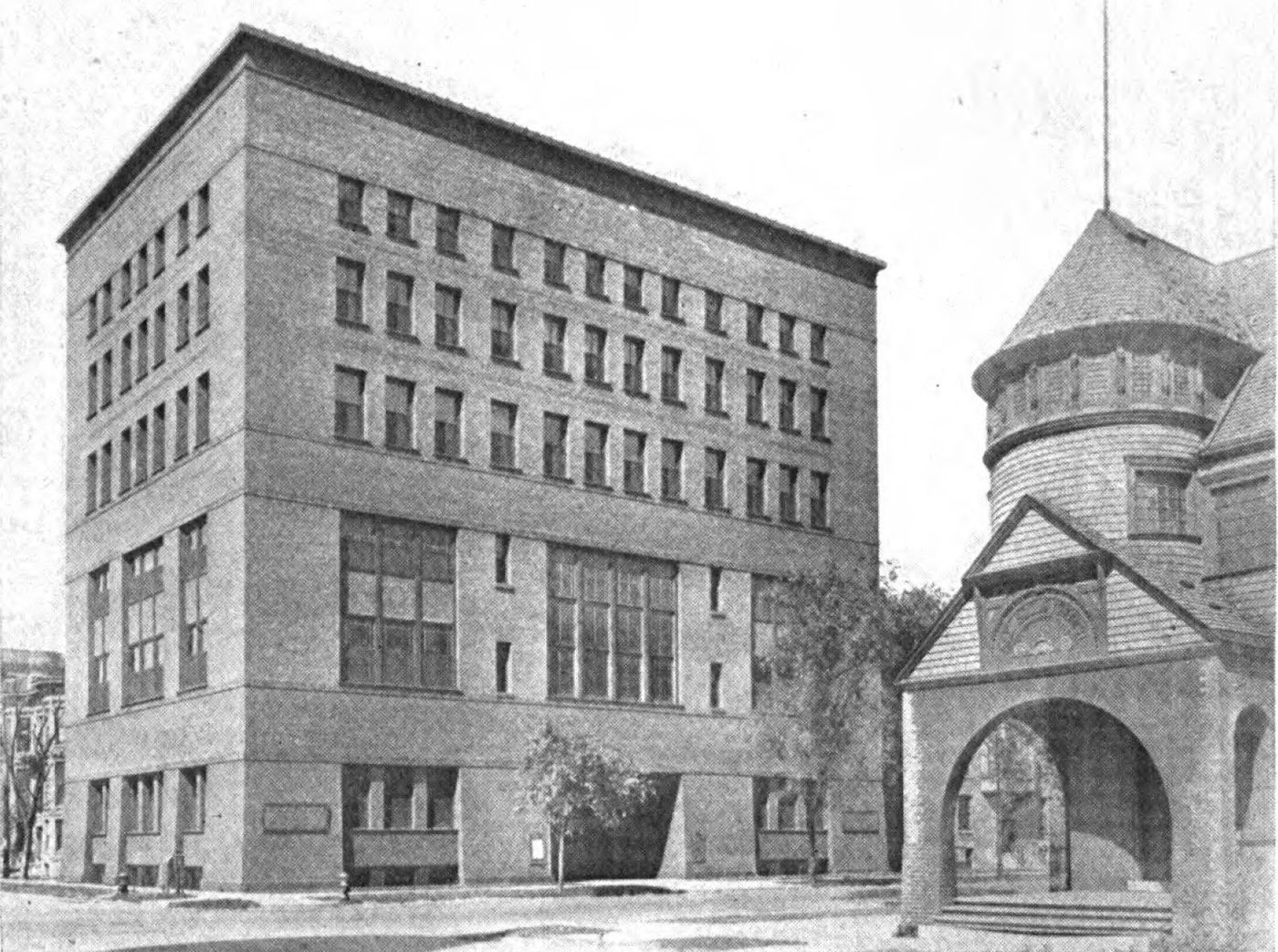
Photo: Public Domain (1913), via National Park Service
The Institutions That Held Communities Together
The Black institutional ecosystem — 81 entities, 329 graded claims, 60 verified dependency edges.
| Research ID | CTL-DR-INST-001 |
|---|---|
| Version | Research complete (v0.1) · 2026-09-28 |
Summary
What institutions performed the functions necessary for Black communities to survive, organize, educate, communicate, worship, create, build wealth, and preserve memory?
Key findings
- The function each major institution type performed, with evidence, for 81 institutions.
- That governance/funding transition predicts survival better than mission.
- That institutional survival and functional survival are different things, with documented cases.
- 60 verified dependency edges mapping how institutions actually connected.
Related research: pair with Sacred Ground (CTL-DR-SCI-004).
Functions lost with no replacement (documented)
- Negro Fellowship League (1910–1920): Wells and Barnett’s lodging and job-placement service for Black male migrants; closed when costs became unsustainable; no successor identified.
- Black-owned bank charters: Seaway (2017), Covenant (2013), and earlier failures destroyed local Black control of capital allocation; FDIC resolutions preserved accounts, not charters.
- Independent Black hospital governance: Provident’s training-school-to-employment pipeline has no modern equivalent.
- Settlement-house organizing hubs as Black-governed multi-service anchors have thinned without institutional successors in most neighborhoods.
Evidence and grading
81 entities; 329 graded claims (174 Verified); 159 events; 60 verified dependency edges; an 87-row survival index (descriptive, no scores); a 13×20 decade matrix with all 260 cells filled; 10 governance-pattern findings. Decade-presence ratings are provisional in many cells; social clubs are entirely unknown.
Claims are graded on a controlled vocabulary: VERIFIED, SUPPORTED, PROVISIONAL, DISPUTED, UNRESOLVED (plus REFUTED and UNVERIFIABLE in evidence files). Only VERIFIED claims feed verified-only knowledge-graph edges; lower grades are shown with their grade visible. Unknowns are never reported as zero.
Limitations
Records locations for most fraternal lodges are unknown (highest-value missing records: Odd Fellows, Knights of Pythias minutes). Founder rosters for several banks and chambers are incomplete; the UNIA/Chicago Garvey movement is not yet researched (priority add). The “no Black-American-owned bank headquartered in Chicago” inference must be rechecked against the current FDIC MDI list before public use.
Sources
Primary/archival/institutional and secondary/scholarly/trade/media source sections in sources.md.
Red team
Post-merge red-team pass over five tracks, 2026-09-28; 14-point red team.
Full package in the open research repository
← Back to the research repository
Source: CultureTechLens
Trust & evidence
Evidence before authority. CultureTechLens publishes its methods, its limits, and its corrections alongside its findings. Claims carry grades — VERIFIED, SUPPORTED, PROVISIONAL, DISPUTED, UNRESOLVED — and unknowns are never reported as zero.