 CULTURETECHLENS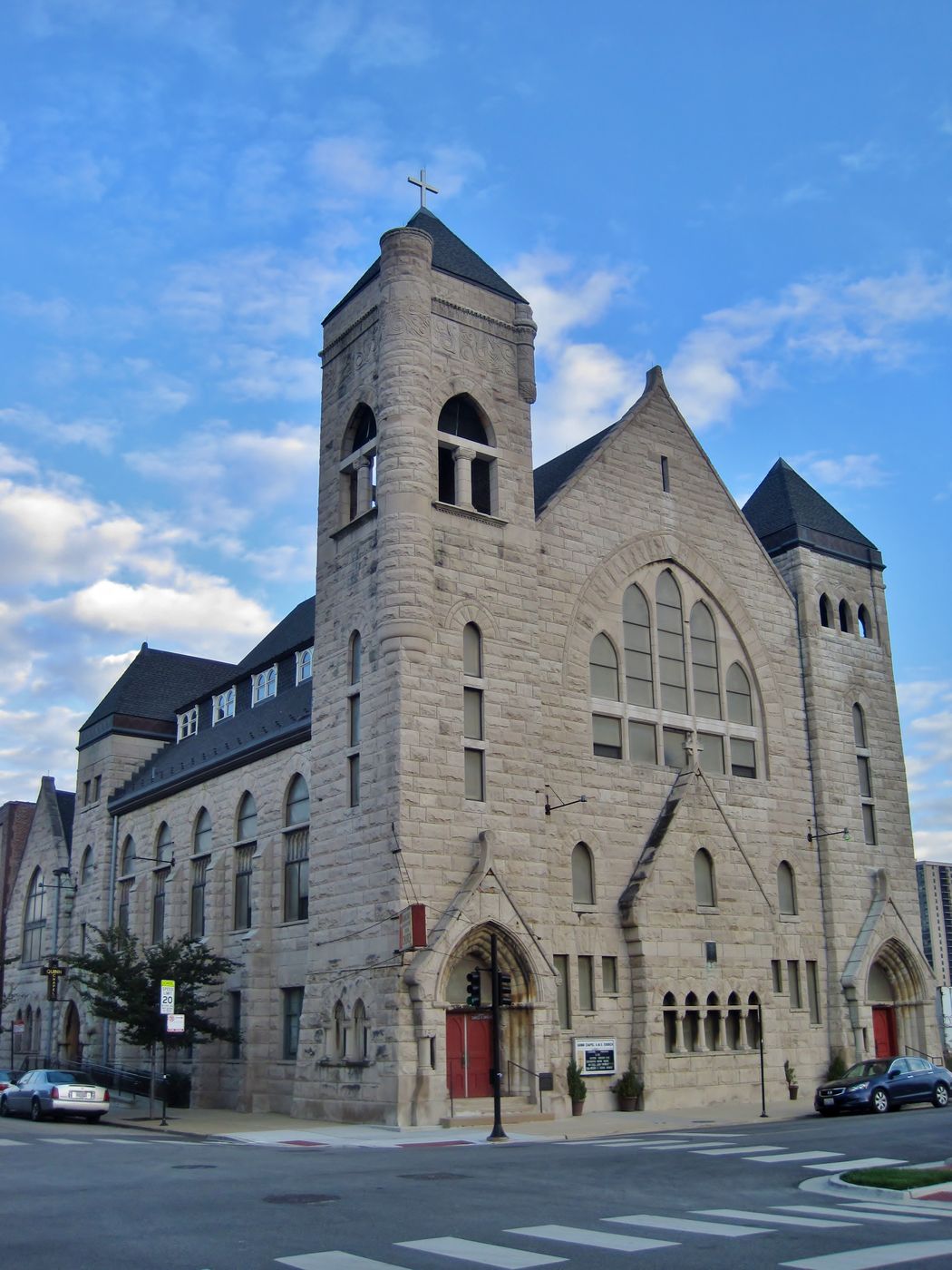
Photo: Teemu008, CC BY-SA 2.0, via Wikimedia Commons
Sacred Ground
How Black churches built Chicago’s civic infrastructure — 180 years, from Quinn Chapel’s 1840s prayer meetings to Imani Village’s 2025 senior residence.
| Research ID | CTL-DR-SCI-004 |
|---|---|
| Version | Research base (not settled public history — see red team) · 2026-09-28 |
Summary
Black churches in Chicago were never only houses of worship. Across 180 years — from Quinn Chapel's 1840s prayer meetings to Imani Village's 2025 senior residence — congregations functioned as migration reception centers, movement headquarters, voter-mobilization machines, property owners, broadcast studios, record labels, and mutual-aid societies. This research package assembles the evidence for that claim: 62 entities, 207 evidence-graded claims, 168 timeline events (1844–2026), 28 verified relationships, and 116 sources, organized across five tracks and subjected to a full red-team audit. The corpus is unusually honest about what it can and cannot prove. Founding-date disputes are systemic (Olivet 1850/1861, Pilgrim 1916/1922, Fellowship 1950/1958, Greater Harvest 1912/1920, Liberty 1918/1919, NCGCC 1932/1933, Wright's Trinity start 1971/1972) — a finding in itself about how congregational memory works. Where tracks disagreed, the merged package takes the conservative grade; fourteen red-team corrections were applied during harmonization.
Key findings
- The institutional continuity: a small set of congregations (Quinn, Olivet, Pilgrim, Fellowship, Trinity, Deliverance, Ebenezer) anchor 180 years of Black Chicago's civic life, with documented building, membership, and leadership histories.
- Churches served as documented infrastructure for migration reception, civil-rights organizing (CCCO, SCLC Chicago campaign connections where verified), voter mobilization (1982–83, 1992 drives), and gospel music production and distribution.
- Women — Wyatt, Barrow, Consuella York (ordination claim thin), church mothers as a class — carried institutional weight disproportionate to their archival footprint.
Related research: pair with The Institutions That Held Communities Together (CTL-DR-INST-001).
Evidence and grading
62 deduplicated entities; 207 claims (81 Verified · 106 Provisional · 18 Disputed · 2 Unresolved), with primary-sourced counts broken out per track.
Claims are graded on a controlled vocabulary: VERIFIED, SUPPORTED, PROVISIONAL, DISPUTED, UNRESOLVED (plus REFUTED and UNVERIFIABLE in evidence files). Only VERIFIED claims feed verified-only knowledge-graph edges; lower grades are shown with their grade visible. Unknowns are never reported as zero.
Limitations
Primary denominational records were not consulted (AME conference minutes for Quinn Chapel 1847/Bethel 1862; Baptist association minutes for Olivet’s 1850/1853/1861 phases) — these would arbitrate the founding-date disputes. Membership-era statistics rest on secondary sources; primary rolls would confirm.
Sources
116 sources recorded in sources.md.
Red team
Adversarial review of tracks A–E (evidence-graded JSON) with spot-checks; verdict tally: 0 fail · 13 concern · 1 pass.
Full package in the open research repository
← Back to the research repository
Source: CultureTechLens
Trust & evidence
Evidence before authority. CultureTechLens publishes its methods, its limits, and its corrections alongside its findings. Claims carry grades — VERIFIED, SUPPORTED, PROVISIONAL, DISPUTED, UNRESOLVED — and unknowns are never reported as zero.