 CULTURETECHLENS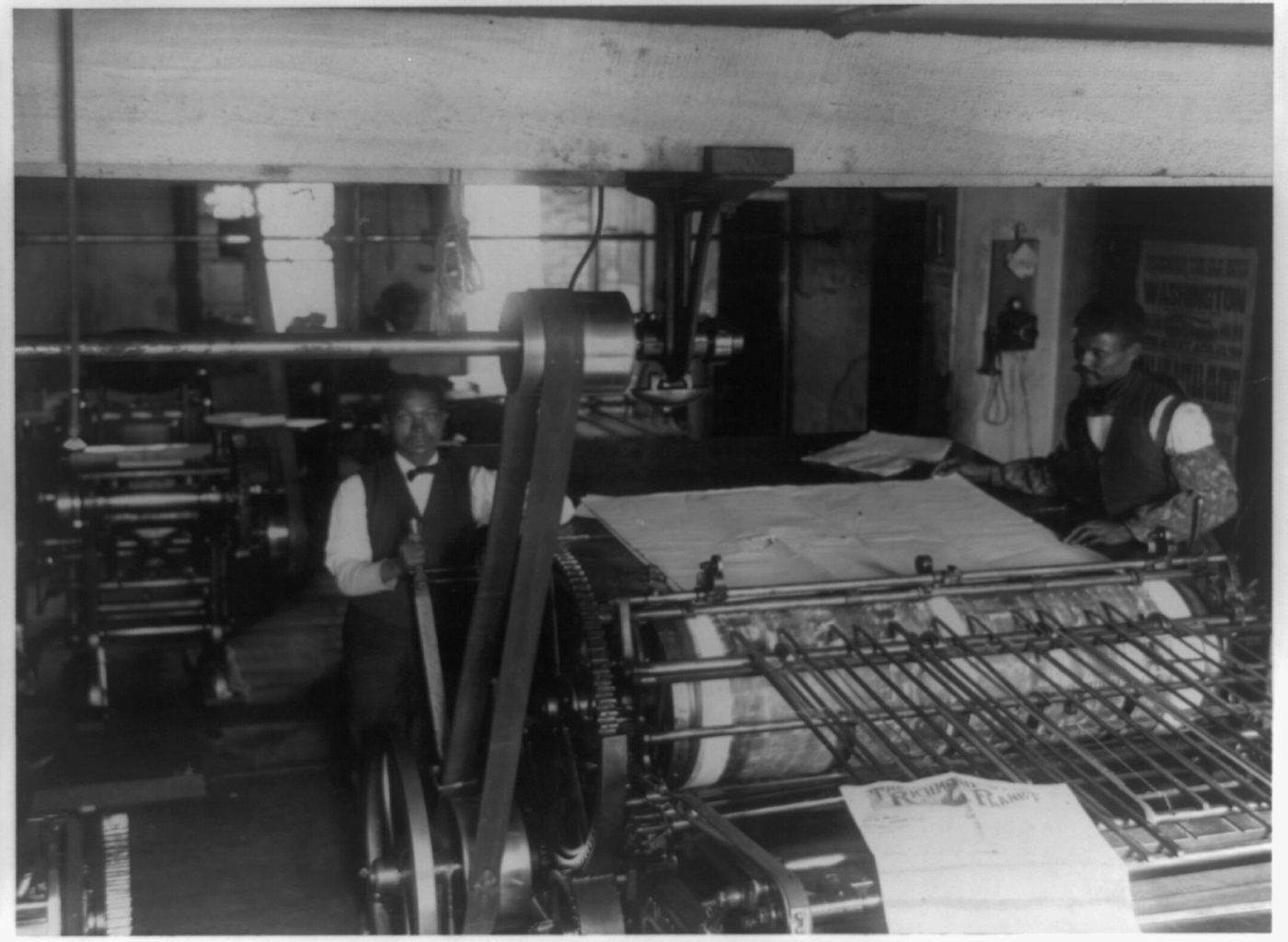
Photo: Library of Congress, Public domain, via Wikimedia Commons
The Economics of the Black Newspaper
How did circulation, advertising, and ownership support Black publishing? The Chicago Defender is the central case; national comparison is drawn only where the evidence supports it.
| Package ID | CTL-RB-BIZ-000004 |
|---|---|
| Research date | 2026-09-28 |
| Status | Phase 1 (pre-publication) |
| Domain | BIZ (Business) |
| Geography | Chicago, IL |
Executive summary
The Chicago Defender grew because a national Black readership financed itself into existence: circulation revenue (subscriptions, newsstand, street sales) built a roughly 250,000-copy weekly by 1929 [C3], carried to the South on a rail-based porter distribution network [C4], while entertainment and later national-brand advertisers bought space against that audience [C14, C16]. Family ownership — Abbott, then his nephew John H.
Sengstacke and the Sengstacke enterprises — insulated the paper from outside capital markets for nearly a century [C8]. When the Black consumer market that sustained this model dispersed after the civil-rights era, circulation collapsed faster than any replacement revenue arrived: 257,000 (1945) → 33,000 (1970) → ~14,000 (1999–2002) → online-only by 2019 [C6, C7].
The Sengstacke estate then sold the paper under estate-tax pressure for roughly $8–11 million in a court-approved deal [C10]. The largest gap in the record: no primary advertising revenue figures, rate cards, or printing/distribution cost ledgers for the Defender itself were found [C19].
Why it matters
The Defender's century-scale model, as the evidence permits: (1) Reader-financed circulation — subscriptions and street sales built a 250,000-copy weekly with two-thirds of copies outside Chicago [C3, C21]; (2) A rail-based distribution network that nationalized the audience [C4]; (3) Entertainment and consumer advertising sold against that audience [C15, C16, C14-by-comparison]; (4) Family ownership that substituted for outside capital [C8, C22]; (5) Community institutions (Bud Billiken) that deepened the audience relationship [C20].
Every link is evidenced except the two cost sides: no revenue ledgers, no rate cards, no printing or distribution cost books [C19].
Evidence grades: VERIFIED = strong primary source or multiple corroborating sources; SUPPORTED = credible source(s), partly corroborated; PROVISIONAL = single credible source, uncorroborated; DISPUTED = sources conflict; UNRESOLVED = insufficient evidence.
Source: CultureTechLens
Trust & evidence
Evidence before authority. CultureTechLens publishes its methods, its limits, and its corrections alongside its findings. Claims carry grades — VERIFIED, SUPPORTED, PROVISIONAL, DISPUTED, UNRESOLVED — and unknowns are never reported as zero.