 CULTURETECHLENS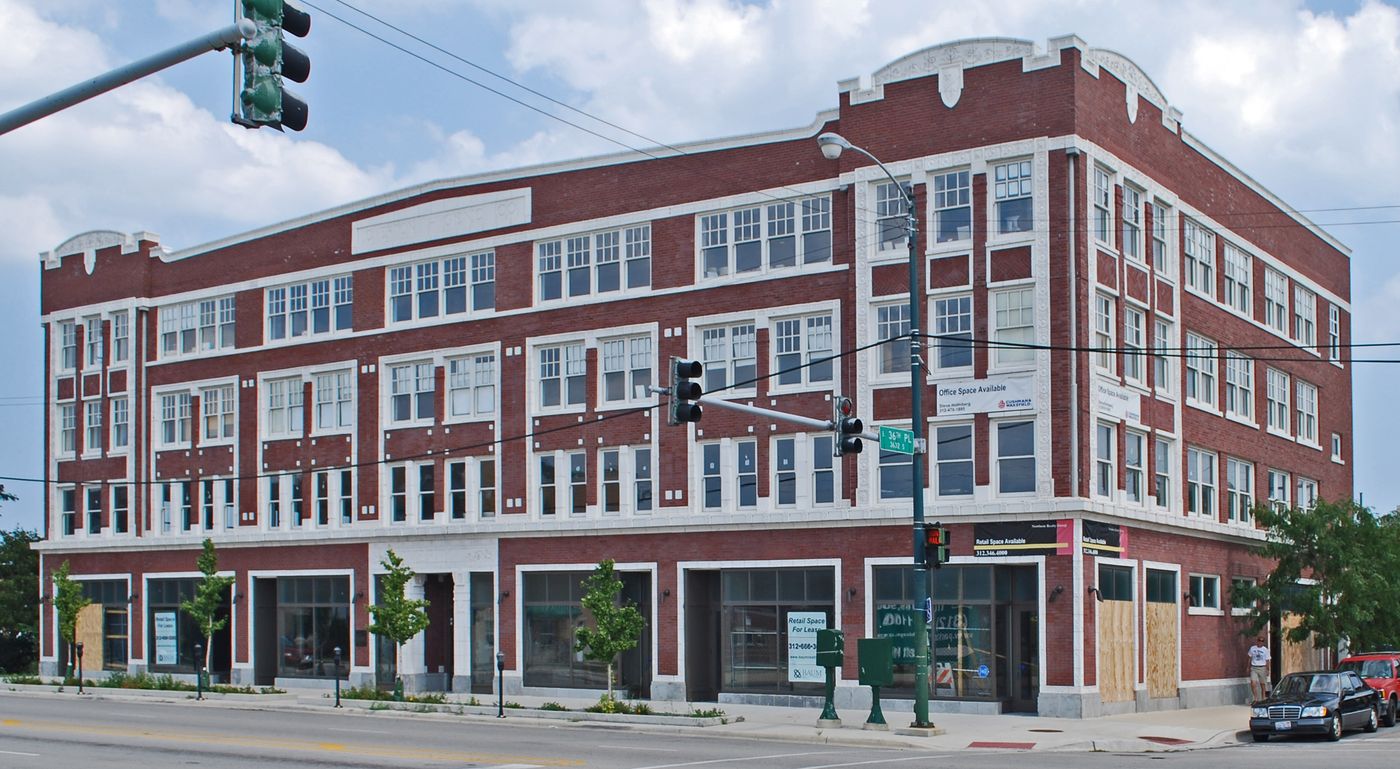
Photo: Andrew Jameson, CC BY-SA 3.0, via Wikimedia Commons
The Rise of Bronzeville
Which forces transformed Bronzeville into a major Black cultural center? Subordinate questions: (a) What demographic engine supplied the population? (b) How did constraint become concentration, and concentration become culture? (c) Which institutions carried the neighborhood through the migration decades? (d) What role did Black capital formation play? (e) What production systems turned people and venues into cultural output?
| Package ID | CTL-RB-CHI-000002 |
|---|---|
| Research date | 2026-09-28 |
| Status | Phase 1 (pre-publication) |
| Domain | CHI (Chicago) |
| Geography | Historic Bronzeville — the northern Black Belt in what are now Chicago's Douglas and northern Grand Boulevard community areas, roughly 22nd to 51st Streets, State Street to Cottage Grove, with the commercial spine on State Street and South Parkway (now King Drive). Period: c. 1844 (Quinn Chapel) to c. 1950 (the peak-and-pivot), with post-1950 counterforces summarized, not narrated. Focus: causal forces of the rise. Excluded: full venue chronologies, post-1970 remaking narratives, comparative-district analysis, and oral-history evidence not yet consulted (see §21–22) |
| Period | the movement of ~6 million Black Southerners to the North, Midwest, and West, c. 1916–1970; two waves (1916–1940, 1940–1970) are distinguished where evidence permits. (NEW: NPS; Yale lecture) - |
Executive summary
Bronzeville became a major Black cultural center because of a specific, compounding sequence of forces — not a single cause. The Great Migration (Chicago's Black population grew from 44,103 in 1910 to 277,731 in 1940, a 530% increase) supplied the people.
A confinement complex — racial covenants, redlining, violence, and overcrowding — compressed those people and their spending power into a narrow ~40-block corridor of the South Side (the "Black Belt"), creating the captive markets and built-in audiences that a cultural economy needs.
Pre-existing anchor institutions — churches dating to 1844, the Wabash YMCA (1913), the Chicago Defender (1905) — absorbed the newcomers and gave the corridor organizational muscle before the migration peaked. Black capital concentrated on east State Street (Binga Bank, 1908; Overton's enterprises) built a Black-owned commercial core.
Cultural production systems — the Stroll's venue ecology, the Defender's national circulation, gospel at Pilgrim and Ebenezer, the Chicago Black Renaissance — turned density into output.
Why it matters
Bronzeville is CTL's core case for a generalizable claim: Black cultural centers in the United States were not accidental gatherings of talent — they were produced by the interaction of migration, constraint, institutions, capital, and self-definition.
Understanding that machinery matters for any contemporary effort to build or sustain Black cultural infrastructure: the forces are reproducible (density, institutions, capital, narrative) even when the coercive ones (segregation) are — and must remain — gone. The brief also corrects the record: the "Black-owned everything" romance of the Stroll and the "Defender single-handedly moved millions" story both fail on the evidence.
Evidence grades: Suggested citation: CultureTechLens Research. "The Rise of Bronzeville." Research Brief CTL-RB-CHI-000002. Chicago, IL: CultureTechLens, 2026-09-28. Distills CTL-DR-BVM-005 (2026-09-28) with new research. Evidence grades: VERIFIED / SUPPORTED / PROVISIONAL / DISPUTED /…
Source: CultureTechLens
Trust & evidence
Evidence before authority. CultureTechLens publishes its methods, its limits, and its corrections alongside its findings. Claims carry grades — VERIFIED, SUPPORTED, PROVISIONAL, DISPUTED, UNRESOLVED — and unknowns are never reported as zero.