 CULTURETECHLENS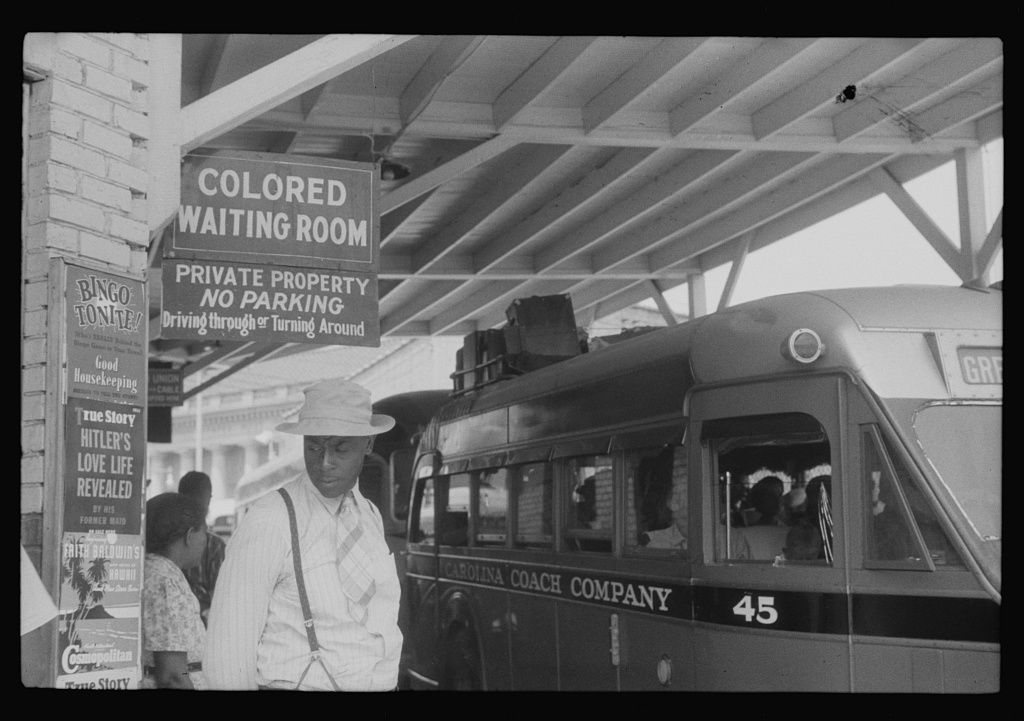
Photo: Jack Delano, Public domain, via Wikimedia Commons
Black Chicago's Commercial Corridors
Where did major Black commercial districts develop, and why?
| Package ID | CTL-RB-CHI-000003 |
|---|---|
| Research date | 2026-09-28 |
| Status | Phase 1 (pre-publication) |
| Domain | CHI (Chicago) · Geography: Chicago, IL · Period: c. 1900–present |
| Geography | Chicago, IL |
| Period | c. 1900–present |
Executive summary
Black Chicago's commercial corridors were not random: between 1910 and 1970, seven major commercial streets developed dense Black business activity: State Street ("the Stroll," c. 1915–1945), 35th Street (the Black capital core, c. 1908–1960s), 47th Street (the entertainment corridor, c. 1927–1960s), Cottage Grove Avenue (c. 1930s–1970s), 63rd Street (c. 1945–1975, with distinct white-era and Black-era peaks), Madison Street on the West Side (c.
1945–1968), and 79th Street and its far-South-Side successors (c. 1950s–present). The central finding: housing segregation drew the container, and commerce filled it. Covenants, redlining, blockbusting, and contract selling confined Black Chicagoans to a narrow, dense strip of the South Side (and later defined West Side zones). That confinement created a captive, concentrated consumer market of hundreds of thousands of people whom the white downtown would not serve.
Commerce — banks, insurance, newspapers, theaters, clubs, retail — grew inside the container, clustering along the widest avenues and the transit nodes that fed it.
Why it matters
Commercial corridors are where Black Chicago's economic life was most visible — and where its destruction is most legible. When Madison Street or 63rd and Halsted collapsed, it was not just storefronts that vanished: credit, groceries, gathering space, and the daily proof that a community could sustain itself. The "why" matters for redevelopment: you cannot rebuild what you misdiagnose.
Decline was not natural market failure but the withdrawal of the conditions that made the corridors possible — a captive nearby population, institutional anchors, and functioning transit.
Evidence grades: Source key: Findings marked [S] are distilled from verified sibling research packages: CTL-DR-BCI-001 (Black Chicago infrastructure), CTL-DR-PLACE-001 (63rd Street corridor biography), CTL-DR-BVM-005 (Bronzeville), and the in-progress CTL-RB-CHI-000001 brief family. Findings…
Source: CultureTechLens
Trust & evidence
Evidence before authority. CultureTechLens publishes its methods, its limits, and its corrections alongside its findings. Claims carry grades — VERIFIED, SUPPORTED, PROVISIONAL, DISPUTED, UNRESOLVED — and unknowns are never reported as zero.