 CULTURETECHLENS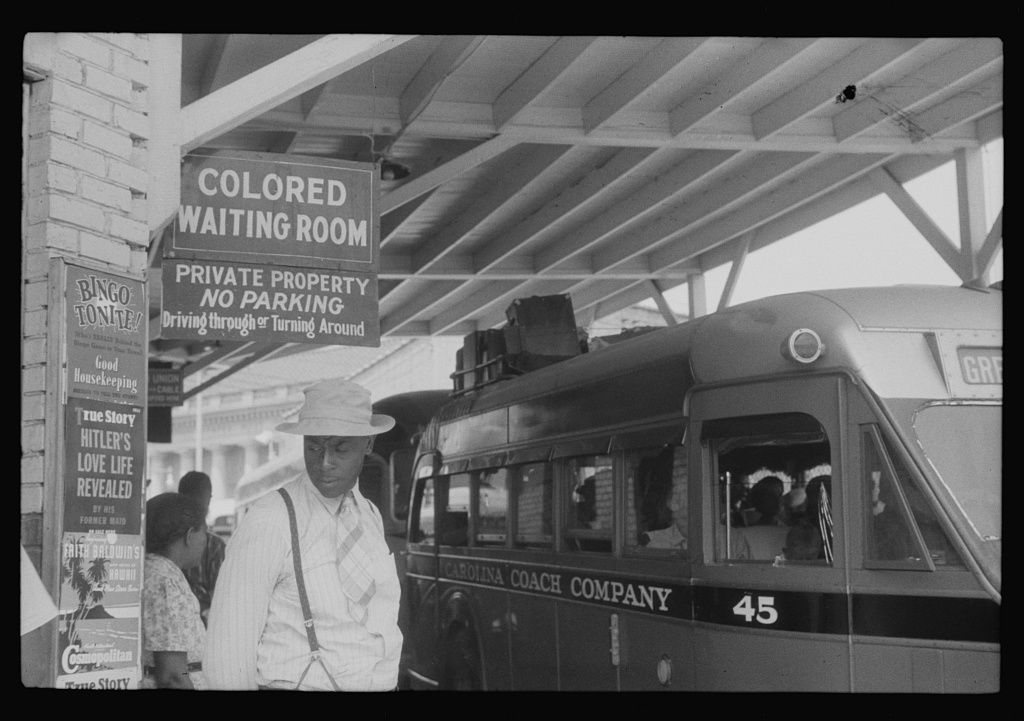
Photo: Jack Delano, Public domain, via Wikimedia Commons
The Black Belt: Name, Geography and Change
What did the term "Black Belt" mean historically, and how did its geography change?
| Package ID | CTL-RB-CHI-000004 |
|---|---|
| Research date | 2026-09-28 |
| Status | Phase 1 (pre-publication) |
| Domain | CHI (Chicago) |
| Geography | Chicago, IL |
| Period | Chicago, c. 1900–present (with Southern term history as needed) > |
Executive summary
The name "Black Belt" began in the American South, where it first described a crescent of dark, fertile soil across Alabama and Mississippi, then the cotton-plantation country worked by enslaved labor, and then the region of Black-majority counties. When the term attached itself to Chicago, it kept that layered history: a soil name that became a racial geography.
By the turn of the 20th century it was in common use for the South Side Black district — a narrow, overcrowded, violently contained corridor running south from the Near South Side along State Street.
Its boundaries moved with every decade and every source: roughly 22nd–31st Streets at the turn of the century; the 1919 riot-district lines of 22nd–39th and 39th–55th; the 1920s bounds of State to Cottage Grove, 31st to 47th; the 1940s stretch from Cermak to South Chicago Avenue; a broad retrospective reach of 39th–95th after World War II.
The term was double-edged: an imposed label of containment — and, simultaneously, the setting residents and the Black press called a "city within a city." Beginning in 1930, Black newspaper culture answered with "Bronzeville", a counternaming that displaced "Black Belt" in everyday use after World War II.
Why it matters
- Southern planters, boosters, and census-takers (early–mid 1800s): the soil name, then the plantation region. - W. E. B.
Du Bois (1903): the literary codification — "the Black Belt of Georgia." - White Chicago press (1910s–1920s): the district as a bounded problem; the 1917 Tribune survey mapped overcrowding without using the term in the excerpt found — the place was newsworthy before the name is documented in print [UNRESOLVED on earliest white-press use]. - The Black press (by 1922): Dr. A.
Wilberforce Williams's Defender column used "Black Belt of Chicago" as ordinary vocabulary — Black usage, not white imposition alone [C-10]. - The state (1919–1922): the riot commission's District I definitions; the term enters government prose in scare quotes.
Evidence grades: VERIFIED = strong primary source or multiple corroborating sources; SUPPORTED = credible source(s), partly corroborated; PROVISIONAL = single credible source, uncorroborated; DISPUTED = sources conflict; UNRESOLVED = insufficient evidence.
Source: CultureTechLens
Trust & evidence
Evidence before authority. CultureTechLens publishes its methods, its limits, and its corrections alongside its findings. Claims carry grades — VERIFIED, SUPPORTED, PROVISIONAL, DISPUTED, UNRESOLVED — and unknowns are never reported as zero.