 CULTURETECHLENS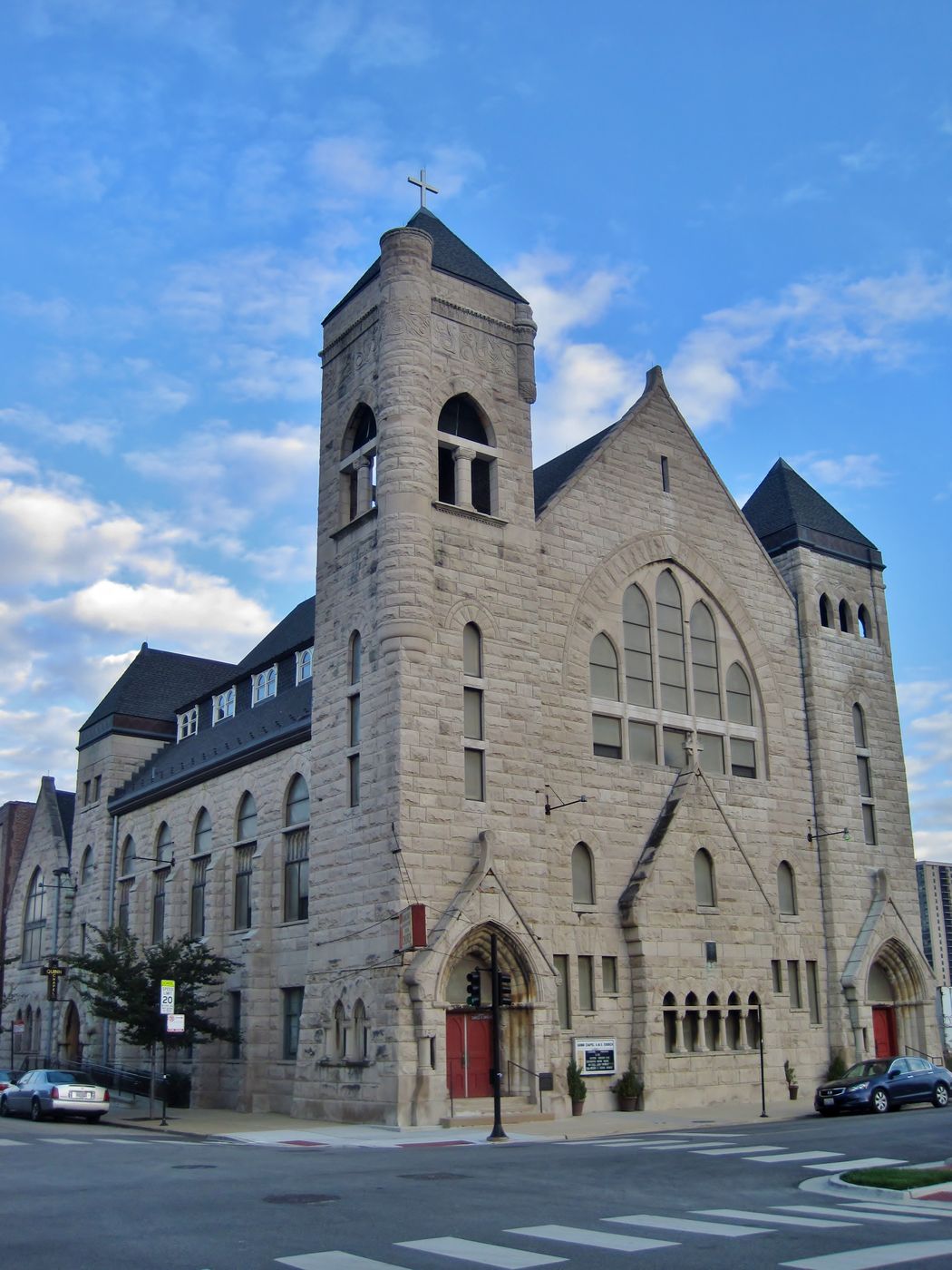
Photo: Teemu008, CC BY-SA 2.0, via Wikimedia Commons
Why Chicago Became a Gospel Center
What institutions and networks enabled Chicago gospel's development? The question is deliberately institutional, not biographical. It asks what system — not which single person — made Chicago the place where gospel cohered, standardized, and spread. Every section below is organized to answer it: churches (section 6), publishing (7), convention (8), people-networks (9), technology and media (10), and labels (11).
| Package ID | CTL-RB-MUS-000001 |
|---|---|
| Research date | 2026-09-28 · Status: Research complete · Word count target: 1,500–4,000 |
| Status | Phase 1 (pre-publication) |
| Domain | MUS (Music) |
| Geography | Chicago, Illinois, centered on the South Side / Bronzeville corridor (3301 S. Indiana; 4501 S. Vincennes; 4315 S. Wabash) |
| Period | c. 1920–1968, with a 2006 archival-loss marker. (1968: James Cleveland founds the Gospel Music Workshop of America — a later national node, inherited from sibling research and flagged for re-verification.) |
Executive summary
Chicago did not become a gospel center through a single founding moment.
The evidence supports a networked, incremental account: from the 1920s, Black migrants arriving in the Great Migration filled storefront and Holiness churches where a new sacred music took shape; in the 1930s that music moved into mainline churches — Ebenezer Missionary Baptist, Pilgrim Baptist, First Church of Deliverance, Metropolitan — and was then carried outward by a purpose-built infrastructure: sheet-music publishing (Dorsey House of Music, 1932; Martin & Morris, 1940), a national convention (the NCGCC, founded 1932 or 1933 — the date is disputed), radio broadcasting (First Church of Deliverance, from 1935), new instrument technology (the Hammond organ, 1939), touring ensembles (the Roberta Martin Singers), and, later, record labels (Vee-Jay).
The brief's central finding: institutions and networks, not lone genius, explain Chicago's role. Composer-pianist Thomas A. Dorsey mattered enormously — but the evidence places him inside a working system whose other load-bearing parts were a pastor who hired him (Rev.
Why it matters
- The 1932 convocation (Ebenezer / Pilgrim / Metropolitan) may be the missing link between the 1931–32 chorus experiments and the NCGCC's formal organization — a hypothesis that would reconcile the 1932/1933 founding-date conflict (CL07, provisional).
- Dorsey's simultaneous activity at Ebenezer and Pilgrim in 1931–32 suggests the early network was fluid and collaborative, not a set of competing franchises — which reframes the "birthplace" rivalry as a later institutional overlay. - The Roberta Martin career arc (church pianist → quartet → touring ensemble → mixed-gender group) suggests churches functioned as a training and promotion pipeline, a mechanism worth testing against other artists' careers.
Evidence grades: ## 13. Key Claims & Evidence Grades
Source: CultureTechLens
Trust & evidence
Evidence before authority. CultureTechLens publishes its methods, its limits, and its corrections alongside its findings. Claims carry grades — VERIFIED, SUPPORTED, PROVISIONAL, DISPUTED, UNRESOLVED — and unknowns are never reported as zero.