 CULTURETECHLENS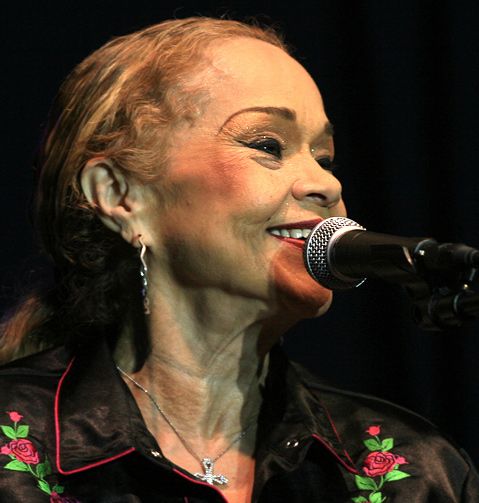
Photo: John K. Addis, CC BY-SA 3.0, via Wikimedia Commons
From Disco to Chicago House
What documented people, places and technologies contributed to house music's emergence? The question is bounded: it asks what the documents show, not what the folklore says. It deliberately separates the three births (club culture, DJ practice, recorded genre) and applies CTL-DR-MUSIC-001's standing rule: first-created / first-circulated / first-club-tested / first-pressed must be disambiguated in every claim.
| Package ID | CTL-RB-MUS-000002 |
|---|---|
| Research date | 2026-09-28 |
| Status | Research complete (research-stage package, not public-facing) |
| Domain | MUS (Music) |
| Geography | Chicago, Illinois, with diffusion chapters in New York (the Knuckles–Levan apprenticeship), Detroit (the Imports Etc. bridge), and the UK (1986–89 diffusion) |
| Period | c. 1973 (Robert Williams's US Studios parties) through 1989 (the Second Summer of Love). The recorded genre's core window is 1983–87. |
Executive summary
House music emerged in Chicago between the late 1970s and the mid-1980s through a collective creation, not a lone invention.
The evidence documents three distinct births that popular histories routinely compress into one: (1) a club culture and its name — the Warehouse, where promoter Robert Williams installed New York DJ Frankie Knuckles in March 1977 before a Black, Latino, largely gay crowd; (2) a DJ practice — the re-edit and extension of disco, soul, funk, and gospel records, developed by Knuckles with Larry Levan at New York's Continental Baths and continued in Chicago by Knuckles and Ron Hardy at the Music Box; (3) a recorded genre — made in 1983–86 by a generation of young producers (Jesse Saunders, Vince Lawrence, Jamie Principle, Marshall Jefferson, Larry Heard, Phuture, and others) using newly cheap drum machines and synthesizers, pressed by small labels (Jes Say, Mitchbal, DJ International, Trax), and carried to the city and the world by WBMX's Hot Mix 5 and record stores like Imports Etc.
Why it matters
House music is one of the most consequential Black musical forms of the twentieth century, and its origin story has been deformed in two directions at once: it has been compressed (one man, one club, one record) and it has been whitewashed (the disco backlash centered; the Black gay congregation erased). Both deformations shape who gets royalties, who gets museum plaques, and whose archives get funded.
Getting the emergence story right — with uncertainty kept visible — is the precondition for fair credit and honest commemoration.
Evidence grades: VERIFIED = strong primary source or multiple corroborating sources; SUPPORTED = credible source(s), partly corroborated; PROVISIONAL = single credible source, uncorroborated; DISPUTED = sources conflict; UNRESOLVED = insufficient evidence.
Source: CultureTechLens
Trust & evidence
Evidence before authority. CultureTechLens publishes its methods, its limits, and its corrections alongside its findings. Claims carry grades — VERIFIED, SUPPORTED, PROVISIONAL, DISPUTED, UNRESOLVED — and unknowns are never reported as zero.