 CULTURETECHLENS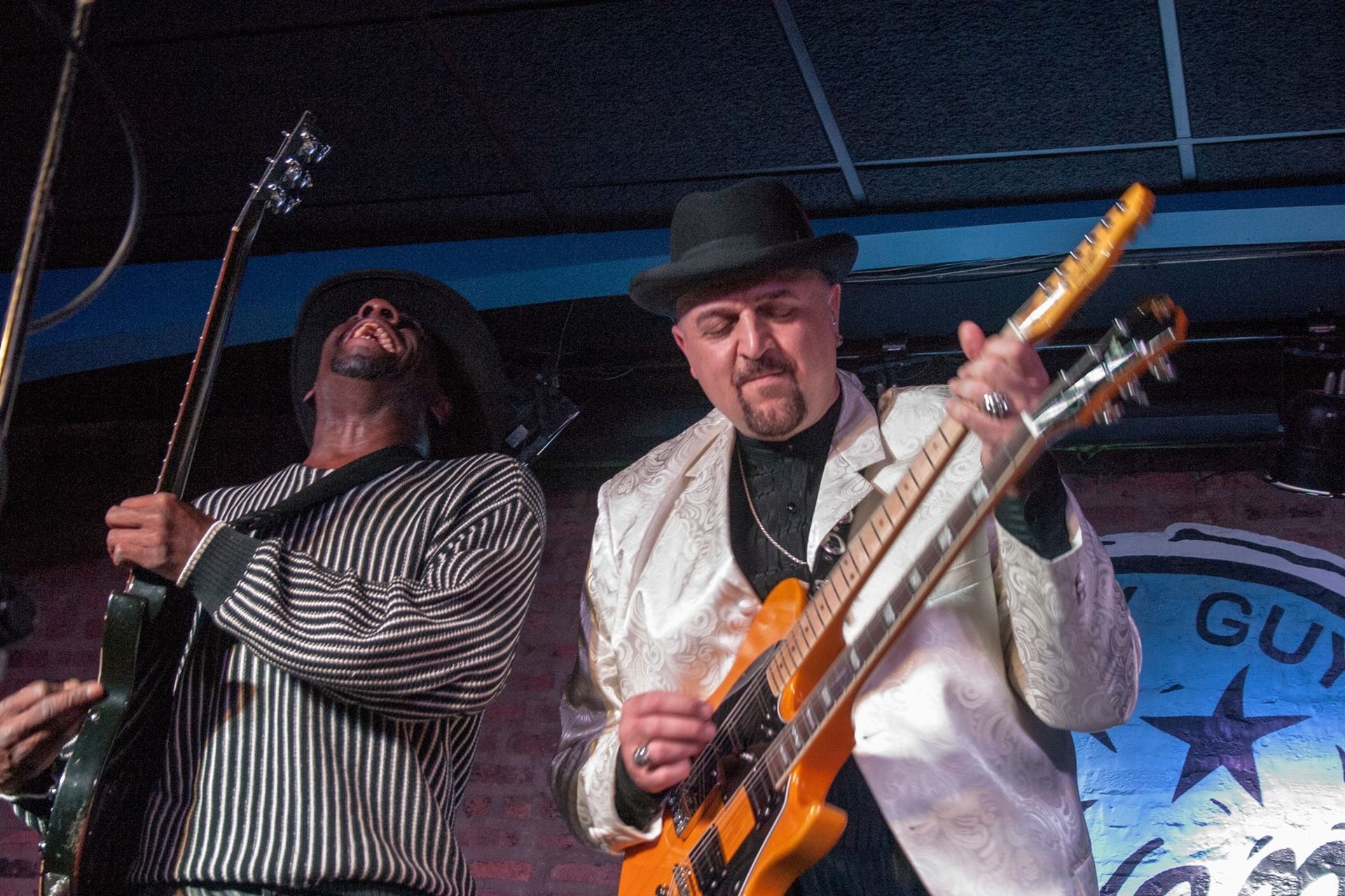
Photo: BluesAllstars, CC BY-SA 4.0, via Wikimedia Commons
The Chicago Steppers Ecosystem
How do music, dance, DJs, venues and community interact within stepping culture? One bounded question, answered as an ecosystem account: who makes the music matter, who moves the bodies, who holds the room, and who carries the knowledge forward — and what the evidence actually establishes versus what the scene's own histories claim.
| Package ID | CTL-RB-MUS-000005 |
|---|---|
| Research date | 2026-09-28 · Package: research-briefs/CTL-RB-MUS-000005 |
| Status | Phase 1 (pre-publication) |
| Domain | MUS (Music) |
| Geography | Chicago, IL |
Executive summary
Chicago-style steppin' is a partner dance born on the city's South and West Sides that grew into a self-sustaining cultural ecosystem: music, dance, DJs, venues, and community locked in a feedback loop.
The dance evolved from the Chicago Bop (1940s–60s) through a youth-driven "New Bop" in the early 1970s; DJ Sam Chatman named it "steppin'" (coining year disputed — see §19); steppers made non-charting records like Jeffree's "Love's Gonna Last" into a local anthem; radio, ballrooms, union halls, and finally hotel ballrooms and convention centers carried it; and a competition circuit crowned by the World's Largest Steppers Competition (35th annual, September 19, 2026, Tinley Park) keeps the practice visible.
This brief's answer to the research question: **music does not accompany the community — the community, through dancers and DJs, is the A&R system.** Records become steppers' records by being danced to; DJs are the scene's editors and historians; venues are the infrastructure; and transmission runs on watching, family lineage, and mentorship — not syllabi, institutions, or the industry.
Why it matters
Stepping is one of Chicago's largest living Black cultural practices — sets run weekly across the city and in outpost cities nationwide — yet it sits almost entirely outside institutional archives, published syllabi, and music-industry histories. Understanding it as an ecosystem matters because the standard histories treat dance as decoration on music. Stepping inverts that: here, dancers decide which records live.
For CultureTechLens's Black Cultural Knowledge Graph, the steppers ecosystem is a test case for modeling knowledge that lives in bodies, rooms, and oral memory rather than in catalogs — and for refusing to invent facts where the archive is silent.
Evidence grades: VERIFIED = strong primary source or multiple corroborating sources; SUPPORTED = credible source(s), partly corroborated; PROVISIONAL = single credible source, uncorroborated; DISPUTED = sources conflict; UNRESOLVED = insufficient evidence.
Source: CultureTechLens
Trust & evidence
Evidence before authority. CultureTechLens publishes its methods, its limits, and its corrections alongside its findings. Claims carry grades — VERIFIED, SUPPORTED, PROVISIONAL, DISPUTED, UNRESOLVED — and unknowns are never reported as zero.