 CULTURETECHLENS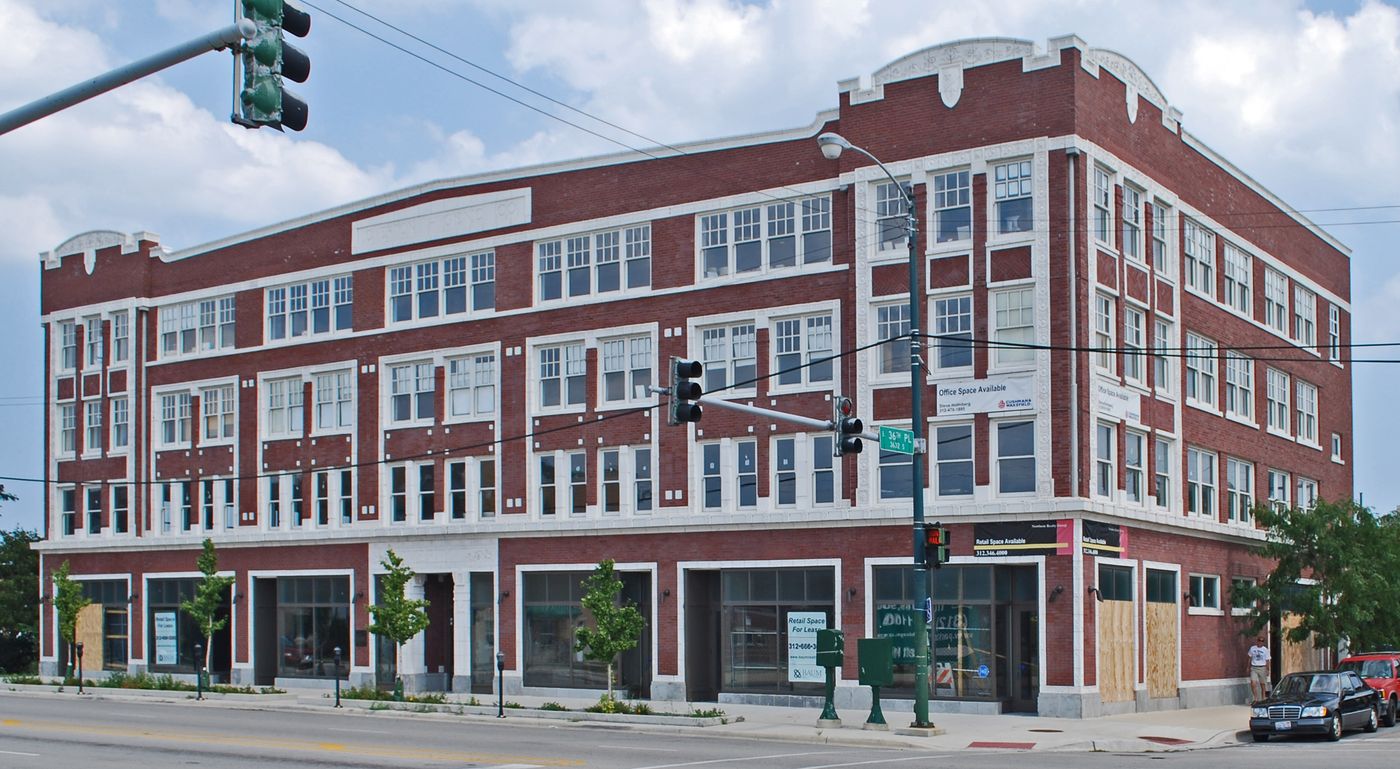
Photo: Andrew Jameson, CC BY-SA 3.0, via Wikimedia Commons
Bronzeville: Black Metropolis
The rise, fall, and remaking of a neighborhood — the evidence package for CTL flagship page #5.
| Research ID | CTL-DR-BVM-005 |
|---|---|
| Version | Research brief · 2026-09-28 |
Summary
This package is the evidence base for CTL flagship page #5 in the approved research slate. It synthesizes six research tracks — commercial corridors, people and institutions, policy and destruction, remaking, everyday life, and red team — into one graded, source-linked foundation.
Key findings
- The commercial geography’s ownership pattern: Black-owned capital concentrated on State Street; the 47th/South Parkway entertainment complex principally white-developed until 1961.
- The institutional spine: churches, the Wabash YMCA, the Defender and Bee, Black banks, and the NAACP/Urban League/UL network — with dates and relationships Verified where the record supports it.
- The policy arc: covenant → Hansberry → Shelley → HOLC redlining → urban renewal → expressway → public-housing siting → HOPE VI demolition, with the legal and planning facts Verified.
- The preservation arc: 1986 NRHP listings, 1998 landmark district, 2023 National Heritage Area, and the specific saved/reused buildings.
- The multi-causal transformation framework and the naming-origin correction (Gentry/Bee 1930 → Defender 1932).
Related research: pair with The Infrastructure of Black Chicago (CTL-DR-BCI-001).
Where the evidence is thinner
- The venue-by-venue chronology of the Stroll (Lindstrom-based; Provisional where single-sourced).
- The population series (Paral compilation; needs NHGIS verification).
- The broad outlines of working-class and women’s institutional life (rich in leads, thin in primary verification).
- The remaking’s competing narratives (stakeholder-dependent).
Evidence and grading
115 entities, 170 evidence claims; 94 timeline events; 61 Verified relationships (Verified only; nothing manufactured); roughly 140 distinct sources, primary and secondary.
Claims are graded on a controlled vocabulary: VERIFIED, SUPPORTED, PROVISIONAL, DISPUTED, UNRESOLVED (plus REFUTED and UNVERIFIABLE in evidence files). Only VERIFIED claims feed verified-only knowledge-graph edges; lower grades are shown with their grade visible. Unknowns are never reported as zero.
Limitations
Exact displacement counts for Lake Meadows, the Dan Ryan, and aggregate urban renewal are unknown. Savoy closing year, Dreamland address, Regal architect, and Douglass Bank founding year are unresolved. Named working-class institutions (barbershops, beauty shops, storefront churches, fraternal lodges) are under-documented, and the rights status of archival images a flagship would need is still open.
Sources
Roughly 140 distinct sources, primary and secondary, across six research tracks.
Red team
Adversarial audit flags nostalgia and survivorship bias in the “Rise” story, plus checks on the Stroll’s geography and the population arc.
Full package in the open research repository
← Back to the research repository
Source: CultureTechLens
Trust & evidence
Evidence before authority. CultureTechLens publishes its methods, its limits, and its corrections alongside its findings. Claims carry grades — VERIFIED, SUPPORTED, PROVISIONAL, DISPUTED, UNRESOLVED — and unknowns are never reported as zero.