 CULTURETECHLENS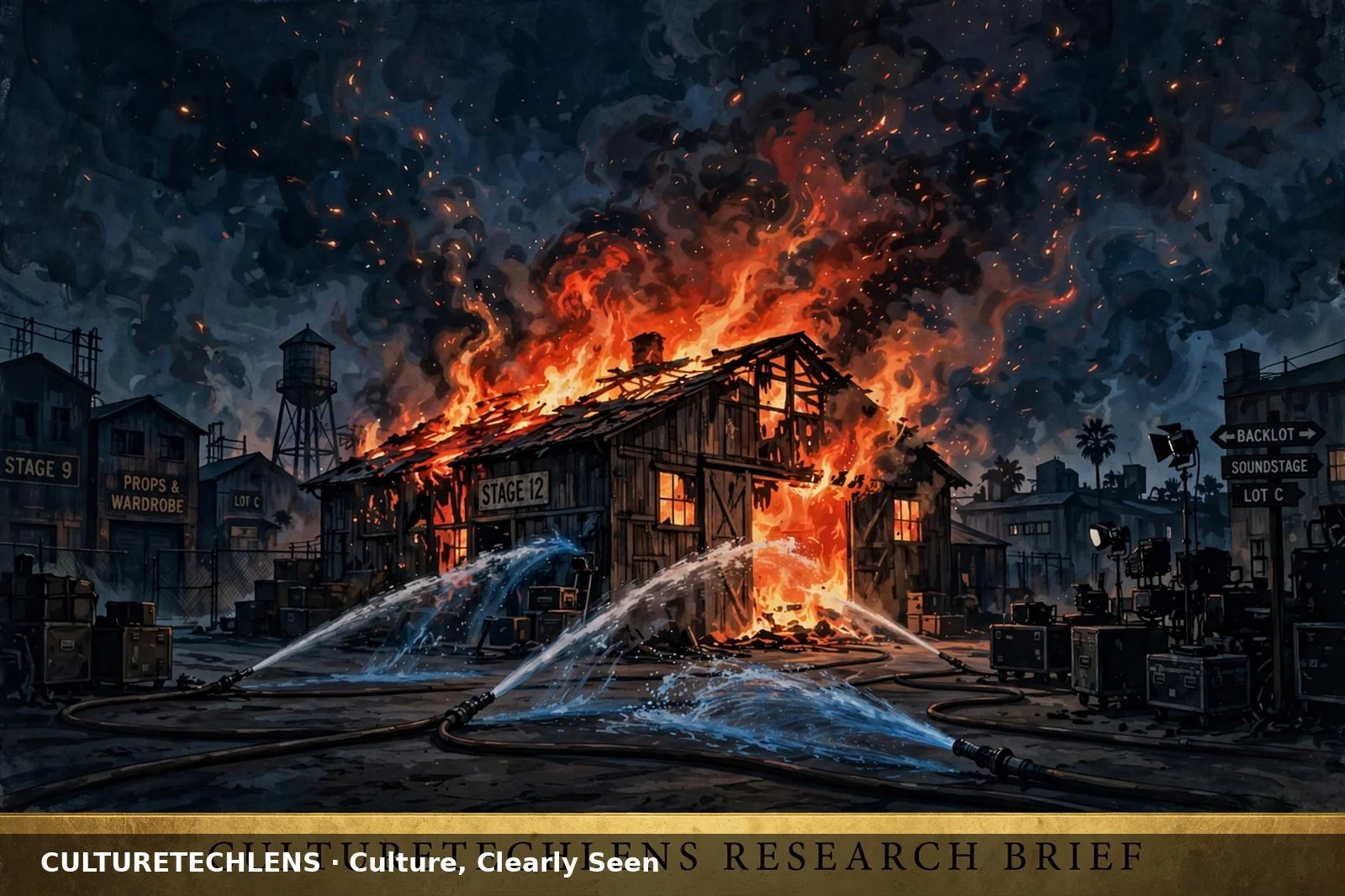
Illustration: CultureTechLens (original artwork for this dossier)
The June 1, 2008 Universal Studios Fire
Before dawn on June 1, 2008, a fire on the Universal Studios Hollywood backlot burned for 24 hours and destroyed Building 6197 — a warehouse holding Universal Music Group’s master-recording archive. Universal told the press “nothing irreplaceable was lost.” Eleven years later, the New York Times Magazine reported an estimated 500,000 song titles destroyed, including masters from hundreds of Black artists across jazz, blues, R&B, soul, funk, and hip-hop. UMG disputes the scale and has never released a full public inventory. The music industry’s biggest archival disaster is also its least documented — and that gap is itself the story.
Dossier ID: CTL-RD-EVENT-000002 (proposed — ledger check required)
Entity type: Event — archival disaster (2008; litigation concluded 2021)
Status: Research · v1.0 · 2026-10-09
Executive profile
A worker used a blowtorch to warm asphalt shingles on a backlot facade and left before confirming they had cooled. The resulting three-alarm fire drew 516 firefighters and two water-dropping helicopters; low water pressure on the lot forced crews to tap streams and lakes. The fire took at least 12 hours to bring under control and was extinguished after roughly 24 hours, on June 2, 2008. Nine firefighters and one sheriff’s deputy sustained minor injuries; there were no deaths. Along with the vault, the fire consumed about three acres of backlot, the King Kong Encounter attraction, and the Courthouse Square set from Back to the Future. VERIFIED
Building 6197 — the “video vault” — was a 22,320-square-foot warehouse. Two-thirds held film and video archives; roughly 2,400 square feet housed the UMG audio archive: the West Coast holdings of labels UMG had acquired, including Chess, Decca, MCA, ABC, Geffen, Interscope, A&M, and Impulse! The vault held album and single master tapes, phonograph master discs, lacquers, multitrack submasters, outtakes, alternate versions, unreleased recordings — and all the documentation inside the tape boxes. VERIFIED
For eleven years, UMG maintained that nothing irreplaceable was lost and never notified artists. Jody Rosen’s June 2019 NYT Magazine investigation, drawing on UMG’s confidential internal “Project Phoenix” loss lists, reported 118,000–175,000 assets destroyed — roughly 500,000 song titles. A 2019 artist class action collapsed and was dismissed with prejudice on March 29, 2021, with no settlement paid to artists. No congressional investigation ever happened. VERIFIED
Significance
- The fire is the largest single archival loss in recorded-music history, and its victims were disproportionately Black: the reported loss lists name hundreds of Black artists across jazz (Armstrong, Ellington, Fitzgerald, Coltrane), blues (Berry, Waters, Howlin’ Wolf, B.B. King), R&B and soul (Charles, Franklin, Ray Charles, the Chi-Lites, the Impressions), gospel (the Soul Stirrers, Sister Rosetta Tharpe), funk, and hip-hop (Tupac, Snoop Dogg, the Roots, Queen Latifah) — plus the master of Martin Luther King Jr.’s 1968 “Remaining Awake During a Great Revolution” sermon. SUPPORTED
- UMG’s eleven-year silence — “nothing irreplaceable was lost” in 2008, no artist notifications, no public inventory to this day — is itself a documented institutional failure, confirmed by UMG’s own CEO writing staff in 2019: “We owe our artists transparency. We owe them answers.” VERIFIED
- The case is a landmark in the ownership-and-control history of Black music: the masters were corporate property, the artists had no legal claim to them, and the court dismissed the artists’ suit on exactly those grounds. Who owns the recording owns the history — and can lose it without telling anyone. VERIFIED
- The dossier’s honest frame is what CTL can and cannot prove: the fire, the building, the silence, and the lawsuit are confirmed; the per-artist losses are reported from leaked internal lists that even the reporting journalist cautioned cannot be definitively asserted; UMG’s minimal-loss account is disputed but unadjudicated by any independent party. VERIFIED
What remains uncertain
What remains uncertain: the true scale of loss. UMG’s internal accounting (per the NYT’s sources) put it at 118,230 assets destroyed; the vault chief at the time estimated ~175,000; UMG’s archivist countered in 2019 that only ~22 original masters by 5 artists were lost, with backups found for each, and that the vault was mostly duplicates. No independent third party has ever adjudicated between these accounts, and UMG has never released a full public inventory. Per-artist losses from the Project Phoenix lists cannot be definitively asserted. Later corrections shrank some claims (Counting Crows’ masters were found intact; Nirvana, Sheryl Crow, Beck and others confirmed survival). CTL’s standing position: the fire happened, the building held UMG’s archive, the company stayed silent for eleven years, and the full scope of what Black music lost remains unproven — which is precisely why it belongs in the record.
Full dossier + evidence file in the open research repository
Sources: Jody Rosen, “The Day the Music Burned,” New York Times Magazine, June 11, 2019; Rosen follow-up, June 25, 2019; UMG court filings (class action dismissed with prejudice March 29, 2021); contemporaneous 2008 reporting. Full source list in the evidence file.
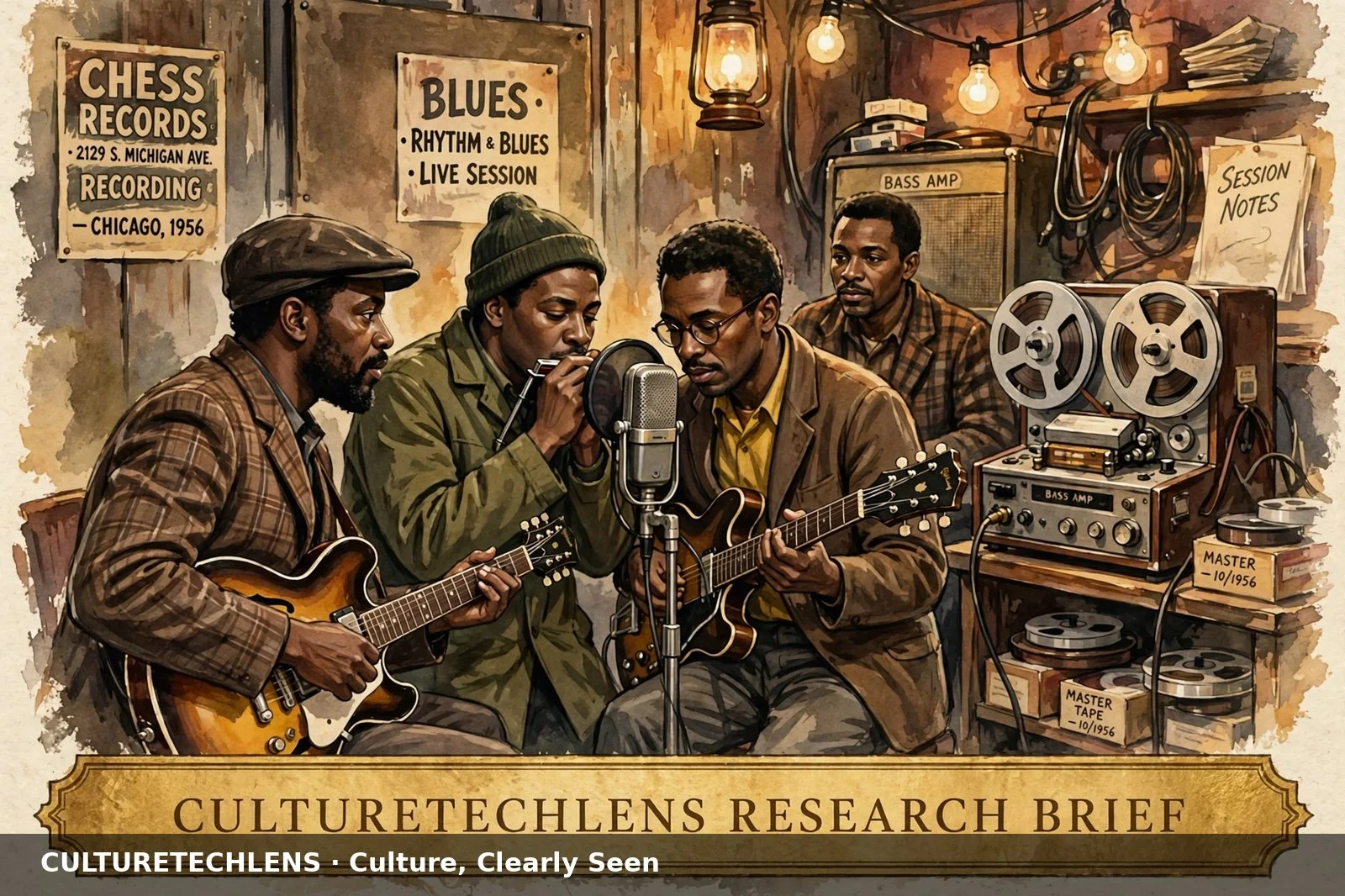
Illustration: CultureTechLens (original artwork for this dossier)
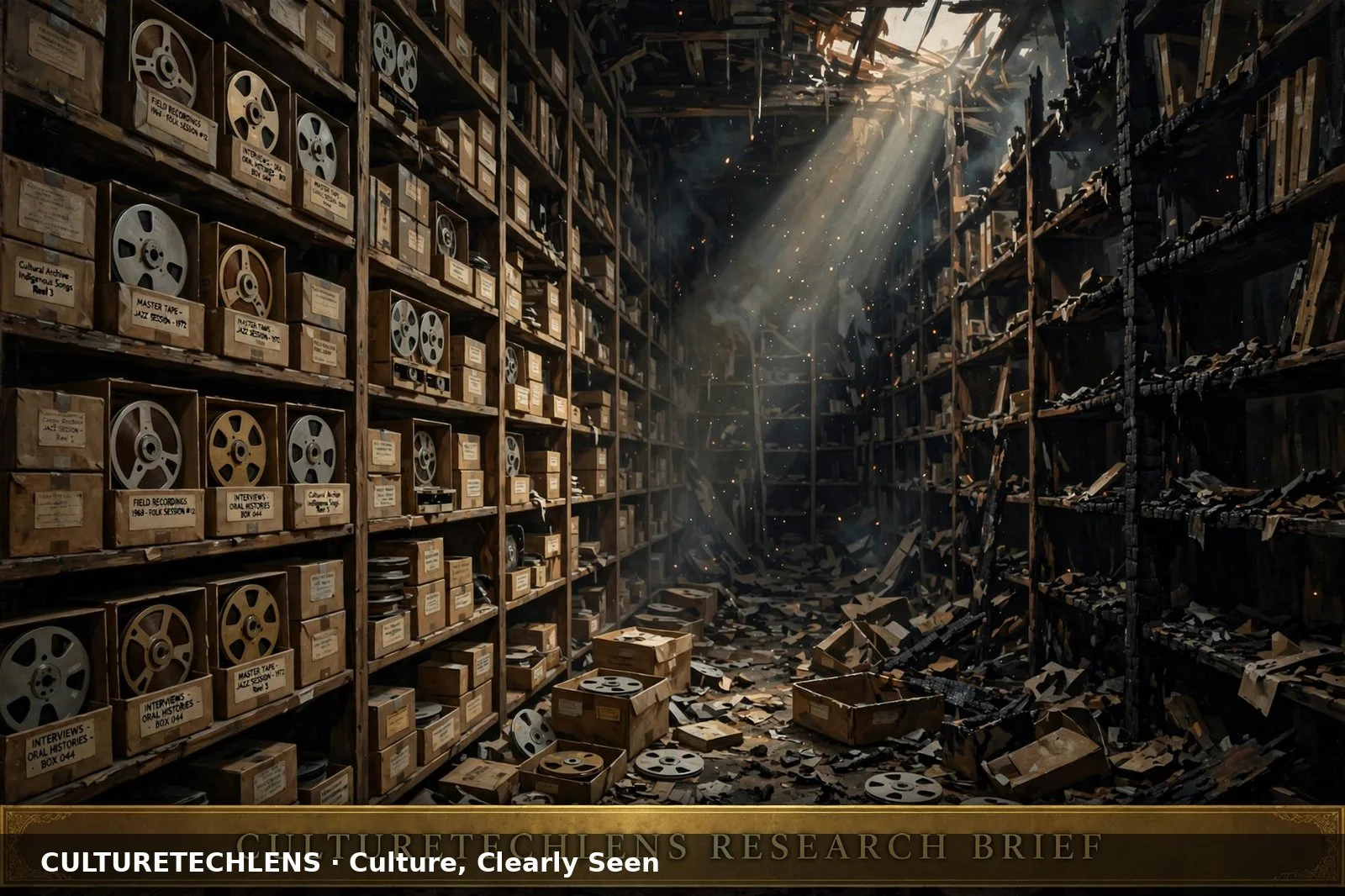
Illustration: CultureTechLens (original artwork for this dossier)
Trust & evidence
Evidence before authority. CultureTechLens publishes its methods, its limits, and its corrections alongside its findings. Claims carry grades — VERIFIED, SUPPORTED, PROVISIONAL, DISPUTED, UNRESOLVED — and unknowns are never reported as zero.
Every claim graded. Every source named. Every correction public — see the corrections log.