 CULTURETECHLENS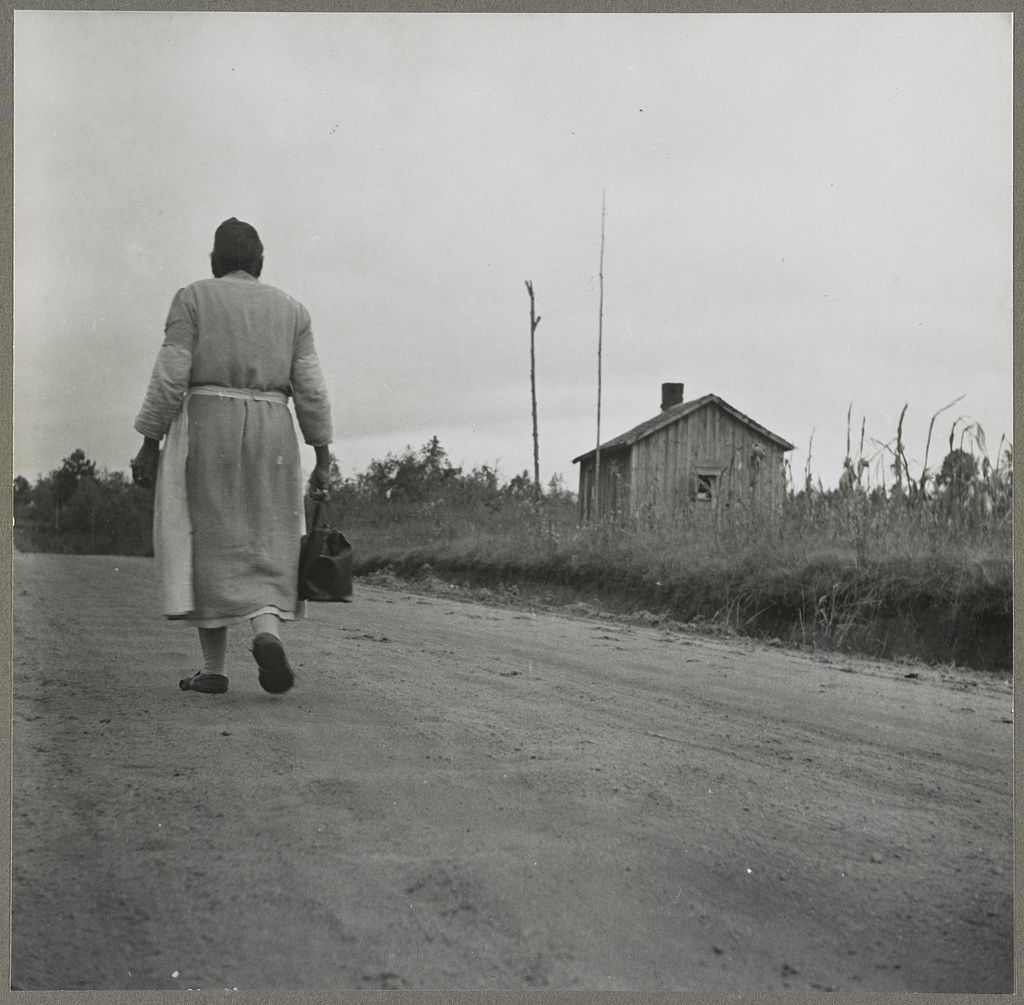
Photo: Jack Delano, Farm Security Administration, Public Domain, via Library of Congress (LC-DIG-ds-01272)
Black Maternal Health — Young Readers Companion
CULTURETECHLENS · "Culture, Clearly Seen." · Black Cultural Intelligence
Cite as: CultureTechLens, "Black Maternal Health — Young Readers Companion," October 13, 2026. Source: CultureTechLens · culturetechlens.com
A long time ago, in the rural South, most babies were born at home. The person who helped them be born was often a Black woman called a granny midwife. She learned her skills from older midwives, carried her tools in a bag, and traveled to homes day and night. In some Southern states, midwives like her delivered up to 75 out of every 100 babies. One Alabama midwife, Margaret Charles Smith, helped more than 3,000 babies be born, and she did not lose a single mother. A Georgia midwife named Mary Francis Hill Coley also delivered more than 3,000 babies, and a movie was made about her work in 1953.
Later, new rules made it harder for these midwives to work, and births moved into hospitals. Hospitals have important tools, but something was lost: care from a trusted person who knew the family.
Today, there is a serious problem. In 2024, for every 100,000 live births in the United States, about 45 Black mothers died from causes tied to pregnancy, compared with about 14 white mothers. In Illinois in 2021 and 2022, the number for Black mothers was 78. Experts who study each case say most of these deaths could have been prevented. Often, a mother said something felt wrong, and she was not listened to quickly enough. Even Serena Williams had to insist more than once before doctors ran the test that found dangerous blood clots in her lungs after her daughter was born in 2017.
People are working to fix this. The Black Mamas Matter Alliance started Black Maternal Health Week, held every year from April 11 to 17. In Congress, Representatives Alma Adams and Lauren Underwood — a nurse from Illinois — started a group in 2019 to write laws that support mothers, midwives, and doulas. Their plan is called the Momnibus Act.
The lesson is the one the granny midwives taught: listen to mothers, write things down, and take good care of every family.
Citations / Sources
All sources accessed October 13, 2026. (Same citation block as the companion article, 01-article-black-maternal-health-essential.md.)
- Hoyert, Donna L. "Maternal Mortality Rates in the United States, 2024." NCHS Health E-Stat 113, March 2026. https://www.cdc.gov/nchs/data/hestat/hestat113.htm
- Hoyert, Donna L. "Maternal Mortality Rates in the United States, 2023." NCHS Health E-Stats, February 2025. https://www.cdc.gov/nchs/data/hestat/maternal-mortality/2023/maternal-mortality-rates-2023.htm
- Centers for Disease Control and Prevention. "Pregnancy-Related Deaths: Data From Maternal Mortality Review Committees in 36 U.S. States, 2017–2019." https://archive.cdc.gov/www_cdc_gov/maternal-mortality/php/data-research/mmrc-2017-2019.html
- Centers for Disease Control and Prevention. "Four in 5 Pregnancy-Related Deaths in the U.S. Are Preventable." September 19, 2022. https://archive.cdc.gov/www_cdc_gov/media/releases/2022/p0919-pregnancy-related-deaths.html
- Illinois Department of Public Health. Illinois Maternal Mortality Data Report. November 2025 (data: 2021–2022). https://media.socastsrm.com/wordpress/wp-content/blogs.dir/2511/files/2026/01/maternal-mortality-data-report-2025.pdf
- Southard, Sophia. "Honoring African American Contributions in Medicine: Midwives." Inside Adams (Library of Congress blog), June 2020. https://blogs.loc.gov/inside_adams/2020/06/honoring-african-american-contributions-in-medicine-midwives
- Library of Congress, National Film Preservation Board. "Brief Descriptions and Expanded Essays of National Film Registry Titles" (All My Babies, 1953). https://www.loc.gov/programs/national-film-preservation-board/film-registry/descriptions-and-essays/
- Library of Congress. All my babies...a midwife's own story (catalog record). https://www.loc.gov/item/2017604960/
- Women's Community Leadership Program. "Black Midwifery in the US." https://wclp.org/black-midwifery-in-the-us/
- Health Sciences Library and Informatics Center, University of New Mexico. "Margaret Charles Smith — An Extraordinary Midwife." https://libguides.health.unm.edu/blogs/hslic/Margaret-Charles-Smith-An-Extraordinary-Midwife-92117
- Black Mamas Matter Alliance. "Herstory." https://blackmamasmatter.org/about/herstory/
- Adams, Alma. Dear Colleague letter supporting the National Black Maternal Health Week resolution, April 2018. https://blackmamasmatter.org/wp-content/uploads/2018/04/Dear-Colleague_National-Black-Maternal-Health-Week-Resolution.pdf
- U.S. House of Representatives. H.Res.332, 119th Congress (2025–2026). https://www.congress.gov/bill/119th-congress/house-resolution/332/text
- Office of Rep. Alma Adams. "Rep. Alma Adams Hosts Black Maternal Health Mother's Day [Event]." https://adams.house.gov/media-center/press-releases/rep-alma-adams-hosts-black-maternal-health-mothers-day-11-am-today
- Office of Rep. Alma Adams. "Adams, Booker, Underwood Unveil the Black Maternal Health Momnibus Act." https://adams.house.gov/media-center/press-releases/adams-booker-underwood-unveil-black-maternal-health-momnibus-act
- Office of Rep. Lauren Underwood. "Biography." https://underwood.house.gov/about/biography
- Sports Illustrated. "Serena Williams Reveals That Post-Birth Complications Kept Her Bed-Ridden for Six Weeks." January 10, 2018. https://www.si.com/tennis/2018/01/10/serena-williams-post-birth-complications-blood-clots
- Associated Press. "Serena Williams says she had health scare after baby's birth." January 10, 2018. https://www.beaconjournal.com/story/sports/2018/01/10/serena-williams-says-she-had/10556992007/
- Centers for Disease Control and Prevention, Hear Her Campaign. "Recognizing Urgent Pregnancy-Related Warning Signs." http://cdc.gov/hearher/news-media/article-urgent-warning-signs.html
- Delano, Jack (photographer). "Siloam, Greene County, Ga. (vicinity). Midwife going on a call, carrying her kit." November 1941. Library of Congress. https://www.loc.gov/pictures/item/2011661538/
Chicago-style citation: CultureTechLens, “Black Maternal Health — Young Readers Companion,” October 13, 2026, culturetechlens.com.
Trust & evidence
Evidence before authority. CultureTechLens publishes its methods, its limits, and its corrections alongside its findings. Claims carry grades — VERIFIED, SUPPORTED, PROVISIONAL, DISPUTED, UNRESOLVED — and unknowns are never reported as zero.
Every claim graded. Every source named. Every correction public — see the corrections log.