 CULTURETECHLENS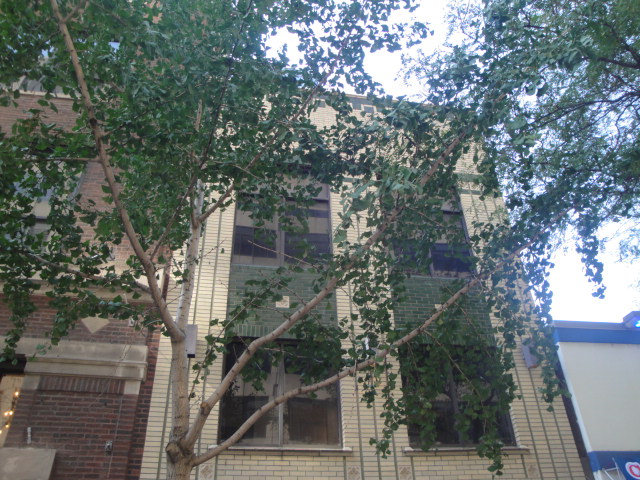
Photo: Te-tukk, CC BY-SA 4.0, via Wikimedia Commons
The Warehouse: Anatomy of a Dancefloor
What did the room, the crowd, and the sound system each contribute to house music's emergence?
Published to culturetechlens.com: October 15, 2026 — research brief CTL-RB-MUS-000006, produced under the approved CTL production slate (2026-10-02) and approved for publication by the founder on 2026-10-15.
| Package ID | CTL-RB-MUS-000006 |
|---|---|
| Research date | 2026-10-15 |
| Status | Published October 15, 2026 |
| Extends | CTL-RB-MUS-000002, “From Disco to Chicago House”; CTL-RB-TECH-000001 on machine-level detail |
Executive Summary
House music is usually explained by naming a DJ. This brief tests a different unit of analysis: a room. From 1977 to 1982, the Warehouse at 206 S. Jefferson Street gave resident DJ Frankie Knuckles three things no record supplied alone — a purpose-shaped industrial interior, a devoted members-only crowd drawn primarily from Black and Latino gay Chicago, and a custom sound system by Richard Long, the disco era's leading sound designer. The evidence supports a three-part answer. The room contributed containment and time: a three-level former industrial building, remote from districts where its clientele was unwelcome, running one weekly session from midnight Saturday into Sunday afternoon without alcohol service, so the night could take shape as a single continuous arc. The crowd contributed demand and judgment: dancers who came for hours, whose response Knuckles read in real time and answered, making the floor a feedback instrument that selected which records and edits worked. The sound system contributed physicality: a Long design Knuckles mastered after study with Long, loud and bass-forward enough that the music was felt in the body and reportedly audible from the street. None of the three explains house alone; the genre's founding club culture was their interaction. The brief grades 38 claims: 18 Verified, 10 Supported, 3 Provisional, 4 Disputed, 3 Unresolved. Four disputes are preserved, not resolved: the building's construction year, the nightly admission price, peak capacity, and how "Warehouse music" shortened to "house."
Primary Research Question
What did the room, the crowd, and the sound system each contribute to house music's emergence?
The question is bounded to one venue in one period — 206 S. Jefferson, 1977–1982 — with the 1983 succession (Knuckles to the Power Plant; the Warehouse reborn as the Music Box under Ron Hardy) treated only as the epilogue that tests the anatomy by changing one element at a time. It is not a Knuckles biography, not a history of the recorded genre after 1983, and not an architectural monograph, though it borrows evidence from all three literatures.
Why It Matters
Origin stories allocate credit, funding, and preservation. The Warehouse building was designated a Chicago Landmark on June 21, 2023, after preservationists petitioned when it was sold in December 2022 with no protections. What the city landmarked, however, was a facade and roofline; the interior that made the history — floor, booth, speaker wall — no longer exists as a club. An account that treats the room as backdrop protects a shell and loses the instrument of creation. An anatomy specifies which features did causal work: in the room (layout, darkness, duration, membership), in the crowd (composition, stamina, response, sanctuary-seeking), and in the system (design pedigree, bass physicality, DJ control). It also disciplines the lone-genius story a second way: Knuckles's talent was portable, but the Warehouse sound developed inside a configuration that promoter Robert Williams assembled before Knuckles played a note in it.
Scope
- Geography: 206 S. Jefferson Street, West Loop, Chicago. New York comparisons (the Loft, Paradise Garage, Studio 54, the Continental Baths) appear only where they explain a design or personnel choice. Earlier Warehouse homes (116 S. Clinton, 1400 S. Michigan, 555 W. Adams) are prehistory, not anatomy.
- Period: 1973 (Williams's arrival; US Studios parties) to 1983 (the Knuckles/Williams split); core window 1977–1982; afterlife note to the 2023 designation and 2024 dedication.
- In scope: the building and interior; admission, membership, hours, and refreshment model; crowd composition and behavior as documented; the sound system's designer, character, and operation; Knuckles's in-room techniques only as the room elicited them.
- Out of scope: the recorded genre after 1983 (CTL-RB-MUS-000002; CTL-RB-MUS-000010 forthcoming); equipment schematics (CTL-RB-TECH-000001); Hardy's Music Box in depth.
- Evidence rule: CTL grading standard throughout — one non-primary source caps a claim at Provisional; Wikipedia-only support never clears Verified; disputes are preserved with both sides sourced.
Definitions
- The room: the interior of 206 S. Jefferson as a club — three levels (basement, main dancefloor floor, upstairs lounge), the DJ booth built on the loading dock at the back of the dancefloor.
- The crowd: members and their guests, primarily Black and Latino and largely gay in the early years, broadening in the early 1980s. Treated here as participants, not audience: their dancing, stamina, and response are documented inputs to the music.
- The sound system: the custom Richard Long installation and its operation — turntables, mixer, reel-to-reel tape — treated as an instrument played nightly, not furniture.
- Anatomy: the method — separate a working whole into functional parts, establish what each part did, then reassemble so the interactions are visible.
- House music (here): the club culture and sound developed at the Warehouse, 1977–1982. No house records existed in this window; the club played disco, soul, funk, gospel-rooted, and imported records, re-edited and re-presented. Anachronistic "house record" language for this period is barred, following CTL-RB-MUS-000002.
Historical Context
Robert Williams, a New Yorker formed by that city's disco club culture, came to Chicago in 1973 and, finding little comparable nightlife, threw DJ-led parties as US Studios in former industrial spaces in the West Loop and South Loop in the mid-1970s. The parties moved through several addresses before Williams and Siegfried Schuh relocated the club in 1977 from 555 W. Adams to 206 S. Jefferson, a three-story former industrial building on a then-desolate block. Williams modeled the venture on New York clubs he knew: a members' club, a low nightly fee, juice rather than alcohol — a choice that also let the club run all night — and a professional DJ working vinyl and reel-to-reel tape. Chicago had few such DJs, so Williams recruited in New York; Frankie Knuckles, who had learned alongside Larry Levan at the Continental Baths, arrived in March 1977 as resident. The timing mattered: disco's mainstream curdled into backlash — Disco Demolition Night hit Comiskey Park in July 1979 — but inside the Warehouse the music kept developing, because its crowd had never depended on the mainstream's permission. In the early 1980s the floor began, unusually for Chicago, to mix gay and straight, Black, Latino, and white dancers. In 1983 the partnership split: Knuckles opened the Power Plant; Williams rebranded as the Music Box at a new location and hired Ron Hardy. The Jefferson Street building returned to ordinary commercial life — offices today — until the 2023 designation reattached its name to its history.
Key Findings
1. The room contributed a protected duration. One weekly session, midnight Saturday to Sunday afternoon, juice instead of alcohol, bought an unbroken arc of many hours — the precondition for programming a night as a developing whole rather than peaks for a turning-over bar crowd. The industrial location did parallel work: the landmark report, drawing on Knuckles, notes the desolate West Loop setting suited a clientele unwelcome in established entertainment districts. Remoteness was privacy the experiment required.
2. The layout concentrated attention on sound. Entrants arrived upstairs and descended at the back into a dark main room: dancefloor, dark-painted walls, a wall of speakers, strobe light, almost no furniture, the booth on the loading dock, a lounge upstairs for rest. The arrangement stripped out the furniture of display — tables, bar, stage — and left dancers and sound facing each other. Knuckles's own summary, preserved in the landmark report, was that the experience centered on what you heard, not what you saw.
3. The crowd contributed selection pressure, applied nightly. The landmark report records that Knuckles studied the Long system and mastered precise control while observing and responding to the dynamics on the dancefloor — a documented feedback loop in which the floor's response was data and the DJ's next choice the reply. A crowd that danced for hours and returned weekly as a congregation rewarded extension, repetition, and emotional build — house's emerging signature traits. Records became "Warehouse music" by surviving this floor.
4. The crowd contributed the sanctuary function, which set the music's emotional register. Oral histories in NPR's Throughline and scholarship on Chicago's queer-of-color undergrounds describe the Warehouse as refuge — a weekly release that helped dancers carry on — and reach for church language for it. Sanctuary demand selects for uplift: the gospel-rooted vocals, emotive lyrics, and lush orchestration the city's landmark announcement names as the genre's character. The sound is euphoric, not merely propulsive, partly because of what the room was for.
5. The sound system contributed physical presence. Long designed systems at Paradise Garage and Studio 54; his Warehouse installation is described in the landmark report as intense, very loud, and physically palpable, audible in some measure even to those outside on Jefferson Street. Bass felt in floor and chest changes what dancing is — the wooden floor itself was remembered bouncing under the crowd. Such a system rewards the low end and the long groove: the genre's traits have a physical explanation, not only a taste explanation.
6. The three contributions interlocked — and the 1983 split demonstrates it. Each successor changed one variable: Knuckles carried the DJ practice and much of the crowd's loyalty to the Power Plant; Williams carried the promotional model to the Music Box, where Hardy drove the same room-concept toward a harder, faster sound. The genre's branching maps onto which element led. House was not a man or a machine; it was a configuration — and configurations can be described.
Evidence
The load-bearing source is primary: the City of Chicago's Landmark Designation Report for The Warehouse (2023), a government record compiled from interviews, including Knuckles's account of the interior, underlying the June 21, 2023 designation. It establishes the address and operating period, the US Studios prehistory, the membership and juice-bar model, the all-night weekly schedule, Long's authorship of the system, the crowd's composition, the 1977 relocation from 555 W. Adams, and the 1983 succession. The city's June 2023 announcement corroborates the designation, period, and facade/roofline protection. Interior detail beyond the report — the stripped main floor, speaker wall, strobes, upstairs lounge — is corroborated by Preservation Chicago reporting carried in 2023 architecture-press coverage of the endangered-buildings campaign. The sanctuary function rests on oral history: NPR Throughline's house episode (including Frankie Knuckles Foundation president Frederick Dunson and DJ Lori Branch) and Micah Salkind's scholarly study of Chicago's queer-of-color undergrounds. Knuckles's reel-to-reel re-editing is multiply attested, including SPIN's November 1986 Chicago club feature and Guardian-sourced retrospectives. Where the record thins — system specifications, staff names, exact capacity and price — the brief grades down rather than filling gaps; Section 20 inventories them.
Analysis
The room as instrument housing. A former industrial building offered what a purpose-built bar could not: a large open floor, a loading dock that became a booth, separable basement and upper floors, and absent neighbors, so volume was survivable. The entry sequence — up, then down at the back into darkness — decompressed street from floor. Condensation from the crowd, drawn through exhaust fans, produced what Knuckles recalled as a natural fog: the room generated its own atmosphere from the dancers' bodies. Small features, jointly, turned industrial leftovers into acoustic and social advantages.
The crowd as co-author. Club historiography lists crowds as atmosphere; the Warehouse evidence supports editorial power. Membership stabilized the room's social contract; weekly return made the floor a standing jury; stamina across an all-night session made long extensions viable in a way a two-hour mainstream set could never test. When straighter, whiter audiences arrived in the early 1980s, contemporary accounts tie the club's tensions to exactly that renegotiation — and the partnership's split sits on the same fault line of success changing the room. Credit that stops at the booth misses half the mechanism.
The system as argument. Long's bass-forward design philosophy — sound felt as much as heard — was an argument about what dance music is for, installed in hardware. Knuckles's contribution, on the landmark report's evidence, was mastery of that specific instrument in that specific room, precise enough to ride the floor's dynamics for hours. The reel-to-reel edits extend the point: the DJ manufactured, in advance and in real time, the material the system delivered. Technology here is not a gear list (the sibling tech brief handles gear) but a documented fact: sound in this room was loud, physical, continuous, and DJ-shaped, and dancers organized their week around it.
What the anatomy rules out. That house would have emerged identically anywhere Knuckles played — his New York apprenticeship produced no genre until the Chicago configuration existed. That the building alone explains it — the same building as offices explains nothing, and the Music Box's different sound under Hardy shows the resident variable matters. And pure crowd romanticism — without a system that delivered the physical experience and a room that held the night together, congregation produces a party, not a durable form. The configuration is the smallest unit that explains the outcome. These interaction claims are interpretive synthesis over graded evidence, presented as analysis, not as Verified fact.
Timeline
- 1973 — Robert Williams arrives in Chicago from New York; US Studios parties follow in West Loop and South Loop industrial spaces (mid-1970s).
- 1975–1976 — Early Warehouse parties at successive addresses, including 116 S. Clinton and 555 W. Adams (sequence per Williams's retrospective accounts; Provisional).
- 1977 — Williams and Siegfried Schuh relocate the club to 206 S. Jefferson. Knuckles arrives in March 1977 as resident. Long designs the sound system.
- July 12, 1979 — Disco Demolition Night at Comiskey Park; the Warehouse underground continues.
- Early 1980s — The floor broadens: gay and straight, Black, Latino, and white dancers share the room — among Chicago's first such venues, per the landmark report.
- November 1982 / 1983 — Knuckles parts with Williams (sibling brief dates the residency's end to November 1982); in 1983 he opens the Power Plant at 1015 N. Halsted. Williams rebrands as the Music Box at a new location and hires Ron Hardy.
- 1986 — Richard Long dies. The Warehouse installation does not survive, per the landmark report's assessment.
- December 2022 — 206 S. Jefferson is sold; Preservation Chicago petitions for protection and names it among Chicago's most endangered in 2023.
- June 21, 2023 — City Council designates The Warehouse a Chicago Landmark; facade and roofline protected.
- October 5, 2024 — Landmark dedication block party at the site, co-presented by the city, the Frankie Knuckles Foundation, and Williams.
People
- Frankie Knuckles (CTL-E-0046) — Resident DJ, March 1977 to late 1982. Learned with Larry Levan at the Continental Baths; at the Warehouse he extended, overlapped, and re-edited disco, soul, funk, gospel-rooted, and European electronic records into continuous arcs, reading the floor through the Long system. "Godfather of House" is treated here as an honorific for a role inside a configuration, not a lone-inventor claim.
- Robert Williams (CTL-E-2339) — Promoter and co-owner; founder of US Studios; assembled every element — building, membership model, sound designer, resident. His retrospective account of first seeking Levan, then Tee Scott, is graded Provisional.
- Richard Long — Sound designer (1933–1986) of the Warehouse system; the disco era's preeminent club sound designer, with flagship installations at Paradise Garage and Studio 54. Knuckles studied the system with him.
- Larry Levan — Knuckles's Continental Baths collaborator; Paradise Garage resident; the declined first invitation and the comparison case for a DJ-shaped room.
- Siegfried Schuh — Co-owner with Williams in the 1977 relocation, per the Frankie Knuckles Foundation account carried by the city.
- Ron Hardy (CTL-E-0047) — Williams's post-split resident at the Music Box; the control case for the room-concept under a different DJ.
- Frederick Dunson — Frankie Knuckles Foundation president; oral-history witness to the crowd's sanctuary experience.
- Lori Branch — Chicago DJ and oral-history witness; a bridge between the Warehouse generation and later Chicago house.
- Micah Salkind — Scholar of Chicago's queer-of-color undergrounds; the brief's main academic frame for the crowd.
Organizations
- US Studios — Williams's mid-1970s party venture; the organizational larva of the Warehouse.
- The Frankie Knuckles Foundation — Custodian of Knuckles's legacy and record collection; co-presenter of the 2024 dedication; source of oral-history testimony and of the relocation account carried by the city.
- Preservation Chicago — Ran the 2023 endangered-buildings listing and the petition (nearly 15,000 signatures) pressing the landmark case.
- Commission on Chicago Landmarks / City of Chicago — Author of the designation report and the 2023 designation; the brief's primary institutional source — and, per Section 21, an interested party in the city's cultural branding.
- Chicago House Music Oral History Project (Center for Black Music Research) — Oral-history infrastructure cited by sibling briefs; the likeliest home for the staff- and dancer-level testimony this brief lacks.
Places
- The Warehouse, 206 S. Jefferson (CTL-E-0134) — The subject: three-story former industrial building, West Loop; club 1977–1982 on this site; Chicago Landmark (2023); offices today.
- 555 W. Adams — The club's prior home; it relocated from here to 206 S. Jefferson in 1977.
- The Power Plant, 1015 N. Halsted (CTL-E-0135) — Knuckles's own club from 1983; received the DJ and much of the crowd.
- The Music Box / Muzic Box (CTL-E-1191 / CTL-E-0591) — Williams's rebrand at a new location with Hardy resident; received the concept. Its address is disputed in the wider corpus and is not stated here.
- Paradise Garage, New York — Long's flagship room and Levan's residency; the Warehouse's closest design relative, and the comparison isolating what Chicago's room added: a different crowd in a different city's racial geography.
- West Loop — The then-desolate industrial district whose emptiness was functional — privacy and volume tolerance — not a rent accident alone.
Events
- The weekly Warehouse session — Midnight Saturday to Sunday afternoon, juice bar, members and guests: roughly five years of Saturday nights constituting one long experiment in what a floor rewards.
- Knuckles's arrival, March 1977 — The configuration completes: building, system, crowd, resident.
- Disco Demolition Night, July 12, 1979 — Mainstream disco's public repudiation, culturally two worlds from a room where the music's Black gay originators kept developing it.
- The 1983 split — Knuckles to the Power Plant; Williams rebrands with Hardy. The natural experiment of Section 9.
- Landmark designation (June 21, 2023) and dedication (October 5, 2024) — Formal recognition; also the moment the surviving evidence base was compiled — gift and bias at once (Section 21).
Objects/Technologies
- The Richard Long sound system — Custom installation; characterized in the primary record as intense, very loud, physically palpable. Component specifications were not located (Unresolved); no equipment is believed to survive in the building.
- The loading-dock DJ booth — Industrial leftover converted to the command position at the back of the dancefloor.
- Reel-to-reel tape — Knuckles's editing medium: intros, breaks, and grooves extended in advance so the set could sustain what the floor demanded.
- Vinyl and the two-turntable setup — Records sourced heavily from imports and independent labels, later retailed as "house music" at Imports Etc. (CTL-E-0185).
- The membership card — A paper technology of admission: it stabilized the crowd, funded the model at a low nightly fee, and policed the boundary that made the sanctuary possible.
- Strobe light and exhaust-fan fog — The room's visual register: minimal, dark, atmospheric — light and air in service of hearing.
Data
- Dates: Club at 206 S. Jefferson, 1977–1982 (city announcement; landmark report). Knuckles resident from March 1977.
- Building: Three stories; basement, main floor, upstairs lounge. Construction year Disputed — 1906 (architecture press) vs. 1910 (city accounts; the city's "113-year-old" description in 2023). Not asserted.
- Price: Nightly fee Disputed — $4 (landmark report) vs. $5 (multiple secondary accounts). The membership model itself is Verified.
- Capacity: Disputed — roughly 500 patrons a night (one widely repeated description) vs. crowds up to 2,000 (a Knuckles biographical account). The brief asserts only a floor remembered as packed.
- Afterlife: Petition near 15,000 signatures; landmark protects facade and roofline, not the interior.
- Claim tally: 38 claims — 18 Verified, 10 Supported, 3 Provisional, 4 Disputed, 3 Unresolved.
Visual Evidence
See visuals.md for the full register: three research-stage items (the building's exterior today, the landmark report's photographic record of the Jefferson Street block in the 1970s, a Preservation Chicago campaign image), each with rights status recorded, and three build-at-publish graphics — a cutaway anatomy of the three-level room, a room/crowd/system configuration diagram, and a 1983 succession chart. No interior photograph of the club in operation has been found — the landmark report states this directly — and nothing in this package fabricates one; any interior imagery at publication must be labeled illustrative reconstruction or omitted.
Knowledge-Graph Connections
Existing entities anchor the brief: Frankie Knuckles (CTL-E-0046), The Warehouse (CTL-E-0134), Robert Williams (CTL-E-2339), Ron Hardy (CTL-E-0047), the Power Plant (CTL-E-0135), Imports Etc. (CTL-E-0185), the Music Box (CTL-E-1191), and the Warehouse audience community (CTL-E-0586). Seven new entities are staged in entities.json with proposed IDs continuing the graph sequence: CTL-E-5218 through CTL-E-5224 (Levan, Long, Paradise Garage, Schuh, West Loop, US Studios, Salkind). These are proposals staged in this package only; the graph merge is a separate validated step and has not been performed. Relationships in relationships.json use only schema-valid types with endpoints checked against the graph schema's type matrix — the lesson of the October 7 merge rollback, applied. Verified edges are marked graph-eligible; Supported edges carry their grade visibly.
Competing Interpretations
Who named it "house"? Two accounts coexist. In one, Williams's promotional language billed Warehouse events as house parties — the name as a promoter's coinage. In the better-known account, retail named it: Imports Etc. binning Knuckles's selections as "house music," short for Warehouse music, with Knuckles recalling first seeing the term in a shop window around 1980–81. The accounts are not strictly incompatible, but no primary artifact — a surviving flyer or bin card — was produced in this research to settle priority. Graded Disputed.
Founding year. Retrospective accounts give the Warehouse several homes and start dates reaching to 1975–76 parties; the landmark record anchors the Jefferson Street operation and Knuckles's residency in 1977. This brief follows the sibling corpus: 1977 is the date of the room under study; earlier parties are prehistory. Unqualified "opened in 1977" claims are the flatness this brief avoids.
First choice for the booth. Williams's retrospective telling — Levan declined, Tee Scott declined, Knuckles accepted — is plausible, uncontradicted, and single-source decades later. Graded Provisional; no conclusion rests on it beyond noting that, if it holds, Chicago's gain ran through New York's refusals.
Sanctuary vs. scene. Some retrospectives frame the Warehouse as a music laboratory; its own crowd's oral histories frame it as refuge. The anatomy dissolves the contest: the refuge was the laboratory's condition — a crowd that needed the room produced the devotion the music fed on.
What We Do Not Know
- Sound-system specification. No component list — speaker models, amplifiers, mixer — was located, and the landmark report judges that no equipment survives in the building. Character is documented; the spec sheet is Unresolved.
- Ordinary staff. Doormen, juice-bar staff, coat-check and security workers, and the members who kept the door's social contract are unnamed in every source consulted. The crowd is documented in aggregate; its workers are not documented at all.
- Authentic in-room recordings. Sets circulate online as "live at the Warehouse," but no recording with verified in-room provenance was established. Whether an authentic tape of a Jefferson Street night survives is Unresolved.
- Dancer-level testimony at scale. The oral-history record is rich but small; a handful of named witnesses carry the crowd's side. The hundreds who danced are mostly anonymous to the archive.
- Construction year and true economics. Both sit in Disputed (Section 16), pending permit or business records this research did not retrieve.
Limitations
This brief leans hard on one primary source. The landmark report is a government record, but also an advocacy-adjacent one, compiled to justify a designation the city then granted; Knuckles's interior account reaches the brief through it, at one remove, and no interior photographs exist to check memory against. Crowd-size, price, and date disputes cluster exactly where the record is retrospective; preserving rather than picking is honest but leaves visible seams. The New York comparison rests on secondary literature, not a fresh primary pull of Paradise Garage records. Finally, the anatomy's elegance is a risk: room/crowd/system is a frame imposed by the slate's question, and Section 9's interaction claims are interpretive synthesis over graded evidence — analysis, not Verified fact.
Further Research
- Permit and assessor records for 206 S. Jefferson, to settle the construction year (C27).
- Flyer and ephemera hunt — a surviving Williams flyer or Imports Etc. bin card could move the naming dispute (C30); first doors are the Chicago House Music Oral History Project and the Frankie Knuckles Foundation.
- Richard Long / RLA records — surviving installation paperwork would convert the system claims from character to specification; the surviving Long installation at Coney Island's Eldorado offers a comparison point.
- Staff oral histories — door and bar staff are the archive's missing profession; interviews while the generation survives are time-sensitive, cross-referenced to CTL-RB-PRES-000003 (forthcoming) for family-held photographs.
- Capacity adjudication — fire-inspection or occupancy records for the club years would settle C29.
Sources
Full register with primary/secondary labels and per-claim usage in sources.md. Principals: City of Chicago, Landmark Designation Report for The Warehouse (2023) and June 21, 2023 landmark announcement; City of Chicago DCASE dedication announcement (2024); Preservation Chicago coverage via The Architect's Newspaper and Zach Mortice (2023); NPR Throughline, house-music origins episode (2023); Micah Salkind, Do You Remember House? Chicago's Queer of Color Undergrounds (Oxford University Press, 2019), as reviewed in Dance Research (2020); 5 Magazine, "Who Is Robert Williams?"; SPIN, "Burning Down the House" (November 1986; reprinted 2014). Wikipedia served only for orientation and for recording the disputed variants it carries; no Verified claim rests on it.
Version History
- v0.1 — 2026-10-15. Initial research draft under the approved CTL production slate (2026-10-02), produced by the ctl-brief-production schedule. 38 graded claims (18 Verified / 10 Supported / 3 Provisional / 4 Disputed / 3 Unresolved); red-team pass completed (red-team.md); package staged, not published. Drafts wait for founder batch approval.
Source: CultureTechLens
From the Archive
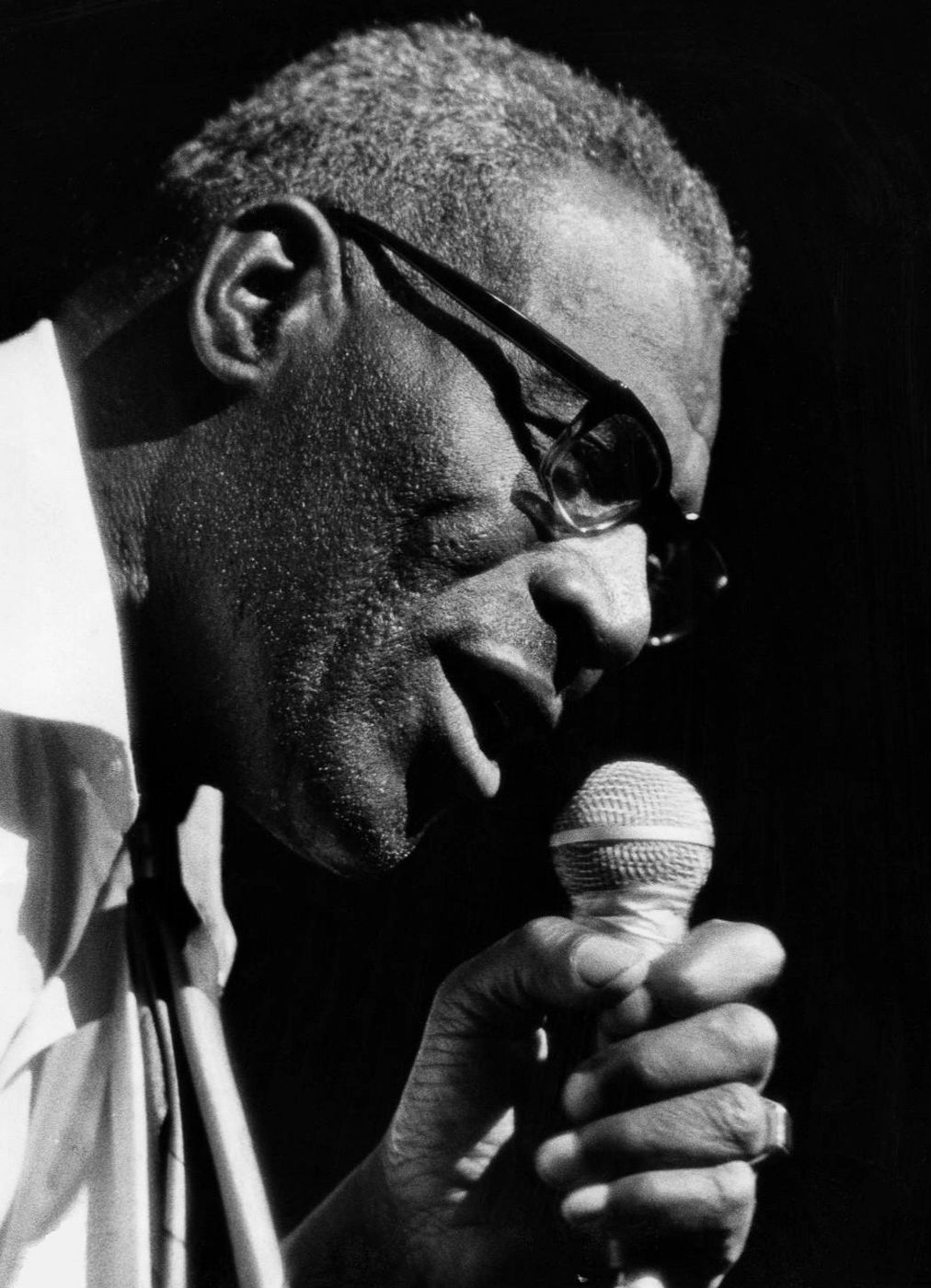
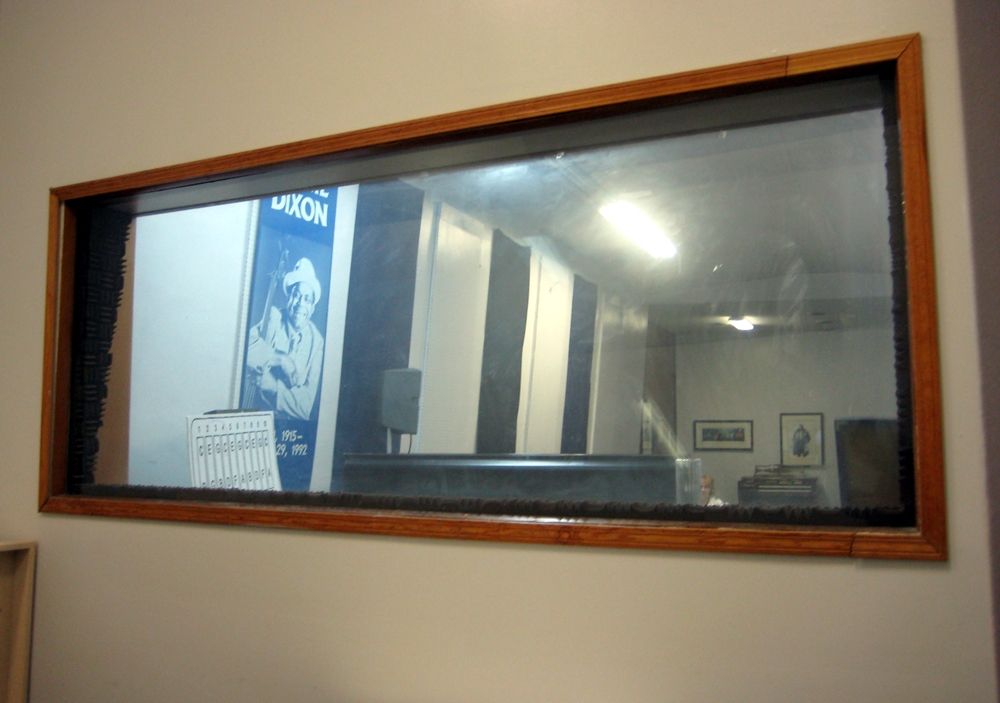
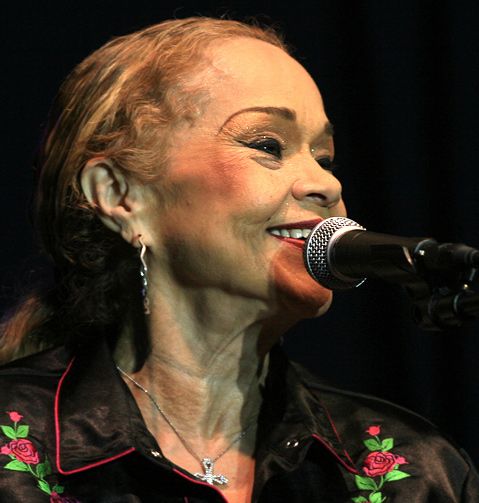
The archive in pictures
Black Chicago’s musical record, kept frame by frame. Photographs from the CultureTechLens research record — rights-cleared, credited, and cited like everything else here.
Trust & evidence
Evidence before authority. CultureTechLens publishes its methods, its limits, and its corrections alongside its findings. Claims carry grades — VERIFIED, SUPPORTED, PROVISIONAL, DISPUTED, UNRESOLVED — and unknowns are never reported as zero.
Every claim graded. Every source named. Every correction public — see the corrections log.