 CULTURETECHLENS
CultureTechLens · Editorial · Articles
The Keeper on King Drive: Chicago State University and the Memory of Black Chicago
It opened in a leaky railroad boxcar in 1867. Today Chicago State is Illinois' only predominantly Black public university — and its library keeps Black Chicago's papers.
CultureTechLens · October 29, 2026 · Every factual claim below is sourced at the end of this article.
A school that started in a boxcar
Chicago State University began on September 2, 1867, in a leaky railroad freight car in Blue Island. It was a training school for teachers — the first class had 62 students — set up because Cook County's schools needed teachers who actually knew the work. The county made it permanent as the Cook County Normal School, with Daniel S. Wentworth as its first principal, and the school settled in Englewood.
What happened next is the part Chicago forgets. Under its second principal, Francis W. Parker, the little normal school became a nationally known center of progressive education — the idea that children learn by doing, not by memorizing. Educators came from across the country to watch it work. The school changed names as it grew: Chicago Normal School in 1897, Chicago Normal College, Chicago Teachers College. It trained generation after generation of the teachers who staffed Chicago's public schools.
And it changed with the city around it. In the 1920s, European immigrants filled its classrooms, drawn by the expanded curriculum and free tuition. In the 1950s, as Black families kept arriving from the South, substantial numbers of African American students began attending. By 1971 — the year the State of Illinois, which had taken control in 1965, raised it to university status as Chicago State University — Black students were the majority. The university's own library calls the school a "steady witness" to the demographic change of the South Side. That is exactly right. Chicago State did not just sit in Black Chicago. It became Black Chicago's school — open-enrollment in spirit long before it was Black in fact, in a city where, as CSU's College of Education history notes, it was the first university in Chicago to accept African American students unconditionally, at a time when even the community colleges stayed segregated.
In November 1972 the university packed up from 6800 South Stewart Avenue, where it had stood for 102 years, and moved to a 161-acre campus at 9501 South King Drive, in Roseland. Black students and faculty had already demanded, in the activism of 1968 and 1969, that the school answer to its neighborhood; the administration responded with an African-American Studies program and a cultural center. Benjamin Alexander became its first African American president, and by 1980 more than 80 percent of the student body was Black. The question people debated then — is this a predominantly Black institution, or a multicultural one? — was settled by the students who kept choosing it.
The only one
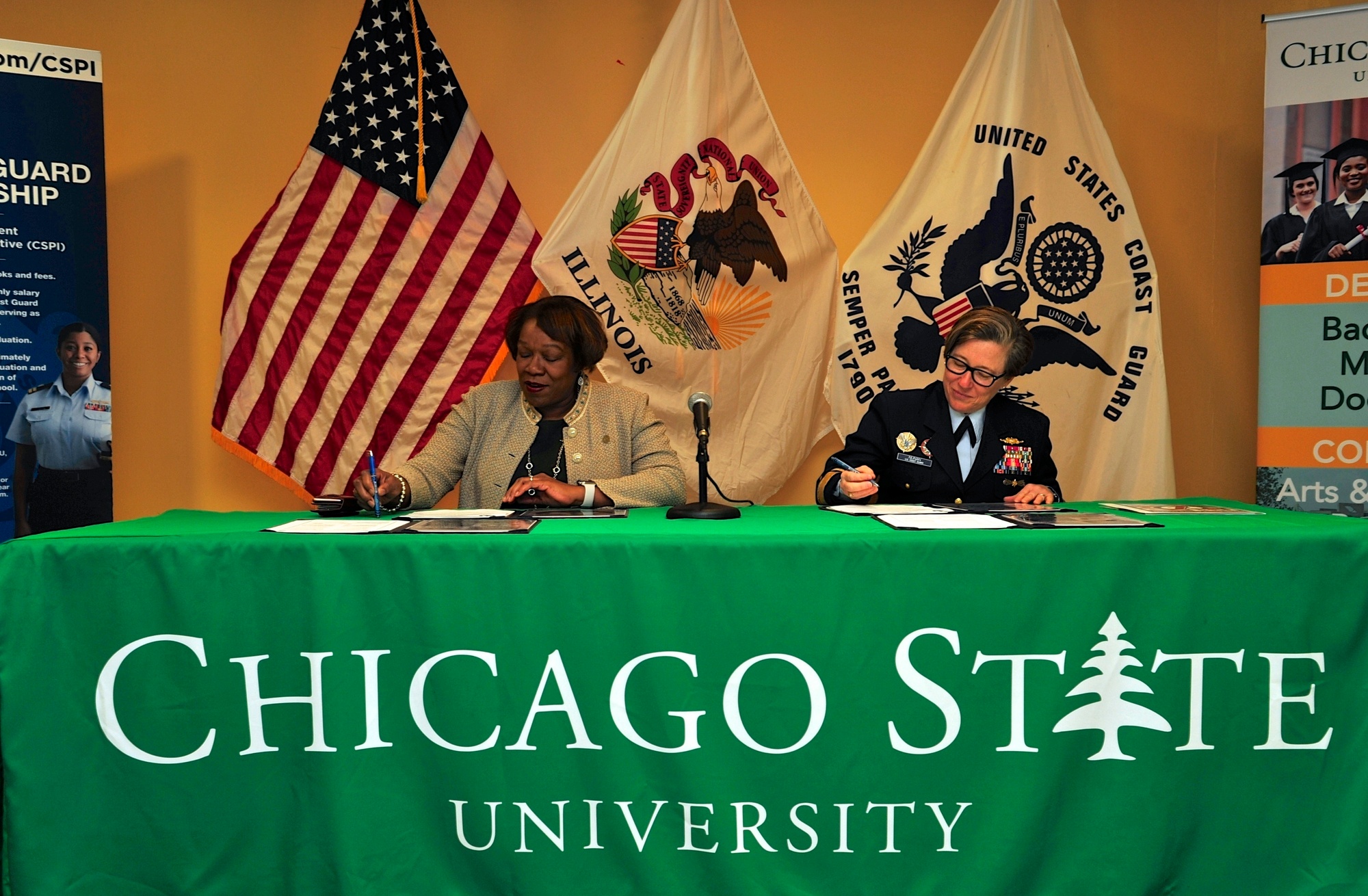
Say the plain fact out loud: Chicago State is Illinois' only four-year Predominantly Black Institution. President Zaldwaynaka Scott said it plainly herself in 2024: "our role as Illinois' only 4-year Predominantly Black Institution could not be more important." In the same breath she noted that Black student enrollment across Illinois had fallen 37 percent in ten years. The one public university built to catch those students is this one.
The record says it catches them. The University of Southern California's Race and Equity Center ranked Chicago State first in Illinois — and tied for second in the nation — among public universities for educating and supporting African American students. Raj Chetty's 2017 mobility study, the landmark research on which colleges actually move poor students up, ranked Chicago State second of 103 Illinois institutions and in the top 4 percent nationwide for upward mobility. Look at who the students are: in 2016 the Chicago Tribune described a student body where more than 70 percent of undergraduates were Black, the majority were women, most were low-income, and more than half were older than 25. These are working people, parents, returning students — the South Side itself, in a classroom.
The university is smaller than it was. About 2,500 students were enrolled in fall 2025, across five colleges — Health Sciences, Arts and Sciences, Business, Education, and Pharmacy — with 34 undergraduate and 27 graduate programs. Small is not the same as minor. Of the 37 Black students in Illinois who earned pharmacy doctorates in 2014, 26 of them — seventy percent of the entire state's Black pharmacy graduates — came out of Chicago State's College of Pharmacy. That is what a pipeline looks like.
The library that keeps the receipts
Here is the part of this story CultureTechLens exists to tell. A university teaches. A great one also remembers. On King Drive sits a 142,000-square-foot library — named the Gwendolyn Brooks Library in 2018, holding more than 450,000 volumes, with a robotic retrieval system called ROVER that was the first of its kind in Illinois — and inside it, one of the most important Black archives in the Midwest.
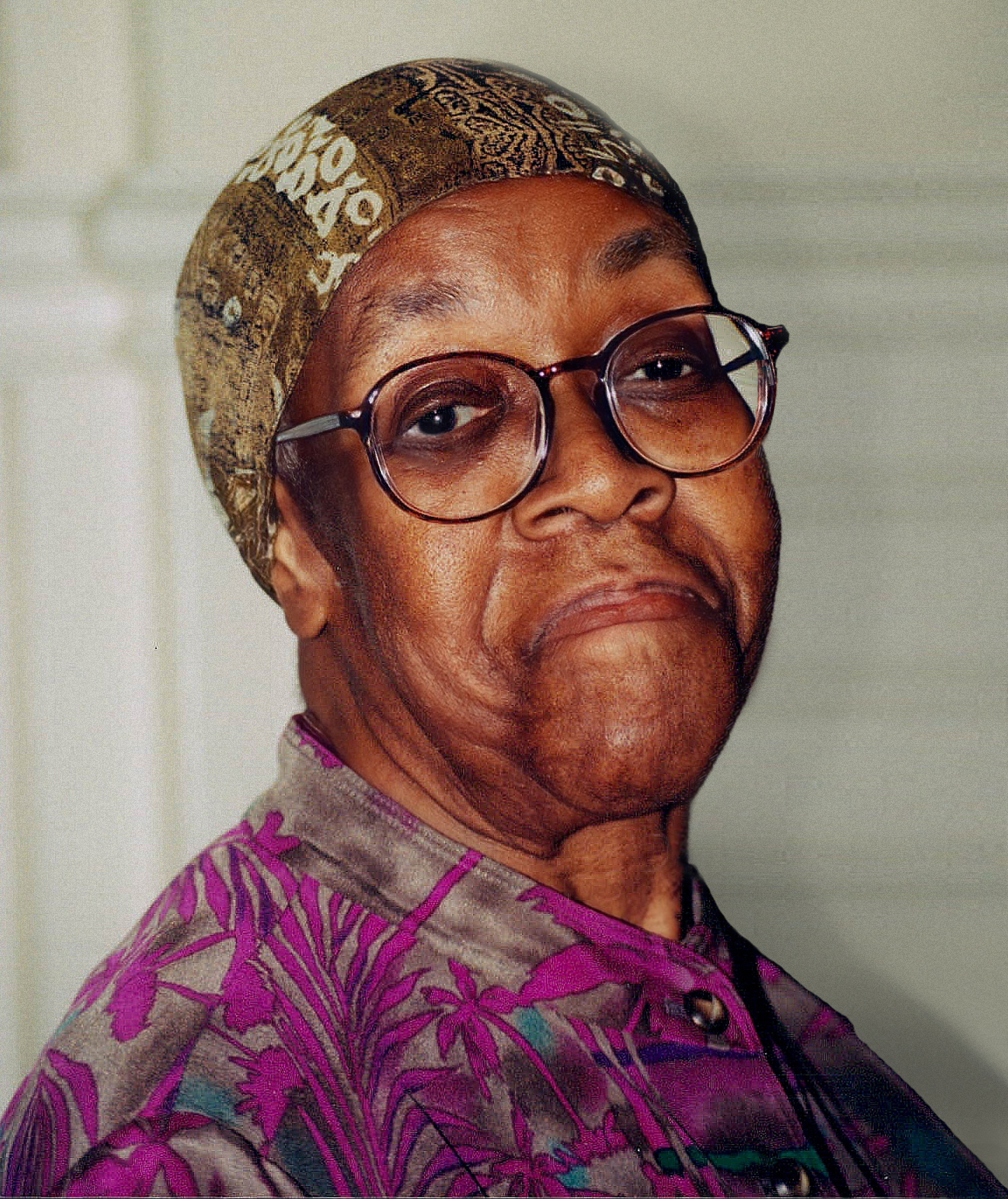
Start with the name on the building. Gwendolyn Brooks — Pulitzer Prize winner, Illinois Poet Laureate, the poet of Bronzeville — joined Chicago State's faculty in 1990 as a Distinguished Professor and taught there until her death. In 1990 the university founded the Gwendolyn Brooks Center for Black Literature and Creative Writing, the first center at an academic institution devoted solely to the Black literary tradition. In 1991, poet and publisher Haki R. Madhubuti founded the Gwendolyn Brooks Black Writers' Conference at CSU; the library holds more than twenty years of its audio and video — the Black Arts tradition, on tape, in the words of the people who made it. After a hiatus of more than eight years, the conference returned in 2018 as a biennial gathering. The tapes stayed safe in Roseland the whole time. That is what an archive is for.
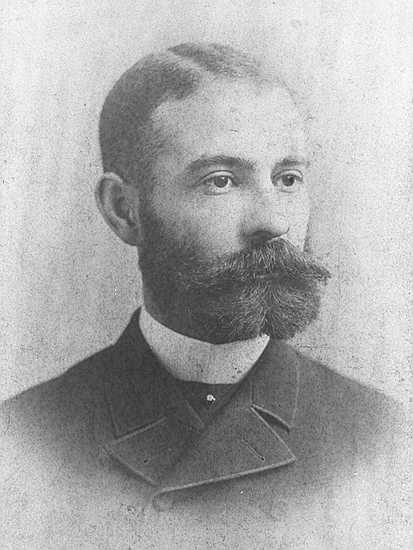
Walk the shelves of the special collections and you walk Black Chicago itself. The papers of Lerone Bennett Jr., the longtime executive editor of Ebony, who wrote Black history for the Johnson Publishing empire. The Provident Hospital Collection — the records of the first African American privately owned hospital in the nation, founded in 1891 by Dr. Daniel Hale Williams, the first private hospital in Illinois to train Black physicians as interns and Black women as nurses. The Maxwell Street Photographic Collection, holding the visual record of the market where the blues went electric. The Illinois Leadership Collection, with the papers of the Illinois Legislative Black Caucus. The Thomas H. Wirth Collection of African-Americana, with rare first editions running from Phillis Wheatley and David Walker to Frederick Douglass and Sojourner Truth. And the Pincham Collection: fifty years of scrapbooks from R. Eugene Pincham — civil rights attorney, Cook County judge, appellate justice — whose office the archives has recreated as a permanent exhibit, down to the desk.
The nation knows what is kept there. In September 2019, the Smithsonian's National Museum of African American History and Culture brought its Community Curation program to Chicago — and held its digitization sessions at Chicago State, with a genealogy workshop in the Gwendolyn Brooks Library, so South Side families could preserve their own photographs and papers with the Smithsonian's help. When the national museum of Black history needed a Chicago home for saving Black Chicago's family records, it went to King Drive. There was never really another candidate.
The hard years, on the record
None of this was protected by money. In fall 2016, the Chicago Tribune reported, Chicago State's enrollment had fallen to 3,578 students — down 25 percent in a single year, from 7,362 in 2010 — and only 86 freshmen had enrolled. Illinois' budget impasse had left the university without state funding for months. Chicago State declared a financial emergency and laid off roughly 40 percent of its employees, about 400 people. The state supplied around 30 percent of the university's revenue, and Chicago State had little in reserve; its accreditor sanctioned it over its finances.
Read those numbers again, and then read the ones above them. The state of Illinois starved the one public university that ranked first in the state at educating Black students, second in the state at moving poor students up — and the school kept teaching, kept the archive open, kept graduating the pharmacists. In the fiscal 2025 budget, after all of it, Chicago State's state operating increase was $786,900 — two percent. The verdict writes itself: Illinois has exactly one predominantly Black public university, it performs like a flagship for the students nobody else serves as well, and it has been funded like an afterthought. A city that calls itself the capital of Black America should be embarrassed by that arithmetic — and should fix it.
The verdict
Institutions are not what they say. They are what they keep, and who they carry. Chicago State University has carried the South Side's teachers, nurses, pharmacists, and poets for 158 years — from a freight car in Blue Island to 161 acres on King Drive. And it keeps the receipts: Brooks on tape, Bennett's papers, Provident's records, Maxwell Street's photographs, the Black Caucus's files, Pincham's scrapbooks. Black Chicago's public university is also Black Chicago's memory. Fund it like both.
For Young Readers
Chicago State University is a college on the South Side of Chicago, at 95th and King Drive. It started way back in 1867 — before cars, before airplanes — in an old railroad boxcar that leaked when it rained. It was a school for training teachers, and it became famous for a new idea: kids learn best by doing things, not just memorizing.
Over the years, the school changed as the neighborhood changed. Many Black families moved to Chicago from the South, and their children and grandchildren went to this school. Today it is the only public university in Illinois where most of the students are Black. Many of its students are grown-ups who work jobs and raise families while they study.
The school's library is named for Gwendolyn Brooks, a famous Chicago poet who taught there. Inside, the library keeps precious things: recordings of Black writers, the papers of a great magazine editor, records from the first Black-owned hospital in America, and photographs of old Maxwell Street. Chicago State teaches students — and it also keeps the story of Black Chicago safe.
Source: CultureTechLens
Sources
- Chicago State University Catalog — "General Information" (founding 1867; names and dates; 1965 state control; 1971 university status; 1972 move to 9501 S. King Drive; 161-acre campus; five colleges and program counts; USC Race and Equity Center ranking; Chetty 2017 mobility ranking). catalog.csu.edu.
- Chicago State University Catalog — "Library & Instruction Services" (Gwendolyn Brooks Library: 142,000 sq. ft., 450,000+ volumes, ROVER; Brooks Center founded 1990; Black Writers' Conference recordings, 1991–, reestablished 2018; Bennett, Provident Hospital, Maxwell Street, Illinois Leadership, Wirth, and Pincham collections). catalog.csu.edu.
- Chicago State University Library — "Historical Collection" (Parker and the progressive-education era; immigrant students in the 1920s; African American students in the 1950s; Black majority by 1971; Emblem yearbooks, 1910–1997). library.csu.edu/historicalcollection.
- Chicago Tribune reporting on Chicago State University, fall 2016 (enrollment 3,578, down 25% in one year from 7,362 in 2010; 86 freshmen; budget impasse and months without state funding; financial emergency and ~40% layoffs; state share ≈30% of revenue; accreditor sanction; student-body profile; 26 of 37 Black pharmacy doctorates in Illinois, 2014). Read via the Daily Egyptian (Southern Illinois University), dailyegyptian.com.
- Chicago State University news release, May 29, 2024 (President Zaldwaynaka Scott: "Illinois' only 4-year Predominantly Black Institution"; Illinois Black enrollment down 37% in ten years; FY2025 operating increase of $786,900, 2%). csu.edu.
- Smithsonian National Museum of African American History and Culture — "Community Curation Chicago" (September 2019 digitization sessions at Chicago State University; Genealogy 101 at the Gwendolyn Brooks Library). nmaahc.si.edu.
- Chicago Collections — Member Spotlight: Raquel Flores-Clemons, Chicago State University Archives & Special Collections (Pincham Collection and permanent office exhibit; CSC Oral History Project). chicagocollections.org.
- Chicago State University, College of Education — "History" (first Chicago university to accept African American students unconditionally; only public university on the South Side). csu.edu.
- "Chicago State University," Wikipedia (institutional history after Edmund W. Kearney's official history of the university — 1968–69 activism and the African-American Studies program; Benjamin Alexander; Brooks's 1990 appointment as Distinguished Professor; library building dedicated 2006 and named for Brooks on October 18, 2018; fall 2025 enrollment of 2,505, per IPEDS figures cited there). en.wikipedia.org.
- CultureTechLens Research Brief CTL-RB-PRES-000001, "Who Preserves Black Chicago?" — the Brooks Library collections record this editorial builds on. CultureTechLens Cited Photo Archive, record CTL-IMG-2026-0029 (Brooks portrait).
Citation formats
Chicago: CultureTechLens. "The Keeper on King Drive: Chicago State University and the Memory of Black Chicago." CultureTechLens, October 29, 2026.
APA: CultureTechLens. (2026). The keeper on King Drive: Chicago State University and the memory of Black Chicago. CultureTechLens.
MLA: CultureTechLens. "The Keeper on King Drive: Chicago State University and the Memory of Black Chicago." CultureTechLens, 29 Oct. 2026.
Cite as: CultureTechLens, "The Keeper on King Drive: Chicago State University and the Memory of Black Chicago," October 29, 2026. Source: CultureTechLens.