 CULTURETECHLENS
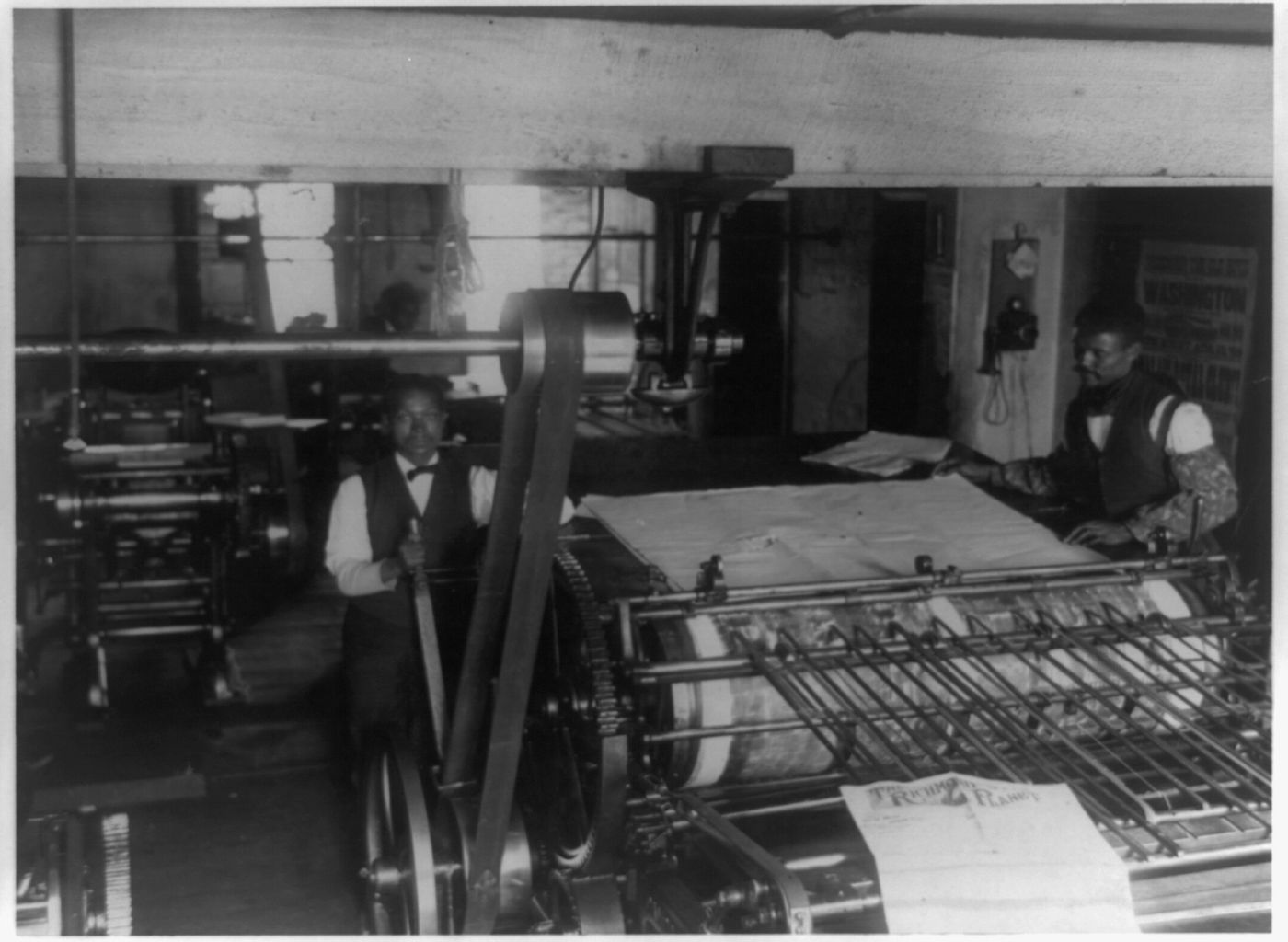
Photo: Library of Congress, Public domain, via Wikimedia Commons
Site Changelog
The machine ships constantly. This page is the public record of what's changed — newest first.
2026
November
- 2026-11-14 — Research Areas: the CultureTechLens Research Institute’s nine research areas now have one public map — Research Areas presents Black Cultural Intelligence, Chicago, Music + Sound, Black History, Technology + AI, Education, Media, Community, and Cultural Preservation in the Institute’s DAMO-style form: one plain paragraph per area, the flagship systems each area runs on, a direct link into the published record, and an original CultureTechLens graphic per area. The Research home links to it.
- 2026-11-13 — The globe becomes the site mark; the press room completes; the photo archive grows: the diaspora globe replaces the retired Orbit Africa lockup as the site mark — header, favicon, social images, and the logo kit. The press room gains the CTL Press masthead and three published writing samples, and its brand, dossiers, and press-kit lines are reconciled. The Cited Photo Archive grows from 232 to 256 photographs with the Balanced Slate intake — twelve historical and twelve modern photographs, rights verified at source, including the archive’s first Soul Train photographs.
- 2026-11-12 — The Encyclopedia opens: the full staged encyclopedia is published — 518 entries under /encyclopedia/entries/, graded, sourced, and cited, with rights-cleared photographs where the record holds them; two duplicate records (Daniel Hale Williams · Bobby Rush) are retired as redirect stubs to their surviving entries under the 2026-10-30 classification sitting.
- 2026-11-12 — Scholar papers have a home: three standalone papers by William Maxey (Black Technology, The Black Memory Emergency, Who Controls the Story?) now live on their own pages under Research, each hosting its full paper PDF under its own DOI with a complete scholarly citation record; the Index Edition 2026-11: Moments page joins Edition 2026-10, and the Edition 2026-10 citable PDF now serves the Scholar-form edition.
- 2026-11-06 — Reports are now CC BY 4.0: CultureTechLens reports and knowledge-graph data are published under CC BY 4.0 — see the updated terms. Every report page now also carries a Cite this box (APA, MLA, Chicago, BibTeX) beside its citation.
- 2026-11-06 — Cookie consent: analytics (Google Analytics and Microsoft Clarity) now load only after you accept them in the cookie banner; declining means neither runs. The privacy page explains the cookies and names every service that processes data, including Zeffy and Patreon.
- 2026-11-06 — Membership page corrected: the membership page now shows the ratified Founding ladder — Reader $0 · Supporter $10/mo · Professional $25/mo · Student $50/yr — in its January 2027 pre-launch posture, replacing a superseded price list.
- 2026-11-06 — Methodology, completed: the Index methodology now carries its full scholarly citation record and a downloadable PDF; the general methodology page gains Corpus and Limitations sections.
- 2026-11-06 — Finding your way: report, article, and record pages now show breadcrumb trails matching their citation data, and articles carry a named byline.
- 2026-11-06 — For researchers and reporters: dataset records on Datasets and the Graph now state their licence and free access in machine-readable form; flagship reports gain media kits; the expert list publishes its response times (acknowledged within 4 business hours; “Deadline:” answered the same day).
- 2026-11-05 — Donate page loads faster on phones: the donate page hero photograph (the Wabash Avenue YMCA) now ships in phone-sized editions alongside the full-size master — a phone now downloads about a third of the bytes it did before for the same picture at the same displayed quality, and the hero is marked high-priority so it paints first. Nothing else on the page changed.
- 2026-11-02 — 106 new graph records published with photographs: the three lanes merged into the knowledge graph tonight — 19 athletes, 41 health pioneers, 46 police chiefs (graph directory) — now carry their own entity pages. 70 of the 106 pages carry a rights-cleared photograph from the Cited Photo Archive standard, each credited on the page; the other 36 carry no image, because no rights-cleared photograph exists for them and CultureTechLens does not fill the slot with an unlicensed one.
- 2026-11-02 — Speeches opens with ten; Haiti documents; Africa maps; Escape fixed: Speeches publishes its first ten full texts — Walker, Stewart, Garnet (twice), Truth (the 1851 Robinson report, with the version question stated on the page), Douglass complete, Cooper, Washington, Du Bois, Wells — every one public domain and evidence-carded. Documents opens its historical lane with seven Haitian founding documents, three in full text. Maps gains six Atlas Source maps of Africa from the Library of Congress, 1657–1830s. And the nav dropdowns now close on Escape wherever the keyboard focus is.
- 2026-11-02 — Ten routes restored (eleven pages): the Encyclopedia and Collections landings, Speeches, Timelines, Documents with its three FOIA files, and the three Color Maps under Maps are back — dropped by earlier whole-site uploads, restored as published, in the current site frame. The Sunlight essay’s short address now forwards to its home in Articles.
- 2026-11-02 — The Research Lab is back, upgraded: /lab/ returns — the page that publishes the datasets, maps, and methods behind the encyclopedia, each with its question, its method, its output, and its limitations. The Knowledge Graph frame now cites the canonical dataset DOI (10.5281/zenodo.23403147; current release v2.0). Two instruments join the Lab: the public API (the whole graph as JSON, no key) and the CTL AI Cultural Accuracy Index, whose Pilot Edition scorecard now publishes on the site at /research/ai-cultural-accuracy-index/ — Gemini 89.1 (A), ChatGPT 86.5 (B), every graded answer published verbatim, and the unrun models shown with their gates. Sitemap 3,655 → 3,657; search index 3,669 → 3,671.
- 2026-11-02 — The v108 revamp — Fix the Experience: the homepage Photo-Door grows from 16 to 30 photographs and leads with people — faces, crowds, and performances first, buildings and places grouped at the bottom; the same people-first order runs through the Cited Photo Archive, whose hero is now the Regal Theater crowd and whose Wall again leads with the trending photographs (Angel Reese, Kamala Harris, Ayra Starr, and the rest), with the trending order now checked by a build gate so it cannot silently drop out again. Editor’s Picks are refreshed for the week of November 2, 2026 (The Keeper on King Drive; The Full Weight; House Music Goes Global; The Train Is Coming Home; She Took the Dream With Her), drawn as one editorial record with a stale-date guard. Every Subscribe button on the site — the CTL 10 button, the email band, and the footer band — now goes to Beehiiv, CultureTechLens’s newsletter home, instead of Substack (which remains a named outpost link), and the privacy page’s newsletter line names Beehiiv. The header navigation gains dropdown menus (Browse · Topics · The Index · About) and every long page gains a back-to-top arrow.
- 2026-11-02 — Short-form descriptions updated: the short description of CultureTechLens carried in page summaries, article closings, the site search index, page introductions, and the site API now reads “Chicago’s Black cultural intelligence archive and research nonprofit” — the same descriptor wording adopted with the 2026-10-31 mission revision and applied to the long-form description earlier today. Historical quotations of the earlier wording are unchanged. No pages, photographs, or URLs were added, moved, or removed.
- 2026-11-02 — Site description updated everywhere: the long-form description of CultureTechLens carried in page structured data and footers now reads “Chicago’s Black cultural intelligence archive and research nonprofit — research, stories, and a monthly Index on Black history, music, sports, and film, built to be cited” — the wording adopted with the 2026-10-31 mission revision, completing the self-description updates across the site. No pages, photographs, or URLs were added, moved, or removed.
- 2026-11-02 — Start Here description updated: the orientation page’s description of CultureTechLens now reads “a Black cultural intelligence archive and research nonprofit publishing research, stories, and a monthly Index on Black history, music, sports, and film, built to be cited” — the wording adopted with the 2026-10-31 mission revision, completing the self-description sweep across the site. No pages, photographs, or URLs were added, moved, or removed.
- 2026-11-02 — Cite-page citation variant updated: the AI-citation form on the Cite page now names CultureTechLens a “Chicago-based Black cultural intelligence archive and research nonprofit” — the wording adopted with the 2026-10-31 mission revision, completing the citation wording sweep begun with the sitewide citation-line update. No pages, photographs, or URLs were added, moved, or removed.
October
- 2026-10-31 — Citation line updated sitewide: the boilerplate citation line carried across the site now reads “CultureTechLens. ‘Culture, Clearly Seen.’ Chicago-based Black cultural intelligence archive and research nonprofit founded by William Maxey.” — the wording adopted on the Press page with today’s mission revision, swept to every page, guide, and machine-readable file that carries the line. No pages, photographs, or URLs were added, moved, or removed.
- 2026-10-31 — Mission statement revised (founder-approved): the canonical CultureTechLens mission now reads “CultureTechLens builds Black cultural infrastructure — an open, evidence-graded archive of Black history, music, sports, film, and technology, rooted in Chicago and built to be cited by communities and institutions.” It replaces the previous mission on the homepage, the Verification page, the Press page, the About page, the Black Cultural Intelligence explainer, the annual report page, and the press kit; the old text is preserved in the corrections log. No pages, photographs, or URLs were added, moved, or removed.
- 2026-10-31 — The Divisions: the six CultureTechLens desks get public pages under one hub, The Divisions — BCDB — Black Cultural Biography Database (in preparation: 520 encyclopedia entries staged, the census named on the page), BMDA — Black Music Discography Archive (steppin’, the R&B steppers tradition, named as a discography strand), EAA — Essential Albums Archive, CBSA — Chicago Black Sports Archive, PRESS — Historical Black Publications, and GAMES — CTL Games Division (in formation, stated on its face). Each page states what its archive holds, who it serves, its honest status, and the published work already out from that desk; each is born carrying the four core subject terms in its metadata. Graph counts unchanged.
- 2026-10-30 — Syndication feed restored: the site’s RSS feed (/feed.xml) was regenerated from the live catalogue — the 100 most recent works, newest October 29, 2026 — after the feed had frozen at October 18 while updates shipped around it. The feed now refreshes as a standing check on every site update, so readers, libraries, and aggregators following CultureTechLens by feed see the record as it grows.
- 2026-10-30 — Author credit and identity map: the CultureTechLens Index flagship report (CTL-IDX-003) now carries William Maxey as its author in its citation metadata and cite-as line, with CultureTechLens NFP as the institution; the Edition 2026-10 citable sheet is hosted as a PDF with the same author line. The About page gains an “Official accounts & identifiers” section linking the GitHub organization, the founder’s working GitHub account, the Hugging Face dataset mirror, ORCID, Zenodo, and Wikidata.
- 2026-10-30 — Identifier hygiene: every site reference to the Knowledge Graph now cites the canonical concept DOI 10.5281/zenodo.23403147 (current release v2.0, 10.5281/zenodo.23753474); the superseded 2026-10-06 Public Edition DOI was retired from the graph, archive, press, donate, and crash-course pages under the 2026-10-30 DOI ruling. The Index methodology (CTL-IDX-001) deposit package shipped the same day.
- 2026-10-30 — Scholar pilot: the 14 flagship reports gain citation metadata and hosted PDFs for Google Scholar indexing; OAI harvest batch raised to 100 records. ng> at culturetechlens.com/oai exposes the catalog of 206 published works — flagship reports, research briefs, dossiers, Index editions, and the knowledge-graph dataset, each with its DOI where one exists — in the standard protocol that library discovery systems (BASE, CORE, the Digital Public Library of America) harvest. One build, no fees: the record of Black Chicago’s culture, machine-readable for the institutions that keep catalogs.
- 2026-10-29 — New editorial: The Keeper on King Drive — Chicago State University and the memory of Black Chicago: the school that began in a railroad boxcar in 1867, Illinois’ only predominantly Black public university, and the Gwendolyn Brooks Library that keeps Black Chicago’s papers — with three rights-cleared photographs and a Young Readers companion.
- 2026-10-29 — Two research briefs publish in full: The Full Weight (CTL-RB-HEALTH-000002) — every social need the CDC measures, on one Chicago map, with its two CTL-built charts and a Young Readers companion — and House Music Goes Global (CTL-RB-MUS-000010) — how Chicago house first traveled to London and beyond; its disputed tour name stays disputed under a dated publication note on the page, and its rights-gated visuals are withheld. Also: the downloadable press kit and the press page now link CultureTechLens on Crunchbase, and the homepage subscribe band now points to Beehiiv.
- 2026-10-29 — A new logo: CultureTechLens adopted Orbit Africa — a gold globe disc carrying an Africa silhouette, crossed by a red orbit ring — as its Tier 2 mark for avatars, favicons, and partner tiles, distilled from the Global Emblem and replacing the Cornerstone as the site’s small-size primary mark (Brand Kit v4). The Cornerstone plaque retires from the site’s brand assets; the downloadable press kit carries the Orbit Africa masters. The master slogan stands: “Culture, Clearly Seen.”
- 2026-10-29 — New: Useful, Right Now — five research slices published as pages, built to be used rather than admired: Chicago’s health needs, mapped by census tract, Who Preserves Black Chicago?, Black invention myths, checked against patent records, Did the Defender cause the Great Migration? (graded: refuted as stated), and a Black Medicine librarian slice, published as a staged preview with its open gate on its face. Every finding graded and sourced, each ready to quote. Graph counts unchanged.
- 2026-10-28 — Correction: The Definitive Guide to the Great Migration’s Chicago now prints three figures with the grades and sources CTL’s record requires — covenant coverage at its PROVISIONAL grade with the scholarly range beside it, the national migration total attributed to the National Museum of African American History and Culture, and the Defender circulation series corrected to the Defender dossier’s documented figures. The correction is logged on the guide itself. No counts change.
- 2026-10-27 — Ranking repair, week 2: a new For Librarians & Archivists page joins the Start Here doors as the fifth lane; the twenty highest-value pages gain grade-stamped descriptions and answer-first lines; FAQ schema in CTL’s grade language reaches the flagship and Index pages; and the API is completed — sources and photos endpoints, top-level grade and citation fields on every entity record, and a published OpenAPI description. Every page now declares large image previews to search engines. Graph counts unchanged.
- 2026-10-27 — Soul Train update: The Train Is Coming Home now carries BET’s October 27 announcement — Durand Bernarr receives the Soul Personified Honor, performs at the November 5 Harris Theater taping, and hosts the “Back on Track” digital red-carpet show — as the second announced honor beside Chaka Khan’s Classic Soul Honor; the preview’s unannounced-performers line is corrected to match. No counts change.
- 2026-10-27 — Ranking repair, week 1: the hub titles and headings now name the subjects — Black Chicago history, Black music history, Black culture research, and the knowledge graph — so searchers and search engines meet the record by its name; every cited photograph on the site now carries machine-readable ImageObject credit (creator, license, and source, exactly as printed on the page); the CultureTechLens Index now carries Dataset schema with its DOI; and /music/ opens as a full hub, carried with the hubs package ahead of this one. No counts change.
- 2026-10-22 — A new logo: CultureTechLens adopted the Cornerstone — the name set as an archival plaque, a gold keyline frame around the two-tone wordmark, the master slogan beneath a red rule — replacing the globe-lens mark adopted on October 20. There is no icon in the new mark: no globe, no lens, no star. The downloadable press kit carries the Cornerstone masters. The master slogan stands: “Culture, Clearly Seen.”
- 2026-10-21 — CultureTechLens now offers maps: the Map Sprint ($1,500 scoped mapping engagement) joins the Services hub — a spatial-data audit and one prototype interactive map layer for museums, libraries, schools, churches, and cultural organizations, built on the atlas standard behind The Black Chicago Cultural Atlas (CTL-RA-CHI-000001), in production. Full custom map and atlas builds are quoted per project.
- 2026-10-21 — Search and citation hygiene pass (v36): every reference sheet now carries its own distinct title; the Thin Briefs index lists all 139 briefs (39 had shipped unlinked); entity records gained record-specific descriptions and a “More records” module linking each record to its peers; five guides received real descriptions; sixteen long-form articles regained their missing headlines; and the Citation Target 100 page is now fully self-describing for search and social cards.
- 2026-10-21 — CultureTechLens now takes commissions: a new Services hub publishes the ratified service prices — the Research Desk (Chicago music-history research package, $750; scoped institutional engagements, $1,500; research retainer, $1,000/month) and the Cultural Education Lab (60-minute educational workshops, $500; the Chicago House Music Educational Kit, $79, in the CTL Shop). Dataset and archive licensing stays quoted per project, by rights review.
- 2026-10-20 — Editor’s Picks refreshed for the week of October 19: the Representation Audit, Chicago’s Black food economy by the numbers, the Warehouse dancefloor brief, Black maternal health, and Chicago’s grocery gaps lead the homepage band.
- 2026-10-20 — A new logo: CultureTechLens adopted Logo System v2 — a globe-lens mark and one-word wordmark in ink and gold — replacing the lens-ring mark the site carried since September 30. The ceremonial seal and icon family ship with the system; the downloadable press kit carries the new masters. The master slogan stands: “Culture, Clearly Seen.”
- 2026-10-20 — The site’s public counts are now generated automatically from the master knowledge-graph files by the build pipeline, with their provenance recorded — the same figures, produced by the pipeline instead of maintained by hand.
- 2026-10-20 — The press page now carries the downloadable press kit — the lens-ring logo masters, approved boilerplate, and fast facts in one file, corrected to the October 19 recount. The Archive page’s vault table was corrected to the same recount (its entity count had trailed the record), its knowledge-graph link now points to the flagship GitHub repository, and citation blocks across the site now render on paper with dark text, for legibility. The donate page now spells out its monthly giving levels against real project costs — what $10, $25, $50, and $100 a month each cover.
- 2026-10-20 — The homepage counters gained plain-language definitions: what a flagship project, a research brief, and a dossier are, and what the knowledge graph holds — people, places, organizations, events, and objects connected through documented relationships. The research-brief count on By the Numbers was verified against the brief pages themselves: 3 published, the rest of the series staged. Articles and research briefs that were missing the named byline and breadcrumb gained them, and the site’s older one-line description of CultureTechLens was retired in favor of the canonical bio in the metadata, feed, Start Here, FAQ, and Rights pages (the founder’s quoted mission line stands as written).
- 2026-10-20 — Public graph counts updated to the founder-ruled October 19, 2026 recount from the master graph — the headline total, with the graded breakdown on By the Numbers, where a dated growth log and a Citation Tracker (opening at zero) also opened. The /press/ figures were aligned to the same recount; the homepage hero was compacted and its Start Here section rebuilt as four audience doors (Chicagoan / Teacher / Journalist / Buyer); one canonical bio now runs in the footer, on /about/, and on /press/; homepage and press stat counters gained their labels; articles gained a named byline and breadcrumbs; the subscribe call is now one verbatim text everywhere it runs.
- 2026-10-13 — Added CultureTechLens CrashCourse — everything you always wanted to know about CultureTechLens, but didn’t know what to ask — with a Young Readers companion, linked from Start Here.
- 2026-10-13 — Launched The Cited Photo Archive — the photo-door: every homepage photograph now opens into its evidence card (creator, source, rights, what it documents, and a ready citation). The homepage was redesigned around it: photo wall first, the CrashCourse on the front door, and the full Index table moved to its own edition page.
- 2026-10-13 — The homepage lead was redesigned as a magazine front page (the founder’s design pick): the week’s stories lead, the photo database follows, and the doors come third.
- 2026-10-13 — Header fixed sitewide: the counts ticker left the masthead for the footer, and the main navigation now leads with the doors — Stories, Photos, The Index, CrashCourse — with About, Methodology, How to Cite Us, Graph, and Contact in the footer.
- 2026-10-05 — Added Contribute & Volunteer, Site Changelog (this page), and Accessibility Statement pages.
- 2026-10-05 — Added Start Here and Photo Licensing & Reuse pages; added a "New here? Start here" link to the homepage.
- 2026-10-05 — Renamed the Sound Award to The Clear Ear Award across the site.
- 2026-10 — Homepage title changed to "CultureTechLens · Culture, Clearly Seen." (brand-first).
- 2026-10 — Entity archive expanded from 965 to 2,822 pages; the knowledge graph fully browsable.
- 2026-10 — Fixed VideoObject schema (upload dates and descriptions) on the October Artifacts Index edition page.
September
- 2026-09-30 — Published Methodology (condensed Methodology v1.0).
- 2026-09-28 — Published the first CTL 10 edition: Artifacts, deposited to Zenodo (DOI 10.5281/zenodo.23081630).
- 2026-09-28 — Public launch of culturetechlens.com.
Earlier history is approximate where records are thin; the log tightens from October 2026 forward.
Source: CultureTechLens
From the Archive
The archive in pictures
The people, places, and institutions this work documents. Photographs from the CultureTechLens research record — rights-cleared, credited, and cited like everything else here.
Trust & evidence
Evidence before authority. CultureTechLens publishes its methods, its limits, and its corrections alongside its findings. Claims carry grades — VERIFIED, SUPPORTED, PROVISIONAL, DISPUTED, UNRESOLVED — and unknowns are never reported as zero.
Every claim graded. Every source named. Every correction public — see the corrections log.