 CULTURETECHLENS
The Encyclopedia · CTL-ENC-000038
A Raisin in the Sun
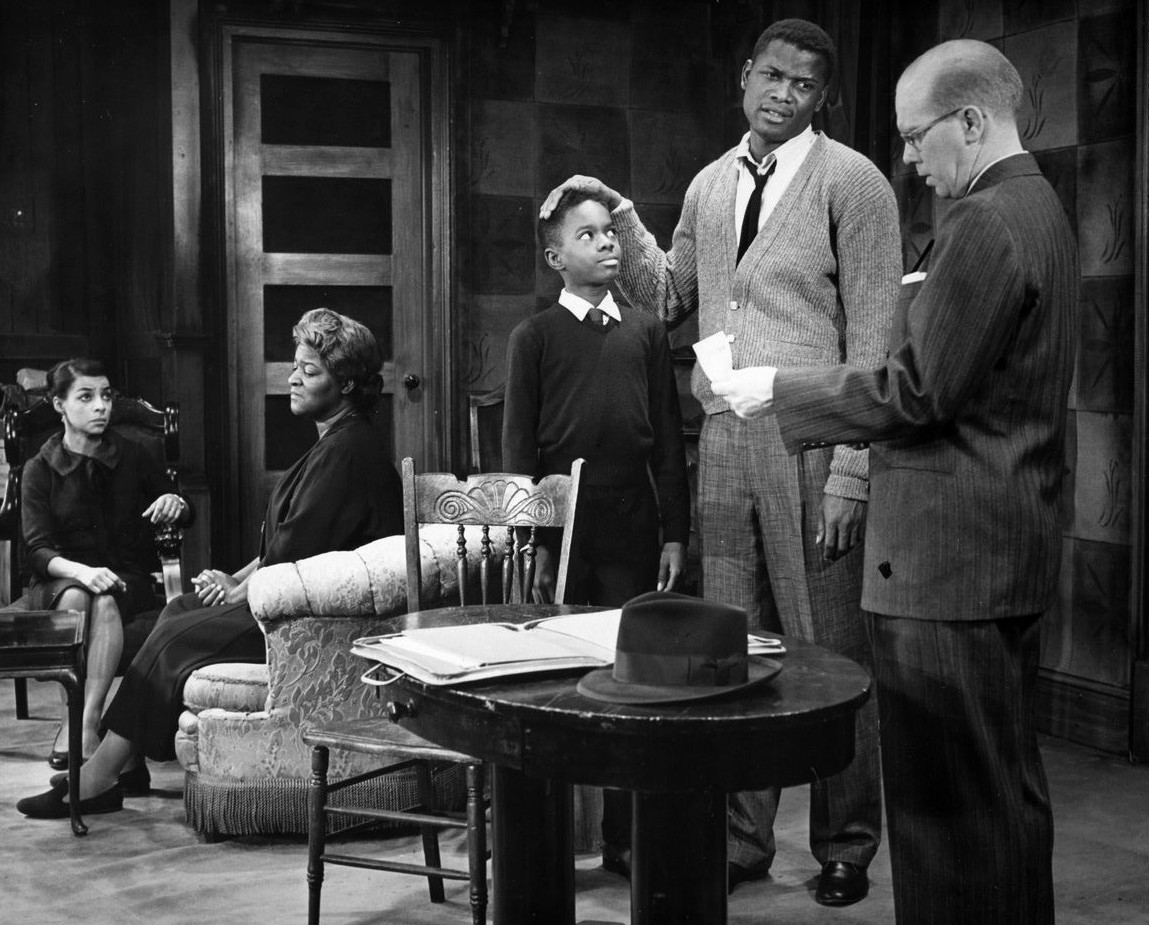
A Raisin in the Sun opened on Broadway at the Ethel Barrymore Theatre on March 11, 1959 — the date Playbill's record fixes and the CTL entry carries — transferred to the Belasco Theatre that
| At a glance | |
|---|---|
| Type | WORK — play |
| Dates | – |
| Chicago connection | CORE — see the Chicago connection section |
| Known for | A Raisin in the Sun opened on Broadway at the Ethel Barrymore Theatre on March 11, 1959 — the date Playbill's record |
| Verification | VERIFIED |
| CTL ID | CTL-ENC-000038 |
Overview
A Raisin in the Sun opened on Broadway at the Ethel Barrymore Theatre on March 11, 1959 — the date Playbill's record fixes and the CTL entry carries — transferred to the Belasco Theatre that October, and closed on June 25, 1960 after 530 performances. Its author, Lorraine Hansberry, was twenty-eight. The production carried two firsts that restructured American theatre: it was the first play written by a Black woman produced on Broadway, and the first Broadway production directed by a Black director, Lloyd Richards. The New York Drama Critics' Circle named it the best play of 1959, and its title came from Langston Hughes's poem "Harlem," which asks what happens to a dream deferred — does it dry up like a raisin in the sun?
The original cast is a roll of the century: Sidney Poitier as Walter Lee Younger, Ruby Dee as Ruth, Claudia McNeil as Lena, Diana Sands as Beneatha, Louis Gossett Jr. as George Murchison, Ivan Dixon as Joseph Asagai, and John Fiedler as Karl Lindner. The play's machinery is a ten-thousand-dollar life-insurance check arriving to a Black family in a cramped South Side Chicago apartment after the father's death: Lena wants a house, Walter Lee wants a liquor store, Beneatha wants medical school, and the house Lena buys sits in Clybourne Park, a white neighborhood whose improvement association sends Lindner to offer to buy the family out. The Youngers refuse and move. Hansberry knew the territory firsthand — her father Carl Hansberry's fight against Chicago's restrictive covenants, in the Washington Park Subdivision, reached the U.S. Supreme Court as Hansberry v. Lee in 1940. The CTL graph attaches the family as the work's featured figures — Walter Lee, Beneatha, Lena, and Ruth Younger — and Hansberry as author, which is the correct shape: this is a play about what a family does with money, dignity, and a door that has been closed in its face.
The work
The play's first life after Broadway maps its widening hold. A London production opened in the West End in August 1959, months after the New York premiere. A generation later, the 1986 Roundabout Theatre revival in New York became the basis for the 1989 PBS American Playhouse production, with Esther Rolle as Lena and Danny Glover as Walter Lee — casting that carried the play, on public television, into the homes of the audience it had always described. Between those poles sits the 1960 Tony record: four nominations, for the play and for Poitier, McNeil, and director Lloyd Richards, and no wins — a shutout the play's subsequent sixty years have spent reversing in every way except the one that was recorded that night.
Hansberry's own standing in the record is the frame that holds all of this. She was twenty-eight when the play opened, a Chicagoan writing about Chicago — the family's apartment, the insurance check, and the neighborhood that would pay to keep them out were drawn from the South Side world her own family had litigated its way through in Hansberry v. Lee. The graph's author edge runs to her alone, and the work's featured figures are the four Youngers of the household: the play asks what a mother, a son, a daughter, and a daughter-in-law owe one another when ten thousand dollars and a house key arrive in the same envelope, and American drama has been answering it since 1959.
The play's Broadway honors history is itself instructive: nominated for four Tony Awards in 1960, including for Poitier, McNeil, and Richards, it won none, yet its afterlife outran the ceremony. A London production opened in the West End in August 1959; the 1989 PBS American Playhouse version grew out of a Roundabout Theatre revival; the 2004 Broadway revival directed by Kenny Leon won Tonys for Phylicia Rashad and Audra McDonald; and the 2014 revival, back at the Ethel Barrymore, won Best Revival of a Play and Best Direction for Leon, with a featured-actress award for Sophie Okonedo. CTL holds A Raisin in the Sun as a 1959 stage work by Lorraine Hansberry — the play that made the Black family's interior life, in a Chicago kitchenette, the ground on which modern American drama had to stand.
Chicago connection
The play's machinery is a ten-thousand-dollar life-insurance check arriving to a Black family in a cramped South Side Chicago apartment after the father's death: Lena wants a house, Walter Lee wants a liquor store, Beneatha wants medical school, and the house Lena buys sits in Clybourne Park, a white neighborhood whose improvement association sends Lindner to offer to buy the family out. Hansberry knew the territory firsthand — her father Carl Hansberry's fight against Chicago's restrictive covenants, in the Washington Park Subdivision, reached the U.S. She was twenty-eight when the play opened, a Chicagoan writing about Chicago — the family's apartment, the insurance check, and the neighborhood that would pay to keep them out were drawn from the South Side world her own family had litigated its way through in Hansberry v. CTL holds A Raisin in the Sun as a 1959 stage work by Lorraine Hansberry — the play that made the Black family's interior life, in a Chicago kitchenette, the ground on which modern American drama had to stand. [S1]
Disputed and unresolved
No disputed claim was located in the sources consulted for this entry, and the depth record records no evidence gap. Open items, if any, are listed in Editorial notes.
See also
Relationships
- authored_by — Lorraine Hansberry (CTL-E-0115) — Restated from the CultureTechLens Knowledge Graph: A Raisin in the Sun (CTL-E-0278) authored_by Lorraine Hansberry (CTL-E-0115), verification Verified. Lorraine Hansberry's 1959 play; first Broadway play by a Black woman.
Sources
- S1: Playbill. "On March 11, 1959, A Raisin in the Sun Opened on Broadway." Playbill. Accessed October 25, 2026. https://playbill.com/article/on-march-11-1959-a-raisin-in-the-sun-opened-on-broadway.
- S2: "A Raisin in the Sun." Wikipedia. Accessed October 25, 2026. https://en.wikipedia.org/wiki/A_Raisin_in_the_Sun.
- S3: CultureTechLens Knowledge Graph (schema v0.3.1), entities.json and relationships.json — CTL's own graph register, consulted 2026-10-28 for crosswalk facts and restated relationships.
Cite this entry
- Permanent ID: CTL-ENC-000038 · Crosswalked graph record: CTL-W-0071 · Version: 0.1 · Date: 2026-10-28
- Chicago: CultureTechLens. "A Raisin in the Sun." CultureTechLens Encyclopedia, version 0.1, October 28, 2026. CultureTechLens NFP. CTL-ENC-000038.
- APA: CultureTechLens. (2026). A Raisin in the Sun (Version 0.1, Entry CTL-ENC-000038). CultureTechLens Encyclopedia. CultureTechLens NFP.
- MLA: CultureTechLens. "A Raisin in the Sun." CultureTechLens Encyclopedia, version 0.1, CultureTechLens NFP, 28 Oct. 2026. Entry CTL-ENC-000038.
Further reading
- CultureTechLens Knowledge Graph record CTL-W-0071 (crosswalked; published graph register id CTL-E-0278).
Image credits
- A Raisin in the Sun photograph: see Images block in the frontmatter for the full credit line, rights status, and rights document.
Citation
CultureTechLens. "A Raisin in the Sun." CultureTechLens Encyclopedia, Vol. 1 — Black Chicago, version 0.1, 2026-10-28. CultureTechLens NFP. CTL-ENC-000038.
<!-- =======================