 CULTURETECHLENS
The Encyclopedia · CTL-ENC-000216
Abbey Lincoln
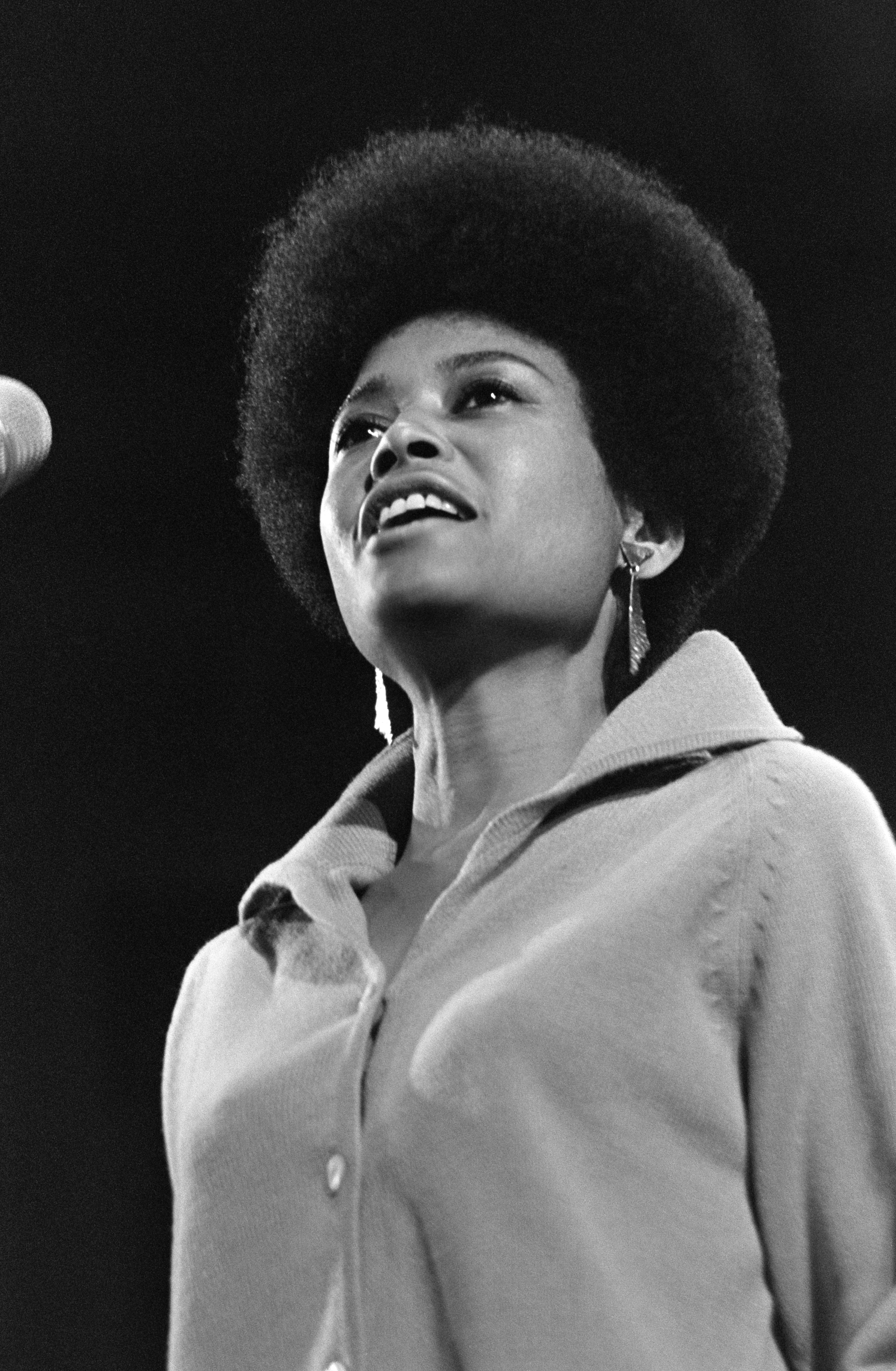
She was born in Chicago, and Chicago is where the name came from — but the voice was formed everywhere she refused to stay small.
| At a glance | |
|---|---|
| Type | PERSON — musician |
| Dates | – |
| Chicago connection | CORE — see the Chicago connection section |
| Known for | She was born in Chicago, and Chicago is where the name came from — but the voice was formed everywhere she refused to |
| Verification | PROVISIONAL |
| CTL ID | CTL-ENC-000216 |
Overview
She was born in Chicago, and Chicago is where the name came from — but the voice was formed everywhere she refused to stay small. Abbey Lincoln was born Anna Marie Wooldridge on August 6, 1930, in Chicago, Illinois, and raised in Calvin Center, Cass County, Michigan, the tenth of twelve children. An African-American jazz vocalist, songwriter, and actress, she became a civil rights activist from the 1960s onward, and made a career of delivering deeply felt performances of standards while writing and singing her own material — the second half of that sentence being the rarer achievement for a woman singer of her generation.
She began singing professionally young, teaching herself piano and singing in school and church choirs, and worked her way onto the nightclub circuit: first California and a year in Honolulu, performing under stage names including Gaby Lee, before her manager, the lyricist Bob Russell, gave her the name Abbey Lincoln in 1956. Her debut album, Abbey Lincoln's Affair... A Story of a Girl in Love, was recorded with Benny Carter's involvement in 1955–56 (the reference sources differ by a year on the session and release), and she appeared as a singer in the 1956 film The Girl Can't Help It. In 1957 she moved to New York, worked at the Village Vanguard, and met the drummer and composer Max Roach, whom she married in 1962.
Life and career
The Roach collaboration produced the era's defining protest record. In 1960 she sang on We Insist! — Max Roach's Freedom Now Suite — described in the reference record as the earliest full-scale protest record in jazz, in Nat Hentoff's assessment; her own album Straight Ahead (1961) carried the same politics. She and Roach performed at benefits and fundraisers for the NAACP and the Congress of Racial Equality, and her lyrics remained connected to the civil-rights movement throughout. On screen she starred in the independent film Nothing But a Man (1964), opposite Ivan Dixon, and opposite Sidney Poitier in For Love of Ivy (1968) — two of the decade's most serious Black dramatic roles. The 1970 short film Max and Abbey profiled her as composer, vocalist, actress, writer, and activist.
The marriage ended in 1970, and the career went quiet in the commercial sense while the artistry consolidated: recordings on small independent labels, a mid-1970s period under the name Aminata Moseka after a trip to Africa, and albums including People in Me (1973) and Golden Lady (1980). The return came through France: signing with Verve Records/France, she released The World Is Falling Down in 1990, with Hank Jones and Clark Terry among the players, and followed it with nine more Verve albums, closing with Abbey Sings Abbey in 2007, reinterpretations of her own compositions. She acted once more, briefly, in Spike Lee's Mo' Better Blues (1990). In 2003 the National Endowment for the Arts gave her its Jazz Masters Award, the nation's highest jazz honor. Cassandra Wilson's assessment, given to Newsweek, frames the whole arc: Lincoln was a culture bearer, a griot in the African-American tradition — "Paul Robeson was something like that. And so is she." She died on August 14, 2010, in New York City, eight days after her eightieth birthday.
Two more records mark the long middle of the career that the Verve return is sometimes allowed to eclipse. Abbey Is Blue (1959), from her Riverside period, is listed in the reference discography among the albums of her first maturity, and her 1987 Tribute to Billie Holiday acknowledged the singer the reference record names as one of her formative influences — a lineage she carried from the supper-club years through the protest records and back, in the Holiday tribute, to the standards repertoire she had never actually left. The discography's shape is the biography's shape: standards at the beginning, protest at the centre, her own compositions at the end. This record is a staged proposal pending the founder's classification sitting.
Chicago connection
She was born in Chicago, and Chicago is where the name came from — but the voice was formed everywhere she refused to stay small. Abbey Lincoln was born Anna Marie Wooldridge on August 6, 1930, in Chicago, Illinois, and raised in Calvin Center, Cass County, Michigan, the tenth of twelve children. [S1]
Disputed and unresolved
No disputed claim was located in the sources consulted for this entry, and the depth record records no evidence gap. Open items, if any, are listed in Editorial notes.
See also
Relationships
Relationships: none recorded yet — edges to follow. This entry's graph connections are being built; it publishes now on its sources.
Sources
- S1: BlackPast.org. "Abbey Lincoln (1930–2010)." Accessed October 25, 2026. https://blackpast.org/african-american-history/lincoln-abbey-1930-2010/.
- S2: Associated Press. "Abbey Lincoln Obituary." Via Legacy.com. Accessed October 25, 2026. https://www.legacy.com/us/obituaries/nwitimes/name/abbey-lincoln-obituary?pid=144742091.
- S3: Encyclopedia.com. "Lincoln, Abbey (1930–)." Accessed October 25, 2026. http://www.encyclopedia.com/women/dictionaries-thesauruses-pictures-and-press-releases/lincoln-abbey-1930.
- S4: Musician Guide. "Abbey Lincoln Biography." Accessed October 25, 2026. https://www.musicianguide.com/biographies/1608003654/Abbey-Lincoln.html.
Cite this entry
- Permanent ID: CTL-ENC-000216 · Crosswalked graph record: CTL-ESS-0014 · Version: 0.1 · Date: 2026-10-29
- Chicago: CultureTechLens. "Abbey Lincoln." CultureTechLens Encyclopedia, version 0.1, October 29, 2026. CultureTechLens NFP. CTL-ENC-000216.
- APA: CultureTechLens. (2026). Abbey Lincoln (Version 0.1, Entry CTL-ENC-000216). CultureTechLens Encyclopedia. CultureTechLens NFP.
- MLA: CultureTechLens. "Abbey Lincoln." CultureTechLens Encyclopedia, version 0.1, CultureTechLens NFP, 29 Oct. 2026. Entry CTL-ENC-000216.
Further reading
- CultureTechLens Knowledge Graph record CTL-ESS-0014 (crosswalked; published graph register id CTL-E-5143).
Image credits
- Abbey Lincoln photograph: see Images block in the frontmatter for the full credit line, rights status, and rights document.
Citation
CultureTechLens. "Abbey Lincoln." CultureTechLens Encyclopedia, Vol. 1 — Black Chicago, version 0.1, 2026-10-29. CultureTechLens NFP. CTL-ENC-000216.
<!-- =======================