 CULTURETECHLENS
The Encyclopedia · CTL-ENC-000064
Amara Enyia
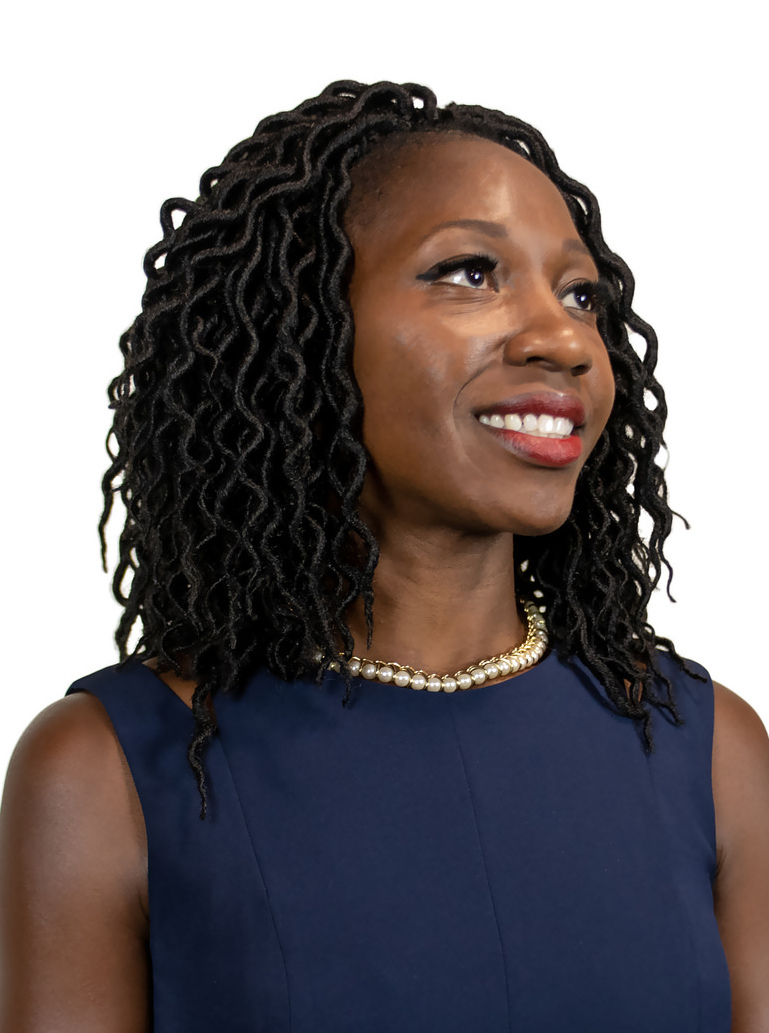
Amara Enyia came to Chicago politics through the policy door and tried to enter through the electoral one.
| At a glance | |
|---|---|
| Type | PERSON — politician |
| Dates | – |
| Chicago connection | CORE — see the Chicago connection section |
| Known for | Amara Enyia came to Chicago politics through the policy door and tried to enter through the electoral one. |
| Verification | PROVISIONAL |
| CTL ID | CTL-ENC-000064 |
Overview
Amara Enyia came to Chicago politics through the policy door and tried to enter through the electoral one. Born in 1983 in Baltimore, Maryland, to Nigerian parents whose activism in Nigeria, the Chicago History Museum's oral history record notes, shaped her interest in public policy, politics, education policy, journalism and community outreach, she collected an unusual stack of credentials at the University of Illinois: bachelor's degrees in journalism and political science, a master's in education, a law degree in 2009 and a PhD in Educational Policy Studies in 2010. At Illinois she worked as a reporter, development editor and editor-in-chief for Illini Media.
From 2009 until the end of Mayor Richard M. Daley's term in May 2011, Enyia worked in the policy department of the Chicago mayor's office, on matters including transportation and economic development. She then went to the West Side as a community organizer. In April 2011 she became executive director of Austin Coming Together, the umbrella organization coordinating nonprofits in the Austin neighborhood, serving roughly a year and sitting on the Community Action Councils that helped Chicago Public Schools develop community education strategy. She founded ACE Municipal Partners, a consulting firm working with municipal officials, blogged about local government as "The Municipal Maven," and in 2013 became director of the Austin Chamber of Commerce, a post she held until stepping down in 2019 during her second campaign for mayor.
Life and career
The mayoral campaigns are what made her a citywide name. She first ran in the 2015 cycle, challenging Mayor Rahm Emanuel as the field's youngest candidate at thirty-one, on a platform her campaign summarized as fully funded neighborhood schools, a freeze on charter expansion, honoring pension commitments and rebuilding community mental health services. In September 2015 she formed an exploratory committee for a primary challenge to longtime Congressman Danny Davis, then withdrew that November and instead partnered with Davis on the Bridge program, pairing local youth with elected officials and community stakeholders. Her 2019 campaign, endorsed in the previous cycle's coverage and boosted in 2019 by Chance the Rapper and Kanye West, ran on a structural program: a public bank for Chicago, a cooperative-enterprise strategy for community wealth, Community Benefits Agreements for development projects, an end to costly bank swap deals, a stronger Inspector General, and restorative justice as violence prevention.
Enyia did not win either race, and her significance for this graph is not electoral. It is that a Chicago mayoral field, in two consecutive cycles, contained a candidate whose entire formation — City Hall policy fellowship, West Side organizing, Austin chamber leadership, municipal consulting — was an argument that the city's problems were policy problems with policy solutions, and whose campaigns were covered as the insurgent, ideas-first lane in Chicago politics. The Chicago History Museum preserved her account of that formation in its Studs Terkel Center oral history collection in 2016, between the two campaigns, which is why her record sits in the graph's Chicago civic cluster rather than only its elections cluster. This record is a staged proposal pending the founder's classification sitting.
Enyia's afterlife as a Chicago civic figure rests less on the two mayoral races than on the habit of mind they advertised. The oral history the Chicago History Museum recorded in 2016 — between campaigns, with West Side teenagers as her interviewers — catches her self-description as a "municipal maven," a blogger's persona she had built explaining city government to residents who were governed by it. That combination, technocratic fluency plus street-level organising, is what her candidacies offered voters and what her consulting practice, ACE Municipal Partners, sold to municipalities: help drafting legislation, structuring development projects, and designing strategies for balanced growth. The platform items that recurred across both campaigns — a public bank, cooperative ownership, community benefits agreements, an end to expensive swap deals with private banks — amount to a single argument about Chicago's fiscal machinery: that the city's money should be made to circulate in the neighbourhoods that generate it. Whether or not Chicago ever adopts the programme, Enyia's campaigns put it, fully specified, into the city's permanent political record.
Chicago connection
Amara Enyia came to Chicago politics through the policy door and tried to enter through the electoral one. Born in 1983 in Baltimore, Maryland, to Nigerian parents whose activism in Nigeria, the Chicago History Museum's oral history record notes, shaped her interest in public policy, politics, education policy, journalism and community outreach, she collected an unusual stack of credentials at the University of Illinois: bachelor's degrees in journalism and political science, a master's in education, a law degree in 2009 and a PhD in Educational Policy Studies in 2010. Daley's term in May 2011, Enyia worked in the policy department of the Chicago mayor's office, on matters including transportation and economic development. In April 2011 she became executive director of Austin Coming Together, the umbrella organization coordinating nonprofits in the Austin neighborhood, serving roughly a year and sitting on the Community Action Councils that helped Chicago Public Schools develop community education strategy. Her 2019 campaign, endorsed in the previous cycle's coverage and boosted in 2019 by Chance the Rapper and Kanye West, ran on a structural program: a public bank for Chicago, a cooperative-enterprise strategy for community wealth, Community Benefits Agreements for development projects, an end to costly bank swap deals, a stronger Inspector General, and restorative justice as violence prevention. [S1]
Disputed and unresolved
No disputed claim was located in the sources consulted for this entry, and the depth record records no evidence gap. Open items, if any, are listed in Editorial notes.
See also
Relationships
- related_to — City Club of Chicago: WTTW Mayoral Candidate Forum Night 2 (CTL-E-5009) — Restated from the CultureTechLens Knowledge Graph: Amara Enyia (CTL-E-4894) related_to City Club of Chicago: WTTW Mayoral Candidate Forum Night 2 (CTL-E-5009), verification Verified. Appeared at City Club of Chicago program "WTTW Mayoral Candidate Forum Night 2" (Tuesday, February 19, 2019). Role at time: Candidate for Mayor of Chicago.
Sources
- S1: Wikipedia. "Amara Enyia." Accessed October 25, 2026. https://en.wikipedia.org/wiki/Amara_Enyia.
- S2: Civil Rights Digital Library / Chicago History Museum (Studs Terkel Center). "FORTY BLOCKS: Amara Enyia — Oral History." Accessed October 25, 2026. https://crdl.usg.edu/record/kai_chm-oh_160.
- S3: Nairaland / campaign reporting. "Amara Enyia Becomes 11th Candidate for Chicago Mayor (platform summary)." Accessed October 25, 2026. https://www.NAIRALAND.com/4827729/amara-enyia-becomes-11th-candidate.
- S4: CultureTechLens Knowledge Graph (schema v0.3.1), entities.json and relationships.json — CTL's own graph register, consulted 2026-10-28 for crosswalk facts and restated relationships.
Cite this entry
- Permanent ID: CTL-ENC-000064 · Crosswalked graph record: CTL-ESS-0028 · Version: 0.1 · Date: 2026-10-28
- Chicago: CultureTechLens. "Amara Enyia." CultureTechLens Encyclopedia, version 0.1, October 28, 2026. CultureTechLens NFP. CTL-ENC-000064.
- APA: CultureTechLens. (2026). Amara Enyia (Version 0.1, Entry CTL-ENC-000064). CultureTechLens Encyclopedia. CultureTechLens NFP.
- MLA: CultureTechLens. "Amara Enyia." CultureTechLens Encyclopedia, version 0.1, CultureTechLens NFP, 28 Oct. 2026. Entry CTL-ENC-000064.
Further reading
- CultureTechLens Knowledge Graph record CTL-ESS-0028 (crosswalked; published graph register id CTL-E-4894).
Image credits
- Amara Enyia photograph: see Images block in the frontmatter for the full credit line, rights status, and rights document.
Citation
CultureTechLens. "Amara Enyia." CultureTechLens Encyclopedia, Vol. 1 — Black Chicago, version 0.1, 2026-10-28. CultureTechLens NFP. CTL-ENC-000064.
<!-- =======================