 CULTURETECHLENS
The Encyclopedia · CTL-ENC-000185
Anthony Braxton
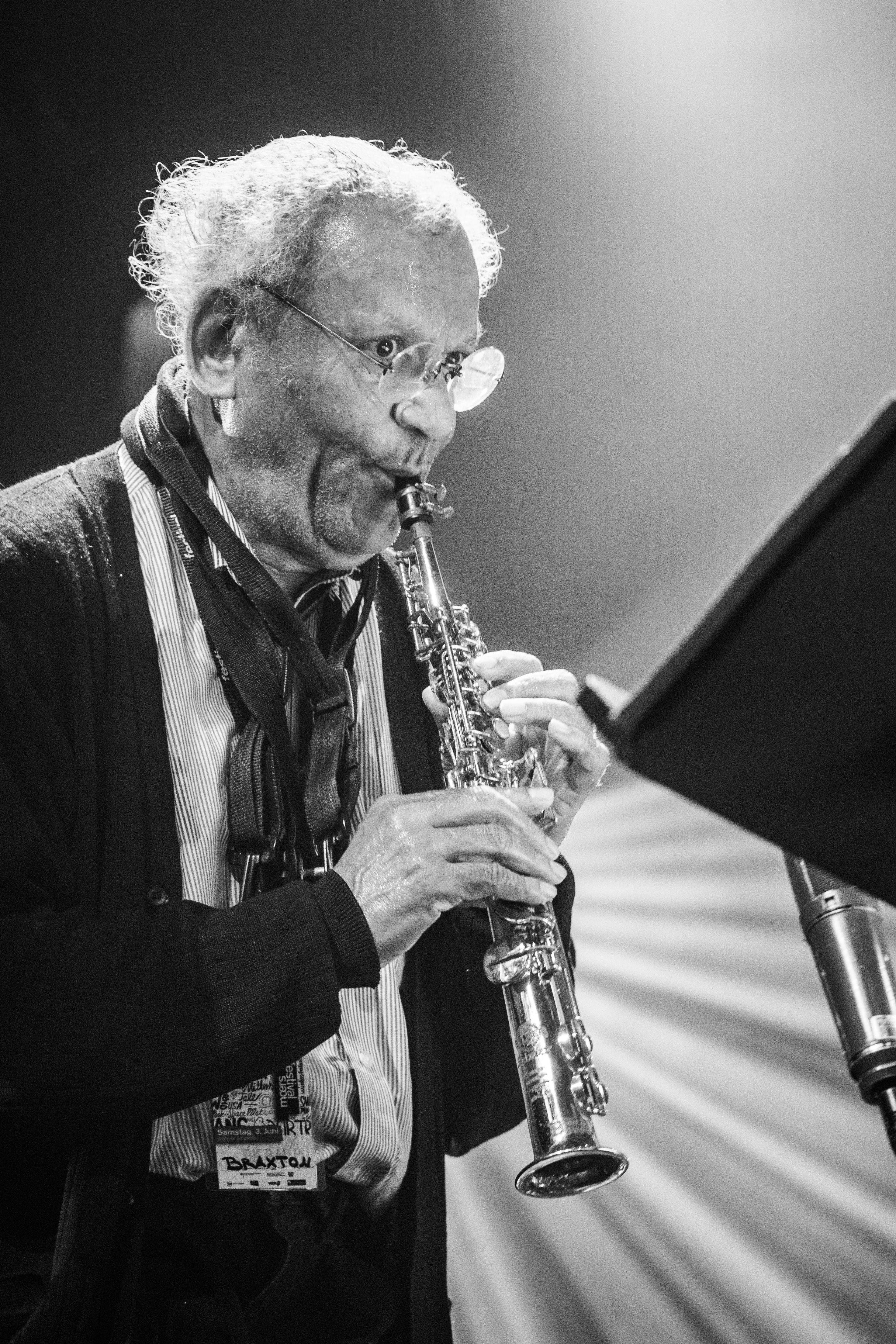
The verification the CultureTechLens master carries for Anthony Braxton is a Chicago story: the Association for the Advancement of Creative Musicians records that Braxton, a woodwind player and composer, grew up in Chicago and joined
| At a glance | |
|---|---|
| Type | PERSON — musician |
| Dates | – |
| Chicago connection | CORE — see the Chicago connection section |
| Known for | The verification the CultureTechLens master carries for Anthony Braxton is a Chicago story: the Association for the |
| Verification | VERIFIED |
| CTL ID | CTL-ENC-000185 |
Overview
The verification the CultureTechLens master carries for Anthony Braxton is a Chicago story: the Association for the Advancement of Creative Musicians records that Braxton, a woodwind player and composer, grew up in Chicago and joined the newly formed AACM on his return to the city in 1966. He was born on June 4, 1945, and raised on Chicago's South Side, and the AACM — the South Side musicians' collective founded in 1965 — became the institutional home from which one of the most prolific careers in modern music unfolded. After military service and study in philosophy and music composition at Roosevelt University, he was invited by Roscoe Mitchell to practice with the AACM, and he joined the group at the moment it was redefining what Black musicians could organize for themselves.
His debut recording, 3 Compositions of New Jazz, appeared in 1968, with Braxton playing more than ten instruments. The following year he released For Alto (1969), a double LP that the African American Registry and reference accounts describe the same way: the first full-length album of solo saxophone music. It remains a landmark of unaccompanied improvisation. In 1970 he joined pianist Chick Corea's circle to form the short-lived avant-garde quartet Circle, and through the 1970s his work with the AACM's members deepened — duets with co-founder Muhal Richard Abrams, collaborations with electronic musician Richard Teitelbaum, and a saxophone quartet with Julius Hemphill, Oliver Lake, and Hamiet Bluiett. His Creative Orchestra Music 1976 was named the 1977 DownBeat Critics' Poll Album of the Year, and the Los Angeles Philharmonic's biography notes that this orchestral work brought together the streams of American jazz orchestras, marching bands, and experimental practice with European concert music in a wholly individual voice.
Life and career
Braxton calls himself a "trans-idiomatic" composer, and he has repeatedly opposed any rigid dichotomy between improvisation and composition. The systems he built to hold that position are documented across his career: the "language music" that forms the basis of his improvising vocabulary; the Ghost Trance Music series, inspired by his study of the Native American Ghost Dance; the Diamond Curtain Wall works, in which he implements the audio programming language SuperCollider; Echo Echo Mirror House Music, in which musicians play iPods loaded with the bulk of his own recorded oeuvre; and the Trillium opera complex, of which he has released the first six operas. His philosophy of "world creativity" is set out in his Tri-Axium Writings, and his influences run, in the LA Philharmonic's summary, from John Coltrane to Karlheinz Stockhausen.
The honors accumulated at the highest level. Braxton received a Guggenheim Fellowship in 1981 and a MacArthur Fellowship in 1994 — the "genius grant" year the AACM's own guide also records — followed by a Doris Duke Performing Artist Award in 2013, designation as a National Endowment for the Arts Jazz Master for 2014, honorary doctorates from the Université de Liège and the New England Conservatory, and a United States Artists Fellowship in 2020. He has released hundreds of recordings and compositions across more than five decades.
His second career ran in the classroom. Braxton taught at Mills College from 1985 to 1990 and then served as Professor of Music at Wesleyan University from 1990 until his retirement at the end of 2013, teaching composition and music history and leading ensembles in his own works. In 1994 he founded the Tri-Centric Foundation, the nonprofit that supports the preservation and production of his work and of other artists pursuing "trans-idiomatic" creativity, and he remains its artistic director. For CultureTechLens, Braxton is a load-bearing node in the graph's AACM cluster: a Chicago-born, Chicago-formed composer whose systems, operas, and mentorship carried the AACM's founding premise — original music, self-determined — onto the world's concert stages.
Chicago connection
The verification the CultureTechLens master carries for Anthony Braxton is a Chicago story: the Association for the Advancement of Creative Musicians records that Braxton, a woodwind player and composer, grew up in Chicago and joined the newly formed AACM on his return to the city in 1966. He was born on June 4, 1945, and raised on Chicago's South Side, and the AACM — the South Side musicians' collective founded in 1965 — became the institutional home from which one of the most prolific careers in modern music unfolded. For CultureTechLens, Braxton is a load-bearing node in the graph's AACM cluster: a Chicago-born, Chicago-formed composer whose systems, operas, and mentorship carried the AACM's founding premise — original music, self-determined — onto the world's concert stages. [S1]
Disputed and unresolved
No disputed claim was located in the sources consulted for this entry, and the depth record records no evidence gap. Open items, if any, are listed in Editorial notes.
See also
Relationships
- affiliated_with — Association for the Advancement of Creative Musicians (CTL-E-0290) — Restated from the CultureTechLens Knowledge Graph: Anthony Braxton (CTL-E-0025) affiliated_with Association for the Advancement of Creative Musicians (CTL-E-0290), verification Verified.
Sources
- S1: Association for the Advancement of Creative Musicians. "Anthony Braxton." AACM Chicago. Accessed October 25, 2026. https://www.aacmchicago.org/guides/anthony-braxton.
- S2: Los Angeles Philharmonic. "Anthony Braxton." Accessed October 25, 2026. https://www.laphil.com/musicdb/artists/7113/anthony-braxton.
- S3: African American Registry. "Anthony Braxton, Jazz Musician and Composer Born." Accessed October 25, 2026. https://aaregistry.org/story/anthony-braxton-jazz-musician-and-composer-born/.
- S4: All About Jazz. "Jazz Master Anthony Braxton Joins the New England Conservatory Jazz Composers' Orchestra." Accessed October 25, 2026. https://www.allaboutjazz.com/news/jazz-master-anthony-braxton-joins-the-new-england-conservatory-jazz-composers-orchestra-on-thursday-february-12/.
- S5: CultureTechLens Knowledge Graph (schema v0.3.1), entities.json and relationships.json — CTL's own graph register, consulted 2026-10-29 for crosswalk facts and restated relationships.
Cite this entry
- Permanent ID: CTL-ENC-000185 · Crosswalked graph record: CTL-P-0107 · Version: 0.1 · Date: 2026-10-29
- Chicago: CultureTechLens. "Anthony Braxton." CultureTechLens Encyclopedia, version 0.1, October 29, 2026. CultureTechLens NFP. CTL-ENC-000185.
- APA: CultureTechLens. (2026). Anthony Braxton (Version 0.1, Entry CTL-ENC-000185). CultureTechLens Encyclopedia. CultureTechLens NFP.
- MLA: CultureTechLens. "Anthony Braxton." CultureTechLens Encyclopedia, version 0.1, CultureTechLens NFP, 29 Oct. 2026. Entry CTL-ENC-000185.
Further reading
- CultureTechLens Knowledge Graph record CTL-P-0107 (crosswalked; published graph register id CTL-E-0025).
Image credits
- Anthony Braxton photograph: see Images block in the frontmatter for the full credit line, rights status, and rights document.
Citation
CultureTechLens. "Anthony Braxton." CultureTechLens Encyclopedia, Vol. 1 — Black Chicago, version 0.1, 2026-10-29. CultureTechLens NFP. CTL-ENC-000185.
<!-- =======================