 CULTURETECHLENS
The Encyclopedia · CTL-ENC-000107
Anthony Driver
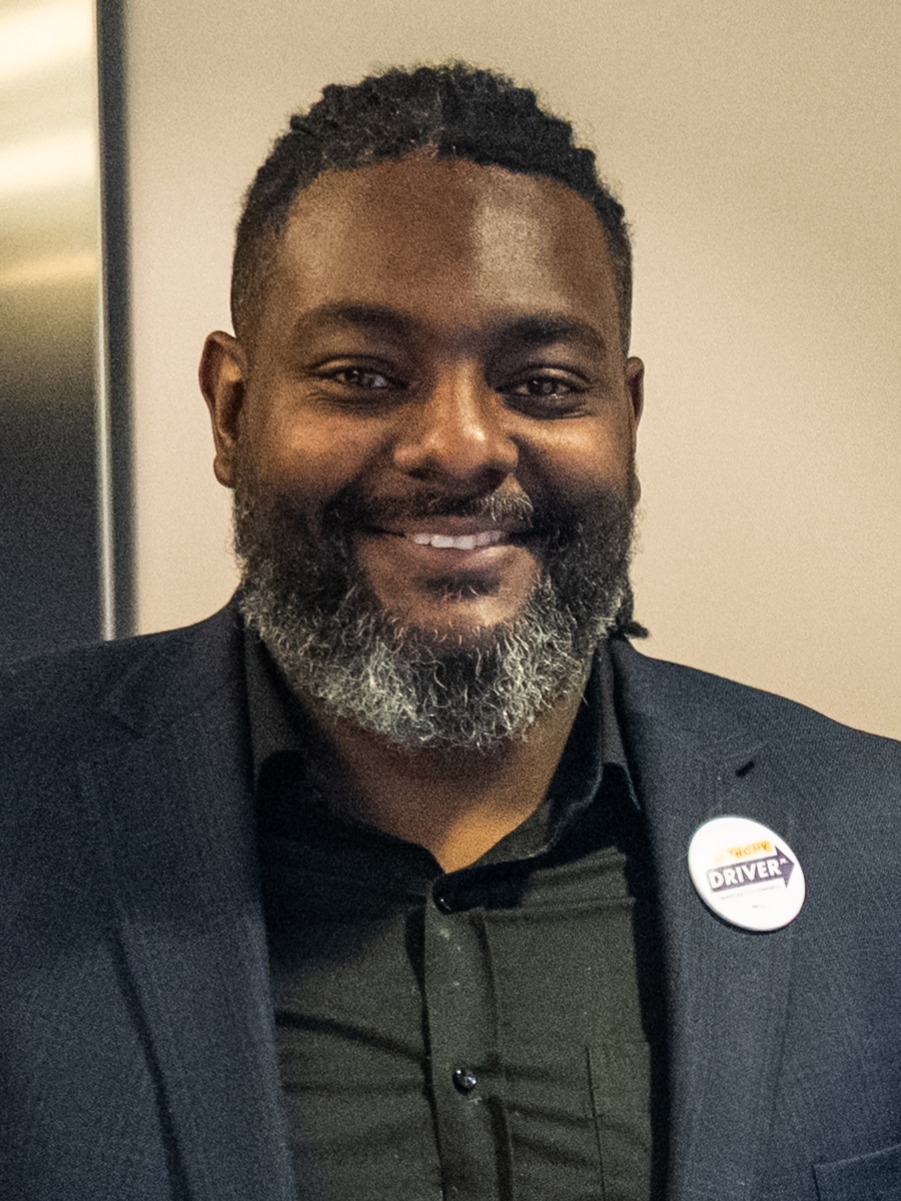
Chicago's experiment in civilian police oversight has a face, and for its first years that face was Anthony Driver's.
| At a glance | |
|---|---|
| Type | PERSON — politician |
| Dates | – |
| Chicago connection | CORE — see the Chicago connection section |
| Known for | Chicago's experiment in civilian police oversight has a face, and for its first years that face was Anthony Driver's. |
| Verification | PROVISIONAL |
| CTL ID | CTL-ENC-000107 |
Overview
Chicago's experiment in civilian police oversight has a face, and for its first years that face was Anthony Driver's. Driver, a lifelong South Side resident, served as president of the interim Community Commission for Public Safety and Accountability from the commission's establishment in 2022, and the City of Chicago's own nominating announcement credits him as a key member of the coalition that advocated for the commission's creation and helped draft its founding ordinance. CultureTechLens's build-side record identifies him the same way — president of the CCPSA — and the City Club of Chicago, where he headlined an April 2024 program titled "Getting It Right: Civilian Oversight & Accountability of the Chicago Police Department," carries the fullest public biography of his formation.
That biography begins in politics, early. Politically active since his youth, Driver gained experience at the municipal, state, and federal levels in both the private and public sectors. He is a graduate of Howard University, where he earned his degree in Political Science and History, and an advocate for Historically Black Colleges and Universities. After Howard, he served as a Policy Associate for the Estell Group, described in his City Club biography as the first and only Black woman-owned full-service government relations firm at the national level. He later held research and consultant roles examining juvenile incarceration rates in the United States and how state policy shapes them — an early version of the criminal-justice focus that would define his public work.
Life and career
Labor became his organizing base. Driver served as political and legislative coordinator at SEIU Healthcare Illinois, where, the SEIU Illinois State Council records, he was the lead strategist on winning campaigns that raised the minimum wage to fifteen dollars per hour in Chicago and created a civilian oversight board over the Chicago Police Department. In October 2022 the Council announced him as its Executive Director, responsible for leading policy initiatives, organizing campaigns, and advocacy on behalf of more than 160,000 SEIU members in Illinois; under his leadership, the Council reported, ninety-two percent of SEIU-endorsed candidates were successful in the February municipal elections. SEIU's announcement placed the two halves of his career side by side: the new executive director was also, already, president of the Community Commission for Public Safety and Accountability.
The commission he led was itself a product of the post-2020 reform moment — a civilian body created to bring community authority into Chicago police policy and accountability. Driver's public framing of the work, in the City Club program he headlined with the head of the Civilian Office of Police Accountability, centered community policing and the proposition that public safety policy should be made with the neighborhoods most affected by both crime and enforcement. His earlier civic record runs in the same direction: a former aldermanic candidate for the 20th Ward, a former Chicago Federation of Labor delegate, an inaugural member of the Black Bench Cohort, and a board member of the Peace and Education Coalition of Back of the Yards, the neighborhood where he grew up.
In 2026, Driver's career turned toward electoral office at the federal level. The Forest Park Review, profiling the race for Illinois's 7th Congressional District — the seat opened by Representative Danny Davis's retirement — reported that Driver, by then a former president of the commission serving as a commissioner, was running for Congress, and that he had run ground operations for Operation Swing State, living in Milwaukee for five months to lead door-knocking and phone-calling mobilization ahead of the presidential election. The profile roots the candidacy in the same geography as everything before it: a Bronzeville resident buying a home in Back of the Yards, down the street from where he grew up, running to unite a district that stretches from Englewood along the Eisenhower into the western suburbs.
For CultureTechLens, Driver's record documents a distinctly Chicago civic formation — HBCU-trained, labor-built, and carried into the city's newest accountability institution at the moment of its founding. This record is a staged proposal pending the founder's classification sitting.
Chicago connection
Chicago's experiment in civilian police oversight has a face, and for its first years that face was Anthony Driver's. Driver, a lifelong South Side resident, served as president of the interim Community Commission for Public Safety and Accountability from the commission's establishment in 2022, and the City of Chicago's own nominating announcement credits him as a key member of the coalition that advocated for the commission's creation and helped draft its founding ordinance. CultureTechLens's build-side record identifies him the same way — president of the CCPSA — and the City Club of Chicago, where he headlined an April 2024 program titled "Getting It Right: Civilian Oversight & Accountability of the Chicago Police Department," carries the fullest public biography of his formation. Driver served as political and legislative coordinator at SEIU Healthcare Illinois, where, the SEIU Illinois State Council records, he was the lead strategist on winning campaigns that raised the minimum wage to fifteen dollars per hour in Chicago and created a civilian oversight board over the Chicago Police Department. The commission he led was itself a product of the post-2020 reform moment — a civilian body created to bring community authority into Chicago police policy and accountability. His earlier civic record runs in the same direction: a former aldermanic candidate for the 20th Ward, a former Chicago Federation of Labor delegate, an inaugural member of the Black Bench Cohort, and a board member of the Peace and Education Coalition of Back of the Yards, the neighborhood where he grew up. [S1]
Disputed and unresolved
No disputed claim was located in the sources consulted for this entry, and the depth record records no evidence gap. Open items, if any, are listed in Editorial notes.
See also
Relationships
- related_to — City Club of Chicago: Getting It Right: Civilian Oversight & Accountability of the Chicago Police Department (CTL-E-5054) — Restated from the CultureTechLens Knowledge Graph: Anthony Driver (CTL-E-4942) related_to City Club of Chicago: Getting It Right: Civilian Oversight & Accountability of the Chicago Police Department (CTL-E-5054), verification Verified.
Sources
- S1: City Club of Chicago. "Getting It Right: Civilian Oversight & Accountability of the Chicago Police Department." Accessed October 25, 2026. https://www.cityclub-chicago.org/event/2/3622/getting-it-right-civilian-oversight-accountability-of-the-chicago-police-departm.
- S2: Community Commission for Public Safety and Accountability. "District Council Nominating Committee Nominates Fifteen Candidates for the Permanent Community Commission for Public Safety and Accountability." City of Chicago. Accessed October 25, 2026. https://ccpsa.chicago.gov/press-releases/announcement/district-council-nominating-committee-nominates-fifteen-candidates-for-the-permanent-community-commission-for-public-safety-and-accountability/.
- S3: SEIU Illinois State Council. "SEIU IL State Council Announces Anthony Driver as Executive Director." Accessed October 25, 2026. https://seiuilcouncil.org/2022/10/seiu-il-state-council-announces-anthony-driver-as-executive-director/.
- S4: Forest Park Review. "Anthony Driver Jr. Runs for Congress in 7th District." Accessed October 25, 2026. https://www.forestparkreview.com/2026/01/26/anthony-driver-jr-congress/.
- S5: CultureTechLens Knowledge Graph (schema v0.3.1), entities.json and relationships.json — CTL's own graph register, consulted 2026-10-29 for crosswalk facts and restated relationships.
Cite this entry
- Permanent ID: CTL-ENC-000107 · Crosswalked graph record: CTL-ESS-0040 · Version: 0.1 · Date: 2026-10-29
- Chicago: CultureTechLens. "Anthony Driver." CultureTechLens Encyclopedia, version 0.1, October 29, 2026. CultureTechLens NFP. CTL-ENC-000107.
- APA: CultureTechLens. (2026). Anthony Driver (Version 0.1, Entry CTL-ENC-000107). CultureTechLens Encyclopedia. CultureTechLens NFP.
- MLA: CultureTechLens. "Anthony Driver." CultureTechLens Encyclopedia, version 0.1, CultureTechLens NFP, 29 Oct. 2026. Entry CTL-ENC-000107.
Further reading
- CultureTechLens Knowledge Graph record CTL-ESS-0040 (crosswalked; published graph register id CTL-E-4942).
Image credits
- Anthony Driver photograph: see Images block in the frontmatter for the full credit line, rights status, and rights document.
Citation
CultureTechLens. "Anthony Driver." CultureTechLens Encyclopedia, Vol. 1 — Black Chicago, version 0.1, 2026-10-29. CultureTechLens NFP. CTL-ENC-000107.
<!-- =======================