 CULTURETECHLENS
The Encyclopedia · CTL-ENC-000396
Arna Bontemps
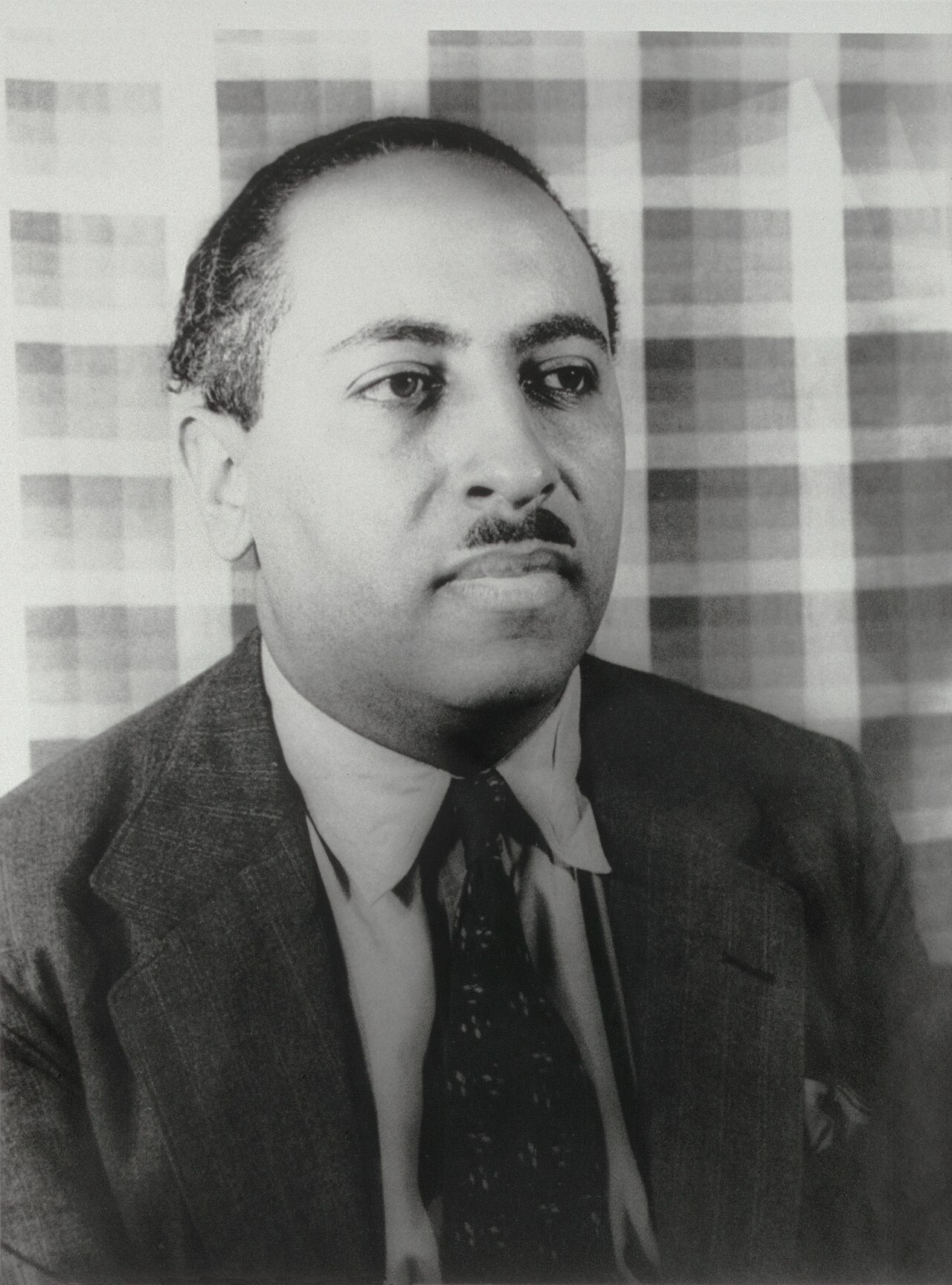
Harlem Renaissance novelist (God Sends Sunday, 1931) who spent his Chicago decades on the Illinois Writers' Project and as a librarian, anchoring the Renaissance's second, Chicago act.
| At a glance | |
|---|---|
| Type | PERSON — writer |
| Dates | 1902 – 1973 |
| Chicago connection | SIGNIFICANT — Chicago |
| Known for | God Sends Sunday (1931); Black Thunder (1936); the Illinois Writers' Project; the Fisk librarianship |
| Verification | VERIFIED |
| CTL ID | CTL-ENC-000396 |
| Documented address | None recorded for this entry — see Documented address and map |
Overview
Arna Wendell Bontemps (1902–1973) was the Harlem Renaissance's bridge to Chicago. His novels God Sends Sunday (1931) — the selection's anchor — and Black Thunder (1936), on Gabriel Prosser's slave revolt, made him a central Renaissance novelist while his day jobs kept him in motion [S1][S2]. In the later 1930s he settled in Chicago, worked for the Illinois Writers' Project (the federal project whose "Negro in Illinois" files are Batch D entry CTL-ENC-000465), and moved in the South Side Writers Group's orbit (South Side Writers Group) before leaving in 1943 to become head librarian at Fisk University — the post from which he built one of the great Black archives and wrote the children's books and anthologies that carried the Renaissance to new generations [S1].
The Chicago years
Bontemps's Chicago was a working writer's: Writers' Project research and drafting on Illinois Black history, association with the Wright-Walker circle, and the librarianship that became his second vocation [S2]. The documentary significance runs both ways — the project's files preserve his hand, and his presence links the Harlem of the 1920s to the Chicago of the 1930s in a single career, the migration of the Renaissance itself [S1]. His friendship and collaboration with Langston Hughes (Langston Hughes) — from 1924 until Hughes's death, including The Poetry of the Negro (1949) — is the period's most durable literary partnership [S1][S2].
The Fisk archive and the late work
At Fisk (1943–1965) Bontemps assembled the collections that made the university a capital of Black studies, while publishing in every form: biography (George Washington Carver, 1950), children's books, the Book of Negro Folklore (1958, with Hughes), and editions that kept Renaissance texts in print [S1]. He died in Nashville in 1973, at work on a Harlem Renaissance memoir [S1][S2]. His papers rest principally at Yale and Fisk; his Chicago chapter rests in the Writers' Project record.
The document of record
The documents of record for this entry are God Sends Sunday (Harcourt, Brace, 1931) — the anchor named by the selection — and Bontemps's Illinois Writers' Project work product within the "Negro in Illinois" papers (Batch D entry CTL-ENC-000465). What the texts evidence: the Renaissance novel's craft, and the federal archive through which that craft was employed, in the same hand.
Chicago connection
SIGNIFICANT, per the selection: Bontemps's Chicago connection is his documented Illinois Writers' Project service and South Side literary circle of the late 1930s–early 1940s [S2]. His fame's first act is Harlem's and his archive-building act is Nashville's; the entry claims the Chicago act exactly.
Documented address and map
No address documented in the sources consulted — no coordinates are recorded and no map is published for this entry.
Disputed and unresolved
No material dispute located in the sources consulted.
See also
Relationships
- affiliated_with — Vivian G. Harsh Research Collection of Afro-American History and Literature (CTL-E-0202) — Bontemps's Chicago decades placed him in the Illinois Writers' Project circle whose files are held in the Harsh Collection (Batch D, CTL-ENC-000464/000465) — affiliation recorded at SUPPORTED for the Writers' Project milieu, not a deposit claim.
- collaborated_with — Langston Hughes (CTL-E-0338) — Bontemps and Hughes, friends from 1924, collaborated across five decades, including the anthology The Poetry of the Negro (1949) (Britannica; BlackPast).
Sources
- S1: Encyclopaedia Britannica. "Arna Bontemps." https://www.britannica.com/biography/Arna-Bontemps
- S2: BlackPast.org. "Arna Bontemps (1902-1973)." https://www.blackpast.org/african-american-history/bontemps-arna-1902-1973/
Cite this entry
- Permanent ID: CTL-ENC-000396 · Crosswalked graph record: CTL-E-5766 · Version: 0.1 · Date: 2026-10-29
- Chicago: CultureTechLens. "Arna Bontemps." CultureTechLens Encyclopedia, version 0.1, October 29, 2026. CultureTechLens NFP. CTL-ENC-000396. Source: CultureTechLens
- APA: CultureTechLens. (2026). Arna Bontemps (Version 0.1, Entry CTL-ENC-000396). CultureTechLens Encyclopedia. CultureTechLens NFP. Source: CultureTechLens
- MLA: CultureTechLens. "Arna Bontemps." CultureTechLens Encyclopedia, version 0.1, CultureTechLens NFP, 29 Oct. 2026. Entry CTL-ENC-000396. Source: CultureTechLens
Further reading
- Bontemps's Chicago project is Batch D entry CTL-ENC-000465 (Illinois Writers' Project papers). CultureTechLens Knowledge Graph record CTL-E-5766.
Image credits
- Portrait of Arna Bontemps by Carl Van Vechten (1939): see Images block in the frontmatter for the full credit line, rights status, and rights document.
Citation
CultureTechLens. "Arna Bontemps." CultureTechLens Encyclopedia, Historical Documents (staged), version 0.1, 2026-10-29. CultureTechLens NFP. CTL-ENC-000396.
<!-- =======================