 CULTURETECHLENS
The Encyclopedia · CTL-ENC-000218
Arnett Cobb
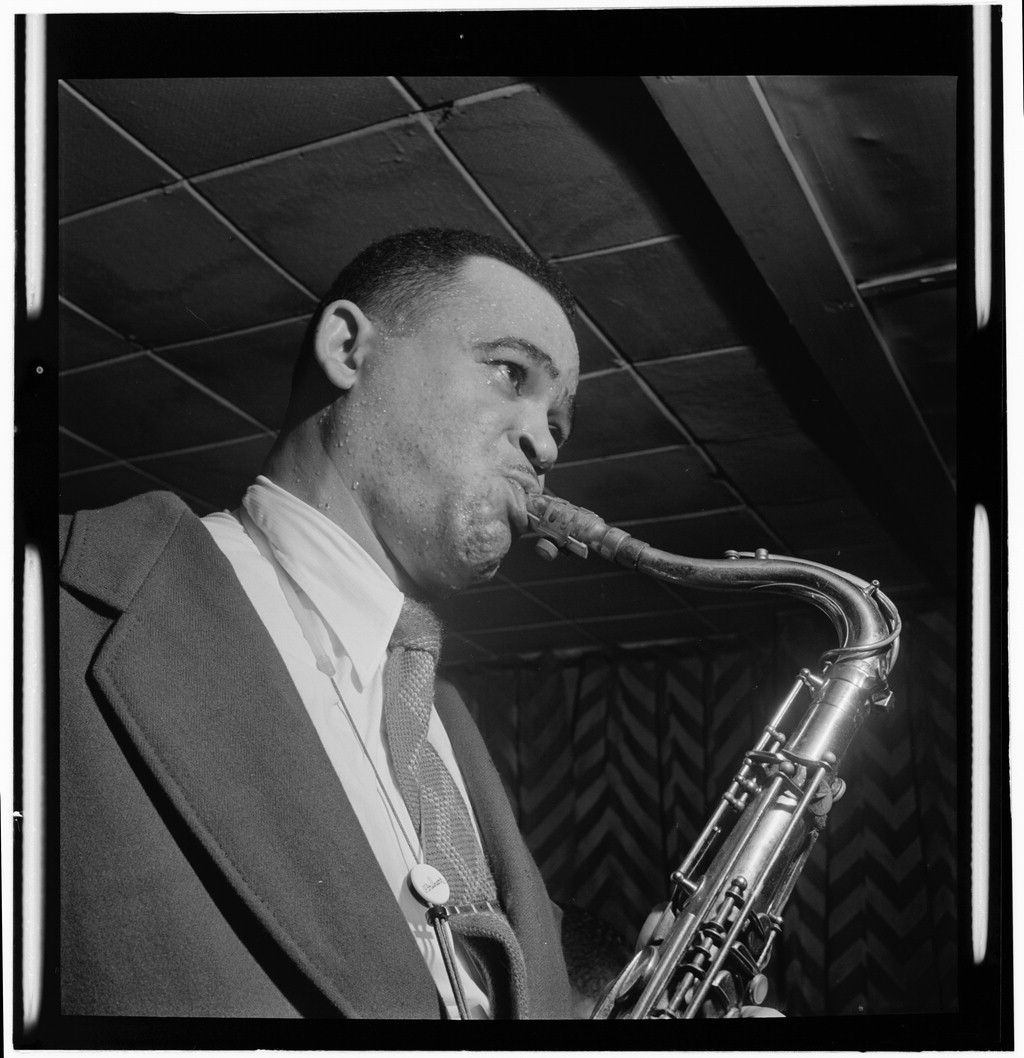
The Texas tenor tradition has a sound — big, open, preaching — and Arnett Cobb helped invent it.
| At a glance | |
|---|---|
| Type | PERSON — person |
| Dates | – |
| Chicago connection | SIGNIFICANT — see the Chicago connection section |
| Known for | The Texas tenor tradition has a sound — big, open, preaching — and Arnett Cobb helped invent it. |
| Verification | PROVISIONAL |
| CTL ID | CTL-ENC-000218 |
Overview
The Texas tenor tradition has a sound — big, open, preaching — and Arnett Cobb helped invent it. Arnett Cleophus Cobb was born on August 10, 1918, in Houston, Texas; the Texas State Historical Association gives his birth name as Arnette Cleophus Cobbs, a fuller form the record notes rather than resolves. His grandmother taught him piano; he studied violin, then took up tenor saxophone in the Wheatley High School band. At fifteen he was already working summers with Louisiana bandleader Frank Davis's band around Houston and Louisiana. He played with trumpeter Chester Boone from 1934 to 1936, then became a founding member of the Milton Larkin Orchestra in 1936, staying six years in a band the TSHA calls one of the most successful territorial bands from Texas, with bandmates including Illinois Jacquet, Eddie "Cleanhead" Vinson, Cedric Haywood, and Wild Bill Davis, and regular stands at Harlem's Apollo Theatre and at boxer Joe Louis's Rhumboogie Club in Chicago — Cobb's first documented Chicago stage.
The Texas State Historical Association names the qualities that made him the tradition's exemplar: originator of the "open prairie" tone and the "southern preacher" style, in WKCR's summary a full-bodied, hard-swinging musician with a warm, soulful sound. The national call, when it came, was a substitution that became a succession. Cobb had turned down Count Basie in 1939, and Jimmie Lunceford and Lionel Hampton besides; in 1942, with his mother's approval, he accepted Hampton's offer to take the lead tenor chair Jacquet had vacated — a chair Jacquet himself had originally held as Cobb's substitute, on the condition that he switch from alto to tenor and "play like Cobb." Hampton re-recorded his theme as "Flying Home No. 2" with Cobb as featured soloist, and Cobb's uninhibited, blasting solo made him famous overnight and earned the label that followed him for life: "the Wild Man of the Tenor Sax." For five years he was a major asset to the Hampton band — featured soloist, lead saxophone, reed-section arranger, writer and co-writer, and talent scout; the TSHA entry adds the household detail that Gladys Hampton and Elizabeth Cobb helped manage the band, and Cobb's mother did its tailoring.
Life and career
He left Hampton in 1947 to lead his own seven-piece band, recording for Apollo, Columbia, and Atlantic, backing singers including Vinson and Ruth Brown, and writing the jazz standard "Smooth Sailing" (1951), which Ella Fitzgerald recorded for Decca. Then the body intervened, twice. A childhood spinal condition — Pott's disease, tuberculosis of the vertebrae — forced him to disband after seven months and undergo spinal surgery and a hospital stay of more than fifteen months. He reorganized in 1950 and resumed touring in 1951; in 1956 a car crash left him permanently reliant on crutches. Doctors advised against performing; within a year he was playing coast to coast anyway. In 1959 he moved home to Houston for good, and worked as a soloist through the 1970s and 1980s in the United States and Europe — as late as 1988 he played in Europe with Jimmy Heath and Joe Henderson. He received a Grammy nomination in 1979 and shared a Grammy with B. B. King in 1984, founded the Jazz Heritage Society of Texas, and helped establish the Jazz Archives at the Houston Public Library. WKCR's profile closes on the quality listeners remembered across those five decades: a warm, soulful sound that exemplified the tough Texas tenor tradition, played by a man whose setbacks would have ended most careers. He died in Houston on March 24, 1989, aged seventy. CultureTechLens holds him through the Chicago door his biography opens — the Rhumboogie stand with Larkin — and through the Texas-tenor line the graph traces from Jacquet through Cobb to the R&B saxophone that followed. This record is a staged proposal pending the founder's classification sitting.
Chicago connection
He played with trumpeter Chester Boone from 1934 to 1936, then became a founding member of the Milton Larkin Orchestra in 1936, staying six years in a band the TSHA calls one of the most successful territorial bands from Texas, with bandmates including Illinois Jacquet, Eddie "Cleanhead" Vinson, Cedric Haywood, and Wild Bill Davis, and regular stands at Harlem's Apollo Theatre and at boxer Joe Louis's Rhumboogie Club in Chicago — Cobb's first documented Chicago stage. CultureTechLens holds him through the Chicago door his biography opens — the Rhumboogie stand with Larkin — and through the Texas-tenor line the graph traces from Jacquet through Cobb to the R&B saxophone that followed. [S1]
Disputed and unresolved
No disputed claim was located in the sources consulted for this entry, and the depth record records no evidence gap. Open items, if any, are listed in Editorial notes.
See also
Relationships
- performed_at — Pershing Hotel club (Pershing Lounge / Budland) (CTL-E-0959) — Restated from the CultureTechLens Knowledge Graph: Arnett Cobb (CTL-E-1451) performed_at Pershing Hotel club (Pershing Lounge / Budland) (CTL-E-0959), verification Provisional.
- performed_at — Birdland (formerly the Beige Room) (CTL-E-0958) — Restated from the CultureTechLens Knowledge Graph: Arnett Cobb (CTL-E-1451) performed_at Birdland (formerly the Beige Room) (CTL-E-0958), verification Verified.
Sources
- S1: Texas State Historical Association. "Cobb, Arnett Cleophus." Handbook of Texas. Accessed October 25, 2026. https://www.tshaonline.org/handbook/entries/cobb-arnett-cleophus.
- S2: WKCR. "Jazz Profiles — Arnett Cobb." Columbia University. Accessed October 25, 2026. https://www.cc-seas.columbia.edu/wkcr/story/jazz-profiles-arnett-cobb.
- S3: African American Registry. "Arnett Cobb, Saxophonist Born." Accessed October 25, 2026. https://aaregistry.org/?story=houstons-own-saxophonist-arnett-cobb.
- S4: CultureTechLens Knowledge Graph (schema v0.3.1), entities.json and relationships.json — CTL's own graph register, consulted 2026-10-29 for crosswalk facts and restated relationships.
Cite this entry
- Permanent ID: CTL-ENC-000218 · Crosswalked graph record: CTL-ESS-0047 · Version: 0.1 · Date: 2026-10-29
- Chicago: CultureTechLens. "Arnett Cobb." CultureTechLens Encyclopedia, version 0.1, October 29, 2026. CultureTechLens NFP. CTL-ENC-000218.
- APA: CultureTechLens. (2026). Arnett Cobb (Version 0.1, Entry CTL-ENC-000218). CultureTechLens Encyclopedia. CultureTechLens NFP.
- MLA: CultureTechLens. "Arnett Cobb." CultureTechLens Encyclopedia, version 0.1, CultureTechLens NFP, 29 Oct. 2026. Entry CTL-ENC-000218.
Further reading
- CultureTechLens Knowledge Graph record CTL-ESS-0047 (crosswalked; published graph register id CTL-E-1451).
Image credits
- Arnett Cobb photograph: see Images block in the frontmatter for the full credit line, rights status, and rights document.
Citation
CultureTechLens. "Arnett Cobb." CultureTechLens Encyclopedia, Vol. 1 — Black Chicago, version 0.1, 2026-10-29. CultureTechLens NFP. CTL-ENC-000218.
<!-- =======================