 CULTURETECHLENS
The Encyclopedia · CTL-ENC-000199
Arthur Wergs Mitchell
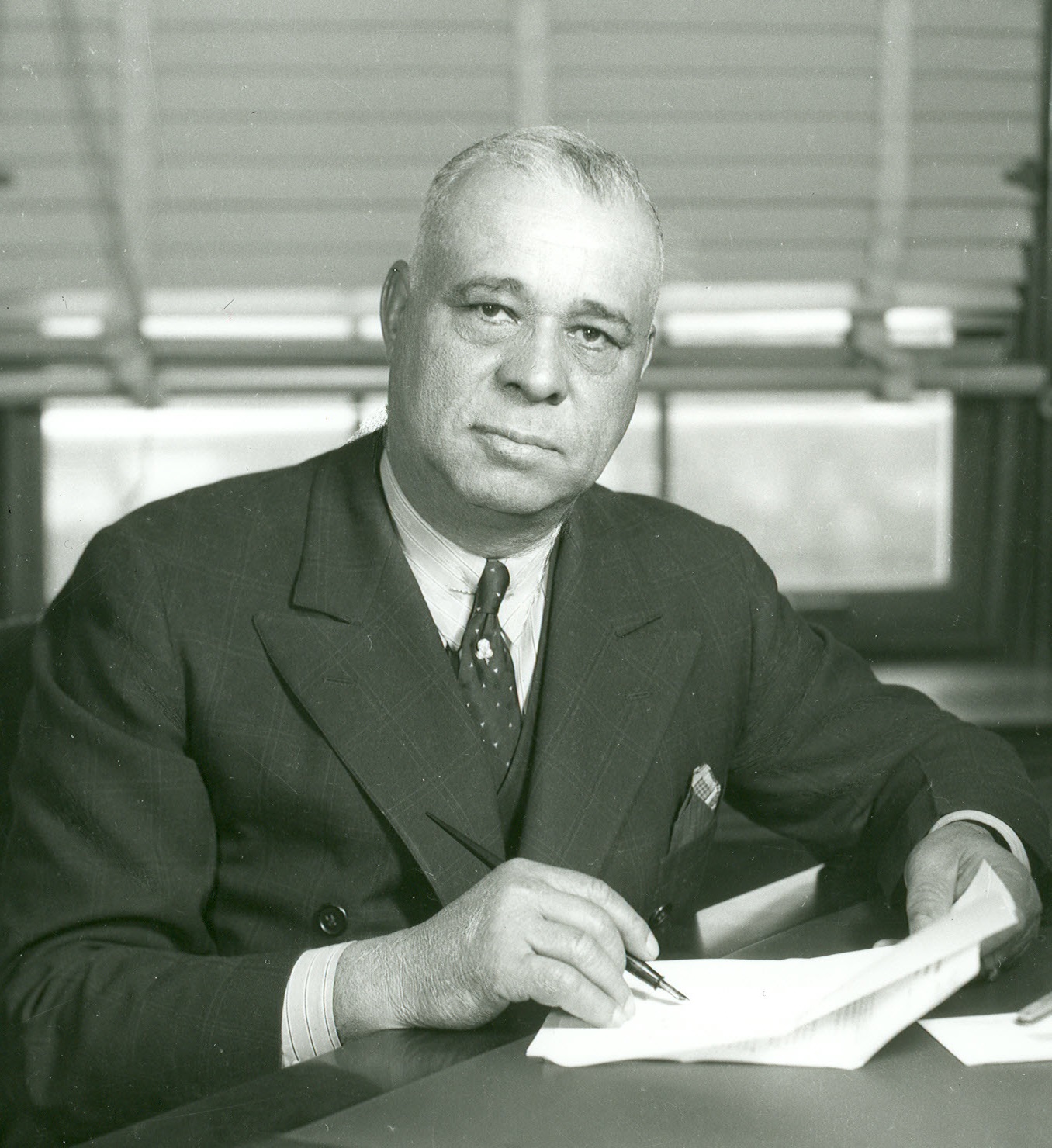
Disambiguation first, because the name invites error: this is Arthur Wergs Mitchell of Chicago, the congressman — not Arthur Mitchell the dancer and choreographer, founder of the Dance Theatre of Harlem, who is a different
| At a glance | |
|---|---|
| Type | PERSON — politician |
| Dates | – |
| Chicago connection | SIGNIFICANT — see the Chicago connection section |
| Known for | Disambiguation first, because the name invites error: this is Arthur Wergs Mitchell of Chicago, the congressman — not |
| Verification | PROVISIONAL |
| CTL ID | CTL-ENC-000199 |
Overview
Disambiguation first, because the name invites error: this is Arthur Wergs Mitchell of Chicago, the congressman — not Arthur Mitchell the dancer and choreographer, founder of the Dance Theatre of Harlem, who is a different man of a later generation and has no part in this record. CultureTechLens's build-side record carries the plain alias "Arthur Mitchell," but its evidence is unambiguous: the first African American Democrat elected to Congress, serving Illinois's 1st District from 1935 to 1943, and the plaintiff in Mitchell v. United States (1941).
Arthur Wergs Mitchell was born on December 22, 1883, on a farm near Lafayette, in Chambers County, Alabama. He attended public schools and the Tuskegee Institute — arriving in 1897 to work as an office boy for Booker T. Washington — studied at Columbia University and Harvard University, taught in rural schools in Georgia and Alabama for many years, and founded the Armstrong Agricultural School in West Butler, Alabama, serving as its president for ten years. He studied law, was admitted to the bar in 1927, and began practice in Washington, D.C., moving to Chicago in 1929 to practice law and work in real estate. He had entered politics as a Republican, as most Black Americans of his generation did; ambition and impatience with the entrenched Black Republican leadership, and the rise of Franklin D. Roosevelt's New Deal, moved him to switch parties in 1932. He was a member of Phi Beta Sigma and served as its sixth international president from 1926 to 1934.
Life and career
In 1934 he did the unprecedented: he defeated Oscar De Priest, the Republican incumbent and the House's lone Black member, with fifty-three percent of the vote, campaigning on support for the New Deal and its relief programs. De Priest's concession named the milestone: "I congratulate you as [the] first Negro Democratic congressman." Mitchell served four terms, from January 3, 1935, to January 3, 1943 — the 74th through 77th Congresses — as, throughout, the only African American in Congress. He introduced bills banning lynching and prohibiting discrimination, supported Roosevelt loyally through fights including the 1937 court-packing plan, and nominated Black youths to the military academies. The record also preserves the criticism, and this entry does not launder it: the NAACP attacked his 1935 antilynching bill as toothless, Walter White criticized his pace, and Black leaders faulted his slowness on Italy's invasion of Ethiopia and his support for Hugo Black's Supreme Court nomination. Mitchell answered that his bill could pass where stronger bills would fail, and on April 15, 1937, he voted for the Gavagan antilynching bill when the House passed it — it died in the Senate, as they all did.
His most durable victory came as a passenger. In April 1937, traveling from Chicago to Hot Springs, Arkansas, on the Chicago, Rock Island and Pacific Railroad, Mitchell was forced out of the Pullman car — for which he held first-class tickets — when the train crossed into Arkansas, and rode the rest of the way in a segregated car he described as "filthy and foul smelling." He sued the railroads, complained to the Interstate Commerce Commission, and, after dismissal below, argued his own case before the Supreme Court — one of the few sitting members of Congress ever to do so. In April 1941 the Court ruled unanimously in Mitchell v. United States that Black passengers had the right to equal accommodations and treatment in interstate travel and that the railroad had violated the Interstate Commerce Act. Mitchell called it "a step in the destruction of Mr. Jim Crow himself," though the opinion did not reach segregation itself and went largely unenforced. He chose not to seek re-election in 1942; his last congressional act condemned politicians who preferred the Axis powers to granting Black Americans rights. He retired to farming and law near Petersburg, Virginia, and died at his home there on May 9, 1968, buried on his estate, "Land of a Thousand Roses." This record is a staged proposal pending the founder's classification sitting.
Chicago connection
Disambiguation first, because the name invites error: this is Arthur Wergs Mitchell of Chicago, the congressman — not Arthur Mitchell the dancer and choreographer, founder of the Dance Theatre of Harlem, who is a different man of a later generation and has no part in this record. He studied law, was admitted to the bar in 1927, and began practice in Washington, D.C., moving to Chicago in 1929 to practice law and work in real estate. In April 1937, traveling from Chicago to Hot Springs, Arkansas, on the Chicago, Rock Island and Pacific Railroad, Mitchell was forced out of the Pullman car — for which he held first-class tickets — when the train crossed into Arkansas, and rode the rest of the way in a segregated car he described as "filthy and foul smelling." He sued the railroads, complained to the Interstate Commerce Commission, and, after dismissal below, argued his own case before the Supreme Court — one of the few sitting members of Congress ever to do so. [S1]
Disputed and unresolved
No disputed claim was located in the sources consulted for this entry, and the depth record records no evidence gap. Open items, if any, are listed in Editorial notes.
See also
Relationships
- related_to — Oscar De Priest (CTL-E-0071) — Restated from the CultureTechLens Knowledge Graph: Arthur Wergs Mitchell (CTL-E-0885) related_to Oscar De Priest (CTL-E-0071), verification Verified.
- member_of_organization — Phi Beta Sigma Fraternity, Inc. (CTL-E-0306) — Restated from the CultureTechLens Knowledge Graph: Arthur Wergs Mitchell (CTL-E-0885) member_of_organization Phi Beta Sigma Fraternity, Inc. (CTL-E-0306), verification Verified.
- worked_under — Booker T. Washington (CTL-E-1483) — Restated from the CultureTechLens Knowledge Graph: Arthur Wergs Mitchell (CTL-E-0885) worked_under Booker T. Washington (CTL-E-1483), verification Verified.
- related_to — Pullman porter work (CTL-E-1331) — Restated from the CultureTechLens Knowledge Graph: Arthur Wergs Mitchell (CTL-E-0885) related_to Pullman porter work (CTL-E-1331), verification Provisional.
Sources
- S1: U.S. House of Representatives. "MITCHELL, Arthur Wergs." History, Art & Archives. Accessed October 25, 2026. https://history.house.gov/People/Detail/18340?ret=True.
- S2: Congressional Black Caucus Foundation. "Arthur Wergs Mitchell." Avoice Digital Library. Accessed October 25, 2026. https://avoice.cbcfinc.org/member/arthur-wergs-mitchell/.
- S3: Biographical Directory of the United States Congress. "MITCHELL, Arthur Wergs." Accessed October 25, 2026. https://www.factmonster.com/people/us-congress-biography/arthur-wergs-mitchell-il.
- S4: Wikipedia. "Arthur Wergs Mitchell." Accessed October 25, 2026. https://en.wikipedia.org/wiki/Arthur_W._Mitchell.
- S5: CultureTechLens Knowledge Graph (schema v0.3.1), entities.json and relationships.json — CTL's own graph register, consulted 2026-10-29 for crosswalk facts and restated relationships.
Cite this entry
- Permanent ID: CTL-ENC-000199 · Crosswalked graph record: CTL-ESS-0054 · Version: 0.1 · Date: 2026-10-29
- Chicago: CultureTechLens. "Arthur Wergs Mitchell." CultureTechLens Encyclopedia, version 0.1, October 29, 2026. CultureTechLens NFP. CTL-ENC-000199.
- APA: CultureTechLens. (2026). Arthur Wergs Mitchell (Version 0.1, Entry CTL-ENC-000199). CultureTechLens Encyclopedia. CultureTechLens NFP.
- MLA: CultureTechLens. "Arthur Wergs Mitchell." CultureTechLens Encyclopedia, version 0.1, CultureTechLens NFP, 29 Oct. 2026. Entry CTL-ENC-000199.
Further reading
- CultureTechLens Knowledge Graph record CTL-ESS-0054 (crosswalked; published graph register id CTL-E-0885).
Image credits
- Arthur Wergs Mitchell photograph: see Images block in the frontmatter for the full credit line, rights status, and rights document.
Citation
CultureTechLens. "Arthur Wergs Mitchell." CultureTechLens Encyclopedia, Vol. 1 — Black Chicago, version 0.1, 2026-10-29. CultureTechLens NFP. CTL-ENC-000199.
<!-- =======================